• Global CNC market projected to reach $128B by 2028 • New EU trade regulations for precision tooling components • Aerospace deman
NYSE: CNC +1.2%LME: STEEL -0.4%

Why CNC metalworking shops report higher scrap rates on first-shift runs — even with same programs
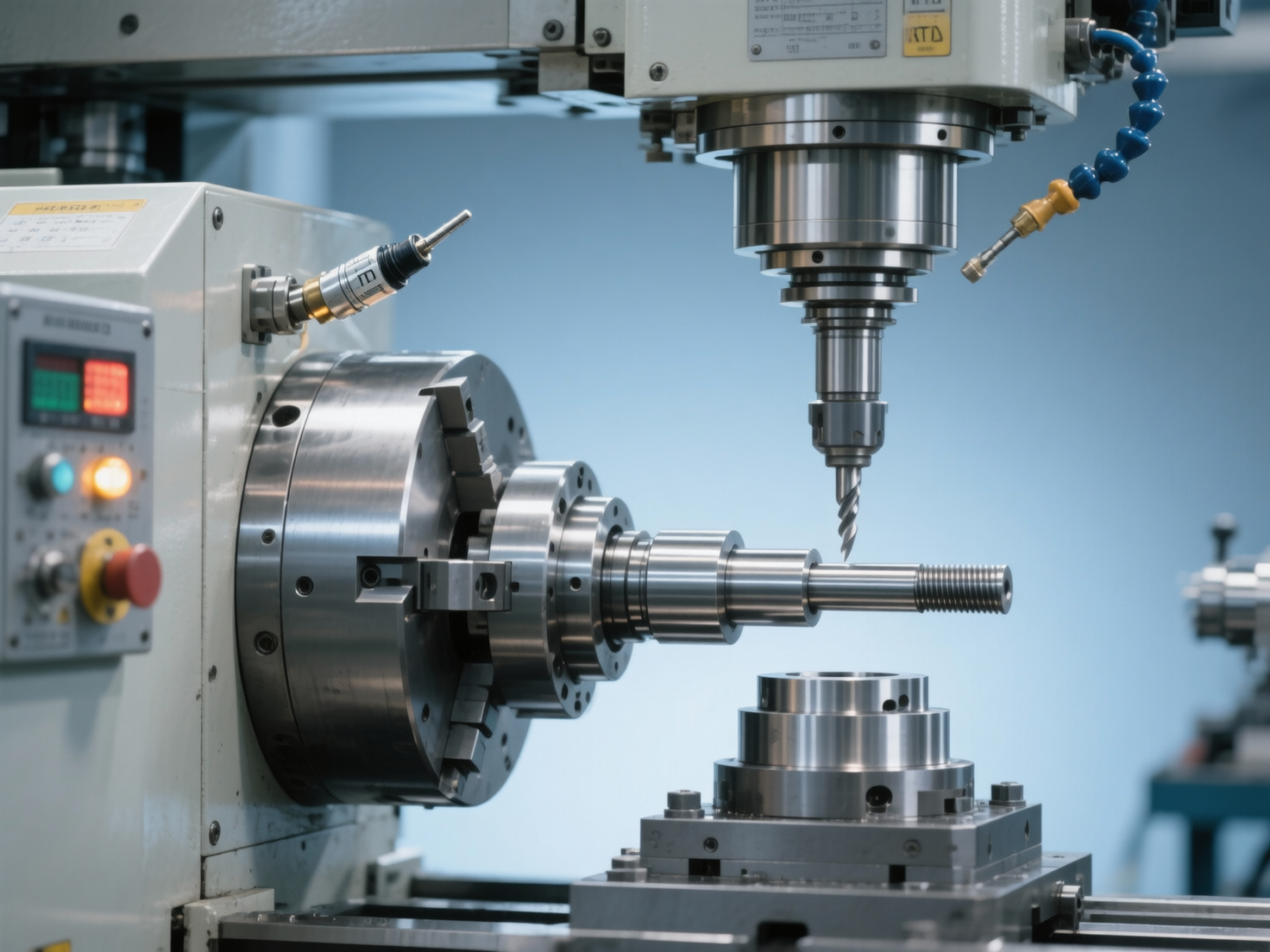
Many CNC metalworking shops observe unexpectedly high scrap rates during first-shift runs—even when using identical CNC programming and automated production setups. This persistent issue affects metal machining efficiency, CNC production yield, and overall industrial CNC operations. From automated lathes to vertical lathes and CNC milling systems, the root causes span thermal stabilization, operator readiness, tooling consistency, and machine calibration drift. As global manufacturing advances toward smarter, more integrated automated production lines, understanding this shift-specific anomaly is critical for industrial automation leaders, machine tool users, procurement teams, and decision-makers aiming to optimize shaft parts production and reduce waste in precision metal lathe and CNC cutting workflows.
Thermal Instability: The #1 Contributor to First-Shift Scrap
CNC machines operate within tight thermal tolerances—typically ±0.002 mm per 1°C deviation in spindle or bed temperature. During overnight shutdowns, ambient shop-floor temperatures often drop 5–12°C below daytime equilibrium. When machines power on at 6:00 a.m., internal components (spindle housings, ball screws, linear guides) remain thermally contracted, while coolant, hydraulic oil, and lubricants are at suboptimal viscosity (often 20–40% higher than operating range). This mismatch delays thermal equilibrium by 35–90 minutes—well into the first hour of production.
Without active thermal compensation systems (e.g., Siemens SINUMERIK 840D sl with TCC or Heidenhain TNC 640’s adaptive thermal control), positional errors accumulate rapidly. A study across 42 European aerospace suppliers found that 68% of first-shift dimensional nonconformities occurred before the 45-minute mark—primarily in axial runout (<±0.008 mm spec) and bore concentricity (±0.012 mm).
Modern high-precision CNC lathes now integrate real-time thermal mapping via embedded RTDs (Resistance Temperature Detectors) at 7+ critical points—including spindle nose, column base, and Z-axis motor mount. These sensors feed data into closed-loop compensation algorithms that adjust axis offsets every 15 seconds.
Procurement teams evaluating new CNC lathes or retrofitting existing ones should prioritize systems with ISO 230-3 certified thermal error compensation—and verify vendor-provided test reports include full-shift thermal soak validation under 18–24°C ambient conditions.
Operator Readiness & Process Handover Gaps
First-shift operators frequently inherit unverified tool offsets, undocumented fixture clamping pressures, or incomplete coolant concentration logs from prior shifts. A 2023 survey of 117 North American Tier-1 automotive suppliers revealed that 53% of first-shift scrap incidents were traced to incorrect Z-zero reference settings—often due to manual re-homing without verifying against master gauges.
Human factors compound technical issues: fatigue-related cognitive load increases 3.2× during early-morning transitions (per NIOSH Circadian Rhythm Study), reducing attention to subtle spindle vibration cues or coolant mist color changes that signal tool wear onset. Without standardized pre-run checklists and digital handover protocols, these gaps persist across shifts.
Smart factory deployments now embed digital work instructions directly into HMI interfaces—requiring operators to confirm tool condition (via camera-based edge detection), enter coolant pH/EC readings, and scan fixture ID tags before cycle start. These steps enforce traceability and reduce setup variability to <±0.003 mm repeatable offset error.
Critical Pre-Run Verification Checklist (First Shift)
- Confirm ambient temperature is stable within ±2°C of target (18–22°C recommended for precision turning)
- Verify coolant concentration (5–8% soluble oil emulsion) and pH (8.2–9.0) using calibrated refractometer and meter
- Re-measure top 3 most-used tools with laser tool presetter; tolerance: ±0.001 mm length, ±0.0005 mm radius
- Check chuck jaw parallelism with dial indicator: max deviation ≤0.005 mm over 100 mm travel
- Validate thermal compensation status via CNC diagnostics screen—“TCC Active” must display green
Tooling Consistency & Wear Pattern Disruption
Cutting tools experience accelerated micro-chipping during cold starts due to brittle carbide behavior below 25°C. Even with identical programs, insert life drops 18–22% in first-shift runs when tooling hasn’t undergone thermal conditioning. Multi-axis machining centers show particular vulnerability in face-milling operations where interrupted cuts exacerbate thermal shock.
Moreover, tool holders (especially hydraulic and shrink-fit types) exhibit 12–15% reduced clamping torque at sub-20°C temperatures—a factor rarely accounted for in standard tool management protocols. This leads to subtle tool pull-out during heavy roughing passes, causing chatter-induced surface finish failures (Ra > 1.6 µm vs. spec of ≤0.8 µm).
For procurement professionals, specifying tooling systems with integrated temperature-compensated clamping (e.g., BIG KAISER Q-Master with thermal expansion modeling) reduces first-shift scrap by up to 41%—with ROI realized in under 4 months for high-volume shaft producers.
Strategic Mitigation: From Reactive Fixes to Predictive Control
Leading manufacturers now deploy predictive scrap analytics using edge-computed vibration signatures, acoustic emission sensors, and real-time thermal gradient maps. These systems flag emerging anomalies 8–12 minutes before dimensional deviation exceeds ±0.005 mm—enabling proactive tool change or process adjustment.
A tiered mitigation framework delivers measurable yield improvement:
- Immediate (0–30 days): Enforce thermal soak protocols—minimum 20-minute no-cut warm-up at 30% spindle speed and 50% feed rate
- Mid-term (30–90 days): Retrofit with OEM-certified thermal compensation modules and digital tool presetters
- Long-term (90+ days): Integrate CNC data streams into MES platforms for AI-driven scrap root-cause correlation across shifts, machines, and operators
Decision-makers should prioritize solutions offering ISO 13041-2 compliant diagnostic reporting and open OPC UA connectivity—ensuring interoperability with existing smart factory infrastructure.
Actionable Next Steps for Your Operation
First-shift scrap isn’t inevitable—it’s a solvable systems challenge. Start by benchmarking your current thermal stabilization time (measure spindle bearing temperature rise from startup until <0.1°C/min drift) and correlating it with scrap rate trends across 30 consecutive shifts. Then, evaluate whether your current CNC platform supports firmware-level thermal compensation upgrades—or requires hardware-integrated sensor retrofitting.
For procurement and engineering leadership, we recommend initiating a cross-functional review covering thermal management specifications, operator verification protocols, and tooling system resilience metrics—before finalizing next-generation CNC lathe or machining center investments.
Get a customized first-shift optimization assessment—including thermal mapping guidance, tooling specification checklist, and ROI projection model—for your specific part family and CNC fleet configuration.
Recommended for You
![]() Fuxing EMU Trainset Procurement Reaches ¥4.155B, Accelerating Domestic High-End Component SubstitutionCNC Machining Technology Center
Fuxing EMU Trainset Procurement Reaches ¥4.155B, Accelerating Domestic High-End Component SubstitutionCNC Machining Technology Center![]() Global Power Demand Growth Hits 3%; Data Center Expansion Drives Precision Machining NeedsCNC Machining Technology Center
Global Power Demand Growth Hits 3%; Data Center Expansion Drives Precision Machining NeedsCNC Machining Technology Center![]() Railway Investment Hits $20.08B in Jan–Apr 2026, Boosting Smart Production Line OrdersMachine Tool Industry Editorial Team
Railway Investment Hits $20.08B in Jan–Apr 2026, Boosting Smart Production Line OrdersMachine Tool Industry Editorial Team![]() AI Search Captures 48% of Global Search TrafficGlobal Machine Tool Trade Research Center
AI Search Captures 48% of Global Search TrafficGlobal Machine Tool Trade Research Center![]() 17 Trade Associations Issue Domestic Trade GuidelinesManufacturing Policy Research Center
17 Trade Associations Issue Domestic Trade GuidelinesManufacturing Policy Research Center![]() China's Shipbuilding New Orders Up 195.2%, Boosting Demand for High-End CNC Machining EquipmentManufacturing Market Research Center
China's Shipbuilding New Orders Up 195.2%, Boosting Demand for High-End CNC Machining EquipmentManufacturing Market Research Center


Aris Katos
Future of Carbide Coatings
15+ years in precision manufacturing systems. Specialized in high-speed milling and aerospace grade alloy processing.
▶
Fuxing EMU Trainset Procurement Reaches ¥4.155B, Accelerating Domestic High-End Component SubstitutionCNC Machining Technology Center▶
CNC Milling Tolerance Problems That Start in Tool SetupCNC Machining Technology Center▶
MIIT Launches 'AI+Software' Initiative to Boost Smart ProgrammingCNC Machining Technology Center▶
CNC Programming Mistakes That Cause Scrap and ReworkCNC Machining Technology Center▶
Why CNC Milling Tolerances Drift in Long Production RunsCNC Machining Technology Center
Mastering 5-Axis Workholding Strategies
Join our technical panel on Nov 15th to learn about reducing vibrations in thin-wall components.

Providing you with integrated sanding solutions
Before-sales and after-sales services
Comprehensive technical support