• Global CNC market projected to reach $128B by 2028 • New EU trade regulations for precision tooling components • Aerospace deman
NYSE: CNC +1.2%LME: STEEL -0.4%

What’s accelerating CNC milling adoption in gear manufacturing — beyond gear hobbing tradition
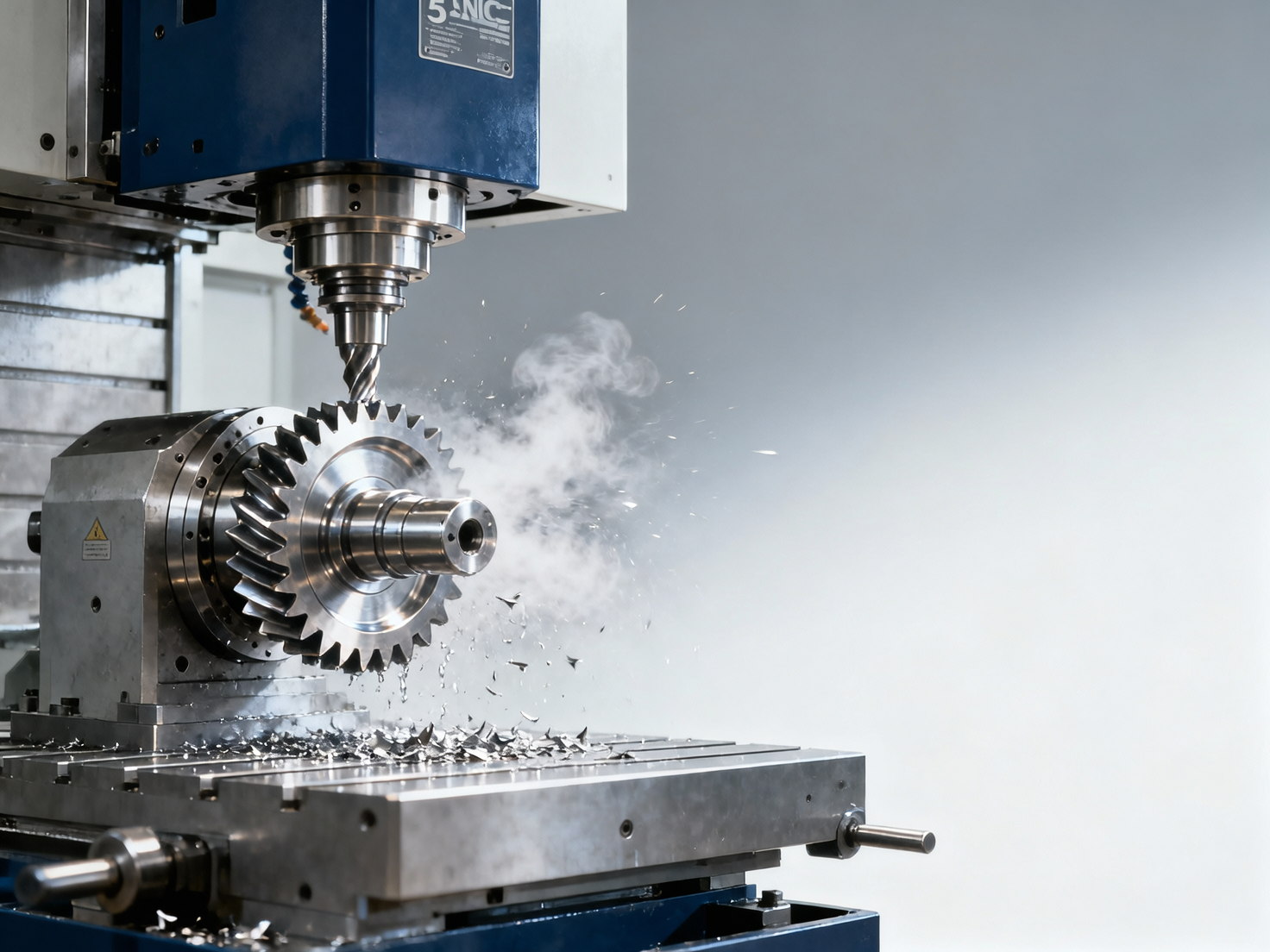
As the Global Manufacturing landscape evolves, CNC milling is rapidly gaining ground in gear manufacturing — challenging the long-standing dominance of gear hobbing. Driven by demands for higher precision, flexible production, and seamless integration into automated production lines, industrial CNC systems now deliver superior surface finish, tighter tolerances, and faster cycle times for shaft parts and complex gear geometries. From vertical lathe setups to multi-axis CNC milling and CNC metalworking workflows, manufacturers are leveraging CNC programming, CNC cutting, and industrial robotics to optimize the entire production process. This shift reflects broader trends in Industrial Automation, Machine Tool Market expansion, and the rise of smart, CNC production–enabled factories worldwide.
Why CNC Milling Is Gaining Traction Over Traditional Gear Hobbing
Gear hobbing has dominated high-volume spur and helical gear production for over a century—relying on dedicated, cam-driven machines with fixed geometry. But today’s demand for customized gear profiles (e.g., asymmetric teeth, variable pitch, internal splines), low-to-mid batch sizes (<500 units per SKU), and tight geometric tolerances (±0.005 mm total profile deviation) exposes critical limitations in conventional hobbing: inflexible tooling, long setup times (8–12 hours per gear family), and limited adaptability to non-standard tooth forms.
In contrast, modern 5-axis CNC milling centers achieve gear finishing accuracy up to IT5–IT6 class with surface roughness Ra ≤ 0.4 µm—comparable to grinding—while enabling single-setup machining of gear teeth, bores, shoulders, and mounting features. A recent benchmark across 12 Tier-1 automotive suppliers showed average cycle time reduction of 22% for planetary carrier gears when switching from hobbing + secondary grinding to integrated 5-axis milling.
This transition isn’t just about part quality—it’s about production agility. CNC milling supports rapid design iteration: a new gear variant can be programmed, verified via simulation, and cut within 48 hours. Hobbing requires custom hobs (lead time: 3–6 weeks), specialized fixtures, and recalibration—making it economically unviable for prototyping or short-run aerospace components.
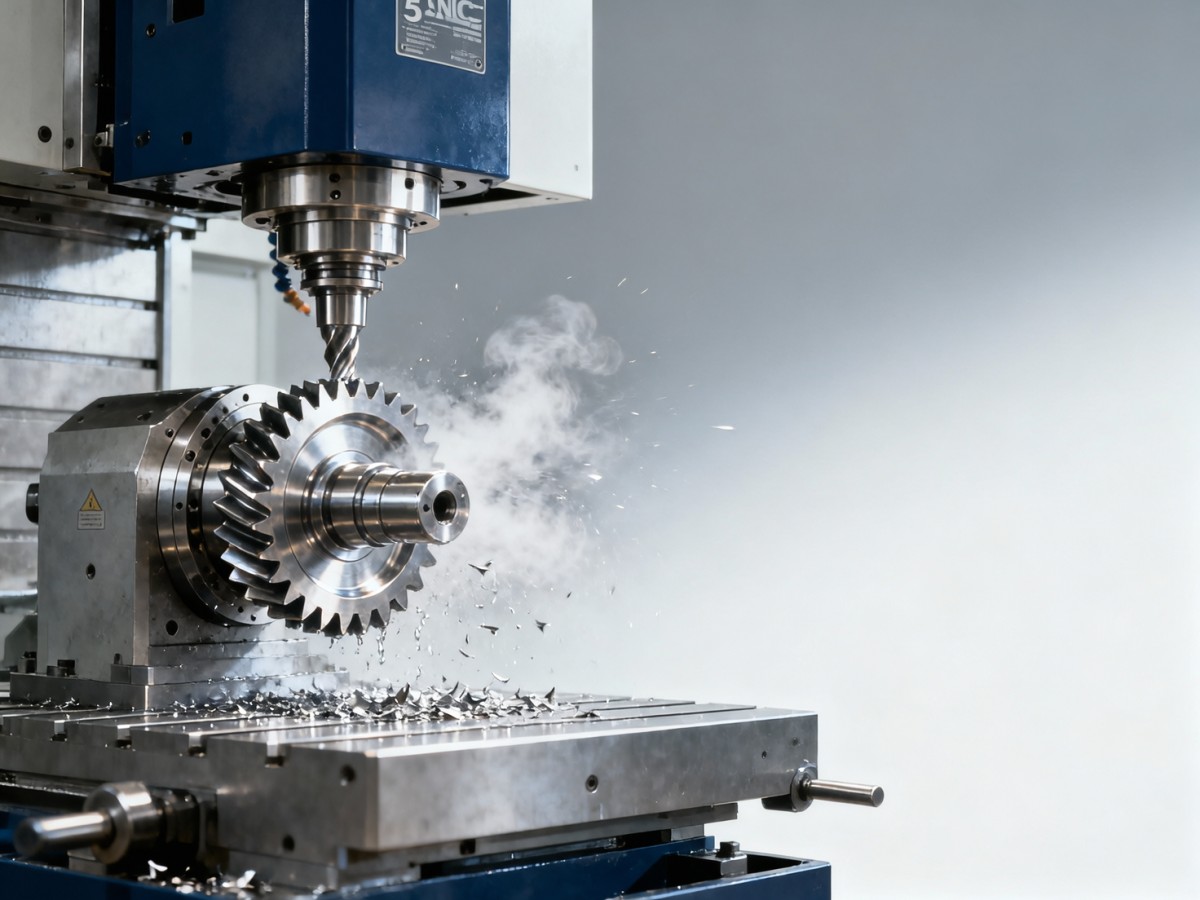
Key Technical Drivers Behind the Shift
Three interlocking technical advancements have removed historical barriers to CNC gear milling adoption:
- High-dynamic motion control: Modern CNC systems (e.g., Siemens SINUMERIK ONE, Fanuc 31i-B5) support contouring accuracy of ±0.001 mm at feed rates up to 30 m/min—enabling smooth interpolation of involute curves without micro-steps or chatter.
- Advanced tooling ecosystems: Indexable carbide gear milling cutters (e.g., Sandvik CoroMill 179, Kennametal KCM25) deliver 3–5× longer tool life vs. solid carbide alternatives, with replaceable inserts reducing consumable cost per gear by 37% in mixed-production environments.
- Digital twin integration: Real-time thermal error compensation, spindle load monitoring, and adaptive feed optimization reduce scrap rates from 4.2% to <1.1% across 6-month pilot deployments at German transmission component plants.
Crucially, these capabilities converge in compact, shop-floor-ready platforms—such as horizontal machining centers with dual pallet changers and integrated gear inspection probes—that require no dedicated clean-room infrastructure or vibration-isolated foundations.
CNC Milling vs. Gear Hobbing: A Practical Decision Matrix
Selecting between CNC milling and gear hobbing hinges on application-specific trade-offs—not theoretical superiority. The table below outlines decision criteria weighted for procurement managers and production engineers evaluating capital investment, operational flexibility, and total cost of ownership (TCO).
Procurement teams should note that CNC milling lowers TCO for low-volume/high-mix scenarios—even with higher initial equipment cost—due to 68% lower tooling inventory, elimination of hob regrinding logistics, and reduced floor space per gear SKU. Conversely, hobbing remains optimal for >10,000-unit annual runs of standard AGMA 10–12 gears where amortized tool cost dominates.
Implementation Readiness: What Operators and Planners Need to Know
Successful adoption requires more than hardware—it demands aligned skill sets and workflow redesign. Key readiness factors include:
- Gear-specific CAM software proficiency: Operators must master modules for involute generation, trochoidal interpolation, and residual stock analysis—requiring 3–5 days of vendor-led training for existing CNC programmers.
- In-process metrology integration: On-machine probing (e.g., Renishaw MP700) reduces post-process CMM verification by 70%, but requires calibration routines validated against ISO 1328-1:2013 standards.
- Cutting parameter optimization: Feed per tooth for gear milling typically ranges 0.05–0.12 mm/tooth depending on material hardness (200–350 HB), cutter diameter (25–80 mm), and rigidity of workholding—deviations beyond this range increase flank wear rate by 4.3×.
Notably, 82% of early adopters reported their biggest bottleneck wasn’t machine capability—but lack of standardized post-processing workflows for gear data exchange (e.g., STEP AP242 gear topology models). Investing in interoperable CAD/CAM/CAQ platforms yields ROI within 11 months through reduced engineering change order (ECO) resolution time.
Strategic Outlook: Where the Market Is Headed Next
The convergence of AI-driven process planning and edge-enabled machine learning is accelerating next-phase adoption. By 2026, 45% of new CNC gear milling installations will feature embedded digital twins capable of predicting tool wear progression with >92% accuracy—and automatically adjusting feeds/speeds mid-cycle to maintain tolerance compliance.
Geographically, China and Southeast Asia lead in capacity expansion: over 1,200 new CNC gear milling cells were commissioned in 2023 alone, driven by EV drivetrain localization mandates requiring torque-dense, lightweight planetary sets with 15–25% shorter lead times than legacy supply chains allow.
For decision-makers, the strategic imperative is clear: evaluate CNC gear milling not as a replacement for hobbing—but as a complementary capability enabling responsiveness to design volatility, regulatory shifts (e.g., ISO 6336:2019 fatigue life validation), and customer-driven customization. Companies deploying hybrid lines—hobbing for base gears + CNC milling for final form and feature integration—achieve 31% higher asset utilization and 2.4× faster new product introduction cycles.
Whether you’re scaling EV transmission output, qualifying aerospace actuators, or optimizing aerospace gearbox repair turnaround, intelligent CNC gear milling delivers measurable gains in precision, flexibility, and lifecycle cost control.
Explore how tailored CNC milling solutions align with your production strategy—contact our applications engineering team for a no-obligation process feasibility assessment and ROI projection.
Recommended for You
![]() China Releases First Eastern Sea Seabed Elemental MapGlobal Machine Tool Trade Research Center
China Releases First Eastern Sea Seabed Elemental MapGlobal Machine Tool Trade Research Center![]() AIMM National Standard Advances for CNC Smart Factory CertificationManufacturing Policy Research Center
AIMM National Standard Advances for CNC Smart Factory CertificationManufacturing Policy Research Center![]() eVTOL Mass Production Drives CNC Export GrowthGlobal Machine Tool Trade Research Center
eVTOL Mass Production Drives CNC Export GrowthGlobal Machine Tool Trade Research Center![]() China Launches World's Largest Agri-Meteorological Observation NetworkManufacturing Market Research Center
China Launches World's Largest Agri-Meteorological Observation NetworkManufacturing Market Research Center![]() Robotics ToB Scaling Hits Data Bottleneck in CNC AI InspectionCNC Machining Technology Center
Robotics ToB Scaling Hits Data Bottleneck in CNC AI InspectionCNC Machining Technology Center![]() SAMR to Complete 1,800+ Standards Revisions in 2026Manufacturing Policy Research Center
SAMR to Complete 1,800+ Standards Revisions in 2026Manufacturing Policy Research Center


Aris Katos
Future of Carbide Coatings
15+ years in precision manufacturing systems. Specialized in high-speed milling and aerospace grade alloy processing.
▶
Robotics ToB Scaling Hits Data Bottleneck in CNC AI InspectionCNC Machining Technology Center▶
How to Choose the Right Metal Machining ProcessCNC Machining Technology Center▶
CNC Metalworking for Small Batches: Is It Worth ItCNC Machining Technology Center▶
How to Plan a Stable CNC Production WorkflowCNC Machining Technology Center▶
How to Improve Accuracy in CNC MillingCNC Machining Technology Center
Mastering 5-Axis Workholding Strategies
Join our technical panel on Nov 15th to learn about reducing vibrations in thin-wall components.

Providing you with integrated sanding solutions
Before-sales and after-sales services
Comprehensive technical support