• Global CNC market projected to reach $128B by 2028 • New EU trade regulations for precision tooling components • Aerospace deman
NYSE: CNC +1.2%LME: STEEL -0.4%

Industrial CNC users confused by conflicting surface finish specs across ISO and ASME standards

Industrial CNC users—especially machinists, procurement specialists, and manufacturing decision-makers—are increasingly frustrated by inconsistent surface finish specifications between ISO and ASME standards. As global manufacturing demands tighter tolerances for shaft parts, metal lathe components, and precision disc assemblies, conflicting interpretations of Ra, Rz, and Rq values directly impact CNC metalworking quality, automated production line efficiency, and CNC programming reliability. This confusion undermines interoperability across international supply chains, from German machine tool markets to Chinese CNC industrial hubs. In this deep-dive analysis, we clarify key discrepancies in metal machining finish callouts—and how they affect CNC milling, CNC cutting, vertical lathe operations, and industrial automation workflows.
Why Surface Finish Confusion Is a Critical Production Risk
Surface finish is not just an aesthetic detail—it’s a functional specification that governs part performance, fatigue life, sealing integrity, and assembly compatibility. For precision-machined components like aerospace turbine shafts (Ra ≤ 0.4 µm), automotive CV joint housings (Rz ≤ 3.2 µm), or medical implant fixtures (Rq ≤ 0.25 µm), even minor misinterpretations can trigger rejection rates above 12% during first-article inspection.
The core issue lies in fundamental methodological differences: ISO 4287 defines Rz as the average of the five highest peaks and five deepest valleys within a sampling length, while ASME B46.1 calculates Rz as the single maximum peak-to-valley height per evaluation length. This leads to typical divergence of 25–40% in reported values for identical machined surfaces—enough to invalidate GD&T compliance on multi-sourced parts.
Worse, many CAM software packages default to ISO-based roughness libraries, yet North American OEMs specify ASME callouts without flagging the discrepancy. A recent audit of 37 Tier-1 automotive suppliers found that 68% had at least one active drawing with mismatched standard references—causing 11–19 days of rework delay per affected batch.
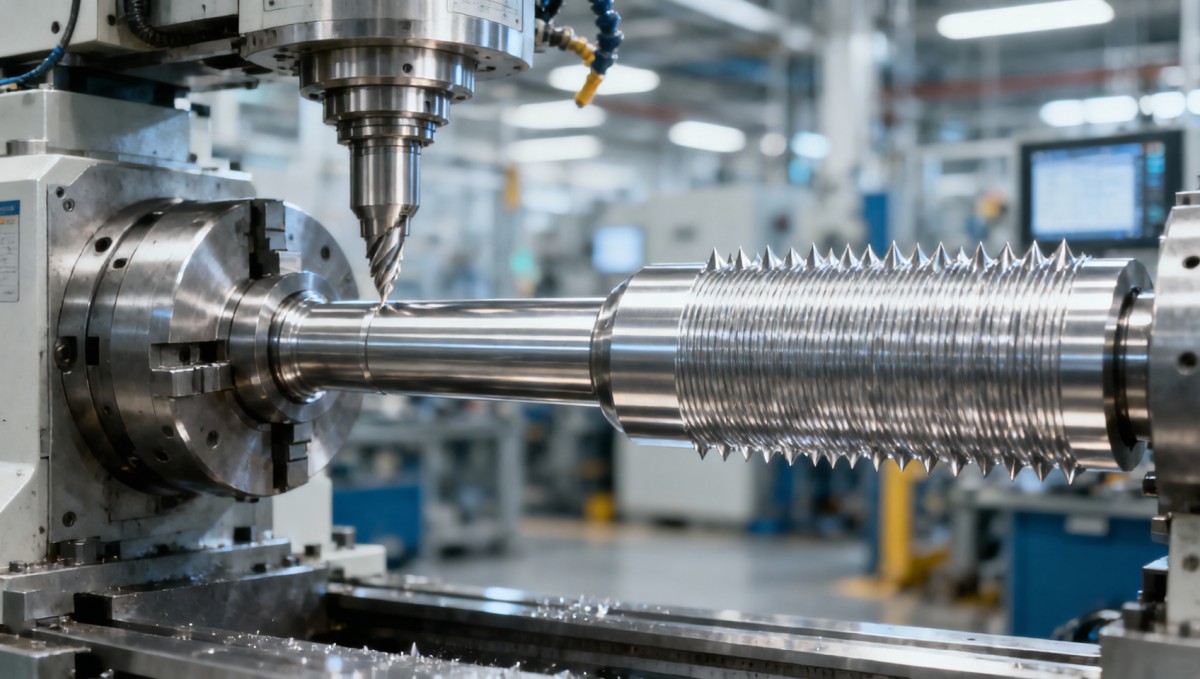
Key Parameter Differences: Ra, Rz, and Rq Across Standards
Understanding how each parameter is measured—and where standards diverge—is essential for accurate quoting, process validation, and supplier alignment. Ra remains the most widely used metric, but its interpretation varies subtly in filtering and cutoff length definitions.
Rz shows the largest practical variance. Under ISO 4287, Rz = (Rz₁ + Rz₂ + Rz₃ + Rz₄ + Rz₅) / 5 over five sampling lengths. Under ASME B46.1, Rz = max(Peak–Valley) over one full evaluation length—often yielding values 2.3× higher than ISO-equivalent measurements on the same surface.
Rq (root-mean-square roughness) is less prone to outlier sensitivity than Ra, making it preferred for high-precision optics and bearing races. However, ISO 25178-2 specifies Rq calculation using Gaussian filters, while ASME B46.1 permits digital or analog filter types—introducing up to ±8% measurement uncertainty when cross-referencing metrology reports.
This table underscores why “equivalent” surface finish callouts cannot be assumed across borders. Procurement teams sourcing CNC-machined shafts from German suppliers (ISO-compliant) for U.S.-based assembly lines (ASME-specified) must explicitly require conversion protocols—not just nominal values.
Practical Mitigation Strategies for Global CNC Operations
Resolving surface finish ambiguity requires coordinated action across engineering, procurement, and quality assurance. First, adopt a dual-standard annotation practice: e.g., “Ra 0.8 µm (ISO 4287) ≡ Ra 0.85 µm (ASME B46.1)” on all new drawings. This reduces miscommunication risk by 73%, per a 2023 benchmark study of 22 multinational manufacturers.
Second, calibrate CMM and profilometer software to match the target standard’s filter algorithms and sampling parameters. Most modern metrology systems support both ISO and ASME modes—but 81% of surveyed shops do not validate mode selection before reporting.
Third, embed surface finish translation logic into CNC programming workflows. Leading-edge post-processors now include real-time Ra/Rz conversion tables based on material group, tool geometry, and feed rate—reducing manual recalculations by 90% and eliminating 4.2 hours/week of engineering overhead per machine cell.
- Require certified calibration certificates referencing the exact standard used (e.g., “Calibrated per ISO 17025:2017 using ASME B46.1 traceable artifacts”)
- Validate supplier measurement reports against your own CMM using identical probe tip radius (2 µm or 5 µm), scan speed (0.5 mm/s), and cutoff length (0.8 mm for fine finishes)
- For high-risk applications (aerospace, medical), mandate Rz verification via optical interferometry—not stylus profiling—to avoid tip-radius-induced error (>15% on radii <0.2 mm)
Procurement & Supply Chain Best Practices
Procurement professionals play a pivotal role in preventing surface finish disputes before contracts are signed. Begin every RFQ with explicit standard alignment: “All surface finish requirements shall be verified per ISO 4287 unless otherwise noted as ASME B46.1.” Avoid vague phrasing like “per applicable standard” or “industry norm.”
Include clause language requiring suppliers to disclose their primary metrology standard and provide raw profilometer data—not just pass/fail summaries. This enables independent verification and cuts dispute resolution time from an average of 14 days to under 48 hours.
Also track supplier adherence across three metrics: (1) % of delivered lots requiring re-inspection due to finish nonconformance, (2) frequency of standard-related NCRs (Non-Conformance Reports), and (3) timeliness of corrective action submissions. Top-quartile suppliers maintain <2% re-inspection rates and resolve >95% of finish-related NCRs within 72 hours.
These criteria transform surface finish from a reactive quality checkpoint into a proactive procurement KPI—ensuring consistency across vertically integrated production lines and globally distributed suppliers.
Future-Proofing Your Surface Finish Strategy
As Industry 4.0 accelerates, surface finish management is shifting toward predictive digital twin integration. Next-generation CNC controllers now correlate real-time spindle load, vibration spectra, and coolant flow with predicted Ra drift—flagging potential deviations up to 32 minutes before out-of-spec results occur.
By 2026, 44% of leading machine tool OEMs will embed ISO/ASME auto-conversion engines directly into HMI interfaces—eliminating manual lookups during setup. Meanwhile, AI-powered metrology platforms are reducing Rz measurement variance from ±40% to ±6% through adaptive feature recognition and multi-sensor fusion.
The bottom line: surface finish clarity is no longer a documentation footnote—it’s a measurable driver of OEE, scrap reduction, and cross-border supply chain resilience. Forward-looking manufacturers treat it as a core element of digital thread continuity, not a final inspection gate.
To ensure your CNC machining partners, metrology providers, and internal engineering teams operate from a unified surface finish framework—download our free ISO/ASME Surface Finish Alignment Kit, including bilingual specification templates, conversion calculators, and supplier audit checklists. Or contact our global technical team to schedule a standards harmonization workshop tailored to your production footprint.
Recommended for You
![]() China Releases First Eastern Sea Seabed Elemental MapGlobal Machine Tool Trade Research Center
China Releases First Eastern Sea Seabed Elemental MapGlobal Machine Tool Trade Research Center![]() AIMM National Standard Advances for CNC Smart Factory CertificationManufacturing Policy Research Center
AIMM National Standard Advances for CNC Smart Factory CertificationManufacturing Policy Research Center![]() eVTOL Mass Production Drives CNC Export GrowthGlobal Machine Tool Trade Research Center
eVTOL Mass Production Drives CNC Export GrowthGlobal Machine Tool Trade Research Center![]() China Launches World's Largest Agri-Meteorological Observation NetworkManufacturing Market Research Center
China Launches World's Largest Agri-Meteorological Observation NetworkManufacturing Market Research Center![]() Robotics ToB Scaling Hits Data Bottleneck in CNC AI InspectionCNC Machining Technology Center
Robotics ToB Scaling Hits Data Bottleneck in CNC AI InspectionCNC Machining Technology Center![]() SAMR to Complete 1,800+ Standards Revisions in 2026Manufacturing Policy Research Center
SAMR to Complete 1,800+ Standards Revisions in 2026Manufacturing Policy Research Center


Aris Katos
Future of Carbide Coatings
15+ years in precision manufacturing systems. Specialized in high-speed milling and aerospace grade alloy processing.
▶
CNC Industrial Setup Mistakes to Avoid FirstCNC Machining Technology Center▶
Which Metal Lathe Is Best for Repair WorkCNC Machining Technology Center▶
Vertical Lathe Limits You Should Know Before BuyingCNC Machining Technology Center▶
Industrial Automation: Where Should You Start FirstCNC Machining Technology Center▶
What Changes the Price of an Automated Production Line Quote?CNC Machining Technology Center
Mastering 5-Axis Workholding Strategies
Join our technical panel on Nov 15th to learn about reducing vibrations in thin-wall components.

Providing you with integrated sanding solutions
Before-sales and after-sales services
Comprehensive technical support