• Global CNC market projected to reach $128B by 2028 • New EU trade regulations for precision tooling components • Aerospace deman
NYSE: CNC +1.2%LME: STEEL -0.4%

Metal machining quotes go wrong when tolerance stackups are ignored
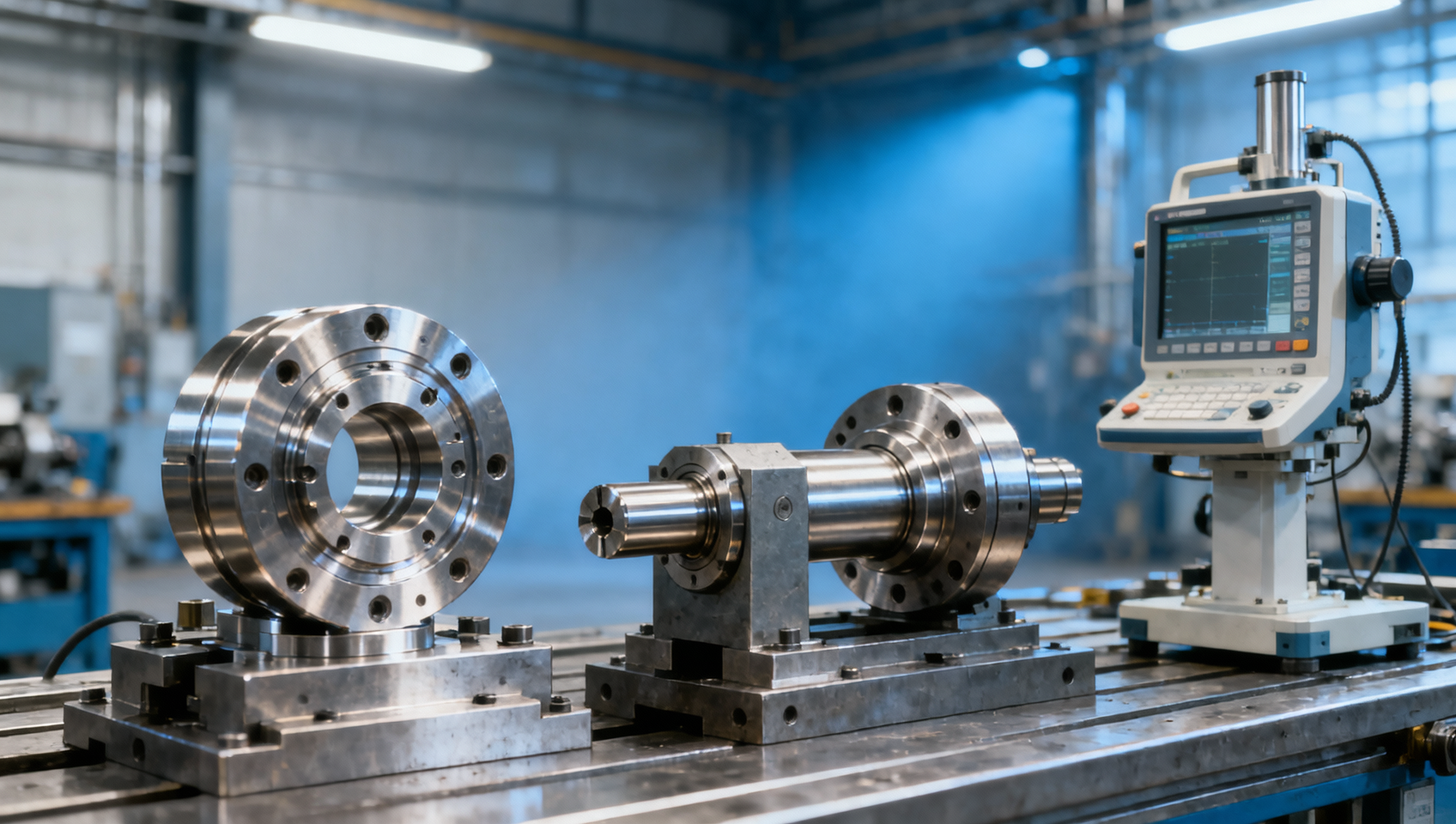
Metal machining quotes often fail when tolerance stackups are overlooked, turning a seemingly efficient CNC production plan into costly rework, delays, and supplier disputes. In today’s Manufacturing Industry, where industrial CNC, CNC milling, automated production, and precision metal lathe operations drive Global Manufacturing, understanding how dimensional variation affects the production process is essential for buyers, operators, and decision-makers seeking reliable cost, quality, and delivery outcomes.
For procurement teams, a quote that looks competitive on day 1 can become expensive by week 3 if critical dimensions cannot be held across multiple operations. For machine operators, tolerance stackups influence setup strategy, fixture design, inspection frequency, and scrap risk. For business leaders, they affect margin, supplier trust, and delivery performance across high-value industries such as automotive, aerospace, energy equipment, and electronics manufacturing.
In CNC machining and precision manufacturing, the problem is rarely a single tolerance on a single drawing note. The bigger issue is how several dimensions accumulate through turning, milling, drilling, grinding, assembly, and inspection. When this chain is ignored during quoting, the result is often underestimated cycle time, unrealistic process assumptions, and preventable nonconformance.
Why tolerance stackups break metal machining quotes
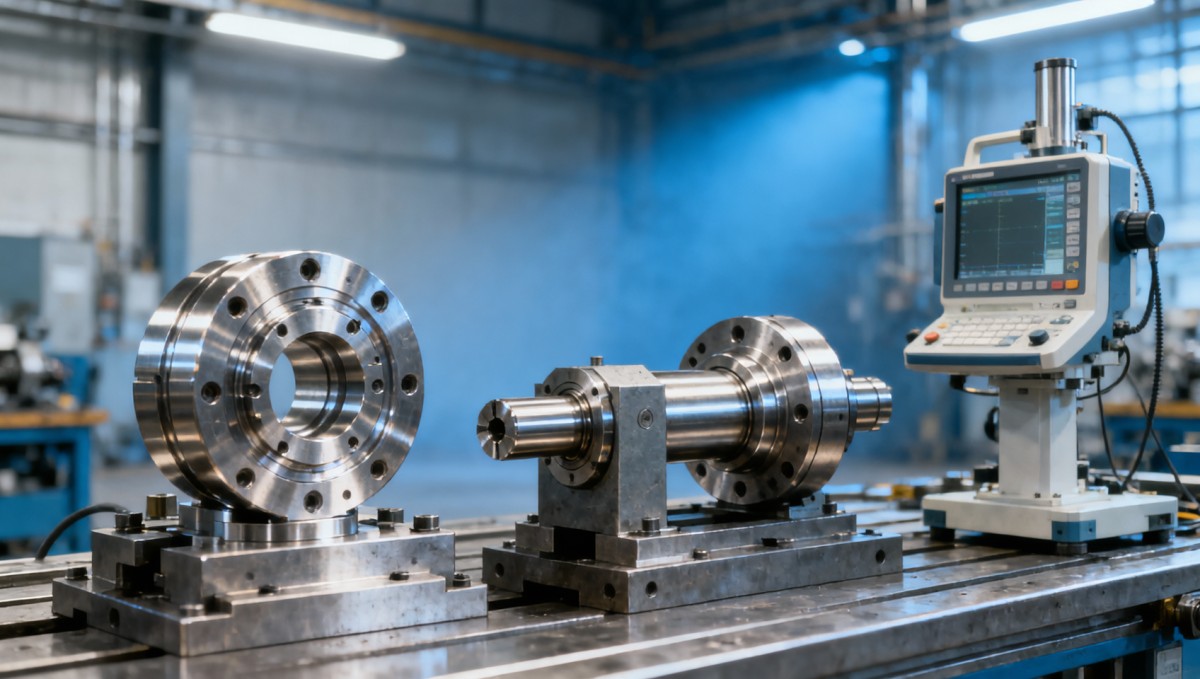
A machining quote is normally built from material cost, machine time, tooling, setup, inspection, finishing, and logistics. That calculation becomes unreliable when the supplier prices each dimension independently instead of evaluating the full dimensional chain. A part with 12 controlled features may appear simple, but if 4 or 5 of those dimensions reference different datums, the actual manufacturing route can become far more complex than expected.
Tolerance stackup refers to the combined variation created when multiple dimensions, positional tolerances, flatness limits, concentricity requirements, or assembly interfaces interact. For example, three dimensions each held at ±0.05 mm do not automatically guarantee a final assembly fit of ±0.05 mm. Depending on datum strategy and process variation, the final relationship may drift beyond the allowed functional range, especially in multi-operation CNC milling and lathe work.
This is where many quotes go wrong. A supplier may estimate 8 minutes of cycle time based on standard machining conditions, but the real process may require an additional in-process probing step, a custom fixture, slower finishing passes, and 100% inspection of key features. That can raise actual machining time by 20% to 45%, even before rework and schedule recovery costs are added.
The impact is even greater in automated production lines. A dimension that is acceptable as a stand-alone machined part may still fail during downstream assembly if stackup pushes the part outside functional fit limits. In global manufacturing programs with batch sizes of 500, 2,000, or 10,000 units, a small quoting error on tolerance interpretation can multiply into major quality and delivery issues.
Typical causes behind quote failure
- Drawing review focuses on nominal dimensions but misses datum relationships and assembly-critical features.
- Procurement compares suppliers by unit price only, without checking measurement capability or process route.
- Operators receive a print with tight limits but no stackup priorities, causing inefficient setup decisions.
- Quoting teams assume standard fixtures will work, while the part actually needs dedicated workholding.
- Inspection cost is underestimated, especially when CMM verification or first article validation is required.
How hidden stackups change cost assumptions
A shaft, disc, or structural housing may require 2 to 6 machining operations depending on feature orientation and tolerance relationships. If quote preparation assumes a single clamping strategy but the actual part needs reorientation to protect datum integrity, setup time can increase from 30 minutes to 90 minutes per batch. On low-volume precision work, setup often contributes more to quote failure than raw material price does.
Another cost driver is process capability. A tolerance of ±0.10 mm may be routine on a rigid machining center, while ±0.01 mm on the same feature may need temperature control, finer tooling, reduced feed, and tighter gauge management. The quoted price must reflect whether the process is comfortably capable or operating close to its limit.
Where the risk appears in CNC machining and precision manufacturing
Tolerance stackup risk is not limited to ultra-complex aerospace parts. It appears across everyday CNC machining work, including flanges, bearing seats, valve bodies, motor housings, and machined assemblies with threaded, milled, and turned features. The more interfaces a part has, the more important it becomes to understand the relationship between design intent and process sequence.
In automotive programs, suppliers often manage medium-to-high volumes where repeatability matters as much as dimensional accuracy. A feature that drifts by only 0.03 mm in one operation may still trigger downstream alignment issues when combined with press-fit, sealing, or bracket mounting variation. In electronics production, compact assemblies leave even less room for accumulated error, especially on precision aluminum or stainless components with multiple reference surfaces.
Energy equipment and industrial machinery create a different challenge. Large parts may have looser nominal tolerances, such as ±0.10 mm to ±0.20 mm, yet the real functional requirement can still be demanding because flatness, runout, or hole position must align over long distances. In these cases, quoting errors often come from underestimating fixturing, machine travel limits, or the need for intermediate inspection between operations.
The table below shows how tolerance stackups typically affect different machining scenarios and why quote accuracy depends on process context, not just drawing values.
The key lesson is that dimensional risk is highly application-specific. A buyer reviewing three quotations should not assume equal technical understanding just because the drawing package is identical. The supplier who asks about functional datums, inspection points, and assembly interfaces is often the one pricing the job more realistically.
Three warning signs during supplier review
- The quotation arrives within 24 hours for a complex part that clearly needs engineering review.
- No comment is made about datum scheme, GD&T interpretation, or inspection method for tight features.
- Lead time looks unusually short, such as 5 days for a part likely requiring fixture build and CMM validation.
How buyers and operators should evaluate a quote before release
A strong metal machining quote should explain more than price and delivery. It should show whether the supplier understands how tolerance stackups affect the production process. This matters for purchasing teams comparing vendors, but it matters equally for plant engineers and operators who will live with the manufacturing consequences after the order is placed.
At a minimum, review 4 core dimensions of the quotation: process route, tolerance feasibility, inspection method, and exception handling. If even one of these is missing, the quote may still be useful as a budget estimate, but it should not be treated as a production-ready commitment. On parts with critical fits, it is reasonable to request a pre-production review lasting 30 to 60 minutes before issuing a purchase order.
Operators should also look at whether the quote assumptions match practical shop-floor conditions. For example, can the specified tolerance be achieved in 1 setup, or will the part need 2 or 3 setups? Is the material stable enough after roughing, or is a rest period needed before finish machining? For aluminum and stainless parts with thin walls, even small thermal or clamping distortion can alter final dimensions.
The following table can be used as a practical quote evaluation checklist for CNC machining, industrial CNC sourcing, and precision machine tool procurement.
A quote that survives this checklist is more likely to support stable cost and delivery. In many B2B machining projects, paying 5% to 12% more for a technically sound supplier is less expensive than accepting a low bid that later triggers rework, line stoppage, or emergency outsourcing.
Recommended questions before placing the order
- Which dimensions are treated as function-critical, and how are they controlled in process?
- What is the expected process capability for the tightest tolerance zone?
- Will the job require dedicated fixtures, soft jaws, or probing routines?
- Is first article inspection included in the quoted lead time and price?
Practical methods to control stackups in the production process
Once a part enters production, the best way to control quote risk is to control variation early. This starts with converting the drawing into a manufacturing plan that respects datum priority, setup logic, and measurement strategy. In precision manufacturing, it is often more effective to spend 2 extra hours on process planning than to lose 2 days in correction work after the first batch fails inspection.
A practical approach is to divide features into three levels: critical, controlled, and standard. Critical features are the ones that directly affect fit, sealing, alignment, or motion. Controlled features influence assembly indirectly. Standard features have normal commercial tolerance and should not consume excessive inspection time. This classification helps both quoting teams and operators allocate resources where they matter most.
For CNC milling and multi-axis machining, probing and in-process verification can significantly reduce stackup drift between operations. For metal lathe applications, the focus is often on concentricity, shoulder spacing, and runout control. In both cases, fixture repeatability is essential. A fixture that repeats within 0.01 mm to 0.02 mm supports stable production far better than one that introduces inconsistent clamping behavior between parts.
Inspection planning should also match the risk level. Not every feature needs 100% inspection, but critical dimensions on first batches, new tools, or process changes usually do. A common pattern is first article inspection on 1 piece, in-process checks every 20 to 50 pieces, and final sampling based on batch size and customer requirement. That balance protects quality without making the process unnecessarily expensive.
A five-step control workflow
- Review the drawing and identify stackup chains across all assembly-critical features.
- Define datums and sequence operations to minimize re-clamping error.
- Select tooling and fixtures that support repeatability across the target batch size.
- Set inspection frequency based on tolerance severity, material behavior, and process maturity.
- Feed inspection results back into quote refinement for future orders and repeat parts.
Common implementation mistakes
One mistake is tightening every dimension to protect assembly performance. That usually raises machine time without solving the real stackup problem. Another is relying on final inspection only. By the time a 200-piece batch reaches final check, correction options are limited and expensive. A better strategy is early detection at the highest-risk process points.
A third mistake is separating quoting from manufacturing engineering. The quote should not be a sales document alone. It should reflect real shop conditions, machine capability, operator handling, and inspection effort. In integrated smart factory environments, digital review of tolerances before production can improve quote accuracy and lower batch-to-batch variation.
FAQ for procurement teams, operators, and decision-makers
How tight does a tolerance need to be before it changes the quote significantly?
There is no single threshold, but quotes often change noticeably when a feature moves from general machining tolerance into a controlled range such as ±0.02 mm, ±0.01 mm, or a demanding positional tolerance tied to multiple datums. The cost increase comes not only from slower cutting but also from setup, measurement, fixturing, and scrap protection. A tolerance that looks only 2 times tighter on paper may create 20% to 50% more manufacturing effort.
Are tolerance stackups only important for assemblies?
No. Assemblies make the issue easier to see, but a single machined part can still suffer from stackup when multiple surfaces, bores, shoulders, and threaded features must relate to one another. For example, a shaft with bearing seats, grooves, and end-face spacing can fail function even if each individual dimension appears acceptable in isolation.
What lead time should buyers expect when stackup analysis is done properly?
For standard parts, supplier feedback may still come within 1 to 3 working days. For complex precision metal machining involving multiple setups, fixture planning, or first article approval, a realistic quote review period is often 3 to 7 working days. Production lead time may then range from 7–15 days for moderate complexity or 2–4 weeks for more demanding parts, depending on volume and inspection scope.
What should procurement prioritize: low price, short lead time, or process clarity?
For repeatable B2B sourcing, process clarity should come first, because it supports the other two. A supplier that clearly explains stackup control, inspection checkpoints, and setup logic is more likely to deliver stable pricing and reliable lead time over multiple orders. Short-term savings from an unclear quote often disappear once quality containment, rework, or delayed shipments begin.
Metal machining quotes become unreliable when tolerance stackups are treated as a drawing detail instead of a production reality. In CNC machining, precision machine tools, and automated production environments, dimensional variation affects setup count, tooling strategy, inspection cost, process capability, and ultimately the success of the order. Buyers need transparent quotations, operators need realistic process assumptions, and decision-makers need suppliers who can connect engineering intent with manufacturing execution.
If you are sourcing CNC milling, precision turning, or complex machined components for global manufacturing programs, a disciplined review of tolerance stackups can reduce hidden cost, protect delivery, and improve quality consistency from the first batch onward. Contact us to discuss your drawings, get a more reliable machining assessment, and explore tailored solutions for precision manufacturing and international sourcing.
Recommended for You
![]() Iranian LNG Vessels Breach U.S. Strait Blockade; Shanghai Crude Surges 4%Manufacturing Market Research Center
Iranian LNG Vessels Breach U.S. Strait Blockade; Shanghai Crude Surges 4%Manufacturing Market Research Center![]() Pakistan Launches CNC Localization Tender for CPEC II Smart Manufacturing ParkGlobal Machine Tool Trade Research Center
Pakistan Launches CNC Localization Tender for CPEC II Smart Manufacturing ParkGlobal Machine Tool Trade Research Center![]() NVIDIA Joins $1T Club; AI-Driven CNC Digital Twin Gains Global TractionCNC Machining Technology Center
NVIDIA Joins $1T Club; AI-Driven CNC Digital Twin Gains Global TractionCNC Machining Technology Center![]() World's First 5-Axis Middle-Grade Wire EDM Machine Enters Mass ProductionMachine Tool Industry Editorial Team
World's First 5-Axis Middle-Grade Wire EDM Machine Enters Mass ProductionMachine Tool Industry Editorial Team![]() China’s CNC Machine Tool Export Prices Up 11.3% in Q1 2026Global Machine Tool Trade Research Center
China’s CNC Machine Tool Export Prices Up 11.3% in Q1 2026Global Machine Tool Trade Research Center![]() Saudi Energy Security Boosts CNC Import Efficiency in Middle EastGlobal Machine Tool Trade Research Center
Saudi Energy Security Boosts CNC Import Efficiency in Middle EastGlobal Machine Tool Trade Research Center


Aris Katos
Future of Carbide Coatings
15+ years in precision manufacturing systems. Specialized in high-speed milling and aerospace grade alloy processing.
▶
What Changes the Price of an Automated Production Line Quote?CNC Machining Technology Center▶
Metal Lathe vs CNC Milling for Low Volume Round PartsCNC Machining Technology Center▶
Production Process Mapping Still Misses the Real Delay PointsCNC Machining Technology Center▶
Why CNC industrial projects miss deadlines after quotingCNC Machining Technology Center▶
What causes unstable output in CNC production scheduling?CNC Machining Technology Center
Mastering 5-Axis Workholding Strategies
Join our technical panel on Nov 15th to learn about reducing vibrations in thin-wall components.

Providing you with integrated sanding solutions
Before-sales and after-sales services
Comprehensive technical support