• Global CNC market projected to reach $128B by 2028 • New EU trade regulations for precision tooling components • Aerospace deman
NYSE: CNC +1.2%LME: STEEL -0.4%

Production Process mapping often misses hidden rework loops
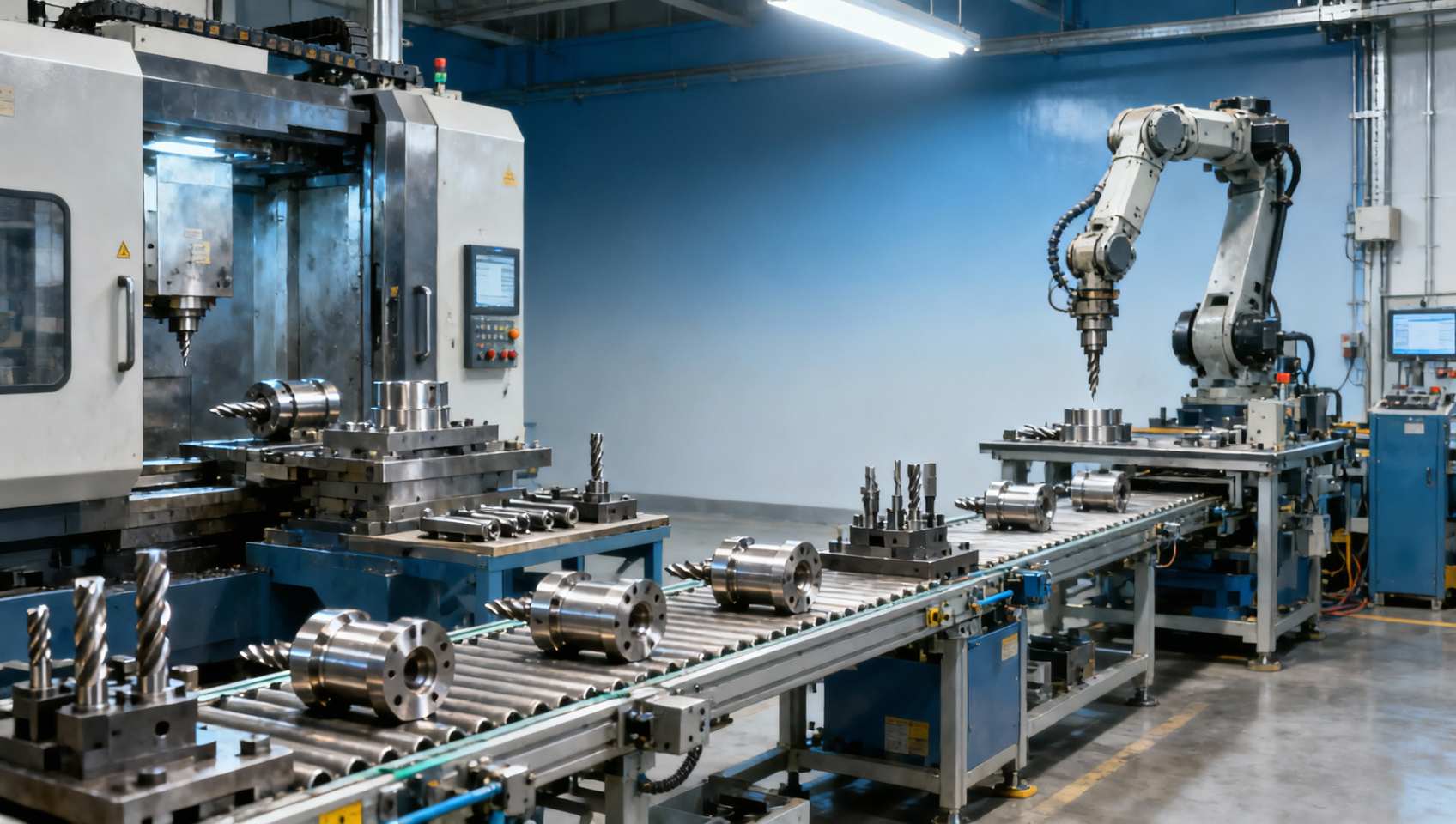
In Global Manufacturing, Production Process mapping in metal machining often overlooks hidden rework loops that quietly drain efficiency, quality, and profit. From industrial CNC and CNC milling to automated production lines and industrial robotics, manufacturers need clearer visibility into how CNC production really flows. This article explores why these gaps persist and how the Manufacturing Industry can reduce waste, improve control, and strengthen automated production performance.
For researchers, operators, procurement teams, and business decision-makers, this issue is more than a documentation gap. When process maps stop at the “ideal route,” they fail to capture inspection returns, tool-change corrections, fixture misalignment, programming edits, and material handling delays. In CNC machining environments, even a 3% to 8% hidden rework rate can distort delivery planning, machine utilization, labor loading, and cost estimation.
In sectors such as automotive, aerospace, energy equipment, and electronics production, the pressure is even higher. Tolerance bands may be within ±0.01 mm to ±0.05 mm, batch sizes may shift from prototype runs of 10 pieces to production lots of 10,000 units, and automated production systems must balance speed with traceability. A process map that ignores rework loops is not neutral; it actively conceals risk.
A stronger approach treats production process mapping as a live control tool rather than a one-time engineering diagram. It should show real material movement, actual decision points, quality gates, machine stoppages, and recurring loop-backs. That level of visibility helps manufacturers improve CNC production flow, support better sourcing choices, and create more resilient automated production lines.
Why Hidden Rework Loops Persist in CNC Production Mapping
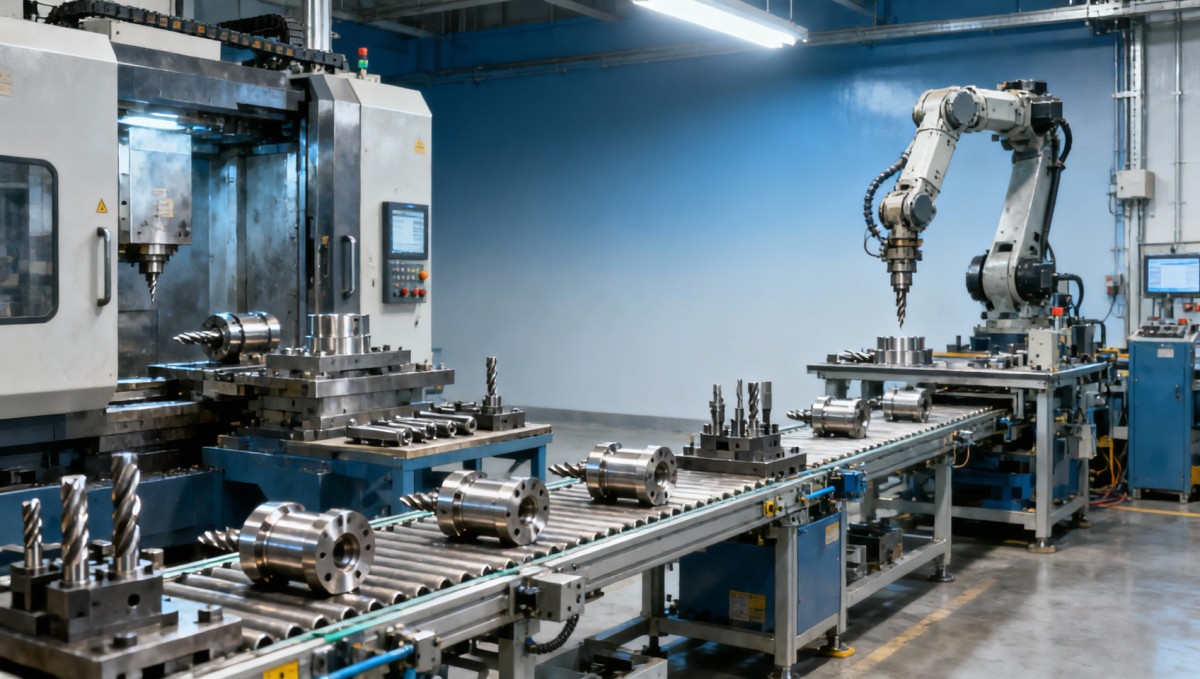
Many metal machining plants begin with a clean routing structure: raw material intake, turning or milling, intermediate inspection, finishing, final inspection, and packing. On paper, the route looks linear. In practice, parts frequently move backward 1 to 3 steps because of burr issues, dimensional drift, surface finish failure, or wrong setup offsets. These returns often happen informally and remain invisible in standard process mapping.
One reason is ownership fragmentation. Process engineering may create the original map, production supervises execution, quality records nonconformities, and maintenance handles machine instability. If these four functions do not share one common view, the map reflects only the planned state. In shops running 2 shifts or 3 shifts, undocumented adjustments become routine, especially when operators need fast corrections to keep spindle uptime above 75% to 85%.
Another cause is over-reliance on machine-level data without workflow context. A CNC machining center can show cycle time, alarm history, and feed override, yet still fail to reveal that the same part was clamped twice, inspected twice, or manually polished after an automated step. Hidden rework loops live between systems: between machine and gauge, between robot and fixture, and between quality hold and restart approval.
Procurement teams also encounter this blind spot. When comparing machine tools, cutting tools, fixtures, or automation suppliers, they may receive throughput figures based on ideal flow. If the actual process includes a 12-minute recheck loop every 20 parts or a repeated deburring step after 15% of batches, the quoted productivity model no longer matches shop-floor reality.
Common Sources of Hidden Loop-Backs
In CNC milling, multi-axis machining, and automated line operations, the most common loop-backs usually fall into a limited number of categories. Identifying them early makes process mapping more accurate and more useful for continuous improvement.
- Dimensional correction loops caused by tool wear, thermal growth, or offset drift after 30 to 120 minutes of continuous cutting.
- Surface quality loops driven by chatter, incorrect coolant application, edge chipping, or secondary polishing requirements.
- Fixture and datum loops where parts are reclamped because the first setup did not guarantee positional repeatability within required tolerance.
- Programming and post-processing loops, especially in multi-axis CNC operations, where a revised toolpath is tested on a small batch before full restart.
- Inspection and approval loops where parts wait for first-article release, final measurement confirmation, or customer-specific reporting.
When these loops are not shown in production process mapping, managers tend to underestimate queue time, underestimate work-in-process inventory, and overestimate available capacity. The result is missed delivery dates, unstable OEE trends, and unreliable cost-per-part calculations.
How Hidden Rework Loops Affect Cost, Delivery, and Quality
A hidden rework loop does not only add machine minutes. It often adds setup repetition, extra inspection, material handling, operator attention, and schedule disruption. In a precision machining environment, a part that returns to the CNC lathe for a second pass may consume only 4 extra minutes of cutting time, but the total impact can reach 15 to 25 minutes once queueing, verification, and documentation are included.
Quality risk also rises. Each additional touchpoint increases the chance of handling damage, traceability gaps, or mixed-status inventory. This is especially relevant in industries that require strict lot control or serial tracking. If 100 parts enter final inspection and 18 are sent back for rework without being clearly marked in the map, the shop loses visibility on true first-pass yield and cannot separate process capability from recovery effort.
From a financial view, hidden loops distort quoting. A supplier may calculate machine burden based on a 9-minute CNC milling cycle and assume 2% scrap. However, if another 6% of parts require a repeat probing cycle and 4% need secondary edge finishing, the quoted margin can disappear quickly. This matters to buyers assessing total cost of ownership and to decision-makers planning automation ROI over 12 to 36 months.
The table below shows how different hidden loops typically affect production performance in metal machining operations.
The main lesson is that hidden rework loops compound across departments. What looks like a small deviation at one machine can become a measurable delivery delay at plant level. For procurement and operations leaders, this is why production process mapping should be part of supplier assessment, not just internal documentation.
Warning Signs That Your Map Is Too Idealized
If any of the following conditions appear regularly, the current mapping model is probably missing rework reality:
- Actual lead time is more than 15% above planned lead time for repeat jobs.
- First-pass yield is not tracked separately from final accepted yield.
- Operators rely on verbal handoffs instead of digital or written loop-back instructions.
- Queue accumulation occurs before inspection, deburring, or final finishing more than twice per week.
- Quoting data and actual labor hours differ significantly after the first 3 production batches.
These signals suggest that the production flow seen by management is not the same as the production flow experienced by operators and quality technicians.
Building a More Accurate Process Map for Metal Machining and Automation
A robust production process map should reflect the real path of parts, data, and decisions. In CNC manufacturing, that means documenting not just the main routing but also the exception paths. A practical map usually includes 5 core layers: material entry, machining operations, inspection points, rework loops, and release criteria. For automated production lines, a sixth layer should show robot transfer logic and buffer positions.
The mapping process should begin with direct observation over at least 1 full shift and preferably 2 to 5 representative production days. Short snapshots miss low-frequency failures, such as fixture reset after lunch break, offset correction after warm-up, or robot gripper adjustment after tool change. Cross-functional mapping teams often produce better results because operators can identify workarounds that engineering documentation never recorded.
It is also useful to distinguish between standard loops and abnormal loops. A standard loop might be a planned intermediate measurement after every 20 parts. An abnormal loop might be a manual surface rework station triggered only when chatter marks exceed acceptance criteria. Both belong on the map, but they should be marked differently so planners can separate controlled quality steps from waste-driven recovery steps.
For factories introducing industrial robotics, process maps should include cycle synchronization. If a CNC cell runs a 7-minute machining cycle while the robot loading pattern averages 50 seconds but occasionally stretches to 95 seconds during part orientation correction, the imbalance should be visible. Otherwise, automation appears capable on paper while underperforming in operation.
Key Elements That Should Appear in the Map
The following framework helps teams capture the details most likely to influence throughput, quality, and procurement planning.
A good map is not necessarily complex. It is specific enough to show where the process bends back on itself, who makes the decision, and how long the loop usually takes. That level of detail turns mapping into a management tool for CNC production improvement and supplier evaluation.
A Practical 4-Step Mapping Routine
- Step 1: Walk the actual process from raw material to packing and record every non-linear movement.
- Step 2: Separate routine quality checks from true rework loops and assign average duration to each loop.
- Step 3: Validate the map with operators, programmers, quality staff, and maintenance within 7 days.
- Step 4: Review the map monthly or after major changes such as new tools, new fixtures, or automation upgrades.
This routine is especially valuable for plants adding smart factory systems. Digital dashboards are only as accurate as the process logic behind them. If loop-back paths are absent, the dashboard can look modern while still hiding basic inefficiencies.
What Procurement Teams and Decision-Makers Should Evaluate
For buyers and plant leaders, production process mapping is not only an engineering concern. It affects sourcing decisions for CNC machine tools, tooling systems, fixtures, software, automation cells, and service providers. A supplier that understands hidden rework loops is usually better prepared to discuss capacity, process stability, preventive maintenance windows, and realistic delivery schedules.
During procurement, one useful question is simple: what percentage of production output follows the standard route without additional handling? Even if the answer is an estimate, it can reveal maturity. A supplier that distinguishes between first-pass yield, rework recovery, and final acceptance often provides a clearer operational picture than one that reports only shipped volume.
Decision-makers should also compare automation proposals against actual process complexity. A highly automated line may not generate expected returns if upstream variation remains unresolved. In many cases, reducing rework loops by 20% can create more usable capacity than adding one more machine, especially when floor space, labor, and utilities are already constrained.
The table below can be used as a practical evaluation guide when selecting machining partners, production systems, or process optimization projects.
This evaluation model helps procurement teams avoid overly optimistic assumptions. It also gives users and operators a stronger basis for discussing machine configuration, fixture strategy, and quality checkpoints with suppliers or internal stakeholders.
Selection Priorities by Stakeholder
- Researchers should focus on process visibility, bottleneck evidence, and traceable exception paths.
- Operators should prioritize setup repeatability, tool-life predictability, and clear escalation rules.
- Procurement should compare lifecycle cost, rework burden, and support response time within 24 to 72 hours.
- Executives should evaluate whether process stability improvements can unlock capacity before capital expansion.
When these priorities align, production process mapping becomes a shared decision framework instead of a static technical document.
Implementation Tips, Common Mistakes, and FAQ
The best implementation strategy is usually phased. Start with one high-volume part family or one unstable CNC cell, not the entire factory. A 30-day pilot often provides enough evidence to identify the top 2 or 3 hidden loops causing the most disruption. Once the map is validated, teams can standardize data capture and expand to other work centers, including turning, milling, grinding, or automated transfer stations.
A common mistake is trying to solve mapping problems only with software. Digital tools are useful, but they cannot replace process discipline. If operators are forced to improvise due to poor fixture repeatability or unclear inspection thresholds, the software will simply record unstable behavior faster. Another mistake is measuring only scrap while ignoring recoverable rework. Scrap shows loss, but rework shows where flow is quietly being taxed.
Maintenance integration is equally important. Rework loops often rise before a machine formally fails. Increased offset correction frequency, repeating spindle alarms, or more frequent finish variation may indicate preventive action is needed. Reviewing these signs every 1 to 2 weeks can help avoid larger disruption and protect automated production continuity.
Below are several frequently asked questions that reflect real search intent from manufacturing teams evaluating process mapping and production improvement.
How can a factory identify hidden rework loops quickly?
Begin with direct observation at the machine, inspection station, and material transfer points. Track 20 to 50 consecutive parts and record every backward movement, repeat check, or manual correction. If actual touches per part exceed the documented route by more than 1 step on average, the current map is incomplete.
Which processes are most likely to hide rework in CNC production?
High-mix, tight-tolerance, and multi-stage processes are the most exposed. This includes multi-axis machining, thin-wall component milling, precision shaft turning, and parts requiring both machining and secondary finishing. Automated loading cells can also hide rework when robot handling masks repeated orientation or reclamping problems.
What is a reasonable review cycle for process maps?
For stable repeat production, monthly review is often sufficient. For new product introduction, tooling changes, or newly automated cells, review every 1 to 2 weeks during the first 60 days. The right frequency depends on process volatility, not just production volume.
Does better mapping really help procurement and ROI?
Yes. Better mapping improves cost realism, machine sizing, labor planning, and supplier comparison. It can reveal whether a bottleneck requires new equipment, better tooling, stronger fixturing, or a simpler quality gate redesign. In many cases, improving visible flow reduces avoidable cost before larger capital spending is approved.
Production process mapping in metal machining should reflect how parts actually move through CNC production, not how teams wish the route looked on paper. Hidden rework loops reduce efficiency, blur quality signals, and weaken automation returns. By capturing loop-back paths, timing their impact, and linking them to ownership and decision points, manufacturers can improve delivery accuracy, strengthen process control, and support better procurement decisions.
For companies operating CNC lathes, machining centers, multi-axis systems, industrial robotics, or automated production lines, clearer mapping creates practical value across engineering, purchasing, operations, and management. If you want to assess your current process flow, compare improvement options, or explore more effective CNC production solutions, contact us to get a tailored plan, discuss technical details, and learn more about manufacturing optimization strategies.
PREVIOUS ARTICLE
NEXT ARTICLE
Recommended for You
![]() Iranian LNG Vessels Breach U.S. Strait Blockade; Shanghai Crude Surges 4%Manufacturing Market Research Center
Iranian LNG Vessels Breach U.S. Strait Blockade; Shanghai Crude Surges 4%Manufacturing Market Research Center![]() Pakistan Launches CNC Localization Tender for CPEC II Smart Manufacturing ParkGlobal Machine Tool Trade Research Center
Pakistan Launches CNC Localization Tender for CPEC II Smart Manufacturing ParkGlobal Machine Tool Trade Research Center![]() NVIDIA Joins $1T Club; AI-Driven CNC Digital Twin Gains Global TractionCNC Machining Technology Center
NVIDIA Joins $1T Club; AI-Driven CNC Digital Twin Gains Global TractionCNC Machining Technology Center![]() World's First 5-Axis Middle-Grade Wire EDM Machine Enters Mass ProductionMachine Tool Industry Editorial Team
World's First 5-Axis Middle-Grade Wire EDM Machine Enters Mass ProductionMachine Tool Industry Editorial Team![]() China’s CNC Machine Tool Export Prices Up 11.3% in Q1 2026Global Machine Tool Trade Research Center
China’s CNC Machine Tool Export Prices Up 11.3% in Q1 2026Global Machine Tool Trade Research Center![]() Saudi Energy Security Boosts CNC Import Efficiency in Middle EastGlobal Machine Tool Trade Research Center
Saudi Energy Security Boosts CNC Import Efficiency in Middle EastGlobal Machine Tool Trade Research Center


Aris Katos
Future of Carbide Coatings
15+ years in precision manufacturing systems. Specialized in high-speed milling and aerospace grade alloy processing.
▶
What Changes the Price of an Automated Production Line Quote?CNC Machining Technology Center▶
Metal Lathe vs CNC Milling for Low Volume Round PartsCNC Machining Technology Center▶
Production Process Mapping Still Misses the Real Delay PointsCNC Machining Technology Center▶
Why CNC industrial projects miss deadlines after quotingCNC Machining Technology Center▶
What causes unstable output in CNC production scheduling?CNC Machining Technology Center
Mastering 5-Axis Workholding Strategies
Join our technical panel on Nov 15th to learn about reducing vibrations in thin-wall components.

Providing you with integrated sanding solutions
Before-sales and after-sales services
Comprehensive technical support