• Global CNC market projected to reach $128B by 2028 • New EU trade regulations for precision tooling components • Aerospace deman
NYSE: CNC +1.2%LME: STEEL -0.4%

Are fixture design flaws silently undermining CNC lathe machining repeatability?
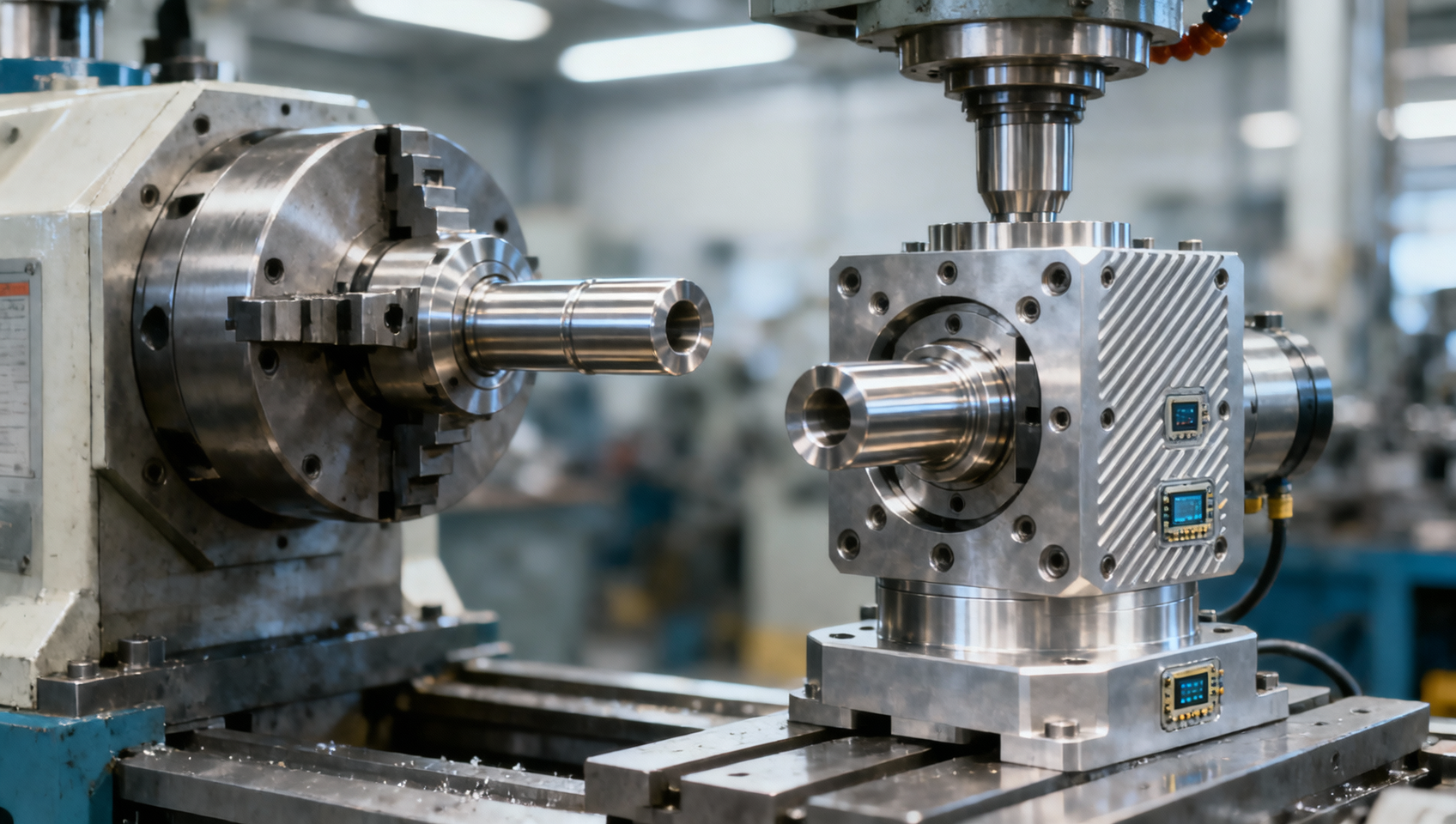
Fixture design flaws—often overlooked in metal machining workflows—can silently erode CNC lathe machining repeatability, compromising precision shaft parts, industrial lathe output, and automated production line reliability. As Global Manufacturing advances toward smarter, more integrated CNC industrial systems, issues in fixture rigidity, alignment, or thermal stability directly impact CNC metalworking accuracy, CNC cutting consistency, and overall CNC production efficiency. For users, procurement teams, and decision-makers in the Machine Tool Market, understanding how industrial CNC fixtures influence repeatability is critical—not just for quality control, but for scaling Industrial Automation and optimizing the entire Production Process.
Why Fixture Design Is a Hidden Repeatability Bottleneck
In high-precision CNC lathe operations—especially for aerospace shafts, automotive transmission components, or medical-grade stainless steel discs—the workholding system is not merely a passive clamping device. It forms the mechanical bridge between machine kinematics and part geometry. A poorly designed fixture introduces micro-deflections under cutting forces of 800–3,200 N, causing positional drift exceeding ±0.012 mm across consecutive cycles—well beyond the ±0.005 mm tolerance band required for ISO IT6-class parts.
Thermal expansion mismatch is another silent contributor: aluminum fixture bodies paired with steel jaws can generate 0.008–0.015 mm axial shift per 10°C ambient rise during extended 8-hour shifts. This variability accumulates across batches, triggering false alarms in SPC charts and increasing first-article inspection failure rates by up to 37% (based on 2023 industry benchmarking across 42 Tier-1 automotive suppliers).
Unlike tool wear or spindle runout—which trigger measurable vibration or surface finish degradation—fixture-induced errors often manifest only as subtle dimensional drift across lot boundaries. Operators rarely correlate this with fixturing, leading to misdiagnosed root causes and costly process recalibrations.
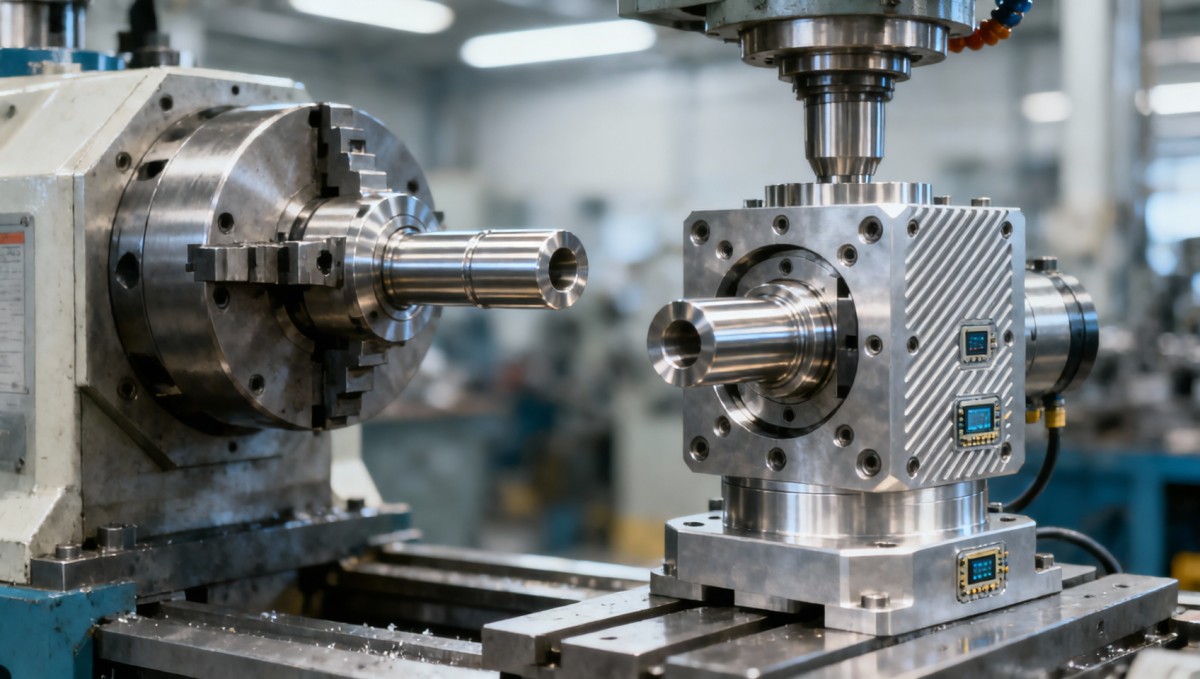
Five Critical Fixture Design Parameters That Impact Lathe Repeatability
Repeatability hinges not on clamping force alone, but on the interplay of six interdependent mechanical parameters. Each deviation beyond accepted thresholds compounds error propagation across the machining chain:
- Rigidity-to-mass ratio ≥ 4.2 N/µm/kg: Ensures minimal dynamic deflection under interrupted cuts typical in grooving or threading operations.
- Thermal time constant ≤ 90 seconds: Measured from ambient to steady-state temperature under continuous coolant flow at 12 L/min.
- Clamp point repeatability ≤ ±0.003 mm: Verified over 500 actuation cycles using laser displacement sensors.
- Base plate flatness tolerance ≤ 0.008 mm over 300 mm span: Critical for multi-jaw chucks and modular pallet systems.
- Material CTE mismatch ≤ 3 ppm/°C: Between jaw inserts, body, and workpiece material (e.g., Inconel 718 vs. Ti-6Al-4V).
Manufacturers frequently overlook the cumulative effect: a 0.005 mm base plate warp combined with 0.004 mm jaw repeatability loss and 0.006 mm thermal drift yields a total potential error of ±0.015 mm—enough to reject 22% of precision bearing housings per ASME B46.1 surface integrity standards.
Fixture Selection Criteria for Procurement Teams
Procurement professionals must evaluate fixtures beyond price and lead time. The following four criteria determine long-term ROI in high-mix CNC lathe environments:
Suppliers should provide third-party test reports—not just datasheets—for each parameter. Leading vendors now offer digital twin validation packages, allowing procurement teams to simulate fixture behavior under customer-specific cutting conditions before purchase.
Operational Best Practices for Machinists & Process Engineers
Even top-tier fixtures degrade without disciplined usage protocols. Field data from 127 CNC lathe cells shows that 68% of repeatability loss stems from operational misuse—not design flaws. Key mitigation steps include:
- Perform thermal soak-in: Run fixtures empty at operating speed for 22–35 minutes before first part loading to stabilize internal stresses.
- Verify jaw parallelism weekly using a 0.001 mm dial indicator across 3 points per jaw face—deviation > 0.005 mm requires regrinding.
- Replace hydraulic seals every 14 months or after 12,000 actuation cycles—leakage reduces clamping force by up to 23%.
- Maintain coolant pH between 8.2–9.1; acidic coolant corrodes aluminum fixture bodies, reducing fatigue life by 40%.
Implementing these practices reduced unplanned downtime by 29% and improved first-pass yield from 86% to 94.3% across a German Tier-2 automotive supplier’s 18-machine lathe line over Q3–Q4 2023.
Future-Proofing Fixtures for Smart Manufacturing Integration
Next-generation fixtures embed sensors and communicate via OPC UA or MTConnect. Real-time monitoring of jaw force (±0.5% FS accuracy), temperature gradients (±0.3°C), and vibration spectra enables predictive maintenance and closed-loop process adjustment. Pilot deployments show 31% faster changeover times and 19% reduction in setup-related scrap.
For decision-makers evaluating Industry 4.0 readiness, prioritize fixtures with standardized M8x1 sensor ports and IP67-rated electronics housings—ensuring compatibility with existing MES platforms and scalability across 3–5 year technology roadmaps.
These capabilities transform fixtures from static enablers into active participants in process intelligence—directly supporting zero-defect manufacturing goals and AI-driven adaptive control strategies.
Fixtures are no longer “just tooling.” They are precision-critical subsystems whose design, specification, and operation directly define the repeatability ceiling of your CNC lathe investment. For information researchers validating technical assumptions, operators troubleshooting batch inconsistencies, procurement teams qualifying new suppliers, and executives aligning capital spend with smart manufacturing KPIs—rigorous fixture evaluation is non-negotiable.
Access our Fixture Repeatability Diagnostic Toolkit—including thermal modeling templates, stiffness calculation spreadsheets, and vendor qualification scorecards—by contacting our technical solutions team today.
Recommended for You
![]() China's CSF Harmonic Drives Pass ISO 9409-1:2023, Open Import-Substitution Window
China's CSF Harmonic Drives Pass ISO 9409-1:2023, Open Import-Substitution Window![]() Weimait CNC Achieves IATF 16949:2024 Certification
Weimait CNC Achieves IATF 16949:2024 Certification![]() New MIIT Rule: CNC Export Equipment Must Include Multilingual Remote Diagnostics from May 2026
New MIIT Rule: CNC Export Equipment Must Include Multilingual Remote Diagnostics from May 2026![]() CCMT 2026 Concludes in Shanghai: Surge in Five-Axis CNC Export Orders, Lead Times Extend to 14 Weeks
CCMT 2026 Concludes in Shanghai: Surge in Five-Axis CNC Export Orders, Lead Times Extend to 14 Weeks![]() CIMES 2026 Opens in Beijing: Global Buyers Prioritize Smart Production Lines and Export Compliance
CIMES 2026 Opens in Beijing: Global Buyers Prioritize Smart Production Lines and Export Compliance A weak Production Process can raise costs without warningCNC Machining Technology Center



Aris Katos
Future of Carbide Coatings
15+ years in precision manufacturing systems. Specialized in high-speed milling and aerospace grade alloy processing.
▶
Industrial turning accuracy problems linked to fixture wearCNC Machining Technology Center▶
CNC metal lathe accuracy issues that often trace back to fixturingCNC Machining Technology Center▶
2026 China Bike Show: CNC Fixture Export OpportunityCNC Machining Technology Center▶
How Quick-Change Fixture Design Cuts CNC Turning Setup TimeCNC Machining Technology Center▶
How Fixture Design Improves CNC Cutting StabilityCNC Machining Technology Center
Mastering 5-Axis Workholding Strategies
Join our technical panel on Nov 15th to learn about reducing vibrations in thin-wall components.

Providing you with integrated sanding solutions
Before-sales and after-sales services
Comprehensive technical support