• Global CNC market projected to reach $128B by 2028 • New EU trade regulations for precision tooling components • Aerospace deman
NYSE: CNC +1.2%LME: STEEL -0.4%

CNC production output drops when fixture repeatability is weak
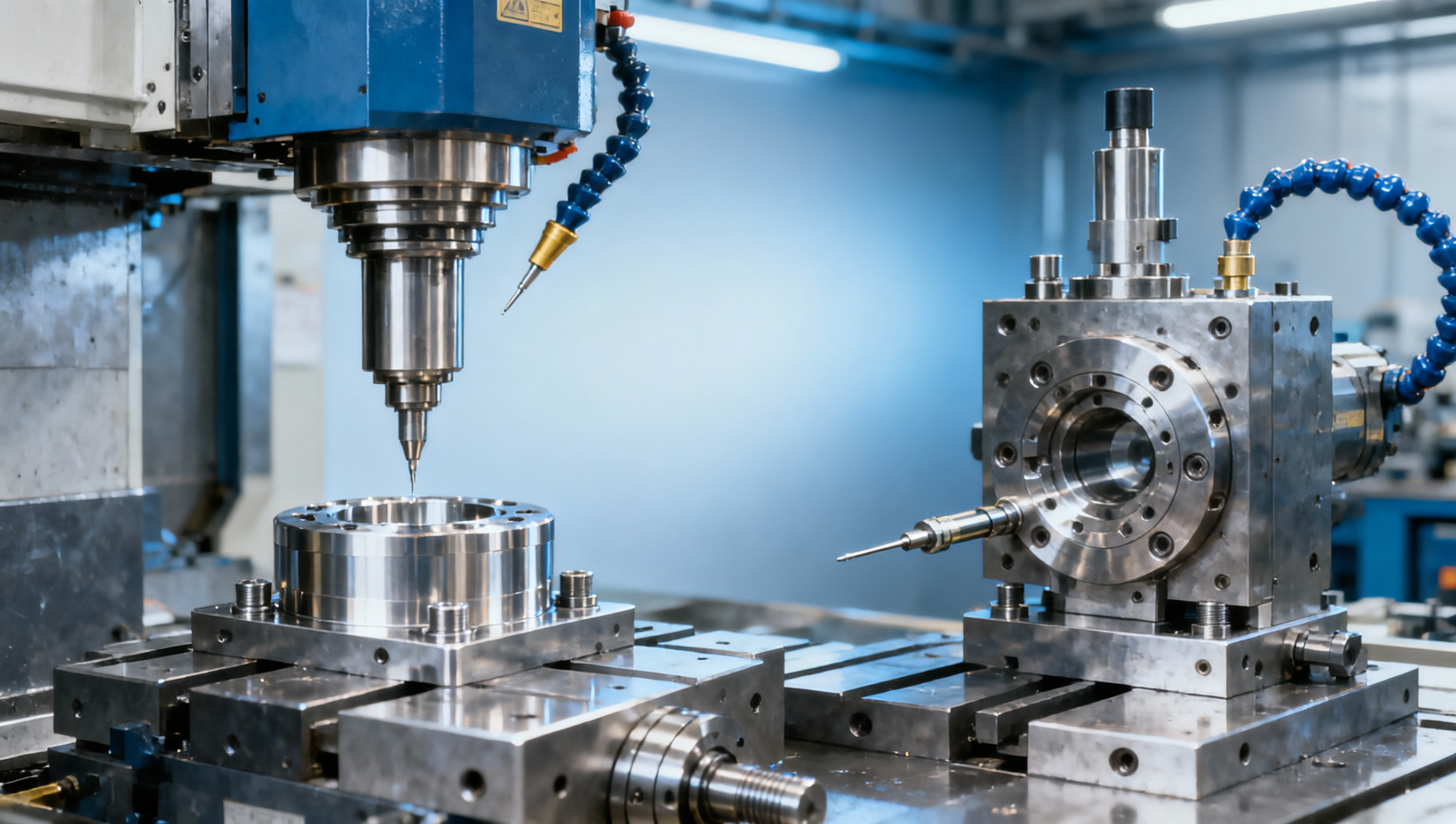
Weak fixture repeatability can quietly reduce CNC production efficiency, part consistency, and overall output across metal machining operations. In today’s industrial CNC and automated production environment, even small positioning errors can disrupt CNC milling, CNC cutting, and automated lathe workflows. This article explains why fixture stability matters, how it affects the production process, and what manufacturers can do to improve performance in the Global Manufacturing landscape.
For operators, the issue often appears as frequent touch-offs, offset corrections, and inconsistent first-pass quality. For buyers, it shows up as higher scrap risk, slower cycle times, and unclear return on investment from machine upgrades. For production managers and executives, weak fixture repeatability can limit spindle utilization, reduce OEE, and delay delivery performance even when the CNC machine itself is accurate.
In high-mix and medium-to-large batch machining, the fixture is not just a holding device. It is a precision link between machine capability and stable output. When repeatability drops from a practical range such as ±0.005 mm to ±0.03 mm, dimensional drift, rework, and inspection load can increase much faster than many teams expect. That is why fixture design, maintenance, and verification should be treated as production-critical decisions rather than workshop details.
Why fixture repeatability directly affects CNC production output
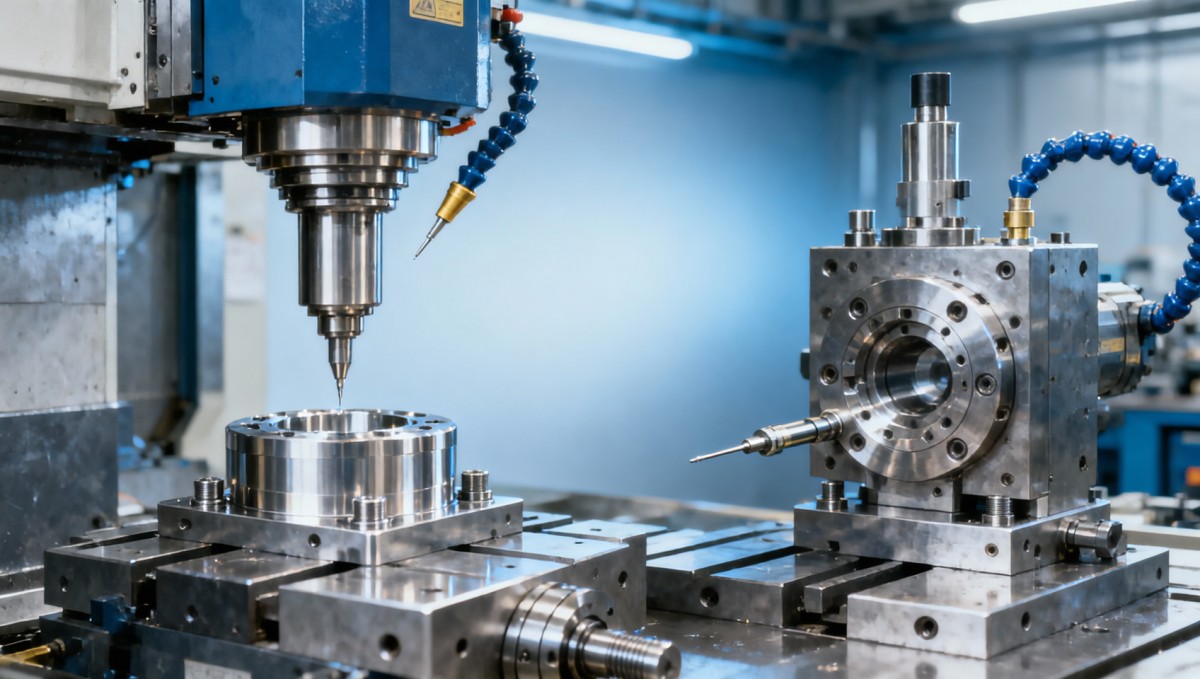
Fixture repeatability refers to how consistently a workpiece returns to the same position and orientation after unloading and reclamping. In CNC machining centers, lathes, and automated cells, this consistency controls the stability of datum alignment, toolpath accuracy, and process capability. If the clamp point shifts by only 0.02 mm to 0.05 mm, hole position, flatness, and contour accuracy may all move outside tolerance on critical parts.
The production impact is rarely limited to one dimension. A weak fixture can force additional probing cycles, extra setup verification, and more frequent tool offset changes. On a line producing 300 to 800 parts per shift, losing 20 to 40 seconds per cycle can remove several machine hours of productive capacity each week. In automated production, those small delays also break synchronization with robot loading and downstream inspection stations.
Repeatability problems often remain hidden because the machine passes calibration and the cutting tools are new. Teams may initially blame tool wear, thermal growth, or operator handling. However, if variation appears after each reclamp, after fixture cleaning, or between pallets, the fixture is often the true root cause. This is especially common in 3-axis and 5-axis machining of aluminum housings, steel brackets, precision discs, and shaft parts.
For global manufacturers working across automotive, aerospace supply chains, electronics, and energy equipment, fixture instability creates a compound risk. It affects not only quality but also delivery reliability, labor efficiency, and spare capacity planning. A machine capable of holding ±0.01 mm cannot deliver that result consistently if the workholding system introduces variation above the process tolerance stack.
Typical production losses caused by poor repeatability
The most common losses appear in five areas: longer setup, reduced first-pass yield, more in-process inspection, extra rework, and lower machine utilization. In batch production, even a 2% to 4% increase in reject rate can materially change part cost when expensive materials, multi-face machining, or long cycle times are involved.
- More first-piece checks after every fixture changeover or part family switch.
- Increased manual intervention when operators no longer trust clamp consistency.
- Loss of unattended runtime in robotic or palletized CNC cells.
- Higher inspection frequency, often from 1 in 10 parts to 1 in 3 parts.
- More secondary operations to recover dimensions that drift after reclamping.
The table below shows how fixture repeatability quality influences practical production results in a typical metal machining environment.
The key takeaway is simple: once fixture variation approaches a significant share of the part tolerance, output falls even if the spindle, control system, and cutting tools remain capable. In many shops, fixture improvement delivers faster gains than replacing the machine.
Common root causes behind unstable fixture performance
Weak fixture repeatability usually comes from a combination of design limits, wear, contamination, and process mismatch. One frequent cause is insufficient location strategy. If the fixture does not properly control the 3-2-1 locating principle, or if contact points are too small for the workpiece geometry, part seating becomes inconsistent. This is common with castings, thin-wall parts, and components with variable raw-stock allowance.
Clamping force is another major variable. Too little force allows movement during cutting, while too much force distorts the part or changes how it seats on the locators. Pneumatic and hydraulic systems that drift outside the intended range, for example from 4 bar to 6 bar without proper regulation, can create repeatability changes between shifts. Manual clamping introduces even more variation when no torque standard is defined.
Surface contamination should not be underestimated. Chips, coolant residue, burrs, and rust can alter the seating point by several microns to tens of microns. In precision CNC milling and turning, that is enough to move a key dimension out of tolerance. Shops running 2 shifts or 3 shifts often see worse fixture consistency when cleaning intervals are irregular or when chip evacuation around locator pins is poorly designed.
Wear on locator pins, rest pads, bushings, and clamp interfaces also accumulates slowly. A fixture may perform well for the first 5,000 to 10,000 cycles but then start drifting. Because the change is gradual, it is often missed until scrap levels rise or customer complaints appear. This is why fixture life-cycle management is as important as the original design.
Design and process mistakes that are often overlooked
Many factories focus on machine specification, spindle speed, or tool brand, but overlook simple fixture-process mismatches. The result is a production line that looks modern but performs inconsistently in daily use.
- Using one universal fixture for 6 to 10 part variants with very different contact surfaces.
- Placing locators near unstable casting surfaces instead of machined datums.
- Ignoring thermal effects when fixtures run continuously for 8 to 12 hours.
- Skipping fixture capability checks after maintenance or after line relocation.
- No standard for clamp torque, pressure window, or locator replacement interval.
Early warning signs on the shop floor
Operators usually notice the problem before management sees the KPI trend. If first-piece approval is taking longer, if offsets are adjusted more than 2 or 3 times per shift, or if dimensions drift after a fixture is cleaned and reloaded, the fixture should be audited. Another practical sign is when one machine or one pallet position consistently produces different Cpk values from the others.
A structured root-cause check should compare machine geometry, tool condition, raw material variation, and fixture seating. In many cases, the fixture does not fail completely. It simply loses enough repeatability to reduce output quality and operator confidence, which is more damaging over time because it normalizes low efficiency.
How to measure fixture repeatability and link it to production KPIs
Improvement starts with measurement. Shops should verify fixture repeatability using a controlled method rather than relying on operator feel. A common approach is to load the same master part or calibrated artifact 20 to 30 times, record the positional variation with a dial indicator, probe, or CMM reference, and compare the spread against the process tolerance. This can be done during PPAP-style validation, new fixture approval, or routine maintenance audits.
For general machining, the target repeatability should be significantly better than the tightest controlled feature. A practical rule is to keep fixture variation below 10% to 20% of the relevant tolerance band. If a hole position tolerance is 0.05 mm, fixture seating variation should ideally remain under 0.005 mm to 0.01 mm. This ratio helps keep the total process stack under control when tool wear and thermal effects are added.
Teams should also connect fixture data to production metrics. Repeatability is not only a quality value; it influences cycle time, first-pass yield, changeover duration, inspection frequency, and machine stoppage. When the connection is visible in weekly KPI review, fixture upgrades become easier to justify to purchasing and management.
The table below outlines a practical framework for turning fixture checks into actionable production decisions.
Using this framework, manufacturers can move fixture decisions from guesswork to measurable control. That matters for procurement teams as well, because a low-price fixture with poor verification support often creates higher operating cost within 3 to 6 months of production.
Useful thresholds for different production environments
In rough machining, a repeatability level of ±0.02 mm may be acceptable if stock allowance is high and downstream finishing absorbs the variation. In semi-finish operations, many shops target ±0.01 mm or better. In finish machining for precision components, especially in electronics tooling, aerospace details, or hydraulic parts, ±0.005 mm and below may be needed depending on the feature and datum structure.
The correct target should match the process, not just the machine brochure. A 5-axis machining cell running lights-out for 6 to 8 hours needs a higher repeatability standard than a manually supervised 2-axis turning operation with relaxed tolerances and low daily output.
Practical ways to improve fixture stability in CNC milling, turning, and automation
The fastest improvements usually come from a mix of design refinement, maintenance discipline, and operator standardization. Start by reviewing the locating scheme. Hard datums should be stable, accessible, and protected from chip accumulation. Locator surfaces need proper hardness and wear resistance, especially in steel part production or high-cycle automation where contact points see repeated impact over thousands of cycles.
Second, stabilize clamping. Hydraulic and pneumatic fixtures should run within a validated pressure window, and manual systems should use a defined torque method where practical. In parts that deform easily, segmented support, floating locators, or balanced clamp distribution can reduce distortion. These choices often matter more than adding excessive force.
Third, make cleaning part of the cycle design. If chips collect around pins or support pads, repeatability will always drift. Shops can reduce this risk through air blow-off, coolant routing changes, chip relief pockets, and cleaning confirmation steps in the PLC or operator checklist. On unattended cells, even a 10-second automated cleaning action may prevent hours of unstable output.
Fourth, build maintenance around cycle count rather than only calendar time. A fixture used for 500 parts per day should not share the same inspection interval as one used for 50 parts per day. Replace wear items before process capability falls, not after scrap rises. This is especially important in high-volume automotive and electronics machining where downtime costs are multiplied across several machines.
Improvement actions by priority
- Audit locator layout and contact surfaces within 1 to 2 weeks.
- Validate clamp force range and repeatability across all shifts.
- Introduce a 3-step cleaning standard before reclamping critical parts.
- Set replacement intervals for pins, pads, bushings, and clamp tips.
- Use in-machine probing or periodic master-part checks on high-value components.
When redesign is better than repair
Repair works when the core fixture concept is correct and only wear or contamination is causing drift. Redesign is usually the better choice when part family variation is too wide, load paths are unbalanced, or the fixture depends too heavily on operator judgment. If the same fixture requires repeated shimming, frequent offset compensation, or produces acceptable parts only with one experienced operator, the design is not robust enough for scalable production.
For procurement teams, this distinction matters. A lower-cost fixture that needs constant manual correction may appear economical at purchase stage but become expensive through labor, downtime, and quality losses. Evaluating total operating impact over 12 months is often more realistic than comparing only initial tooling price.
What buyers and decision-makers should evaluate before selecting fixtures or workholding partners
Purchasing decisions in CNC production should consider more than fixture material or unit price. Buyers should ask how repeatability is verified, how wear parts are managed, and how the fixture fits machine type, part geometry, batch size, and automation level. A fixture for a vertical machining center producing 200 parts per week should not be specified the same way as a palletized horizontal system targeting 2,000 parts per week.
Technical discussions should also include tolerance allocation. If the finished part requires ±0.02 mm on a critical feature, buyers should understand what portion of that tolerance is consumed by fixture repeatability, machine capability, and process variation. Without that clarity, supply quotations are difficult to compare fairly.
Service support is another differentiator. In global manufacturing, fixtures may be shipped across regions, installed by local teams, and used on multiple machine brands. Suppliers that can provide setup guidance, spare part availability, validation support, and response within 24 to 72 hours often reduce production risk more effectively than vendors focused only on initial delivery.
The following table can help procurement teams compare fixture options on a practical basis.
A well-chosen fixture partner helps manufacturers reduce the gap between machine capability and actual production output. That matters not only for quality engineers but also for finance, purchasing, and operations leaders who measure cost per part and delivery performance.
Buyer questions worth asking during RFQ and technical review
Before confirming an order, buyers should request clear answers to at least four points: expected repeatability range, validation method, maintenance interval, and consumable replacement plan. It is also useful to ask whether the fixture design has been optimized for raw part variation, chip evacuation, and multi-shift production. These are often the areas where output losses begin.
If the application supports automation, ask how the fixture handles misload protection, seat confirmation, and consistent clamp detection. In robotic loading environments, a single failed seat can affect 20 to 50 unattended cycles, so fixture monitoring becomes part of risk management rather than an optional feature.
FAQ and implementation guidance for manufacturing teams
Many companies know fixture stability matters, but they are unsure where to start. The best approach is usually a short audit followed by prioritized corrective actions. In most factories, 2 to 4 weeks is enough to identify the main repeatability losses, test improvements, and decide whether maintenance, retrofitting, or redesign is the correct next step.
How often should fixture repeatability be checked?
For high-volume production, a weekly or cycle-based check is usually more effective than a monthly visual inspection. Critical fixtures can be verified every 5,000 cycles, after any maintenance event, or whenever dimensional drift becomes visible. In lower-volume production, checks can be aligned with setup changes or new batch launches.
Can a machine with high accuracy still lose output because of poor workholding?
Yes. Machine accuracy and fixture repeatability are different layers of the process. A precise CNC machine cannot compensate for inconsistent part seating or unstable clamping. In practice, many output losses come from the interface between the machine and the part rather than the machine structure itself.
What is the first improvement with the highest return?
For many plants, the best first move is a repeatability test combined with cleaning and wear inspection. This requires limited investment and can quickly show whether the problem is contamination, worn elements, or a deeper design issue. If variation drops immediately after cleaning or part replacement, the fixture concept may still be valid with better maintenance control.
A simple 5-step implementation path
- Identify the 3 to 5 parts or machines with the highest scrap, rework, or setup instability.
- Measure repeatability through 20–30 repeated clamp cycles using one reference part.
- Inspect locator wear, clamp force consistency, and chip contamination paths.
- Apply quick fixes such as cleaning controls, pressure stabilization, and wear-part replacement.
- If results remain unstable, move to fixture redesign or supplier review.
Weak fixture repeatability is one of the most underestimated causes of lost CNC production output. It affects machining accuracy, automation stability, labor efficiency, and delivery reliability across modern manufacturing environments. When fixture performance is measured, maintained, and matched to the real process requirement, manufacturers can protect part quality and recover capacity without unnecessary machine replacement.
If your team is facing unstable CNC milling, turning, or automated workholding performance, now is the right time to review fixture capability, maintenance strategy, and sourcing criteria. Contact us to discuss your application, get a tailored evaluation framework, and learn more solutions for stable, high-output CNC production.
Recommended for You
![]() Iranian LNG Vessels Breach U.S. Strait Blockade; Shanghai Crude Surges 4%Manufacturing Market Research Center
Iranian LNG Vessels Breach U.S. Strait Blockade; Shanghai Crude Surges 4%Manufacturing Market Research Center![]() Pakistan Launches CNC Localization Tender for CPEC II Smart Manufacturing ParkGlobal Machine Tool Trade Research Center
Pakistan Launches CNC Localization Tender for CPEC II Smart Manufacturing ParkGlobal Machine Tool Trade Research Center![]() NVIDIA Joins $1T Club; AI-Driven CNC Digital Twin Gains Global TractionCNC Machining Technology Center
NVIDIA Joins $1T Club; AI-Driven CNC Digital Twin Gains Global TractionCNC Machining Technology Center![]() World's First 5-Axis Middle-Grade Wire EDM Machine Enters Mass ProductionMachine Tool Industry Editorial Team
World's First 5-Axis Middle-Grade Wire EDM Machine Enters Mass ProductionMachine Tool Industry Editorial Team![]() China’s CNC Machine Tool Export Prices Up 11.3% in Q1 2026Global Machine Tool Trade Research Center
China’s CNC Machine Tool Export Prices Up 11.3% in Q1 2026Global Machine Tool Trade Research Center![]() Saudi Energy Security Boosts CNC Import Efficiency in Middle EastGlobal Machine Tool Trade Research Center
Saudi Energy Security Boosts CNC Import Efficiency in Middle EastGlobal Machine Tool Trade Research Center


Aris Katos
Future of Carbide Coatings
15+ years in precision manufacturing systems. Specialized in high-speed milling and aerospace grade alloy processing.
▶
Cost-effective Fixture Design for Mass Production Starts HereCNC Machining Technology Center▶
Custom Fixture Design Mistakes That Ruin CNC Milling AccuracyCNC Machining Technology Center▶
Quick-change Fixture Design for CNC turning: Why clamping force consistency drops after 200 cyclesCNC Machining Technology Center▶
Quick setup CNC manufacturing: Is ‘fast changeover’ really delivering ROI on the shop floor?CNC Machining Technology Center▶
Shaft Parts Need Different Clamping Than Many Shops ExpectCNC Machining Technology Center
Mastering 5-Axis Workholding Strategies
Join our technical panel on Nov 15th to learn about reducing vibrations in thin-wall components.

Providing you with integrated sanding solutions
Before-sales and after-sales services
Comprehensive technical support