• Global CNC market projected to reach $128B by 2028 • New EU trade regulations for precision tooling components • Aerospace deman
NYSE: CNC +1.2%LME: STEEL -0.4%

Industrial turning accuracy problems linked to fixture wear
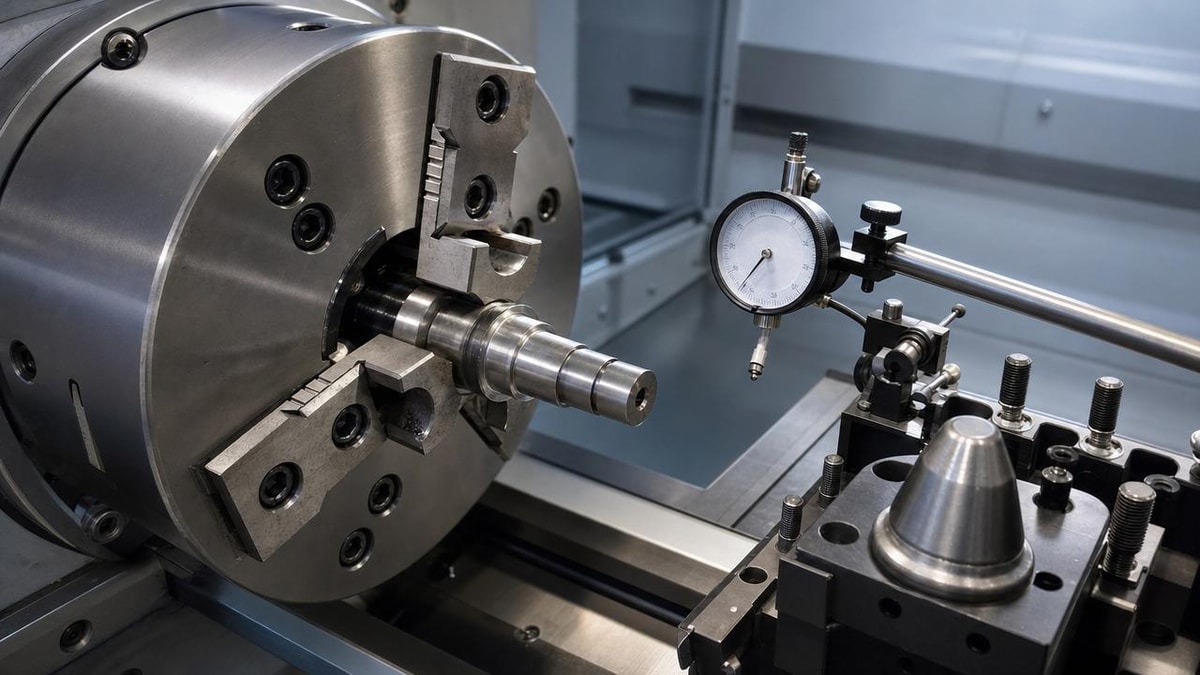
In industrial turning, even minor fixture wear can trigger major accuracy problems, leading to dimensional drift, surface defects, and repeated rework. For after-sales maintenance teams, identifying wear-related clamping issues early is essential to keeping CNC lathes stable, productive, and within tolerance. This article explores the warning signs, root causes, and practical maintenance responses that help restore turning precision.
In high-volume CNC environments, fixture wear often develops gradually rather than through a single failure event. A jaw face may lose contact consistency by only a few hundredths of a millimeter, or a locating surface may polish over after 20,000 to 50,000 clamp cycles. Yet in industrial turning, such small changes can quickly affect roundness, concentricity, runout, and repeatability across entire batches.
For after-sales maintenance personnel, the challenge is not only to repair visible wear but to separate fixture-related accuracy loss from spindle error, thermal growth, tool wear, and programming issues. That distinction matters because incorrect diagnosis can lead to unnecessary part replacement, longer downtime, and recurring quality escapes on shafts, sleeves, discs, and precision rotational components.
Why Fixture Wear Has a Direct Impact on Industrial Turning Accuracy
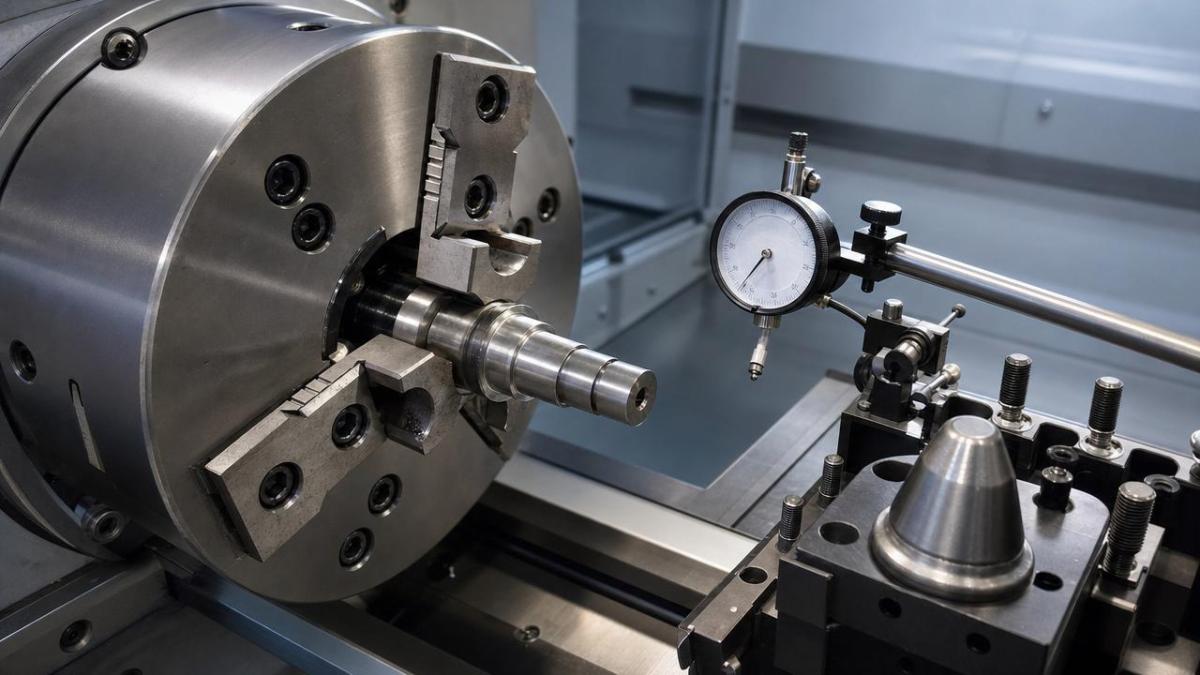
In industrial turning, the fixture is more than a holding accessory. It defines how the workpiece is located, how cutting force is absorbed, and how repeatable each clamping cycle remains over time. When fixture wear exceeds typical tolerance windows such as 0.01 mm to 0.03 mm at key contact points, part variation often appears before operators see obvious hardware damage.
This is especially critical in sectors like automotive, aerospace, energy equipment, and electronics manufacturing, where CNC lathes may run 2 shifts or 3 shifts per day. Under these conditions, hardened jaws, collets, draw tubes, locating pins, V-blocks, and stop faces experience repeated friction, chip impact, coolant exposure, and thermal cycling. Over 3 to 12 months, these factors can reduce clamping reliability even when the machine itself remains mechanically sound.
How Wear Changes the Clamping Condition
Fixture wear changes the contact geometry between the workpiece and the holding element. A worn jaw may create point contact instead of surface contact. A damaged collet may grip with uneven radial force. A locator with a polished edge may allow slight axial movement. In practical industrial turning operations, these changes often result in 3 common outcomes: shifted datum position, unstable cutting behavior, and poor repeatability between cycles.
- Radial runout increases after reclamping, often by 0.02 mm to 0.08 mm.
- Axial position drifts, affecting shoulder dimensions and groove location.
- Surface finish worsens because vibration rises under heavy or interrupted cutting.
- Dimensional spread grows across a batch, even when offsets and tools are unchanged.
Why Maintenance Teams Often Miss the Early Signs
Early fixture wear is easy to overlook because its symptoms resemble other machine problems. A maintenance team may suspect insert chipping, spindle bearing looseness, turret misalignment, or thermal instability first. However, when out-of-tolerance parts appear only after the second clamping or only on one family of diameters, fixture wear should move much higher on the inspection list.
A useful rule in service diagnostics is to compare the first-off part, the fifth part, and the tenth part after a setup verification. If drift continues while tool wear remains stable and spindle runout checks acceptable, clamping repeatability becomes a strong suspect. In many workshops, this simple 3-point comparison can shorten troubleshooting time by 30 to 60 minutes.
Typical Accuracy Problems Linked to Fixture Wear
The table below summarizes common turning accuracy symptoms and the fixture-related wear conditions most often associated with them. It can help after-sales teams decide whether to inspect jaws, collets, locators, or force transmission components first.
The key takeaway is that fixture wear rarely affects only one quality characteristic. Once contact stability changes, dimensions, geometry, and surface finish can all deteriorate together. In industrial turning service work, that combined symptom pattern is often a stronger indicator than any single measurement result.
Root Causes and Inspection Priorities for After-Sales Maintenance Teams
A practical maintenance response starts with root-cause ranking. Instead of disassembling the full machine immediately, after-sales teams should inspect the fixture system in a defined order. In many cases, 4 priority areas explain most wear-related accuracy loss: contact surfaces, clamping force transmission, contamination, and fixture-to-spindle interface condition.
1. Contact Surface Wear
Jaw faces, soft jaws, collets, pads, and locator surfaces are the first line of mechanical accuracy. If a jaw has taper wear of 0.02 mm or more, or if a collet shows uneven polishing around its circumference, repeatability can degrade even before visible cracks or chips appear. For precision batches with tolerance bands of ±0.01 mm to ±0.03 mm, this level of wear is already significant.
2. Clamp Force Transmission Loss
Draw tubes, hydraulic cylinders, wedge hooks, and internal linkage components can lose efficiency as friction increases or mating surfaces wear. The result is inconsistent clamp force from one cycle to the next. In industrial turning, even a 10% to 15% reduction in effective gripping force can allow micro-slip during roughing passes, especially on long shafts or interrupted cuts.
3. Contamination and Embedded Chips
Fine chips, dried coolant residue, grinding dust, and oil sludge often create false seating conditions. A chip trapped under a stop face may be only 0.05 mm thick, yet that is enough to push a finished shoulder out of tolerance. This issue is common in mixed production environments where turning, drilling, and secondary operations share fixtures or maintenance stations.
4. Interface Wear Between Fixture and Machine
Sometimes the worn area is not the jaw or collet but the back mounting surface, chuck register, draw bar interface, or adaptor fit. If these interfaces lose alignment, operators may chase offsets repeatedly without realizing the reference error starts behind the visible clamping area. This is why interface inspection should be included at least every 6 months or every major preventive maintenance interval.
A Practical Inspection Sequence
The following sequence helps after-sales maintenance teams isolate fixture wear efficiently during industrial turning service calls. It is designed for workshop conditions where downtime pressure is high and a fast, defensible diagnosis is needed.
- Record the defect pattern across at least 5 to 10 recent parts.
- Check clamping repeatability with a reference bar over 3 to 5 reclamp cycles.
- Inspect jaw or collet contact surfaces for taper wear, scoring, bell-mouthing, or embedded chips.
- Measure interface runout and seating condition at the chuck or fixture mounting face.
- Verify clamp force consistency, hydraulic pressure, and linkage condition.
- Run a controlled test cut after cleaning, minor correction, or replacement.
This order reduces guesswork because it starts with the highest-probability wear points and moves toward machine-level contributors only when necessary. For field teams supporting multiple customer sites, standardized inspection logic also improves reporting quality and spare-parts planning.
Maintenance Actions That Restore Turning Precision Faster
Not every worn fixture requires full replacement. In industrial turning, the best maintenance decision depends on part tolerance, batch size, downtime cost, and the remaining life of the fixture body. A maintenance team should balance speed and long-term stability rather than defaulting to the cheapest immediate fix.
When Cleaning and Reconditioning Are Enough
If the main problem is contamination, light scoring, or minor loss of seating quality, cleaning and reconditioning may restore acceptable performance. This typically includes full disassembly, chip removal, contact face inspection, soft jaw reboring, locator touch-up, and clamp pressure verification. In many production shops, this can be completed within 2 to 6 hours depending on fixture complexity.
When Replacement Is the Better Decision
Replacement is often more reliable when wear affects hardened geometry, internal clamp transmission, or repeatability under process load. If a fixture cannot hold within the required tolerance after reconditioning and 3-cycle repeat tests, keeping it in production usually increases scrap risk. For critical aerospace or energy parts, even a low repeatability loss may justify replacing the wear component immediately.
Maintenance Decision Matrix
The table below provides a practical decision framework for after-sales teams dealing with industrial turning accuracy complaints linked to fixture wear.
The matrix shows that the lowest-cost action is not always the most economical outcome. In industrial turning, repeated minor interventions can cost more than one decisive replacement if the line continues to produce unstable dimensions, surface defects, or operator adjustment loops.
Verification After Maintenance
A repair is not complete until accuracy is verified under actual cutting conditions. After maintenance, teams should confirm at least 4 items: reclamping repeatability, static runout, trial cut dimensions, and part surface quality. For critical work, testing 5 consecutive parts is often more meaningful than checking only one sample because it reveals whether the fixture remains stable through repeated loading.
- Target repeatability should match the process requirement, often within 30% to 50% of final part tolerance.
- Clamp pressure should be documented before and after service.
- Any replaced wear parts should be logged by service date and cycle estimate.
- If chatter remains after fixture work, then toolholding and spindle checks should follow.
Preventive Service Strategies to Reduce Recurring Accuracy Complaints
The most effective after-sales support in industrial turning is preventive rather than reactive. When fixture wear is monitored on a schedule, maintenance teams can intervene before customer complaints escalate into scrap, delivery delays, or machine reputation issues. Preventive routines are especially valuable in smart manufacturing environments where production continuity and traceability matter as much as raw cutting speed.
Build a Wear-Based Service Interval
Instead of relying only on calendar intervals, build inspection frequency around clamp cycles, material type, and part family. For example, fixtures used on tough alloys, interrupted cuts, or heavy roughing may require checks every 10,000 to 20,000 cycles, while lighter-duty applications may be reviewed every 30,000 to 50,000 cycles. This approach is more accurate than a generic quarterly routine.
Standardize the Service Record
A strong service record should include wear location, measured deviation, clamp force setting, corrective action, and verification result. Over time, this creates a trend history that helps both OEM support teams and end users predict when jaws, collets, or locator sets should be rotated, reconditioned, or replaced. Even a simple 6-item checklist can improve consistency across multiple sites.
Coordinate Maintenance With Production Planning
Many recurring industrial turning issues are not technical alone; they are scheduling issues. If fixtures are only serviced after quality failure, maintenance works under emergency conditions. Coordinating inspections with batch changeovers, weekend shutdowns, or planned PM windows of 4 to 8 hours reduces unplanned downtime and gives technicians enough time for full verification rather than a rushed adjustment.
Common Preventive Mistakes to Avoid
- Checking clamp pressure but not confirming actual contact pattern.
- Replacing inserts and offsets repeatedly before inspecting the fixture.
- Cleaning visible chips while ignoring packed contamination inside the mechanism.
- Approving a repair after one acceptable part instead of a short repeatability run.
- Tracking machine PM but not fixture cycle history.
Avoiding these mistakes improves both machine performance and customer trust. In B2B manufacturing support, a maintenance team that can explain the cause, document the correction, and show stable post-service results delivers far more value than one that only resets the machine and leaves the root cause unresolved.
What After-Sales Teams Should Communicate to Customers
When fixture wear causes industrial turning accuracy problems, customer communication should be specific, measurable, and operationally useful. Customers do not only want to know that a jaw or locator is worn. They need to understand how that wear affects tolerance, what action is required, what the expected recovery path looks like, and how to prevent the same issue over the next production cycle.
Focus on Tolerance Risk and Production Stability
A clear service explanation might state that contact wear increased reclamp variation from 0.01 mm to 0.05 mm, which is unacceptable for a part tolerance of ±0.02 mm. This type of message is more effective than a generic statement about fixture aging because it connects the maintenance finding directly to scrap risk, inspection burden, and line stability.
Offer a Practical Next Step
The strongest after-sales support usually includes 2 levels of recommendation: an immediate corrective action and a preventive follow-up. For example, replace the worn clamping element now, then schedule interface inspection after the next 15,000 cycles. This gives the customer a realistic path forward without overselling unnecessary hardware or service.
Fixture wear is one of the most common hidden causes of accuracy loss in industrial turning, especially where CNC lathes run continuously and dimensional control is tight. For after-sales maintenance teams, the priority is to detect wear early, inspect in the right sequence, verify correction under real cutting conditions, and build preventive service routines that match clamp cycles and part demands.
If you support CNC turning lines in automotive, aerospace, energy, electronics, or general precision manufacturing, a structured fixture maintenance strategy can reduce repeat complaints, shorten downtime, and protect tolerance performance across the full production batch. To discuss fixture wear diagnosis, maintenance planning, or precision turning support in more detail, contact us today to get a tailored solution and learn more about practical service options for your operation.
NEXT ARTICLE
Recommended for You
 Industrial Robotics payback depends on more than labor savingsManufacturing Market Research Center
 Shaft Parts machining problems that show up after final inspectionCNC Machining Technology Center
 Which Production Process changes bring the fastest output gains?CNC Machining Technology Center
 Industrial Automation projects fail when integration is underestimatedCNC Machining Technology Center
 CNC metal cutting costs rise fast when material data is wrongCNC Machining Technology Center
 High precision lathe claims to verify before accepting deliveryMachine Tool Industry Editorial Team

Aris Katos
Future of Carbide Coatings
15+ years in precision manufacturing systems. Specialized in high-speed milling and aerospace grade alloy processing.
▶
Industrial turning accuracy problems linked to fixture wearCNC Machining Technology Center▶
ISO 23218-2:2026 Published for CNC Fixture Dynamic Repeatability TestingCNC Machining Technology Center▶
CNC metal lathe accuracy issues that often trace back to fixturingCNC Machining Technology Center▶
2026 China Bike Show: CNC Fixture Export OpportunityCNC Machining Technology Center▶
How Quick-Change Fixture Design Cuts CNC Turning Setup TimeCNC Machining Technology Center
Mastering 5-Axis Workholding Strategies
Join our technical panel on Nov 15th to learn about reducing vibrations in thin-wall components.

Providing you with integrated sanding solutions
Before-sales and after-sales services
Comprehensive technical support