• Global CNC market projected to reach $128B by 2028 • New EU trade regulations for precision tooling components • Aerospace deman
NYSE: CNC +1.2%LME: STEEL -0.4%

Custom Fixture Design Mistakes That Ruin CNC Milling Accuracy
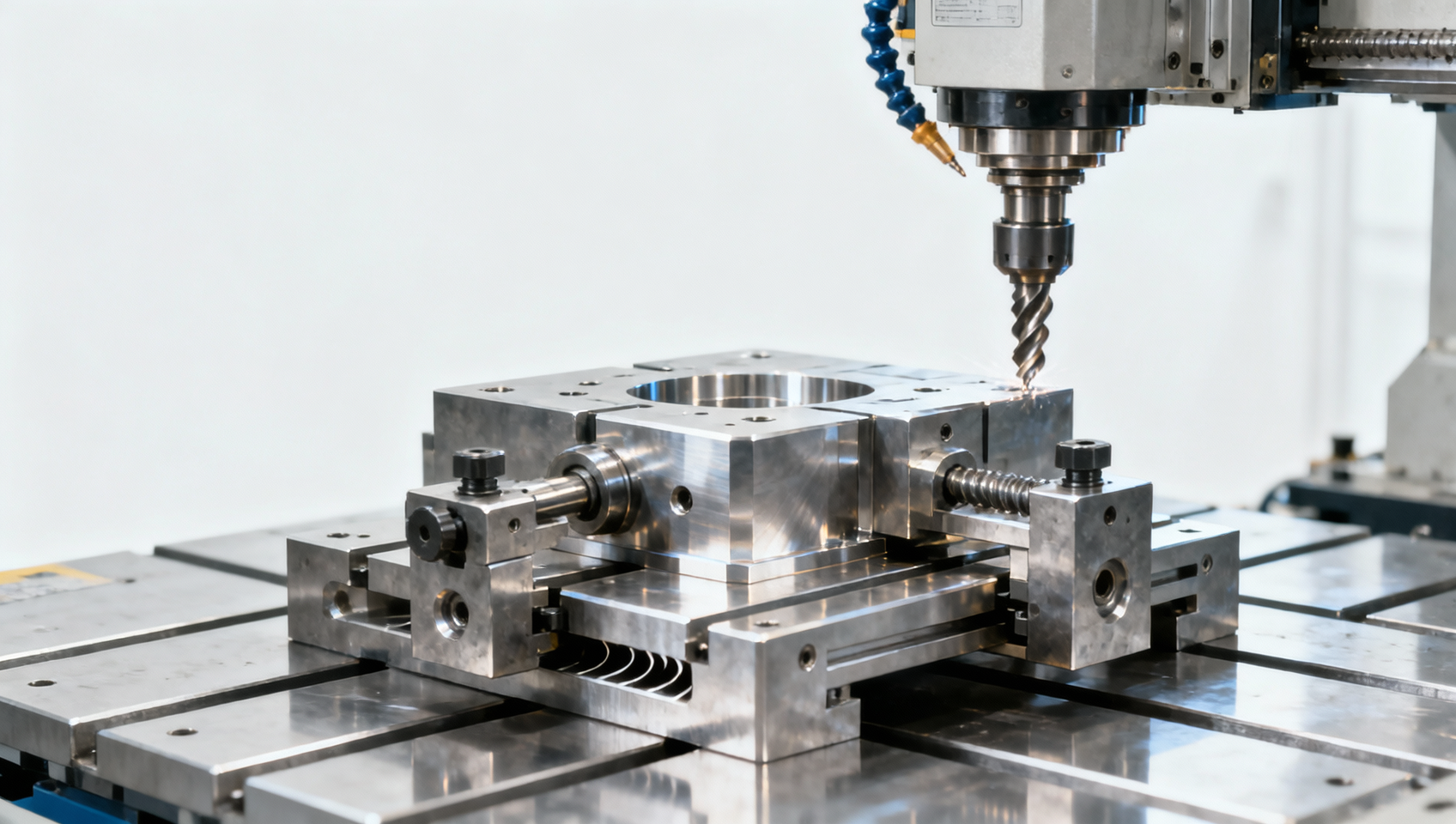
Custom fixture design errors are one of the fastest ways to lose CNC milling accuracy, even when the machine, tooling, and program are all capable of holding tight tolerances. In practice, most accuracy problems do not start with the spindle alone. They often come from unstable workholding, poor datum strategy, uneven clamping, weak fixture rigidity, or designs that ignore chip flow and thermal behavior. For operators, engineers, buyers, and manufacturing managers, the key question is simple: can the fixture repeatedly locate, support, and clamp the part without distortion or variation? If the answer is no, accuracy, cycle time, scrap rate, and production confidence all suffer.
This article explains the most common custom fixture design mistakes that ruin CNC milling accuracy, why they happen, how to identify them early, and what to evaluate before approving a fixture for production. Whether you are optimizing stainless steel machining, improving a CNC tooling system for titanium machining, or scaling automated production, the principles below directly affect part quality and process stability.
Why fixture mistakes cause bigger accuracy problems than many teams expect
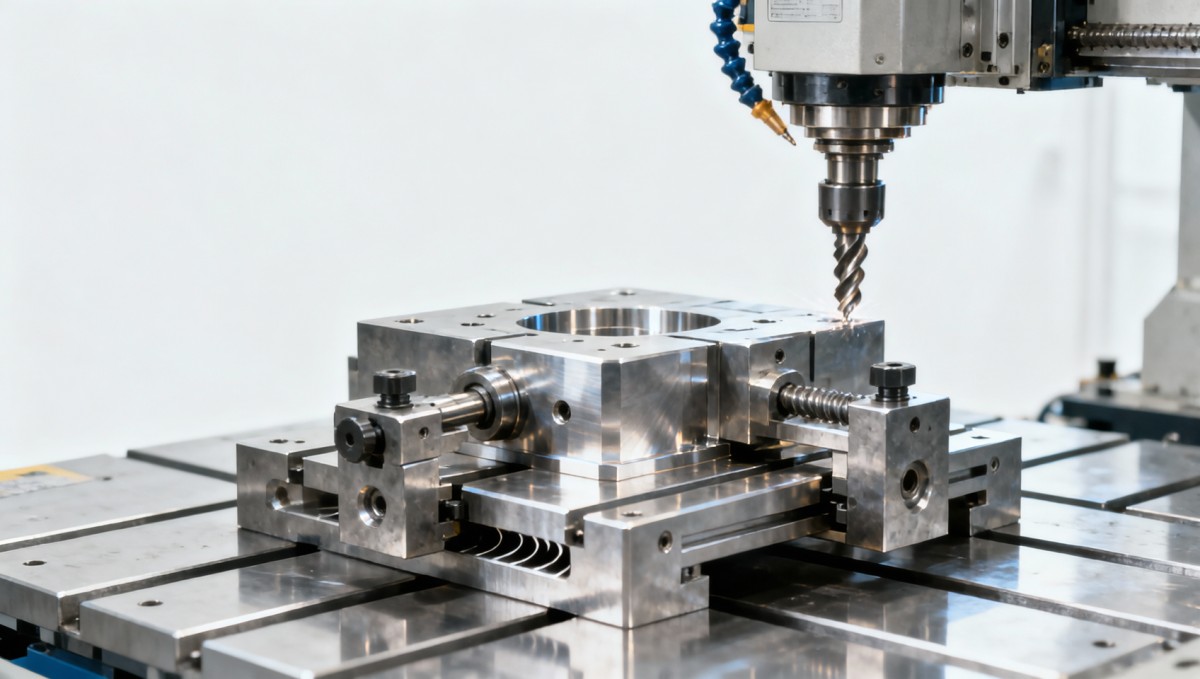
Many shops first investigate the machine tool, cutter wear, offsets, or programming when parts start drifting out of tolerance. Those factors matter, but fixture design is often the hidden root cause. A fixture is not just a holder. It defines how the part is located, how cutting forces are absorbed, how vibration is controlled, and whether every cycle starts from the same physical reference.
When a custom fixture is poorly designed, several problems appear at once:
- Datum repeatability becomes inconsistent
- Clamping deforms thin walls, pockets, or unsupported surfaces
- Tool access is restricted, forcing inefficient toolpaths or extra setups
- Chip buildup affects seating and part position
- Thermal growth changes contact conditions over long runs
- Automation reliability drops because loading position is less forgiving
For procurement teams and decision-makers, this matters because fixture mistakes rarely show up as a single visible cost. They appear as scrap, rework, offset adjustments, longer setup times, lower spindle utilization, unstable Cp/Cpk performance, and delayed production ramps. A cheap or rushed fixture can become an expensive bottleneck very quickly.
The most common custom fixture design mistakes that ruin CNC milling accuracy
The following mistakes are the ones most likely to damage part accuracy in real production environments.
1. Poor datum strategy
If the fixture does not control the correct primary, secondary, and tertiary datums, the part may be clamped consistently but still be wrong relative to the drawing. This is a common issue when fixture design is based mainly on convenience rather than dimensional requirements.
What happens: hole positions drift, profile tolerances fail, and multi-face relationships become unstable after part rotation or second operations.
What to do instead: build the fixture around functional datums tied directly to inspection and final assembly requirements. The fixture, machining process, and inspection plan should all reference the same logic.
2. Too much clamping force
More clamping force does not automatically mean more accuracy. On thin-walled aluminum, stainless steel parts with unsupported features, or titanium components with long machining cycles, excessive clamping can distort the workpiece before cutting even begins.
What happens: the part looks stable during machining but springs back after unclamping, causing flatness, parallelism, or position errors.
What to do instead: apply only the force needed to resist cutting loads, and place clamps where load paths are supported. Use balanced force distribution, soft jaws, contoured supports, or auxiliary supports where needed.
3. Too little support under critical cutting zones
A fixture may locate a part correctly but still fail if it does not support the material where the cutter generates force. Unsupported regions deflect under load, especially during side milling, pocketing, or heavy roughing.
What happens: chatter increases, dimensional variation grows, surface finish declines, and tool life drops.
What to do instead: place supports close to the machining zone without blocking tool access. Evaluate real cutting directions, tool engagement, and force vectors rather than relying on a general support pattern.
4. Ignoring fixture rigidity
Even if the part is rigid enough, the fixture body itself may flex. This is a major problem in modular weldments, long overhang designs, and cost-reduced plates with insufficient section thickness.
What happens: dimensions vary by station, especially under aggressive cutting parameters or multi-part loading.
What to do instead: verify fixture base stiffness, connection integrity, and support structure. In high-precision applications, fixture body deflection should be analyzed as carefully as part deflection.
5. Clamp positions that fight the machining process
Some fixtures hold a part securely but interfere with cutter paths, spindle approach angles, probing, or chip evacuation. This forces programmers to compromise the optimized machining process.
What happens: longer cycle times, extra tool changes, reduced cutting efficiency, and greater chance of collision or incomplete machining.
What to do instead: design fixture layout together with machining strategy. Fixture engineers, CNC programmers, and operators should review tool access before final release.
6. Poor chip and coolant management
Fixture contact points can become unreliable when chips accumulate around locators, nests, or support pads. This is especially damaging in automated production, where small debris can shift the seating condition from cycle to cycle.
What happens: repeatability drops, operators chase offsets, and random out-of-tolerance parts appear with no obvious machine fault.
What to do instead: include chip relief, self-cleaning contact surfaces, coolant flow paths, and easy access for cleaning. If the process is automated, assume contamination will happen and design around it.
7. Overlooking thermal effects
Fixtures used in long-run production, heavy roughing, or difficult materials can change behavior as temperatures rise. Different expansion rates between fixture materials and workpieces may alter clamping condition or location repeatability.
What happens: dimensions shift during extended runs even though first-off parts were acceptable.
What to do instead: consider thermal stability during fixture material selection and contact design. For tight-tolerance production, validate accuracy after the process reaches steady-state temperature.
8. Designing only for the first setup, not for full production reality
A fixture may perform well during engineering trials but fail under actual shop conditions. Manual loading variation, tool wear, robot handling, raw material variation, and cleaning intervals all affect real-world accuracy.
What happens: fixture approval looks successful at low volume, but process capability collapses at scale.
What to do instead: validate fixtures under production-like conditions, including realistic cycle times, operator interaction, batch variation, and maintenance intervals.
How to tell whether fixture design is the real cause of your milling accuracy problem
Not every tolerance issue comes from workholding, so teams need a practical way to isolate the source. The following signs strongly suggest fixture-related error:
- Part variation changes after reclamping or between setups
- First-off parts are good, but results drift over longer runs
- Accuracy improves when cutting parameters are reduced
- Different operators get different results on the same program
- Probing results show inconsistent workpiece location
- Inspection failures cluster around thin walls, unsupported faces, or features near clamps
- Parts relax or measure differently after unclamping
A useful diagnostic method is to compare three conditions separately: free-state part geometry before clamping, geometry under clamping, and final geometry after machining and unclamping. This often reveals whether the fixture is distorting the part or failing to hold it consistently.
What operators, engineers, buyers, and managers should each evaluate before approving a custom fixture
Different stakeholders look at fixture quality from different angles, but the best results come when all of them are considered together.
For operators and setup personnel
- Is loading intuitive and repeatable?
- Are datum contacts easy to clean and verify?
- Can clamps be applied consistently without guesswork?
- Is tool access practical during setup and production?
- Does the fixture reduce adjustment time rather than increase it?
For manufacturing and process engineers
- Does the datum scheme match drawing and inspection requirements?
- Are support and clamping forces aligned with cutting loads?
- Has fixture rigidity been verified for actual machining conditions?
- Can the design support the optimized machining process for the target material?
- Is there enough repeatability for process capability targets?
For procurement teams
- Is the supplier selling only a fixture body, or a validated workholding solution?
- What testing data supports repeatability claims?
- How easy is maintenance, replacement of wear parts, and cleaning?
- Will the fixture support future automation or product family expansion?
- What hidden costs might appear through scrap, downtime, or low throughput?
For business decision-makers
- Will this fixture improve yield, cycle time, and production stability enough to justify investment?
- Does it reduce risk in high-value materials like titanium or complex stainless steel parts?
- Can it support volume growth and quality consistency across shifts or sites?
- Is the solution scalable for automated production lines or flexible manufacturing cells?
Design practices that improve CNC milling accuracy from the start
A strong custom fixture design process usually includes the following best practices:
- Start with tolerances and functional datums, not just part shape.
- Map cutting forces by operation. Roughing, finishing, drilling, and side milling do not load the part the same way.
- Control deformation risk early. This is critical for thin walls, long parts, and difficult materials.
- Review fixture design with programming and inspection teams.
- Validate under realistic production conditions.
- Plan for chip management, maintenance, and wear surfaces.
- Design for repeatability first, speed second. Faster loading only creates value if part location stays stable.
For high-performance CNC tooling systems and automated lines, fixture design should be treated as part of the machining system, not as an isolated accessory. Accuracy depends on the interaction among machine, tool, holder, part, fixture, program, material, and environment.
When a custom fixture is worth the investment
Not every job needs a highly engineered dedicated fixture. But a custom fixture is usually justified when:
- Part tolerances are tight and repeatability matters more than one-time setup flexibility
- Material cost is high, making scrap expensive
- Part geometry is prone to deformation
- Production volume is high enough to benefit from stable cycle times
- Automation is planned or already in use
- Multiple operations need to reference the same datums reliably
In these cases, a good fixture does more than hold the part. It protects throughput, improves confidence in quoting and delivery, and helps companies maintain quality as production scales.
Conclusion: the best fixture is the one that makes accuracy repeatable, not just possible
Custom fixture design mistakes ruin CNC milling accuracy when they weaken datum control, distort the part, reduce rigidity, or ignore real production conditions. The biggest lesson is that accuracy is not only about machine precision. It is about stable and repeatable part control throughout the entire machining process.
If you are evaluating fixture performance, do not ask only whether the part can be machined. Ask whether it can be located, clamped, supported, and repeated reliably across shifts, operators, batches, and production volumes. That is the standard that protects accuracy, cycle time, and long-term manufacturing value.
Recommended for You
 What Slows Down an Automation Line in Textile Production?Machine Tool Industry Editorial Team
 High Temperature Alloy Cutting Tools Wear Out for Hidden ReasonsCNC Machining Technology Center
 Automated Production Lines in Auto Manufacturing: Key BottlenecksMachine Tool Industry Editorial Team
 What Makes a 5 Axis Machining Center Fit Aerospace Parts?Machine Tool Industry Editorial Team
 Medical Equipment Machining Centers Need Accuracy Beyond SpecsMachine Tool Industry Editorial Team
 How to Compare CNC Tooling System Suppliers in GermanyGlobal Machine Tool Trade Research Center

Aris Katos
Future of Carbide Coatings
15+ years in precision manufacturing systems. Specialized in high-speed milling and aerospace grade alloy processing.
▶
Cost-effective Fixture Design for Mass Production Starts HereCNC Machining Technology Center▶
Custom Fixture Design Mistakes That Ruin CNC Milling AccuracyCNC Machining Technology Center▶
Quick-change Fixture Design for CNC turning: Why clamping force consistency drops after 200 cyclesCNC Machining Technology Center▶
Quick setup CNC manufacturing: Is ‘fast changeover’ really delivering ROI on the shop floor?CNC Machining Technology Center▶
Shaft Parts Need Different Clamping Than Many Shops ExpectCNC Machining Technology Center
Mastering 5-Axis Workholding Strategies
Join our technical panel on Nov 15th to learn about reducing vibrations in thin-wall components.

Providing you with integrated sanding solutions
Before-sales and after-sales services
Comprehensive technical support