• Global CNC market projected to reach $128B by 2028 • New EU trade regulations for precision tooling components • Aerospace deman
NYSE: CNC +1.2%LME: STEEL -0.4%

Shaft Parts Need Different Clamping Than Many Shops Expect
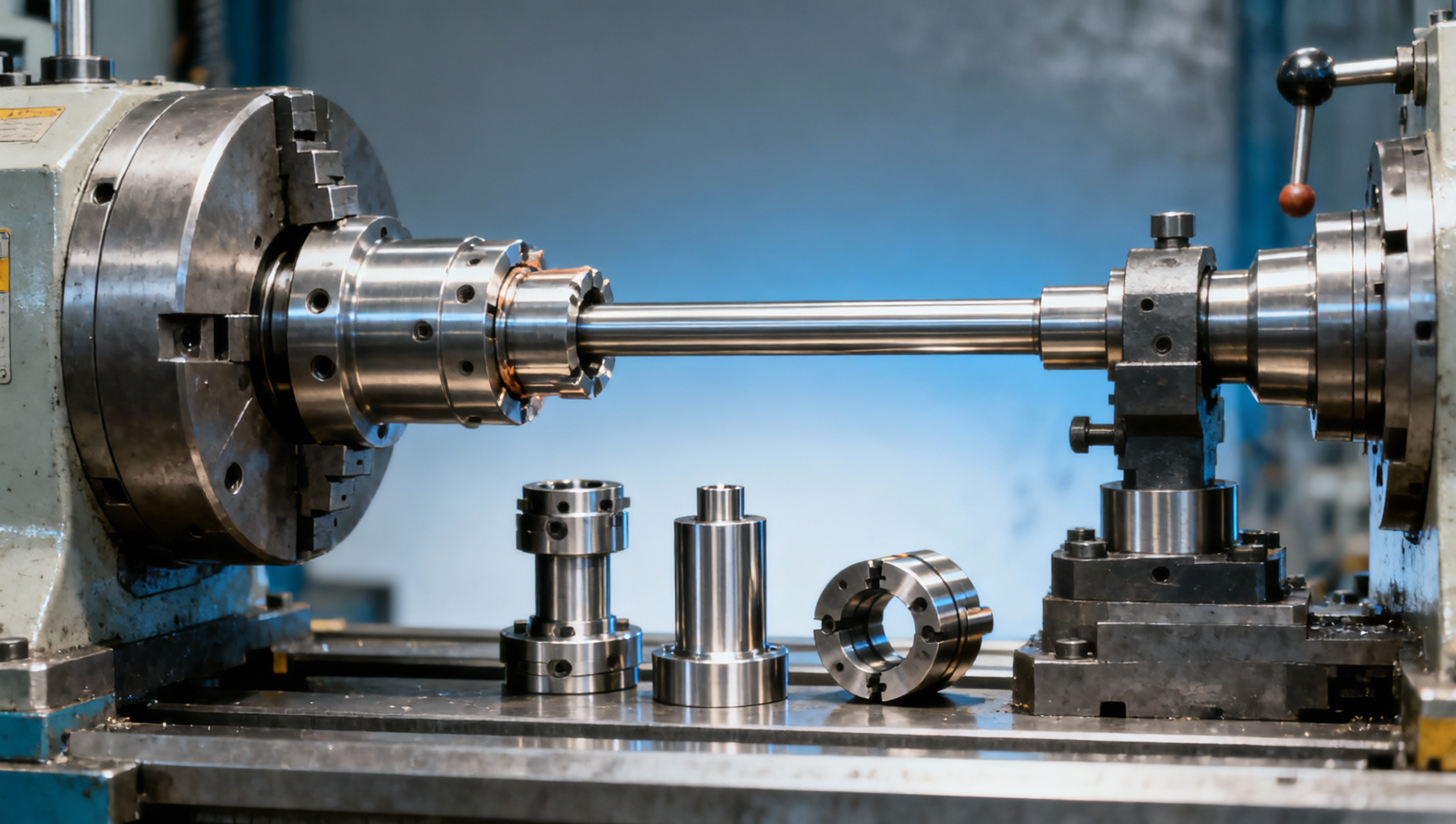
In metal machining, Shaft Parts often demand far different clamping strategies than many shops expect. As industrial CNC, automated lathe, and CNC milling systems reshape the Manufacturing Industry, improper workholding can undermine accuracy, surface finish, and Production Process stability. This article explores why smarter fixturing matters for CNC production, helping operators, buyers, and decision-makers improve efficiency in today’s Global Manufacturing environment.
Why do shaft parts require a different clamping logic?
Many machining teams assume that if a chuck, collet, or vise can hold a round component firmly, it is good enough for shaft machining. In reality, shaft parts behave differently from block parts, plate parts, and even many disc parts. Their length-to-diameter ratio, limited support area, and sensitivity to radial force make clamping a primary process variable rather than a secondary setup detail.
A shaft may look simple on a drawing, yet it often carries tight runout, concentricity, and surface finish requirements across several machining stages. In a typical CNC lathe or turn-mill process, even a small clamping error can transfer into taper, chatter, shoulder mismatch, or unstable tool life. For many shops, the issue appears during batch production, not during the first sample.
This is especially important in automotive manufacturing, aerospace components, energy equipment, and electronics production, where shaft parts may include bearing seats, seal journals, splines, threads, and precision shoulders in one workflow. Once industrial automation pushes cycle times down, setup inconsistency becomes more visible. A problem that seems minor over 5 pieces can become a major cost driver over 500 or 5,000 pieces.
In practical terms, shaft clamping must balance 3 core targets: holding force, deformation control, and repeatability. If one target dominates the others, the Production Process becomes unstable. Too much force can distort slender sections. Too little force can create slippage under interrupted cutting. Poor repeatability can turn a capable CNC machine into an unpredictable line bottleneck.
What makes shaft workholding more sensitive?
Shaft parts often have unsupported lengths that range from 2×D to 10×D or more, depending on geometry and operation sequence. Once the overhang increases, spindle speed, cutting load, and chuck pressure interact more aggressively. A setup that works at 1,200 rpm on a short steel shaft may fail at 3,000 rpm on a longer stainless or alloy part.
Another factor is datum transfer. Shaft components are frequently machined in 2–4 stages, such as rough turning, semi-finishing, heat treatment, grinding, or secondary milling. If clamping references are not planned from the beginning, concentricity errors accumulate from one station to the next. Buyers evaluating a supplier should always ask how datums are protected throughout the process chain.
Automation adds another layer. In robotic loading or bar-fed turning, a fixture must not only hold the part, but also position it consistently over long runs. A shop may achieve good quality in manual mode, then see deviations once it scales to 8-hour, 16-hour, or 24-hour production windows. That difference usually points to clamping stability rather than machine capability alone.
Common shaft-part risk signals on the shop floor
- Runout changes after reclamping, especially when the part is flipped for second-side machining.
- Stable dimensions in the first 10 pieces, followed by drift during the next 50–100 pieces.
- Visible jaw marks, out-of-round sections, or inconsistent bearing-seat finish after higher chuck pressure is applied.
- Chatter appearing only on long or thin shaft variants, even when the same cutting tools are used.
When these signs appear, the solution is rarely just a tool change. More often, the shop needs to revise clamping pressure, support method, jaw geometry, or process sequence. That is why shaft parts need a dedicated fixturing strategy from the quotation stage onward.
Which clamping methods fit different shaft machining scenarios?
There is no single best workholding method for every shaft part. The right choice depends on diameter range, unsupported length, tolerance stack, surface protection, and production volume. For procurement teams and plant managers, the key question is not whether a shop owns a CNC lathe, but whether it matches the clamping method to the shaft geometry and the production process.
In low-volume jobs, a standard 3-jaw chuck may be acceptable for roughing or non-critical dimensions. In medium-volume and high-precision work, collets, soft jaws, custom nests, live centers, steady rests, mandrels, or hydraulic fixtures often become necessary. The higher the concentricity demand, the more important controlled contact surfaces and repeatable centering become.
The guide below compares common clamping options used for shaft parts in CNC turning, turn-mill machining, and secondary milling operations. It is useful for information researchers evaluating process feasibility, operators troubleshooting quality drift, and buyers comparing supplier capability beyond machine lists.
The comparison shows why many shops underestimate shaft workholding. A fast setup method is not always a stable production method. For shafts with tight runout or finish requirements, using soft jaws, collets, or center-based support may add setup time in the first 30–60 minutes, but it can reduce scrap, inspection sorting, and rework over the full production lot.
How should operators and engineers choose support points?
Support planning should begin with the critical functional zones of the shaft. If the journal, spline, or sealing surface is the most sensitive area, clamping should avoid deforming or marking that zone. It is often better to grip a sacrificial section or stock allowance and protect the final functional surface until the finishing stage.
For shafts with a high length-to-diameter ratio, tailstock support or a steady rest becomes essential once cutting forces or overhang exceed a stable range. A common planning rule is to review support options when the unsupported length approaches 6×D, though the actual threshold depends on material, toolpath, and rpm. This is a process review point, not a universal fixed rule.
In turn-mill applications, clamping must also account for side loads from milling cutters. A setup stable in pure turning may lose rigidity during cross-hole drilling, keyway milling, or flat machining. Buyers comparing suppliers for complex shaft parts should ask whether fixture design was validated for both turning and milling loads, not only for rotational cuts.
What should buyers and decision-makers evaluate before ordering shaft parts?
Purchasing shaft parts is not only about price per piece. In B2B manufacturing, the real cost comes from quality stability, lead-time reliability, process traceability, and communication speed when dimensions or drawings change. A supplier may quote competitively, yet still create delays if its fixturing capability is too generic for shaft machining.
Before releasing a purchase order, procurement teams should review at least 5 areas: clamping method, datum strategy, in-process inspection, batch consistency, and response time for engineering changes. These areas matter even more when shaft parts are linked to assemblies such as motors, gearboxes, pumps, spindles, or automation units, where one out-of-spec journal can stop final assembly.
For urgent programs, typical sample preparation may take 7–15 days depending on complexity, fixture preparation, material availability, and whether heat treatment or grinding is included. Production lead time for repeat orders may then stabilize at 2–4 weeks for common volumes, though high-precision or multi-process shafts often require longer review and validation windows.
The table below helps procurement personnel and enterprise decision-makers compare suppliers on factors that directly affect shaft-part quality and delivery, rather than relying only on machine photos or broad capability statements.
A strong supplier discussion should lead to clear answers on these points before mass production begins. This is especially relevant in global manufacturing, where sourcing may involve different countries, time zones, and inspection expectations. Clear fixturing and process communication reduce not only technical risk, but also project management friction.
A practical sourcing checklist
- Ask which surfaces are used for primary clamping in roughing and in finishing.
- Confirm whether special soft jaws, centers, or support fixtures are required for your part family.
- Review whether the supplier can handle small-batch trials, medium-volume runs, and larger production without changing the quality logic.
- Check typical communication windows for quotation, DFM feedback, sample approval, and engineering change response.
If a supplier cannot describe the fixture strategy clearly, that is usually a warning sign. Machine count alone does not prove shaft-part capability. The ability to control holding force and reference transfer is often the more meaningful differentiator.
What mistakes do many shops make with shaft part clamping?
The most common mistake is over-prioritizing gripping force. When operators see slip marks or hear chatter, the first reaction is often to increase chuck pressure. That may solve a short-term holding issue, but it can also deform the shaft, damage the surface, or create size variation after unclamping. On precision diameters, this trade-off is often hidden until final inspection.
Another frequent mistake is ignoring the full process chain. A roughing fixture may seem fine, but if it leaves jaw marks on a future sealing area or disturbs a datum used in grinding, the whole routing suffers. In modern CNC production, clamping decisions should support the next 2–3 steps, not only the current machine cycle.
Some shops also underestimate thermal and batch effects. During a 6-hour to 12-hour production run, spindle heat, jaw wear, coolant behavior, and chip packing can change effective repeatability. This is why process verification should cover more than one first article. Stable shaft machining usually requires checkpoint reviews at startup, mid-batch, and end-batch conditions.
For buyers, these mistakes matter because they often appear as delayed shipments, inconsistent CPK trends, or unexplained quality escapes. For operators, they show up as constant offset adjustment. For decision-makers, they reduce the value of investments in automation and smart manufacturing because the workholding foundation remains weak.
Typical misconceptions to avoid
“If the part does not move, the setup is correct.”
A shaft can remain fixed and still be distorted. Static holding security is only one measure. Geometry after release is what matters. This is especially relevant on thin-wall sections, long unsupported shafts, and precision bearing fits.
“One universal chuck setup saves time across all shaft families.”
A universal setup may reduce changeover, but it rarely gives the same process control across diameters, materials, and tolerance grades. For mixed production, grouping shafts into 3–5 fixture families is often more efficient than forcing one general-purpose setup onto every part.
“Automation removes fixturing risk.”
Automation increases the need for fixturing discipline. A robot can load thousands of parts consistently, but if the clamping concept is wrong, it will repeat the same problem at scale. Smart manufacturing works best when fixture repeatability, process feedback, and inspection logic are aligned.
FAQ on shaft parts and clamping strategy
How do I know whether a shaft needs center support or a steady rest?
Review the unsupported length, material stiffness, cutting load, and rpm range together. When shaft length increases toward 6×D or above, or when interrupted cuts raise vibration risk, support should be evaluated early. A process trial with finish and runout checks is more reliable than relying on a single geometry rule.
Are collets always better than standard chucks for shaft parts?
Not always. Collets often improve concentricity and reduce localized distortion on smaller diameters, but they are less flexible across diameter changes and may require more tooling inventory. For roughing larger shafts or non-critical dimensions, soft jaws or standard chucks may still be the practical choice.
What should be checked during first article approval?
At minimum, confirm key diameters, total indicated runout, shoulder position, thread quality, surface finish, and datum consistency after unclamping. For batch orders, it is wise to add a repeatability check across 3–5 consecutive parts, not only one sample, especially when automation or long cycle times are involved.
What is a reasonable communication package when requesting a quote?
Provide the latest drawing revision, material grade, annual or monthly volume, critical tolerances, surface requirements, and whether heat treatment, grinding, or secondary milling is needed. If a functional diameter must remain free of clamp marks, note that clearly. This shortens DFM review and reduces quotation ambiguity.
How to build a more reliable shaft-part manufacturing strategy
For companies operating in global CNC machining and precision manufacturing, shaft-part quality is rarely determined by machine power alone. The more reliable strategy is to align 4 elements from the start: part geometry review, fixture planning, process sequence, and inspection control. When these elements are connected, CNC lathes, machining centers, and automated production lines deliver their full value more consistently.
This matters across the broader machine tool industry because precision shafts support rotating systems, transmission assemblies, pumps, motors, spindles, and robotic mechanisms. As digital integration and flexible production lines expand, manufacturers need suppliers that can connect fixturing logic with real production constraints, not only theoretical machining capability.
If you are comparing shaft-part production partners, the most productive next step is a technical review rather than a generic price discussion. A useful review should cover parameter confirmation, fixture selection, critical tolerance strategy, sample feasibility, lead-time planning, and any certification or documentation expectations tied to your market or customer requirements.
We support professionals across the global CNC machining and precision manufacturing industry with practical discussion on shaft-part clamping, CNC process planning, and sourcing evaluation. You can contact us to discuss drawing review, workholding method selection, sample support, delivery cycle expectations, tolerance confirmation, customized machining solutions, and quotation communication for your next shaft-part project.
Why contact us for shaft-part evaluation?
- We focus on the global CNC machining and precision manufacturing sector, so discussions stay tied to real machine-tool, fixture, and production-process conditions.
- We can help you organize the right pre-purchase questions on clamping, process routing, quality checkpoints, and batch stability before you commit budget.
- We can support conversations around sample timing, common 2–4 week production planning windows, customization needs, and practical risk points in automated shaft machining.
If your team is facing uncertainty around shaft parts, clamping risk, supplier comparison, or CNC production readiness, reach out with your drawings, target quantities, and critical dimensions. A focused technical exchange at the beginning can reduce trial cycles, improve sourcing accuracy, and protect both quality and delivery in demanding manufacturing programs.
PREVIOUS ARTICLE
NEXT ARTICLE
Recommended for You
 Global Manufacturing Lead Times Improve but Not EverywhereGlobal Machine Tool Trade Research Center
 Machine Tool Market Inventory Pressure Is Building AgainGlobal Machine Tool Trade Research Center
 Metal Lathe vs CNC Milling for Low Volume Round PartsCNC Machining Technology Center
 CNC Cutting Gas Choice Affects More Than Edge FinishCNC Machining Technology Center
 CNC Metalworking Shops Face New Pressure on TraceabilityManufacturing Policy Research Center
 Automated Lathe Cycle Time Gains Can Hide Quality LossesCNC Machining Technology Center

Aris Katos
Future of Carbide Coatings
15+ years in precision manufacturing systems. Specialized in high-speed milling and aerospace grade alloy processing.
▶
Shaft Parts Need Different Clamping Than Many Shops ExpectCNC Machining Technology Center▶
Automated Production Line Downtime Often Comes From FixturesCNC Machining Technology Center▶
Are fixture design flaws silently undermining CNC lathe machining repeatability?CNC Machining Technology Center▶
Quick-change Fixture Design for CNC turning: Why clamping force distribution affects concentricity more than repeatabilityCNC Machining Technology Center▶
CNC manufacturing for medical devices — why ISO 13485 compliance starts at fixture designCNC Machining Technology Center
Mastering 5-Axis Workholding Strategies
Join our technical panel on Nov 15th to learn about reducing vibrations in thin-wall components.

Providing you with integrated sanding solutions
Before-sales and after-sales services
Comprehensive technical support