• Global CNC market projected to reach $128B by 2028 • New EU trade regulations for precision tooling components • Aerospace deman
NYSE: CNC +1.2%LME: STEEL -0.4%

Automated Production Line Downtime Often Comes From Fixtures
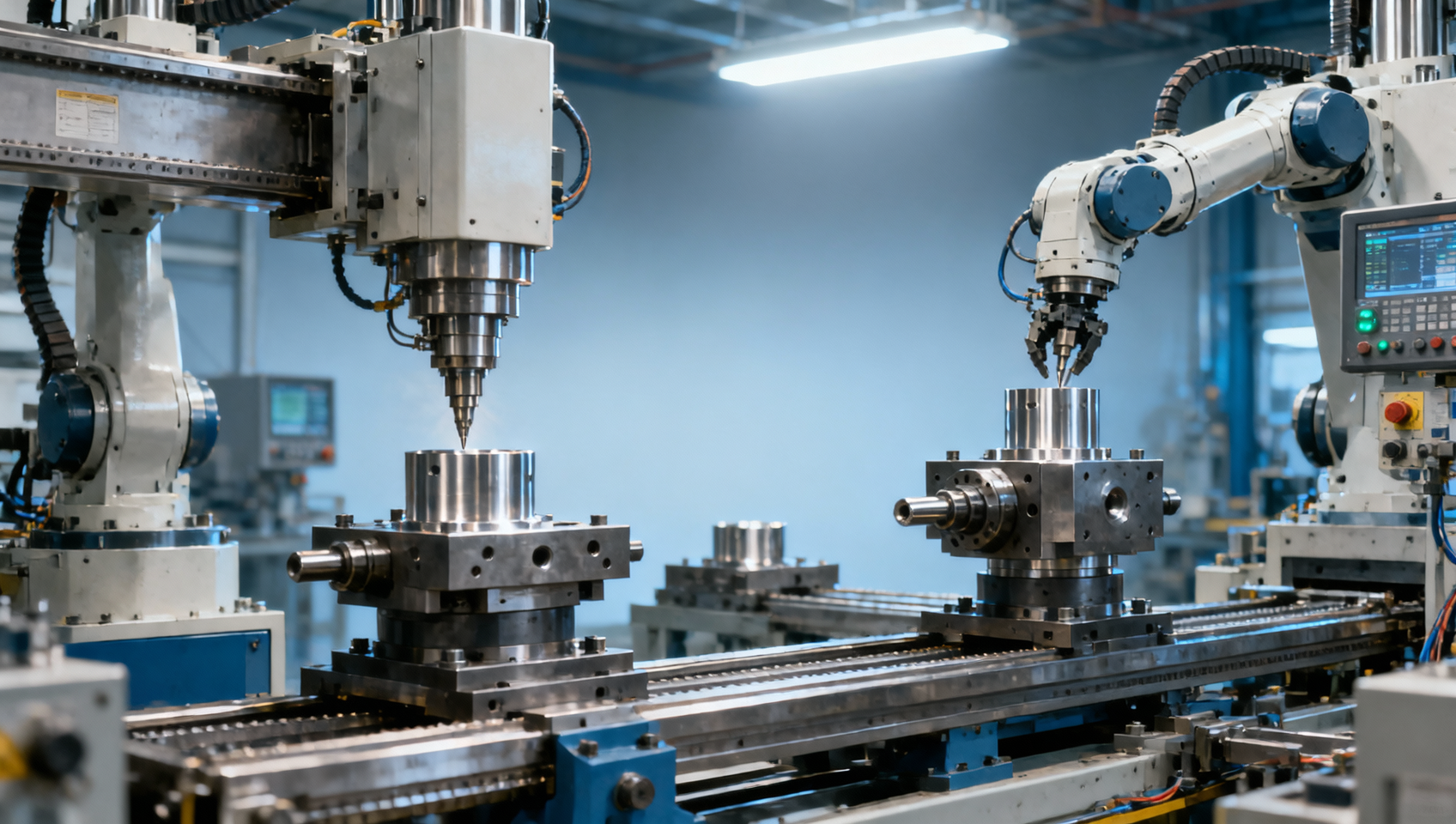
In automated production, unexpected downtime often starts with overlooked fixtures rather than the machine itself. For professionals in metal machining, industrial CNC, and CNC production, understanding how fixture design affects CNC cutting accuracy, cycle stability, and the overall production process is essential. This article explores why fixture-related issues disrupt the Automated Production Line and how smarter solutions can improve efficiency, consistency, and Industrial Automation performance.
Why fixture problems shut down an automated production line faster than many teams expect
When a CNC machine stops, many operators first check the spindle, servo alarms, tooling wear, or program logic. In real production, however, fixture instability is often the earlier trigger. A clamp that loses repeatability by even a small range, such as 0.02 mm to 0.05 mm depending on the part and process, can cause part offset drift, probe errors, poor surface finish, or robotic loading failure across an entire automated production line.
Fixtures sit at the intersection of machining, automation, and quality control. They influence how the workpiece is positioned, how cutting force is transferred, and how a robot or operator interacts with the station. In flexible manufacturing cells running 2 shifts, 3 shifts, or continuous unmanned windows of 6 to 10 hours, a weak fixture design can create cascading downtime that is far more expensive than a single machine alarm.
This issue is particularly important in sectors such as automotive components, aerospace parts, energy equipment, and electronics housings, where dimensional consistency and takt time must remain stable over medium-batch and high-volume production. A fixture is not only a holding device. In industrial automation, it is a control point that affects loading repeatability, machining accuracy, and process reliability from the first part to the thousandth part.
For information researchers, operators, buyers, and decision-makers, the practical question is not whether fixtures matter. It is how to identify the hidden fixture risks before they become line stoppages, scrap, or delayed delivery. That requires looking beyond basic clamping force and focusing on repeatability, changeover time, maintenance intervals, and compatibility with robotic handling and in-line inspection.
Common fixture-related downtime triggers in CNC production
- Positioning surfaces wear gradually, causing datum shift that may only become visible after 200 to 500 cycles or after a weekly quality audit.
- Clamping force is inconsistent due to pneumatic leakage, hydraulic pressure fluctuation, or contamination in moving components.
- Fixture design blocks chips or coolant flow, leading to poor seating, unstable machining, and false part presence confirmation.
- Robots cannot place the part consistently because the fixture entry guidance, tolerances, or sensor logic are too narrow for actual shop-floor variation.
Which fixture weaknesses most often affect CNC cutting accuracy and cycle stability?
Fixture faults do not always appear as obvious mechanical failure. More often, they show up as unstable cycle time, rising tool wear, occasional out-of-tolerance dimensions, or unpredictable machine stoppages. In a modern automated production line, these symptoms are often linked to five factors: locating repeatability, clamping consistency, rigidity, accessibility, and maintainability. If one factor is weak, the whole process becomes sensitive to variation.
Locating repeatability is the first checkpoint. If the fixture cannot position the same workpiece family within a stable process window, the CNC machine has to absorb the error through offset changes or additional probing. That may work in manual production, but in industrial automation it creates cycle-time loss and process uncertainty. A repeated 8-second to 20-second delay per part can become a serious bottleneck over 1,000 parts per week.
Rigidity is equally important. Thin-wall parts, shafts, precision discs, and irregular castings respond very differently to clamping. Over-clamping can distort the workpiece before cutting starts. Under-clamping can allow vibration during roughing or finishing. Both conditions reduce CNC cutting accuracy and may force lower feed rates, extra finishing passes, or manual rework that defeats the purpose of automation.
Accessibility is another frequent oversight. A fixture that performs well in a standalone machining test may fail in an automated production process because chips build up around locating pins, robot grippers lack approach clearance, or sensors cannot reliably detect part seating. On production lines with 4 to 6 linked stations, poor accessibility can create repeated micro-stoppages that are difficult to trace without fixture-focused analysis.
Typical symptoms and the fixture causes behind them
The table below helps buyers and production engineers connect shop-floor symptoms with likely fixture design issues. This is useful during root-cause review, pre-purchase evaluation, and line-upgrade planning.
These patterns matter because fixture errors are often treated as machine errors, software errors, or operator errors. A structured review can shorten troubleshooting time from several shifts to a few targeted checks. That is why more manufacturers are treating fixtures as a core part of automated production line engineering rather than a secondary accessory.
A practical 4-point diagnostic sequence
- Verify repeatability at the locating points over 20 to 30 loading cycles, not only at first-piece inspection.
- Check pressure stability, actuator response time, and contamination near moving clamping parts.
- Observe chip evacuation and robot loading motion during real production, especially after 2 to 3 hours of continuous cutting.
- Compare fixture maintenance frequency with actual production volume and changeover requirements.
How should buyers and engineers evaluate fixtures before procurement?
Procurement decisions often prioritize machine specifications, spindle power, control system brand, or robot payload. Yet fixture selection can decide whether the investment reaches expected output. For procurement teams and plant managers, a better approach is to evaluate fixture performance across the full production process: loading, clamping, machining, inspection, cleaning, unloading, and maintenance. That broader view reduces risk during project launch and mass production ramp-up.
A useful starting point is to divide fixture requirements into 3 categories: part-related requirements, automation-related requirements, and lifecycle-related requirements. Part-related requirements include geometry, tolerance stack-up, material behavior, and surface protection. Automation-related requirements include robot accessibility, sensor integration, and cycle-time compatibility. Lifecycle-related requirements include spare part replacement, maintenance intervals, and changeover complexity over 12 to 36 months of use.
Buyers should also separate prototype feasibility from production readiness. A fixture that works for 50 test pieces may not hold up in a line running 5 days per week with target OEE requirements. For many CNC production projects, the key procurement question is not only “Can it machine the part?” but also “Can it keep the line stable under typical production volume, shift pattern, and maintenance capacity?”
Lead time is another important factor. Standard fixture elements may support faster implementation within 2 to 4 weeks, while custom automation-ready fixtures may require 4 to 8 weeks depending on complexity, validation steps, and sample approval. When project timelines are tight, procurement teams should request a phased plan that clarifies what can be standardized and what must be customized.
Key fixture selection criteria for automated production line projects
The following table can be used as a procurement checklist when comparing fixture concepts, suppliers, or line-integration proposals for industrial CNC production.
Using this framework helps buyers compare total production suitability rather than only initial price. In many projects, a lower-cost fixture creates higher cost later through scrap, delayed launch, or frequent intervention. A better fixture often reduces hidden production loss across months, not just at the time of quotation.
5 questions procurement teams should ask suppliers
- How is repeatability validated across multiple loading cycles and not only in a single setup test?
- What is the typical maintenance interval, and which wear parts should be stocked on site?
- Can the fixture support future part variants or only one geometry?
- How does the design handle chips, coolant, and sensor contamination in real production conditions?
- What validation steps are recommended before line acceptance, such as dry run, trial cutting, or pilot batch testing?
What implementation approach reduces fixture-related downtime after installation?
Even a well-designed fixture can fail if implementation is rushed. Successful automated production line projects usually follow a staged approach: requirement review, design confirmation, sample validation, line integration, and ramp-up monitoring. This sequence may sound basic, but it prevents one of the most common project mistakes: approving the fixture for machining performance alone without proving automation stability across full-cycle operation.
For operators and manufacturing engineers, the most critical period is the first 2 to 6 weeks after launch. During this phase, the team should record clamping consistency, sensor faults, loading failures, part quality deviations, and cleaning frequency. These observations often reveal whether the fixture is robust enough for continuous industrial automation or whether minor redesign is needed around guides, contact surfaces, or chip discharge paths.
A practical implementation plan also requires role clarity. Operators need clear daily inspection points. Maintenance personnel need access to replacement parts and adjustment instructions. Process engineers need baseline measurements for first-piece, in-process, and end-of-shift checks. Procurement teams need visibility on consumables and lead time for critical components. Without this cross-functional alignment, downtime may be wrongly assigned to the machine, tooling, or operator training.
Where possible, fixture validation should include both short-cycle and extended-cycle testing. A fixture may pass 10 trial parts and still fail after 300 cycles due to wear, contamination, or thermal behavior. For medium-volume to high-volume CNC production, this distinction is essential because the production process must remain stable beyond initial commissioning.
A practical 6-step rollout process
- Confirm part family, tolerance priorities, and target cycle time before fixture design is frozen.
- Review robot access, gripper path, and sensor logic together with the fixture concept.
- Run sample validation on representative materials, including roughing and finishing operations.
- Perform continuous-cycle testing for a meaningful batch, such as 100 to 300 cycles where feasible.
- Train operators on cleaning, seating confirmation, and wear-point inspection at daily and weekly intervals.
- Track launch KPIs for 2 to 4 weeks, then update maintenance and spare-part planning based on actual data.
Standards, documentation, and process discipline
Specific certification requirements vary by product and market, but most global manufacturing projects benefit from documented inspection criteria, traceable change records, and consistent operator instructions. In precision manufacturing environments, fixtures should be managed as controlled process equipment, especially where they affect safety-critical or tolerance-critical components. Good documentation improves handover between shifts and supports more reliable root-cause analysis.
For export-oriented manufacturers and cross-border procurement teams, standardization matters even more. A fixture design that relies on undocumented manual adjustments can become difficult to support across plants in different countries. Clear drawings, spare-part lists, preventive maintenance points, and acceptance criteria reduce communication gaps and help maintain automated production line performance over time.
FAQ: what do manufacturers ask most about fixtures in industrial automation?
The questions below reflect common concerns from production engineers, equipment users, sourcing teams, and managers who are trying to reduce downtime in CNC production. They also help clarify where fixture design influences cost, delivery, and long-term line stability.
How do I know whether downtime is caused by the fixture or the CNC machine?
Start by checking whether the issue follows the part-holding condition rather than the machining program. If alarms, dimensional drift, or robot loading failures appear intermittently and increase after repeated cycles, the fixture is a likely cause. Repeatability checks over 20 to 30 cycles, along with inspection of contact points, pressure consistency, and chip accumulation, usually provide a faster answer than changing machine parameters first.
Are custom fixtures always better than standard modular fixtures?
Not always. Standard modular fixtures can shorten delivery to around 2 to 4 weeks and work well for simpler parts, pilot lines, or lower-volume production. Custom fixtures are often more suitable when the part geometry is complex, robotic loading is required, cycle time is tight, or process stability must be maintained over large batches. The best choice depends on part complexity, changeover frequency, and automation level rather than on customization alone.
What should operators inspect every day to prevent fixture-related line stops?
Daily checks should focus on 5 items: seating surfaces, locating pins, clamping response, chip build-up, and sensor cleanliness. These checks do not need to be time-consuming. In many lines, 5 to 10 minutes per shift is enough to detect early wear or contamination before it causes a stop. The key is consistency and clear ownership between operators and maintenance staff.
How much does fixture design affect overall production cost?
It affects more than the purchase price suggests. Fixture design influences scrap, rework, machine utilization, changeover time, maintenance labor, and spare-part planning. A cheaper fixture may increase hidden cost over 6 to 12 months if it creates unstable cycle time or frequent intervention. That is why total cost evaluation should include lifecycle factors, not only initial quotation.
Why choose us for fixture evaluation, CNC production planning, and automated line support?
We focus on the global CNC machining and precision manufacturing industry, where machine tools, fixtures, tooling, and automation systems must work together under real production conditions. This industry perspective helps us discuss not only isolated equipment details, but also how fixture decisions affect the broader production process across machining, handling, quality control, and delivery planning.
If you are comparing fixture concepts, upgrading an automated production line, or troubleshooting downtime in industrial CNC applications, you can contact us for practical support around 6 common topics: parameter confirmation, fixture selection, compatible machine and automation configuration, delivery timeline planning, custom solution discussion, and quotation communication. This is especially useful when your team needs a clearer path between technical requirements and procurement decisions.
We can also help structure the discussion around sample support, part drawings, target cycle time, expected batch size, and maintenance expectations. For many buyers and plant teams, these details are the difference between a fixture that works in testing and one that performs reliably in continuous CNC production. Early clarification reduces project risk and shortens the time spent on redesign after installation.
If your current line shows repeated loading faults, unstable CNC cutting accuracy, long changeovers, or unexplained downtime, send your part type, process requirement, and project stage. Based on that information, the discussion can move quickly toward a more suitable fixture strategy, realistic implementation steps, and a production-ready plan for stronger industrial automation performance.
Recommended for You
 Global Manufacturing Lead Times Improve but Not EverywhereGlobal Machine Tool Trade Research Center
 Machine Tool Market Inventory Pressure Is Building AgainGlobal Machine Tool Trade Research Center
 Metal Lathe vs CNC Milling for Low Volume Round PartsCNC Machining Technology Center
 CNC Cutting Gas Choice Affects More Than Edge FinishCNC Machining Technology Center
 CNC Metalworking Shops Face New Pressure on TraceabilityManufacturing Policy Research Center
 Automated Lathe Cycle Time Gains Can Hide Quality LossesCNC Machining Technology Center

Aris Katos
Future of Carbide Coatings
15+ years in precision manufacturing systems. Specialized in high-speed milling and aerospace grade alloy processing.
▶
Shaft Parts Need Different Clamping Than Many Shops ExpectCNC Machining Technology Center▶
Automated Production Line Downtime Often Comes From FixturesCNC Machining Technology Center▶
Are fixture design flaws silently undermining CNC lathe machining repeatability?CNC Machining Technology Center▶
Quick-change Fixture Design for CNC turning: Why clamping force distribution affects concentricity more than repeatabilityCNC Machining Technology Center▶
CNC manufacturing for medical devices — why ISO 13485 compliance starts at fixture designCNC Machining Technology Center
Mastering 5-Axis Workholding Strategies
Join our technical panel on Nov 15th to learn about reducing vibrations in thin-wall components.

Providing you with integrated sanding solutions
Before-sales and after-sales services
Comprehensive technical support