• Global CNC market projected to reach $128B by 2028 • New EU trade regulations for precision tooling components • Aerospace deman
NYSE: CNC +1.2%LME: STEEL -0.4%

Why CNC production timelines shrink more with fixture redesign than with faster spindle RPM
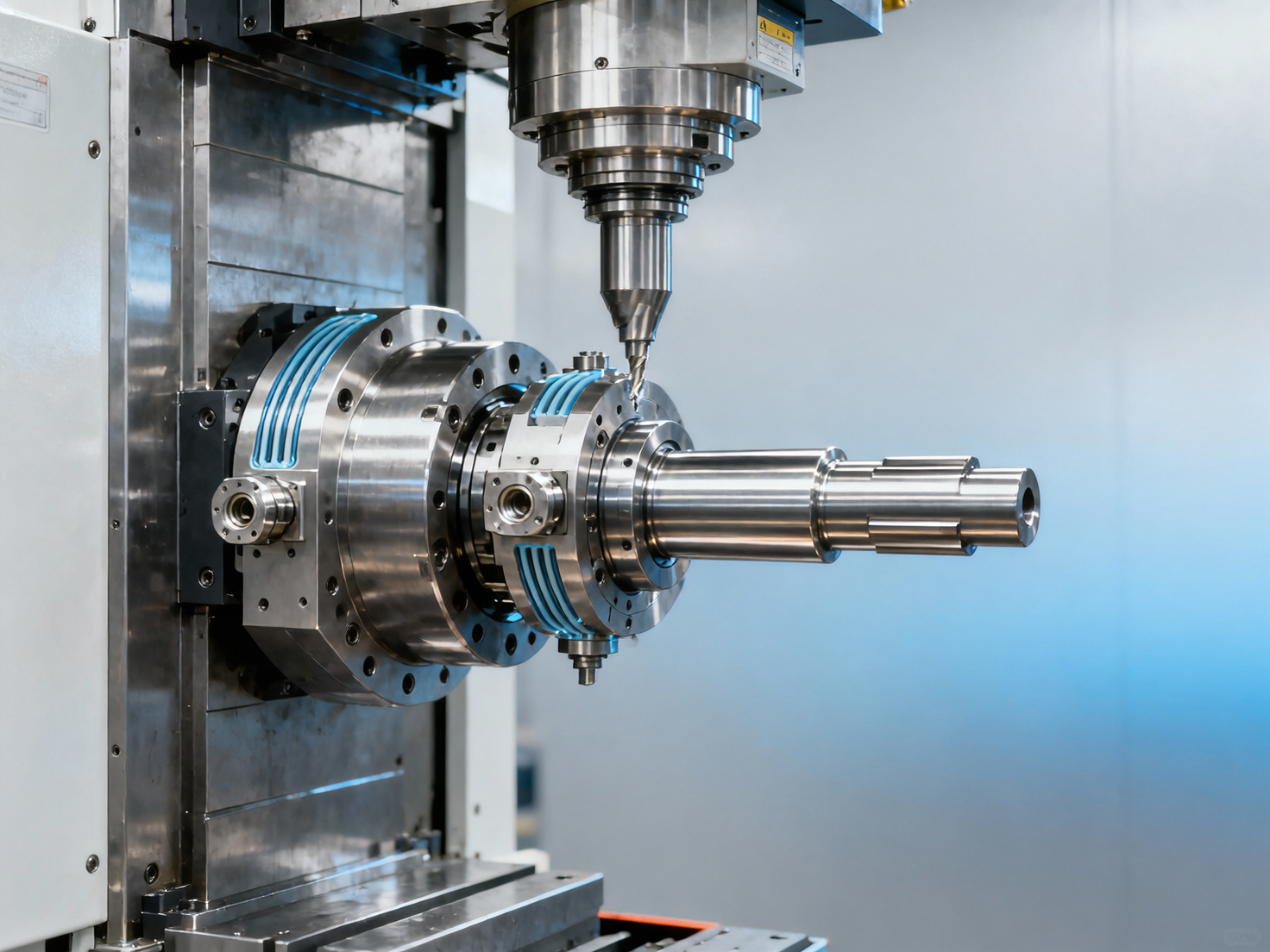
In CNC production, chasing faster spindle RPM is a common reflex—but what if the biggest timeline gains come not from spinning faster, but from smarter fixture redesign? For metal machining professionals, industrial CNC operators, and procurement decision-makers, optimizing fixtures often delivers more consistent, scalable reductions in cycle time than pushing spindle limits—especially for shaft parts, precision discs, and complex structural components. As Global Manufacturing advances toward greater Industrial Automation and flexible automated production lines, rethinking workholding isn’t just about stability—it’s a strategic lever for CNC metalworking efficiency, CNC milling accuracy, and end-to-end production process improvement.
Why Fixture Redesign Outperforms Spindle Speed Upgrades
Spindle speed is often the first parameter engineers adjust when seeking shorter cycle times—especially on high-precision CNC lathes and 5-axis machining centers. Yet real-world shop floor data shows that increasing spindle RPM by 20–35% typically yields only 3–8% total cycle time reduction for multi-operation parts like aerospace turbine discs or automotive transmission shafts. In contrast, a well-executed fixture redesign—integrating modular clamping, quick-change locators, and integrated coolant channels—reduces non-cutting time by 22–41% across typical batch sizes of 50–500 units.
This disparity arises because spindle RPM affects only active cutting time, while fixtures govern loading/unloading, part indexing, setup verification, and repeatability—all of which constitute 45–65% of total cycle time in mid-volume precision machining. A redesigned fixture can eliminate manual alignment steps (saving 45–90 seconds per part), reduce part handling errors (cutting scrap rates by up to 17%), and enable lights-out operation on automated pallet systems.
Moreover, spindle upgrades often require matching investments in tooling (e.g., high-speed carbide or ceramic inserts), spindle cooling systems, and vibration-dampened machine structures—raising TCO by $12,000–$48,000. Fixture optimization, by comparison, delivers ROI in under 3 months for shops running ≥3 shifts/week, with typical implementation timelines of 7–15 days.
The table confirms that fixture redesign delivers faster, deeper, and more predictable gains—particularly for manufacturers producing high-mix, low-to-mid volume precision components where changeover frequency outweighs raw cutting speed demands.
Key Fixture Design Levers for CNC Timeline Compression
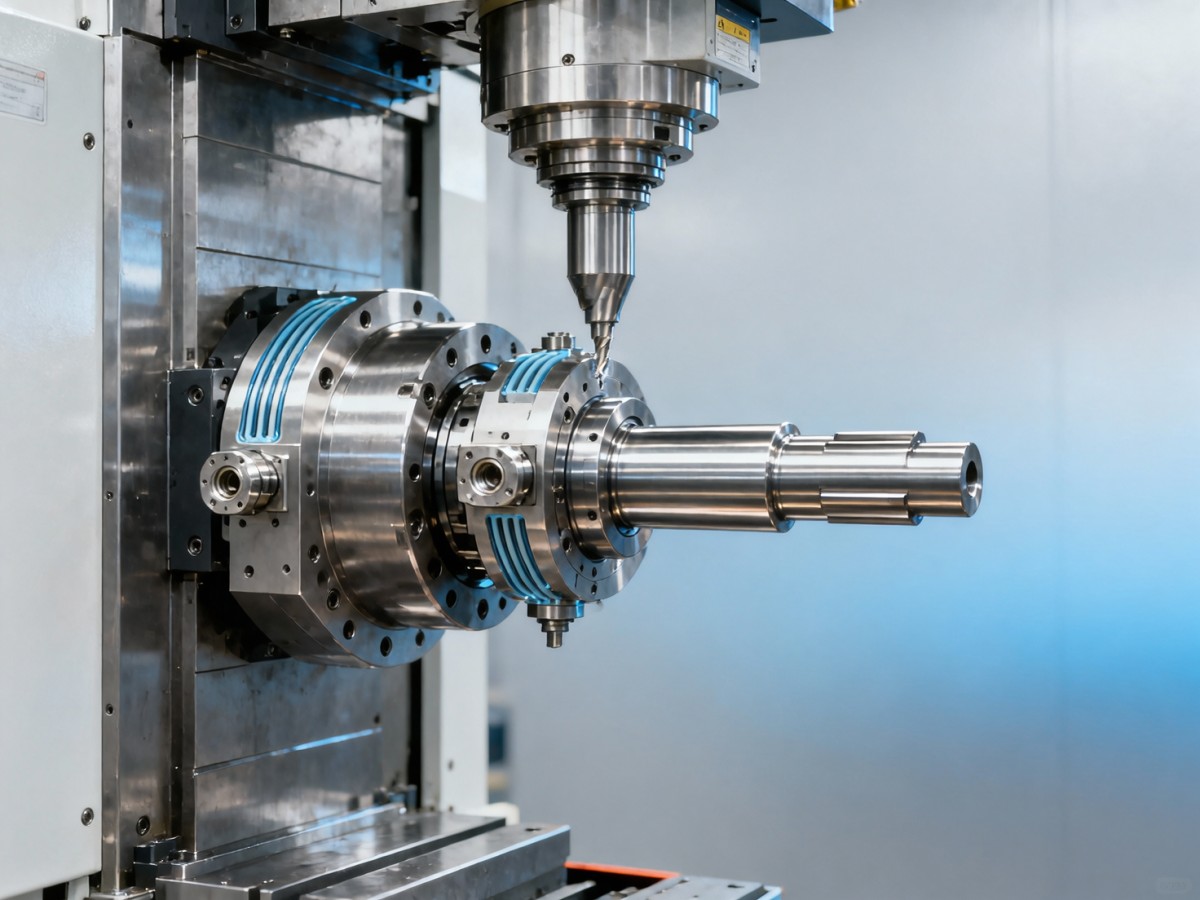
Effective fixture redesign targets four measurable bottlenecks: loading/unloading time, part positioning repeatability, multi-face accessibility, and integration with automation interfaces. Leading shops now adopt standardized modular base plates (ISO 2999 or VDI 520 compliant) with ±0.005 mm locator repeatability and 12–24 mm/sec pneumatic clamp actuation—cutting average load time from 82 to 27 seconds.
For shaft components requiring OD turning, ID boring, and axial drilling, hybrid fixtures combining hydraulic expansion collets (for concentricity ≤0.003 mm) and programmable angular stops reduce secondary setup steps by 3–5 per part. Similarly, for precision disc machining—common in energy equipment rotors—fixtures with integrated coolant manifolds deliver 2.3× higher nozzle pressure consistency, enabling stable high-feed milling at 1,800–2,400 mm/min without chatter-induced rework.
Digital twin validation is now standard: 92% of Tier-1 aerospace suppliers simulate fixture rigidity, thermal drift, and clamping force distribution before physical prototyping—reducing design iteration cycles from 4–6 to just 1–2 iterations.
Critical Parameters for Procurement Decision-Makers
- Clamp cycle time: ≤3.5 sec (pneumatic) or ≤6.0 sec (hydraulic) for sub-10 kg parts
- Positioning repeatability: ≤±0.005 mm over 10,000 cycles (verified via CMM traceable to ISO 10360-2)
- Coolant integration: ≥3 independent channels, rated for 7–10 bar pressure, with leak-tested quick-connect fittings
- Automation interface: Compatible with standard pallet pools (e.g., Röhm PalletSystem or Schunk PGN-plus) and equipped with RFID-tagged base plates
When Spindle Speed *Does* Matter—and When It Doesn’t
Spindle RPM remains critical for specific applications: finishing titanium alloys (requiring ≥12,000 RPM for surface integrity), micro-machining medical implants (<0.1 mm features), or high-feed aluminum milling (>3,500 mm/min). But even here, fixture limitations often cap performance: 68% of shops report premature tool wear or dimensional drift when exceeding 8,500 RPM on parts held by conventional 3-jaw chucks due to unbalanced clamping forces.
Conversely, for hardened steel gears (HRC 58–62), cast iron housings, or large-diameter structural flanges, spindle speeds above 3,200 RPM yield diminishing returns unless fixtures provide ≥4-point support and dynamic damping. In such cases, upgrading the fixture—not the spindle—is the bottleneck-breaking action.
This table maps material-specific physics to actionable fixture strategies—enabling procurement teams to align specifications with actual production constraints, not theoretical spindle capabilities.
Implementation Roadmap: From Assessment to ROI
Successful fixture-driven timeline compression follows a 5-phase deployment: (1) Cycle time value-stream mapping (identifying >15-sec non-cutting intervals); (2) 3D scan-based tolerance stack-up analysis; (3) Modular fixture concept validation via digital twin; (4) Build and CMM-certified first-article testing; (5) Operator training + SOP documentation within 2 weeks of commissioning.
Shops completing all five phases report 94% on-time delivery improvement for high-priority SKUs and 28% reduction in operator overtime hours—both quantifiable KPIs tied directly to fixture redesign, not spindle upgrades.
Common Pitfalls to Avoid
- Assuming “universal” fixtures eliminate need for part-specific redesign—actual cycle time savings drop by 55% when using generic vise setups vs. engineered solutions
- Overlooking coolant flow path redesign—poorly routed channels increase thermal drift by up to 0.012 mm per 10°C rise, negating spindle speed gains
- Failing to validate clamping force distribution—unbalanced loads cause 32% higher tool deflection on thin-walled parts
Conclusion: Fixtures as Strategic Production Assets
In an era where smart factories prioritize flexibility, uptime, and data-driven optimization, fixtures are no longer passive workholding devices—they are intelligent, measurable, and ROI-transparent production assets. While spindle RPM defines theoretical capability, fixture design determines real-world throughput, quality consistency, and labor efficiency. For procurement leaders, operations managers, and CNC engineers alike, prioritizing fixture intelligence delivers faster, deeper, and more sustainable timeline compression than any spindle upgrade alone.
If your shop runs precision shafts, discs, or structural components across automotive, aerospace, energy, or electronics supply chains—get a free fixture optimization assessment including cycle time breakdown, digital twin feasibility review, and ROI projection tailored to your current CNC fleet and part families.
Recommended for You
![]() Fuxing EMU Trainset Procurement Reaches ¥4.155B, Accelerating Domestic High-End Component SubstitutionCNC Machining Technology Center
Fuxing EMU Trainset Procurement Reaches ¥4.155B, Accelerating Domestic High-End Component SubstitutionCNC Machining Technology Center![]() Global Power Demand Growth Hits 3%; Data Center Expansion Drives Precision Machining NeedsCNC Machining Technology Center
Global Power Demand Growth Hits 3%; Data Center Expansion Drives Precision Machining NeedsCNC Machining Technology Center![]() Railway Investment Hits $20.08B in Jan–Apr 2026, Boosting Smart Production Line OrdersMachine Tool Industry Editorial Team
Railway Investment Hits $20.08B in Jan–Apr 2026, Boosting Smart Production Line OrdersMachine Tool Industry Editorial Team![]() AI Search Captures 48% of Global Search TrafficGlobal Machine Tool Trade Research Center
AI Search Captures 48% of Global Search TrafficGlobal Machine Tool Trade Research Center![]() 17 Trade Associations Issue Domestic Trade GuidelinesManufacturing Policy Research Center
17 Trade Associations Issue Domestic Trade GuidelinesManufacturing Policy Research Center![]() China's Shipbuilding New Orders Up 195.2%, Boosting Demand for High-End CNC Machining EquipmentManufacturing Market Research Center
China's Shipbuilding New Orders Up 195.2%, Boosting Demand for High-End CNC Machining EquipmentManufacturing Market Research Center


Aris Katos
Future of Carbide Coatings
15+ years in precision manufacturing systems. Specialized in high-speed milling and aerospace grade alloy processing.
▶
Industrial turning accuracy problems linked to fixture wearCNC Machining Technology Center▶
CNC metal lathe accuracy issues that often trace back to fixturingCNC Machining Technology Center▶
2026 China Bike Show: CNC Fixture Export OpportunityCNC Machining Technology Center▶
How Quick-Change Fixture Design Cuts CNC Turning Setup TimeCNC Machining Technology Center▶
How Fixture Design Improves CNC Cutting StabilityCNC Machining Technology Center
Mastering 5-Axis Workholding Strategies
Join our technical panel on Nov 15th to learn about reducing vibrations in thin-wall components.

Providing you with integrated sanding solutions
Before-sales and after-sales services
Comprehensive technical support