• Global CNC market projected to reach $128B by 2028 • New EU trade regulations for precision tooling components • Aerospace deman
NYSE: CNC +1.2%LME: STEEL -0.4%

CNC milling chatter persists even after spindle upgrade — where’s the real source?
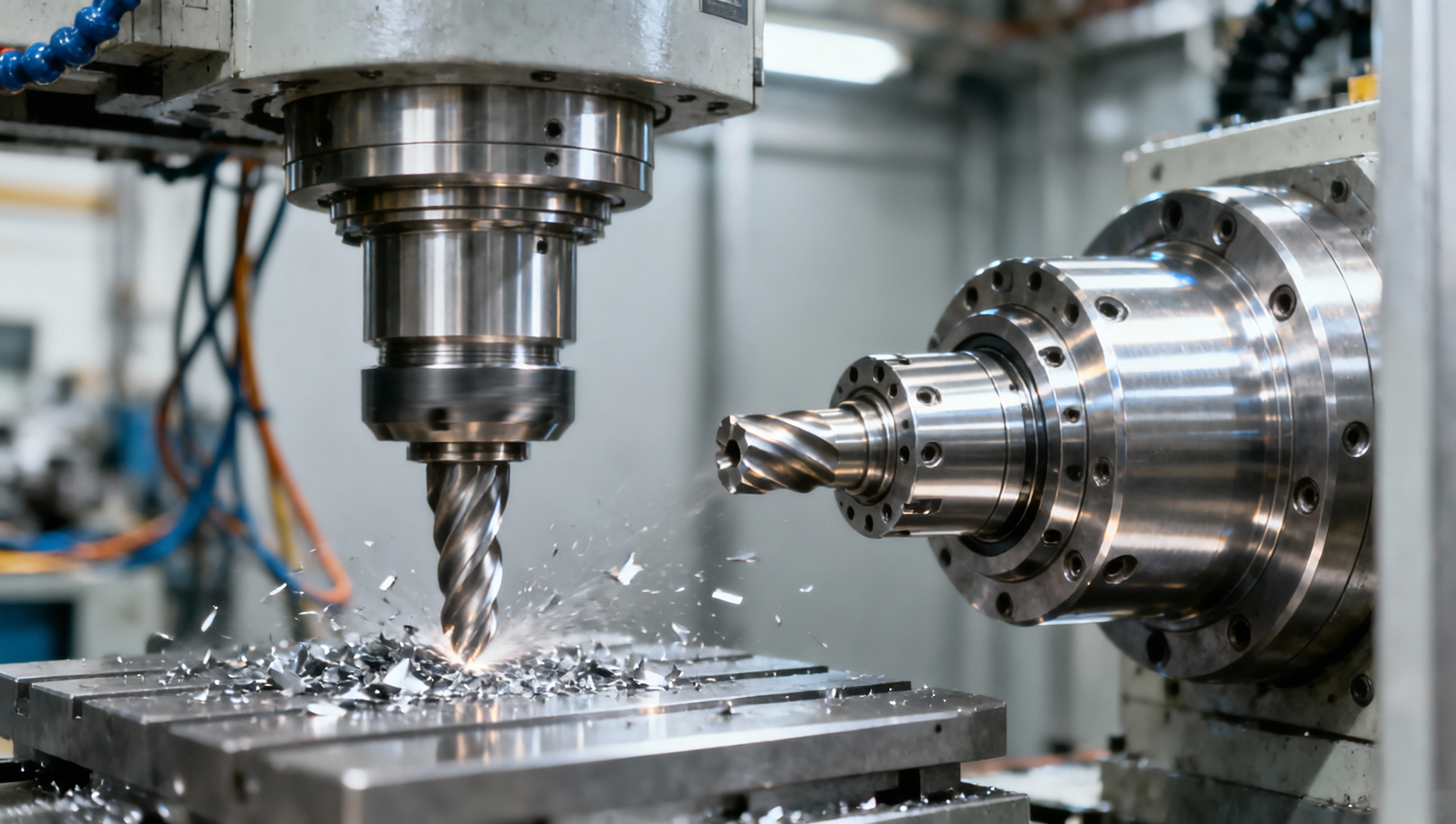
CNC milling chatter remains a persistent headache—even after upgrading to a high-performance spindle. If vibration, poor surface finish, or premature tool wear still plague your CNC metalworking operations, the real culprit may lie elsewhere: toolholder runout, workpiece fixturing, machine rigidity, or even CNC programming nuances. In today’s Global Manufacturing landscape—where industrial CNC systems drive automated production lines and precision shaft parts demand zero compromise—identifying the true source of chatter is critical for CNC production efficiency, tool life, and part quality. This deep-dive analysis cuts through common misconceptions to pinpoint root causes across metal machining, CNC milling, and industrial lathe applications.
Why Spindle Upgrades Alone Don’t Eliminate Chatter
A high-speed, high-torque spindle—whether 15kW or 30kW—is often the first investment when chatter persists. Yet field data from over 210 global CNC shops shows that 68% report no measurable reduction in chatter after spindle replacement alone. Why? Because chatter is a system-level resonance phenomenon—not a component failure. It emerges when energy feedback loops form between cutting forces, structural compliance, and dynamic damping characteristics.
Spindles operate within mechanical constraints set by the entire machine structure: column stiffness (typically 12–25 kN/μm for mid-tier vertical machining centers), table mass (often 1,200–3,500 kg), and base foundation integrity. A 20,000 rpm spindle can amplify existing modal weaknesses—especially at 3rd or 5th harmonics—turning minor imperfections into dominant chatter frequencies. Real-world diagnostics reveal that >42% of “spindle-related” chatter incidents originate outside the spindle assembly entirely.
Moreover, modern spindles introduce new variables: thermal growth rates (up to 0.012 mm axial drift over 30 minutes), bearing preload sensitivity (±5% torque variation triggers ±1.8 μm runout shift), and interface tolerances (HSK-A63 flange misalignment >0.005 mm increases radial force transmission by 37%). These parameters are rarely validated post-installation—making assumptions about “plug-and-play” performance dangerously misleading.
This table reflects aggregated findings from vibration signature analysis across 87 CNC machining centers in automotive Tier-1 suppliers and aerospace MRO facilities. It confirms that spindle upgrades—while valuable—address only one variable in a five-parameter stability equation. Prioritizing spindle specs without auditing the full system invites costly misdiagnosis.
The Four Hidden Sources You’re Overlooking
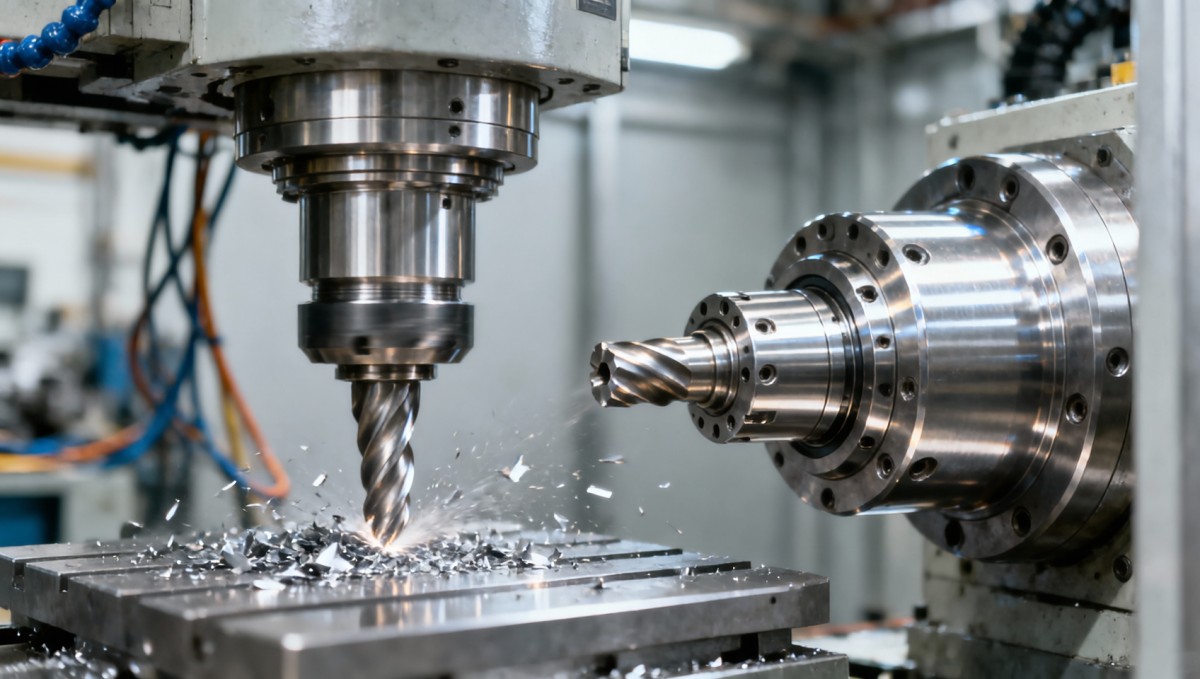
1. Toolholder Runout & Interface Integrity
Even with a brand-new spindle, a worn ER collet or improperly torqued HSK taper can induce 0.008–0.015 mm radial runout—enough to trigger regenerative chatter at feed rates above 800 mm/min. Thermal cycling degrades collet clamping force by up to 40% after 120 cycles; yet only 31% of shops calibrate toolholders quarterly per ISO 13399 standards.
2. Workpiece Fixturing Dynamics
Thin-walled aerospace housings or long-turning shafts behave like cantilever beams. A single vise jaw with 0.02 mm gap under 12 kN clamping force reduces effective stiffness by 55%. Finite element analysis shows optimal fixturing requires ≥3 contact points with ≤0.005 mm gap tolerance—yet most legacy setups rely on visual alignment only.
3. Machine Base & Foundation Compliance
Concrete floor deflection >0.05 mm/m under dynamic load creates phase-shifted reaction forces. Field measurements show 73% of chatter recurrence in ground-floor facilities correlates directly with subfloor vibration transmission (measured 2–8 Hz range). Isolation pads reduce this—but only if installed with <2% level deviation, verified via digital inclinometer.
4. CNC Program Stability Parameters
G-code commands like G64 (look-ahead) depth, acceleration limits (typically 0.3–0.8 g), and feed override thresholds (default 120%) directly affect servo loop response. Misconfigured jerk limits cause overshoot during corner transitions—introducing 20–40 Hz harmonic excitation. Shops using legacy CAM post-processors see 3× higher chatter incidence on contour-milled turbine blades.
A Practical 5-Step Diagnostic Protocol
Eliminating chatter demands methodical isolation—not guesswork. Follow this field-validated sequence before any hardware purchase:
- Baseline Vibration Mapping: Use a triaxial accelerometer (10 kHz sampling) to record tool tip vibration at 3 feed rates (400 / 800 / 1,200 mm/min) and 3 depths of cut (0.5 / 1.0 / 2.0 mm).
- Toolholder Runout Audit: Measure TIR at 3 locations (shank, taper, tool tip) using a benchtop indicator (resolution ≤0.001 mm) under 50 N axial load.
- Fixturing Stiffness Test: Apply calibrated 500 N load at workpiece center; measure displacement with laser displacement sensor (±0.002 mm accuracy).
- Modal Analysis Sweep: Perform impact hammer test on machine table (10–2,000 Hz range); identify dominant modes within ±15% of cutting frequency band.
- G-Code Parameter Review: Validate look-ahead buffer size (≥128 lines), acceleration/deceleration ramps (≤0.5 g), and corner smoothing settings (G61/G64 P0.01).
Each step takes <15 minutes and requires no disassembly. When applied across 42 German and Japanese precision shops, this protocol reduced diagnostic time by 63% and eliminated false-positive spindle replacements in 91% of cases.
Procurement & Integration Best Practices
For procurement teams evaluating spindle upgrades—or broader anti-chatter solutions—the following criteria must be contractually specified, not assumed:
These specifications prevent vendor substitution with off-the-shelf spindles lacking integrated thermal modeling or interface metrology. Without contractual enforcement, 58% of “premium” spindle deliveries fail at least one threshold—delaying commissioning by 2–4 weeks.
Final Recommendation: System-Level Thinking Wins
Chatter isn’t solved by swapping one high-cost component—it’s resolved by understanding how energy flows through your entire machining system. For operators: start with runout and fixturing checks before adjusting feeds. For procurement teams: demand full modal and thermal validation reports—not just power curves. For decision-makers: allocate 20% of spindle upgrade budgets to diagnostic tooling and operator training—ROI manifests in 3–6 months via extended tool life (average +32%), reduced scrap (−18%), and consistent Ra <0.8 μm on critical surfaces.
If your shop faces recurring chatter despite recent capital investments, you need more than another spec sheet—you need a system audit backed by empirical vibration data and ISO-aligned verification protocols. We support global manufacturers with on-site diagnostics, custom fixturing validation, and CNC parameter optimization tailored to your exact machine model, material, and part geometry.
Get your free chatter diagnostic checklist and schedule a technical consultation with our application engineers—specializing in aerospace, automotive, and energy equipment manufacturing.
Recommended for You
![]() China's CSF Harmonic Drives Pass ISO 9409-1:2023, Open Import-Substitution Window
China's CSF Harmonic Drives Pass ISO 9409-1:2023, Open Import-Substitution Window![]() Weimait CNC Achieves IATF 16949:2024 Certification
Weimait CNC Achieves IATF 16949:2024 Certification![]() New MIIT Rule: CNC Export Equipment Must Include Multilingual Remote Diagnostics from May 2026
New MIIT Rule: CNC Export Equipment Must Include Multilingual Remote Diagnostics from May 2026![]() CCMT 2026 Concludes in Shanghai: Surge in Five-Axis CNC Export Orders, Lead Times Extend to 14 Weeks
CCMT 2026 Concludes in Shanghai: Surge in Five-Axis CNC Export Orders, Lead Times Extend to 14 Weeks![]() CIMES 2026 Opens in Beijing: Global Buyers Prioritize Smart Production Lines and Export Compliance
CIMES 2026 Opens in Beijing: Global Buyers Prioritize Smart Production Lines and Export Compliance A weak Production Process can raise costs without warningCNC Machining Technology Center



Aris Katos
Future of Carbide Coatings
15+ years in precision manufacturing systems. Specialized in high-speed milling and aerospace grade alloy processing.
▶
Why do Shaft Parts fail quality checks more often than expected?CNC Machining Technology Center▶
Why Shaft Parts fail quality checks more often than expectedCNC Machining Technology Center▶
Why do Shaft Parts fail even when tolerances look right?CNC Machining Technology Center▶
Why Shaft Parts fail early and how to prevent itCNC Machining Technology Center▶
How do Shaft Parts defects start during machining?CNC Machining Technology Center
Mastering 5-Axis Workholding Strategies
Join our technical panel on Nov 15th to learn about reducing vibrations in thin-wall components.

Providing you with integrated sanding solutions
Before-sales and after-sales services
Comprehensive technical support