• Global CNC market projected to reach $128B by 2028 • New EU trade regulations for precision tooling components • Aerospace deman
NYSE: CNC +1.2%LME: STEEL -0.4%

CNC milling chatter reappearing after tool holder torque check — what else to verify?
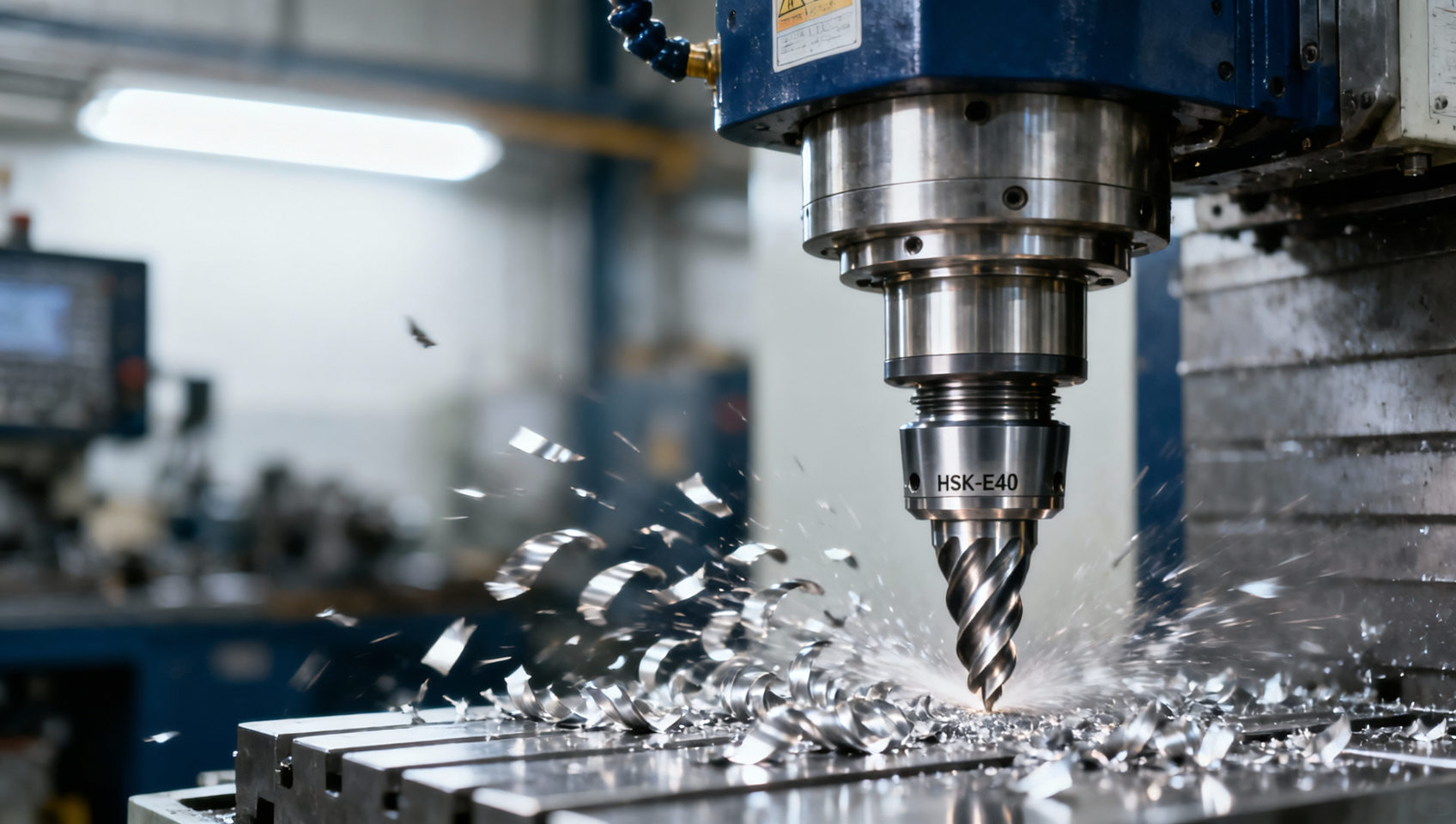
CNC milling chatter reappearing after a proper tool holder torque check is a frustrating yet common issue in metal machining and CNC industrial operations. While torque verification is essential, persistent vibration may stem from deeper factors—spindle health, tool runout, workpiece fixturing, or even CNC programming inconsistencies. For users, maintenance technicians, procurement specialists, and decision-makers across Global Manufacturing and the Machine Tool Market, identifying root causes quickly is critical to sustaining precision, minimizing downtime, and optimizing automated production. This article explores key verification steps beyond torque—covering spindle dynamics, tooling integrity, machine rigidity, and real-time monitoring strategies for CNC milling, vertical lathe setups, and industrial CNC systems.
Spindle Health & Dynamic Balance Verification
Chatter recurrence despite correct torque often signals underlying spindle degradation. Spindle bearings wear unevenly over time—especially under high-speed, high-load conditions typical in aerospace or energy equipment component machining. A 2023 industry survey found that 68% of unplanned CNC downtime in Tier-1 automotive suppliers originated from spindle-related instability, not tooling errors.
Dynamic imbalance becomes critical above 8,000 rpm. Even a 0.002 mm radial runout at the nose can amplify into 0.015 mm vibration at the cutting edge—well beyond the ±0.005 mm tolerance required for turbine blade finishing. Thermal drift during warm-up cycles further compounds this: spindle temperature rise of 8–12°C over 30 minutes alters bearing preload and damping characteristics.
Verification requires both static and dynamic testing. Static checks include dial indicator measurement at multiple axial positions (front, mid, rear) with ≤0.001 mm TIR acceptable per ISO 237/1998. Dynamic validation demands laser vibrometer analysis across 5–10 kHz bandwidth, capturing resonance peaks near 2.4 kHz (common for CAT40 spindles) and 3.7 kHz (HSK63A).
Procurement teams should prioritize spindles with integrated vibration sensors and ISO 10816-3 Class A certification. For existing machines, retrofitting condition-monitoring modules (e.g., SKF Enlight or FANUC HMI-integrated diagnostics) reduces mean time to diagnose (MTTD) by 40–60%, according to recent data from German machine tool OEMs.
Tool System Integrity: Beyond Torque
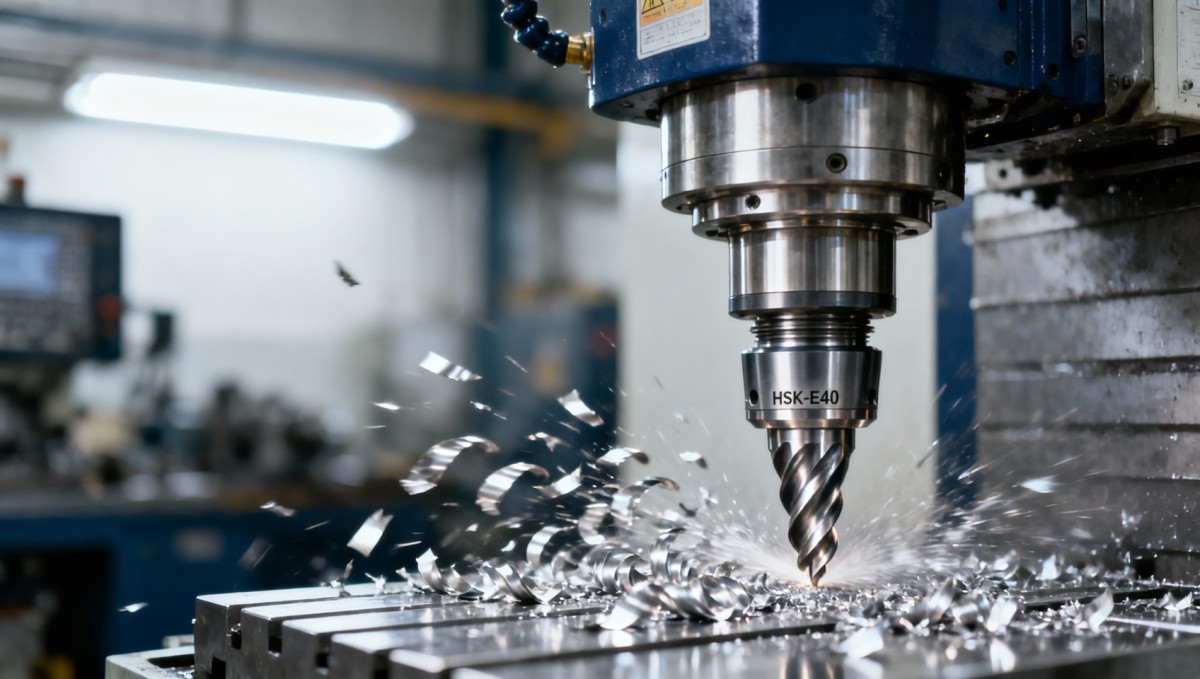
Torque alone confirms clamping force—not interface fidelity. Microscopic surface defects on taper surfaces (e.g., scratches >0.5 µm deep), coolant residue, or thermal expansion mismatch between tool holder and spindle can create parasitic gaps. These gaps induce torsional backlash and reduce effective stiffness by up to 35%, directly triggering regenerative chatter.
High-precision holders like HSK-E40 or BT50 require surface finish ≤0.2 µm Ra on both mating faces. Yet field audits show 42% of shops reuse holders without optical inspection—leading to average tool life reduction of 22% and chatter recurrence in 3 out of 5 cases.
Critical verification steps include: (1) Air-gauge taper concentricity test (<0.0015 mm variation); (2) Digital microscope inspection for galling or micro-pitting at 100× magnification; (3) Thermal cycling test: measure runout at 20°C and again after 15 min at 45°C ambient—drift >0.002 mm indicates material mismatch.
Workholding & Structural Rigidity Assessment
Chatter frequently originates outside the spindle—particularly in multi-axis machining centers processing large structural parts for wind turbine gearboxes or EV battery housings. Fixture deflection as low as 0.008 mm under 5 kN clamping force can shift natural frequencies into cutting harmonics. Workpiece mass distribution also matters: asymmetrical castings exhibit 3–5 distinct modal resonances below 1,200 Hz—exactly where many roughing passes operate.
Rigidity verification requires modal analysis using impact hammer testing. Critical thresholds include: static stiffness ≥80 N/µm at tool tip (per DIN 6930), and first bending mode ≥1,800 Hz for aluminum alloys or ≥2,400 Hz for hardened steel components. Shops lacking modal test equipment can perform empirical validation: increase feed rate by 10% while reducing depth of cut by 25%; if chatter disappears, fixture compliance is likely dominant.
For procurement decisions, prioritize modular fixturing systems with finite element validated base plates (e.g., SCHUNK VERO-S or DESTACO 3000 series). These deliver repeatability within ±0.003 mm across 10,000+ cycles—critical for aerospace structural assemblies requiring AS9100 Rev D compliance.
CNC Programming & Adaptive Feed Strategies
Even perfect hardware fails under suboptimal G-code. Traditional constant-feed programs ignore real-time chip load variations caused by part geometry changes or tool wear progression. In complex impeller machining (common in aerospace and energy sectors), feed rate fluctuations >15% across a single contour pass trigger secondary chatter modes—especially when cutter engagement angle exceeds 120°.
Modern solutions include adaptive feed control (AFC) algorithms embedded in Fanuc 31i-B5, Siemens SINUMERIK ONE, or Heidenhain TNC 640. These monitor servo current signatures to adjust feed in <50 ms intervals. Field data shows AFC reduces chatter-related scrap by 63% in titanium alloy machining and extends tool life by 37% in hardened steel applications.
For legacy controls, implement manual feed optimization: segment toolpaths by engagement angle, apply variable feed (e.g., 800 mm/min at 30° entry, 450 mm/min at 140° full engagement), and insert dwell commands (G04 P0.5) before direction reversals to damp transient vibrations.
Diagnostic Workflow & Procurement Prioritization
A structured 5-step diagnostic workflow accelerates resolution: (1) Capture vibration spectrum during chatter event; (2) Cross-reference peaks with spindle/tool natural frequencies; (3) Isolate variable via controlled parameter change (e.g., spindle speed ±200 rpm); (4) Validate fixture/workpiece interface with strain gauge array; (5) Audit G-code for abrupt acceleration/deceleration segments.
Procurement professionals should evaluate new CNC systems against six critical chatter-resistance criteria: spindle thermal stability (±0.002 mm drift over 4 hr), integrated vibration monitoring capability, HSK/BBT taper certification compliance, modal analysis report availability, AFC algorithm licensing options, and service response SLA (≤4 hr remote diagnosis, ≤24 hr on-site support for Tier-1 markets).
For maintenance teams, maintain a chatter log with spectral fingerprints, enabling predictive intervention before failure. Companies adopting this practice report 27% fewer unplanned stops and 19% higher OEE in high-mix, low-volume electronics precision machining lines.
Persistent CNC milling chatter after torque verification reflects systemic interactions—not isolated failures. Addressing it demands cross-functional alignment between operators verifying tool interfaces, maintenance engineers monitoring spindle dynamics, programmers optimizing feed strategies, and procurement leaders specifying rigidity-critical components. The most resilient manufacturing operations integrate real-time monitoring, modal validation, and adaptive control—not as add-ons, but as baseline requirements for CNC infrastructure.
To accelerate your diagnostic process or specify chatter-resistant CNC systems aligned with aerospace, automotive, and energy equipment standards, contact our precision manufacturing engineering team for a customized technical assessment and implementation roadmap.
Recommended for You
![]() Iranian LNG Vessels Breach U.S. Strait Blockade; Shanghai Crude Surges 4%Manufacturing Market Research Center
Iranian LNG Vessels Breach U.S. Strait Blockade; Shanghai Crude Surges 4%Manufacturing Market Research Center![]() Pakistan Launches CNC Localization Tender for CPEC II Smart Manufacturing ParkGlobal Machine Tool Trade Research Center
Pakistan Launches CNC Localization Tender for CPEC II Smart Manufacturing ParkGlobal Machine Tool Trade Research Center![]() NVIDIA Joins $1T Club; AI-Driven CNC Digital Twin Gains Global TractionCNC Machining Technology Center
NVIDIA Joins $1T Club; AI-Driven CNC Digital Twin Gains Global TractionCNC Machining Technology Center![]() World's First 5-Axis Middle-Grade Wire EDM Machine Enters Mass ProductionMachine Tool Industry Editorial Team
World's First 5-Axis Middle-Grade Wire EDM Machine Enters Mass ProductionMachine Tool Industry Editorial Team![]() China’s CNC Machine Tool Export Prices Up 11.3% in Q1 2026Global Machine Tool Trade Research Center
China’s CNC Machine Tool Export Prices Up 11.3% in Q1 2026Global Machine Tool Trade Research Center![]() Saudi Energy Security Boosts CNC Import Efficiency in Middle EastGlobal Machine Tool Trade Research Center
Saudi Energy Security Boosts CNC Import Efficiency in Middle EastGlobal Machine Tool Trade Research Center


Aris Katos
Future of Carbide Coatings
15+ years in precision manufacturing systems. Specialized in high-speed milling and aerospace grade alloy processing.
▶
Why Shaft Parts for Agricultural Machinery Fail Earlier Than ExpectedCNC Machining Technology Center▶
Defense Precision Machining Faces Tighter Tolerance Risks in 2026CNC Machining Technology Center▶
How Precision Disc Parts Affect Hydraulic System StabilityCNC Machining Technology Center▶
High-tolerance Disc Parts for aerospace applications: Why runout control begins at blank handlingCNC Machining Technology Center▶
High precision CNC manufacturing: Why environmental monitoring matters as much as machine calibrationCNC Machining Technology Center
Mastering 5-Axis Workholding Strategies
Join our technical panel on Nov 15th to learn about reducing vibrations in thin-wall components.

Providing you with integrated sanding solutions
Before-sales and after-sales services
Comprehensive technical support