• Global CNC market projected to reach $128B by 2028 • New EU trade regulations for precision tooling components • Aerospace deman
NYSE: CNC +1.2%LME: STEEL -0.4%

Is an Energy-Saving Machine Tool Worth It in 2026
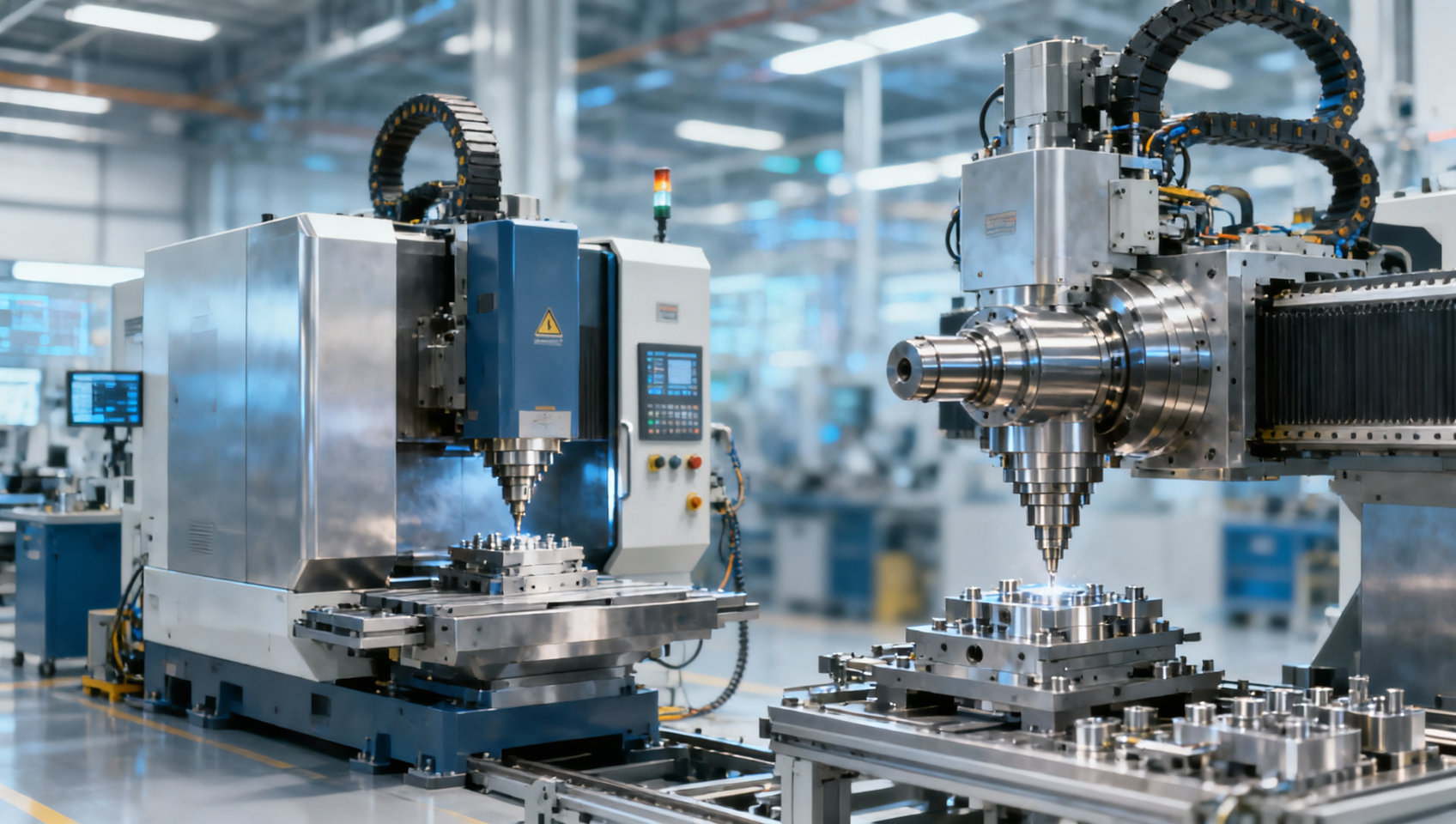
In 2026, is an energy-saving machine tool really a smarter investment than a conventional system? For buyers, operators, and manufacturing leaders, the answer depends on production goals, machine tool price, maintenance demands, and long-term efficiency. From precision CNC manufacturing to automated CNC manufacturing for aerospace, electronics, and energy equipment, this guide explores whether an energy-saving machine tool can deliver cost-effective performance, lower operating costs, and stronger competitiveness.
Why are energy-saving machine tools getting more attention in 2026?
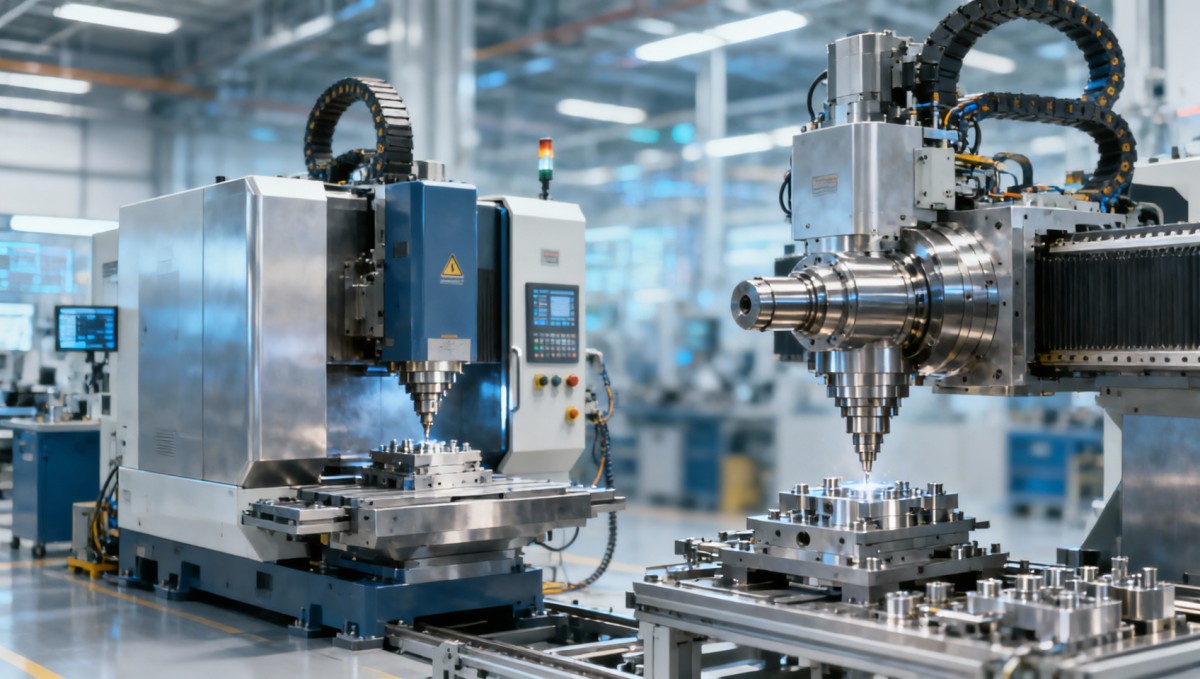
Across the global CNC machine tool industry, energy efficiency is no longer a secondary feature. It has become a purchasing factor linked to operating cost, production stability, and digital factory planning. In 2026, manufacturers in automotive, aerospace, electronics, and energy equipment are under pressure to improve output while controlling electricity use, compressed air demand, coolant load, and maintenance intervals.
An energy-saving machine tool usually combines several design improvements rather than one single technology. Common examples include servo optimization, regenerative braking, variable-frequency drives, lower-loss spindle systems, standby power control, smart lubrication, and thermal management. In practical terms, the machine may reduce idle consumption during shift gaps of 10–30 minutes and stabilize performance during continuous operation across 2 or 3 shifts.
For information researchers, the key question is not whether energy-saving claims sound attractive. The real question is how those claims translate into machining hours, part quality, and return over a 3–5 year ownership window. For operators, the concern is whether the machine remains easy to run, easy to maintain, and consistent during long cycles. For procurement teams, the challenge is comparing machine tool price against long-term total cost.
For decision-makers, energy-saving machine tools matter because the machine tool itself is only part of the cost structure. A machining center or CNC lathe can influence utility bills, tooling wear, cooling demand, floor-level heat, and unplanned downtime. In high-mix and medium-batch production, even a modest reduction in wasted power per cycle can improve cost control when multiplied over 12 months.
What usually changes in an energy-saving CNC platform?
- Drive systems may use variable output control so motors draw less power during non-cutting movements, tool changes, and standby periods.
- Spindle and feed systems are often tuned for lower thermal loss, which can support better dimensional consistency during runs lasting 4–8 hours.
- Peripheral systems such as coolant pumps, chip conveyors, hydraulics, and lubrication units may operate on demand instead of running continuously.
- Control software can provide load monitoring, energy tracking, and alarm logic that helps maintenance teams find hidden waste points faster.
These changes are especially relevant in smart manufacturing environments where factories want better visibility into machine-level consumption. The move toward digital integration means machine tools are increasingly judged not only by spindle speed or axis travel, but also by how efficiently they support the wider production line.
Energy-saving vs conventional machine tools: where does the difference really show?
The most useful comparison is not marketing language but application-based evaluation. A conventional CNC machine tool may still be the right choice for low utilization shops, simple one-shift operations, or facilities where energy cost is a small share of part cost. By contrast, an energy-saving machine tool becomes more attractive when utilization is high, process control is strict, or the plant is pushing toward automated CNC manufacturing.
To make comparison practical, buyers should review at least 5 factors: machine duty cycle, average spindle load, auxiliary system demand, maintenance frequency, and planned automation level. A machine used only 3–4 hours per day will show different payback logic from one running 16–20 hours per day. This is why the same machine tool price premium can look expensive in one factory and economical in another.
The table below helps compare typical decision points between an energy-saving machine tool and a conventional system. These are not fixed market numbers, but common evaluation dimensions used by procurement teams in CNC machining and precision manufacturing.
This comparison shows why many procurement teams now look beyond the initial quotation. In plants where uptime, consistency, and automation matter, the better decision is often the machine with the stronger life-cycle profile, not the lowest entry price. The right benchmark is total production value per hour, not purchase cost alone.
Where the performance gap becomes visible
The difference becomes clearer in facilities producing precision discs, shaft components, and structural parts that require long cycles or tight dimensional control. When spindles, drives, cooling, and lubrication are managed more efficiently, machine behavior is often more stable from the first batch to the last. That matters when a line must hold process consistency across 50, 500, or 5,000 parts.
It also matters in flexible production lines. If a smart factory switches between small batches several times per day, energy-saving logic can reduce wasted power during setup, tool change, pallet exchange, and temporary waiting states. This is particularly relevant in electronics and aerospace manufacturing, where complexity and process variation are both high.
Which applications justify the investment faster?
Not every factory sees the same benefit from an energy-saving machine tool. The strongest business case usually appears where production hours are long, tolerance requirements are strict, or utility-intensive peripherals are active most of the day. Facilities making automotive parts, aerospace structures, energy equipment components, and precision electronics housings often have the utilization level needed to evaluate long-term savings seriously.
For operators and plant engineers, the biggest advantage may be operational stability rather than headline energy reduction. A machine that runs cooler, reaches thermal balance faster, and manages auxiliary systems more intelligently can reduce adjustment frequency per shift. In practical shop-floor terms, fewer offset corrections over 8–12 hours can be just as valuable as lower electricity demand.
The application scenarios below can help determine whether an energy-saving CNC machine is likely to deliver meaningful value within the normal planning horizon of 24–60 months.
The table makes one point clear: the return depends on operating pattern. If your machine sits idle for long periods, the benefit may be modest. If your line runs continuously, handles complex parts, or supports automated loading, the investment logic is usually stronger. This is why the same energy-saving machine tool can be a strategic asset in one workshop and an unnecessary upgrade in another.
A practical screening checklist for buyers
- Review annual utilization: below 1 shift, 2 shifts, or near-continuous operation. Higher utilization strengthens the investment case.
- Check process sensitivity: if thermal drift or repeatability affects scrap, energy-efficient design can add indirect value.
- Measure auxiliary load: pumps, hydraulics, and coolant systems can be major hidden cost points in long-run machining.
- Assess automation plans for the next 12–36 months. A future robot cell or flexible line changes the value equation.
- Map maintenance capability: advanced systems are most effective when service teams can use diagnostic functions correctly.
This checklist helps avoid a common mistake: evaluating an energy-saving machine tool as if it were only a utility-saving device. In reality, it is often a process-control and production-efficiency decision at the same time.
How should procurement teams evaluate cost, payback, and risk?
Procurement decisions fail when teams compare only machine tool price and ignore ownership structure. A better method is to use a 4-part cost model: initial equipment cost, operating cost, maintenance cost, and production-impact cost. This approach fits B2B manufacturing better because two machines with similar cutting capacity may perform very differently over a 3–7 year period.
Operating cost should include power use during cutting, idle power, coolant and lubrication demand, compressed air, and heat-related environmental load. Maintenance cost should include service intervals, spare parts availability, diagnostic complexity, and stoppage frequency. Production-impact cost should cover scrap risk, setup delay, and the cost of losing machine hours in a tightly scheduled line.
When requesting quotations, buyers should ask suppliers to clarify at least 6 items rather than focusing on the base machine alone. This creates a more realistic evaluation and reduces the chance of choosing a lower-priced machine that becomes more expensive after installation.
What should be included in a serious machine tool RFQ?
- Rated spindle and feed configuration, plus the expected load profile under your actual parts and materials.
- Power behavior in cutting, idle, standby, and restart conditions, especially if shifts involve pauses every 20–60 minutes.
- Auxiliary system logic for pumps, hydraulics, lubrication, and chip handling, including whether they run continuously or on demand.
- Maintenance intervals for filters, lubrication, drive systems, and cooling units across monthly, quarterly, and annual schedules.
- Compatibility with robot loading, MES connectivity, tool monitoring, and other smart factory requirements planned within 2–3 years.
- Delivery lead time, installation scope, operator training hours, and commissioning support for multi-shift startup.
Common procurement risks to avoid
One risk is assuming that “energy-saving” automatically means lower total cost. If the machine uses unfamiliar controls, requires scarce parts, or creates integration delays of 2–4 weeks, the cost advantage may shrink. Another risk is buying a high-spec platform for a low-utilization workshop that cannot exploit the energy or automation benefits.
A third risk is ignoring implementation discipline. Even the best machine will not deliver value if spindle warm-up, lubrication checks, tool balancing, and maintenance schedules are inconsistent. Procurement should therefore involve operators, maintenance staff, and production planners early, not just finance and purchasing.
In short, the right payback calculation is operational, not theoretical. It depends on parts, shifts, materials, automation level, and service capability. That is why supplier consultation around process details is often more useful than relying on headline efficiency claims.
What standards, implementation steps, and shop-floor questions matter most?
In global machine tool sourcing, compliance and implementation are just as important as machine performance. While exact requirements differ by region and application, buyers commonly review electrical safety, machine guarding, documentation completeness, and compatibility with factory-level operating standards. For export-oriented manufacturers, documentation quality and control-system traceability can influence acceptance just as much as machine specification.
Implementation normally works best in 4 stages: application review, configuration confirmation, commissioning, and stabilized production handover. Depending on machine complexity, this process can take from several days for a simpler standalone unit to 2–6 weeks for a connected cell with automation interfaces. Early planning reduces startup friction and helps operators adapt to energy-management functions correctly.
For plants in aerospace, electronics, and energy equipment, a practical focus should include repeatability checks, thermal behavior during extended runs, alarm logic, and spare-part response planning. These issues often decide whether an energy-saving machine tool delivers smooth production or only performs well during demonstration conditions.
FAQ: the questions buyers and operators ask most often
Is an energy-saving machine tool always worth the higher machine tool price?
No. It is usually worth it when the machine runs 2–3 shifts, supports precision CNC manufacturing, or fits a smart factory roadmap. In lower-utilization environments, the benefit may be slower to recover. Buyers should compare 24–60 month ownership cost instead of only the purchase invoice.
Does energy-saving design affect machining accuracy?
It can, indirectly. Better thermal control, more stable drive behavior, and smarter subsystem management may help maintain repeatability during long cycles. However, accuracy still depends on machine structure, tooling, setup quality, maintenance, and process discipline.
What should operators check after installation?
Operators should confirm startup logic, standby recovery, lubrication status, coolant behavior, alarm history, and thermal warm-up routine. During the first 1–2 weeks, tracking part consistency across different shifts can reveal whether energy-saving settings are helping or interfering with production stability.
Can an older production line benefit from one energy-saving machine tool?
Yes, especially if the line has one bottleneck machine with high runtime or high auxiliary load. Replacing that single unit can be a practical step before larger automation upgrades. This phased approach is common when budget is limited but production pressure is increasing.
In 2026, the best decision is rarely based on a simple yes or no. An energy-saving machine tool is worth it when your production profile, maintenance capability, and automation plan can actually use its advantages. If the machine is central to throughput, quality consistency, or long-hour operation, the investment case is often strong. If utilization is low or process requirements are basic, a conventional platform may still be the more rational choice.
Why choose us for machine tool evaluation and sourcing support?
Our platform focuses on the global CNC machining and precision manufacturing industry, with attention to machine tools, automated production lines, cutting technology, and cross-border equipment sourcing. We help information researchers, operators, procurement teams, and business decision-makers compare options in a way that reflects real manufacturing needs rather than generic product claims.
If you are evaluating an energy-saving machine tool for 2026, you can contact us for support on parameter confirmation, application matching, machine tool price comparison, delivery lead-time review, automation compatibility, and typical configuration analysis. We can also help organize supplier communication around spindle configuration, auxiliary systems, maintenance planning, and smart factory integration points.
For projects involving aerospace parts, automotive components, electronics production, or energy equipment manufacturing, you may also ask about suitable machine categories, expected commissioning steps, and common procurement checkpoints. This is especially useful when comparing CNC lathes, machining centers, multi-axis systems, or flexible line upgrades across different countries and supplier clusters.
If you want a more confident purchase decision, send your part type, material, batch range, working hours, tolerance expectations, and target delivery schedule. Based on that information, we can help narrow the options, identify the most relevant evaluation criteria, and support clearer quotation discussions for your next CNC machine tool investment.
PREVIOUS ARTICLE
NEXT ARTICLE
Recommended for You
 How to Choose a Heavy-Duty Machining Center for Mold MakingMachine Tool Industry Editorial Team
 How Quick-Change Fixture Design Cuts CNC Turning Setup TimeCNC Machining Technology Center
 Why 5 Axis Machining Is Ideal for Impeller ManufacturingCNC Machining Technology Center
 How to Start Lean Production Without Disrupting OutputManufacturing Market Research Center
 When a Modular Tooling System Improves Flexible ManufacturingMachine Tool Industry Editorial Team
 How CNC Machine Control Systems Improve Automation StabilityMachine Tool Industry Editorial Team

Aris Katos
Future of Carbide Coatings
15+ years in precision manufacturing systems. Specialized in high-speed milling and aerospace grade alloy processing.
▶
Is an Energy-Saving Machine Tool Worth It in 2026Manufacturing Policy Research Center▶
Can Energy-Saving CNC Manufacturing Lower Total Operating CostManufacturing Policy Research Center▶
Can Energy-Saving CNC Manufacturing Lower Unit CostManufacturing Policy Research Center▶
Do Energy-Saving Machine Tools Pay Back FastManufacturing Policy Research Center▶
China’s CNC Smart Factories Gain Zero-Carbon Certification Mutual RecognitionManufacturing Policy Research Center
Mastering 5-Axis Workholding Strategies
Join our technical panel on Nov 15th to learn about reducing vibrations in thin-wall components.

Providing you with integrated sanding solutions
Before-sales and after-sales services
Comprehensive technical support