• Global CNC market projected to reach $128B by 2028 • New EU trade regulations for precision tooling components • Aerospace deman
NYSE: CNC +1.2%LME: STEEL -0.4%

Automation Line Maintenance Guide: Preventive Checks That Reduce Unplanned Downtime
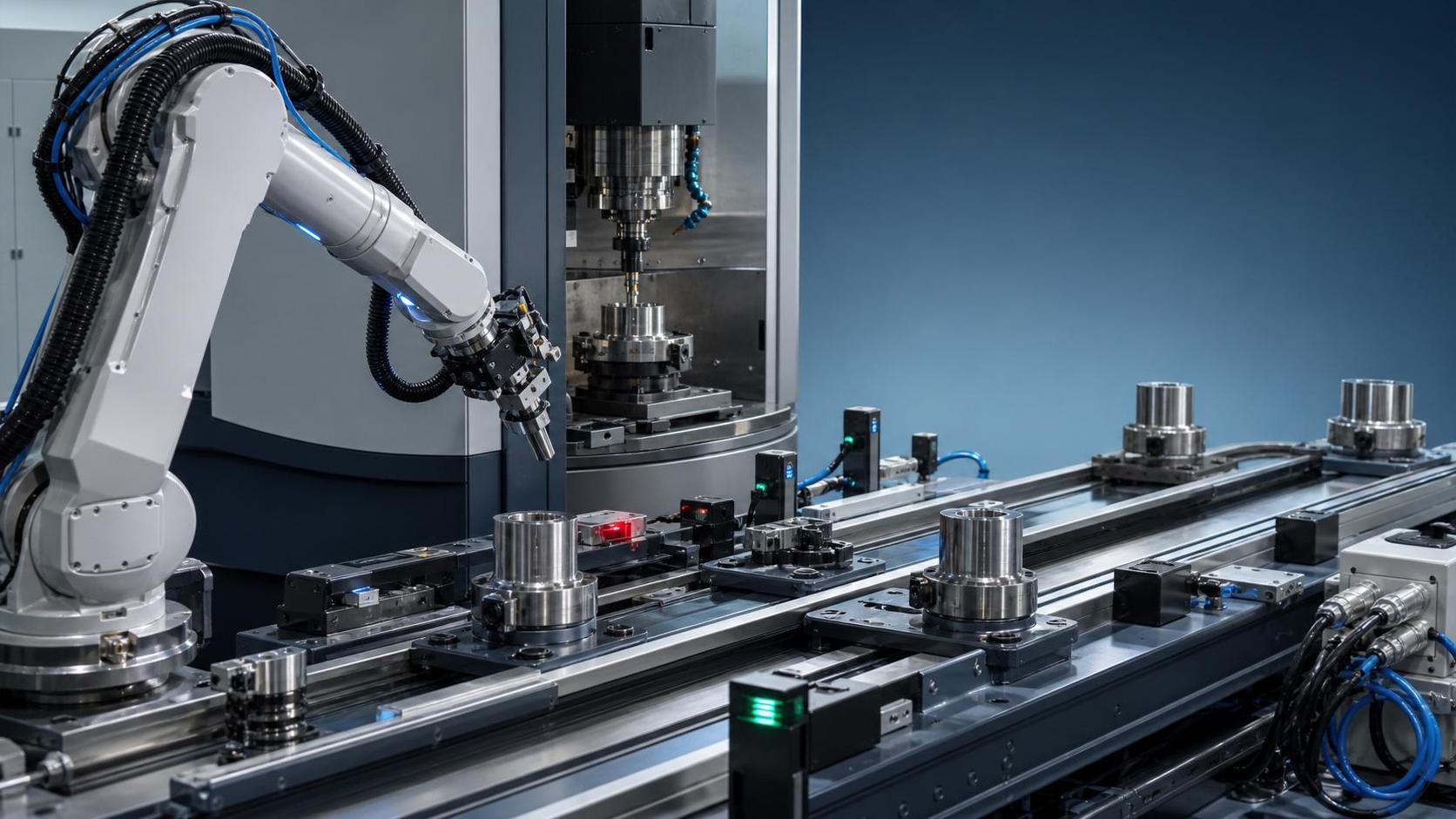
Why Preventive Checks Matter Before a Line Stops
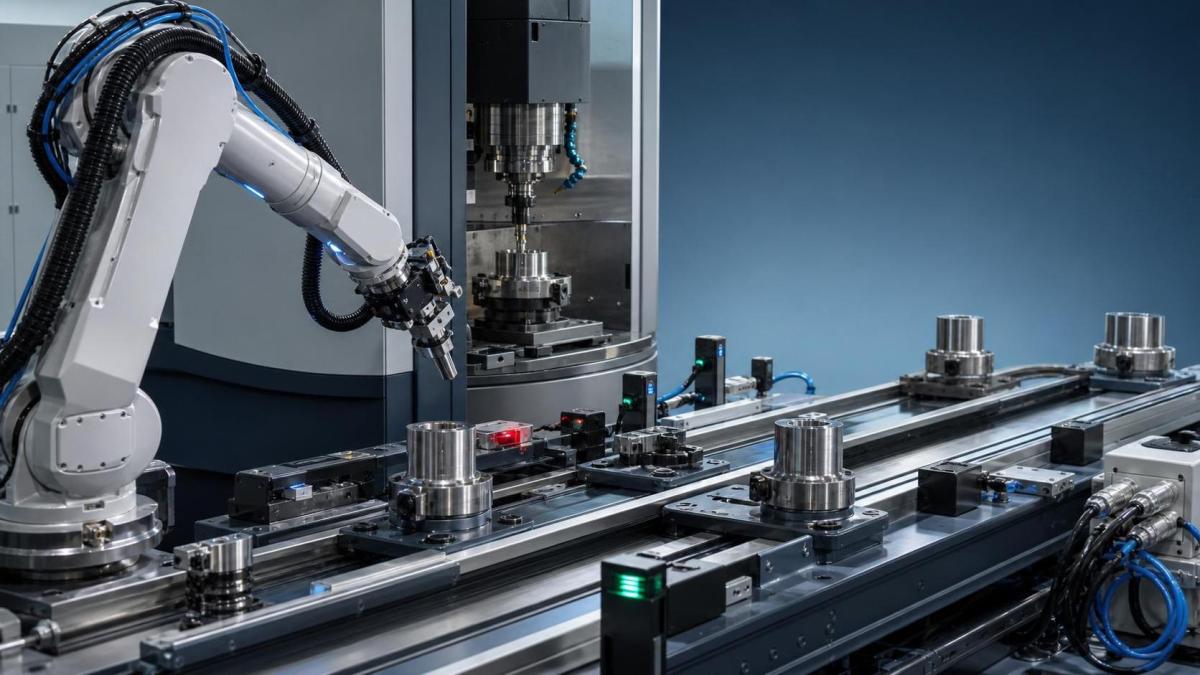
An effective Automated Production Line maintenance guide is less about paperwork and more about preserving machining stability under real production pressure.
In CNC machining, unplanned downtime rarely begins with a complete failure. It usually starts with small, visible deviations.
Cycle time drifts, spindle vibration changes, tool wear accelerates, or robot positioning begins to vary beyond normal tolerance.
Across automotive, aerospace, energy equipment, and electronics production, those early signs do not carry the same meaning.
A transfer line making high-volume shaft parts faces different maintenance pressure than a flexible cell producing complex structural components.
That is why a practical Automated Production Line maintenance guide should connect inspection routines to process type, load pattern, and precision expectations.
In actual use, the strongest preventive programs are built around condition signals, not just calendar-based service intervals.
Different Production Conditions Change What Should Be Checked First
The same alarm history can point to very different risks depending on how the automated line is used.
High-volume machining lines usually care first about repeatability loss, lubrication consistency, and tool life variation across shifts.
Mixed-model production pays closer attention to setup change accuracy, fixture condition, and communication stability between machines and robots.
Electronics-related precision work may tolerate little contamination, while energy equipment machining often challenges spindle load and coolant performance.
A useful Automated Production Line maintenance guide therefore begins with one question: what causes the most expensive interruption in this line?
Sometimes that interruption is a failed axis drive. More often, it is scrap, unstable dimensions, or blocked handoff between connected stations.
A simple comparison helps set the inspection priority
This is where an Automated Production Line maintenance guide becomes practical rather than generic.
On High-Volume Lines, Small Drifts Become Big Losses Fast
In high-output automotive and component machining, downtime is not the only cost. Instability during continued running can be worse.
A machine that still runs but cuts inconsistently may generate hundreds of suspect parts before the issue is escalated.
Here, the Automated Production Line maintenance guide should emphasize trend checks rather than isolated inspection values.
Watch spindle current patterns, pneumatic pressure fluctuation, tool break detection reliability, and chip conveyor loading over several shifts.
A common mistake is checking only whether each subsystem still works. The better question is whether performance remains stable under full takt.
If alarms appear mostly near shift change, lubrication refill, or coolant replacement, the root cause may be routine execution rather than hardware failure.
Checks that usually pay off quickly
- Compare actual tool life with programmed expectation by part family, not by monthly average.
- Record spindle warm-up time and temperature stabilization before first qualified production.
- Inspect chip handling points where buildup can slow transfer before a jam alarm appears.
- Verify fixture clamping consistency under repeated loading, especially on parts with high cutting force.
Flexible Cells Need More Than Machine Checks Alone
In aerospace, contract machining, and mixed-batch production, the line changes state more often than a dedicated transfer line.
That changes the maintenance logic completely. Wear still matters, but interface accuracy matters just as much.
A realistic Automated Production Line maintenance guide for this environment should cover machine tools, robots, fixtures, probes, and data links together.
When one station is reprogrammed, offset mismatches can spread downstream without triggering a clear equipment alarm.
More common than outright failure is a gradual loss of alignment between the machining center, handling robot, and inspection routine.
Preventive checks should therefore include confirmation of recipe control, fixture identification, and safe recovery steps after interruption.
If the line frequently switches between aluminum and steel parts, contamination, gripper wear, and tool preset reliability deserve closer review.
Heavy Cutting and Precision Finishing Fail for Different Reasons
It is easy to group CNC lines together, but heavy roughing and high-precision finishing rarely share the same maintenance priorities.
On heavy-cut machines, structural stress, thermal load, and coolant volume often determine whether downtime risk is rising.
On finishing lines, much earlier signals appear in vibration, holder condition, spindle taper cleanliness, or probing repeatability.
An Automated Production Line maintenance guide should separate those paths clearly, because using one checklist for both creates blind spots.
For example, a coolant system that seems acceptable for roughing may still be too unstable for fine surface control.
Likewise, acceptable backlash in a lower-precision process may be unacceptable in a multi-axis finishing application.
Where misjudgment usually happens
- Treating a passing alarm reset as a solved issue without checking repeat conditions.
- Using fixed service intervals while actual load, material, and ambient conditions have changed.
- Focusing on machine parameters while ignoring automation handoff timing and sensor contamination.
- Measuring maintenance cost alone, while scrap risk and restart time remain uncounted.
What a Usable Automated Production Line Maintenance Guide Should Include
The best maintenance structure is usually layered. Daily checks catch visible drift, while weekly and monthly reviews confirm trend direction.
In practical terms, an Automated Production Line maintenance guide should define what to inspect, how to compare results, and when escalation is required.
That matters even more in internationally distributed machine tool operations, where equipment brands, standards, and support methods may differ by site.
A concise framework often works better than a long checklist no one uses consistently.
- Daily: lubrication level, abnormal noise, chip flow, coolant concentration, sensor cleanliness, visible leaks.
- Weekly: spindle load trend, axis repeatability sample, gripper wear, fixture positioning check, alarm pattern review.
- Monthly: thermal drift review, backlash verification, network communication stability, tool management accuracy, recovery test.
If a line combines CNC lathes, machining centers, and robotic transfer, the guide should also assign cross-station responsibility.
Without that, repeated minor stoppages tend to move between teams without reaching root cause.
Use the Guide to Build Better Decisions, Not Just Better Records
A strong Automated Production Line maintenance guide supports more than maintenance execution. It improves decisions about scheduling, spare parts, and process stability.
In actual deployment, the most useful next step is to map recurring downtime events against process stage and machine condition.
Then separate failures caused by wear, setup variation, environmental change, and automation coordination.
That comparison usually reveals whether the line needs tighter inspection frequency, revised thresholds, or better coordination between machining and handling systems.
For operations linked to global CNC machining and precision manufacturing, this approach also creates a clearer basis for benchmarking across sites.
Before revising any checklist, confirm the actual production scenario, the precision requirement, the load pattern, and the restart risk after interruption.
That is where preventive checks begin to reduce unplanned downtime in a measurable way.
Recommended for You
![]() Mitsubishi Electric Announces Physical AI System Linking Humanoid Robots and CNC MachinesMachine Tool Industry Editorial Team
Mitsubishi Electric Announces Physical AI System Linking Humanoid Robots and CNC MachinesMachine Tool Industry Editorial Team Precision Machining for Defense: Supplier Quality and Traceability ChecksManufacturing Market Research Center
![]() Nidec Machine Tool Launches MVR-5X Five-Axis Gantry MachineMachine Tool Industry Editorial Team
Nidec Machine Tool Launches MVR-5X Five-Axis Gantry MachineMachine Tool Industry Editorial Team Choosing a Precision Disc Parts Manufacturer in China: Tolerances and Quality ChecksManufacturing Market Research Center
![]() Siemens Executive Says AI Could Raise Factory Automation to 80%Manufacturing Market Research Center
Siemens Executive Says AI Could Raise Factory Automation to 80%Manufacturing Market Research Center Choosing Automated Machine Tools for High-Mix, Low-Volume ProductionMachine Tool Industry Editorial Team


Aris Katos
Future of Carbide Coatings
15+ years in precision manufacturing systems. Specialized in high-speed milling and aerospace grade alloy processing.
▶
Choosing Automated Machine Tools for High-Mix, Low-Volume ProductionMachine Tool Industry Editorial Team▶
Choosing Industrial Robots for Warehouse Picking and PalletizingMachine Tool Industry Editorial Team▶
Digital Manufacturing for Smart Factories: Connecting Legacy Machines to MESMachine Tool Industry Editorial Team▶
Selecting Machine Tools for Automotive Parts: Accuracy, Throughput, and AutomationMachine Tool Industry Editorial Team▶
Smart Manufacturing for Small Businesses: Where Automation Delivers the Fastest ROIMachine Tool Industry Editorial Team
▶
Mastering 5-Axis Workholding Strategies
Join our technical panel on Nov 15th to learn about reducing vibrations in thin-wall components.

Providing you with integrated sanding solutions
Before-sales and after-sales services
Comprehensive technical support