• Global CNC market projected to reach $128B by 2028 • New EU trade regulations for precision tooling components • Aerospace deman
NYSE: CNC +1.2%LME: STEEL -0.4%

How to Choose an Automation Line for Electronics Production by Product Type and Output
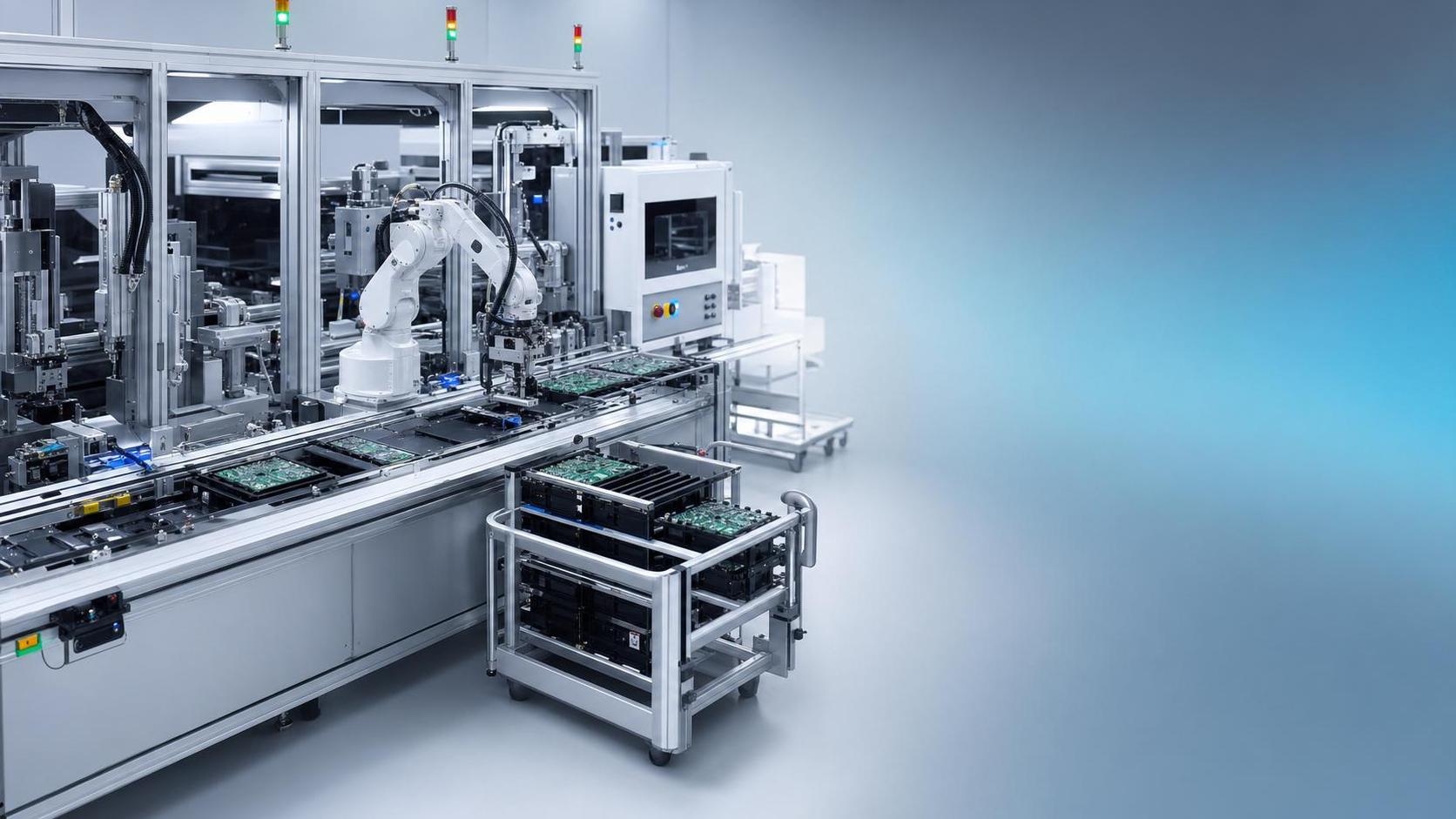
Selecting an Automation Line for Electronics Production starts with a practical question: what exactly will run on the line, and how many units must leave it each shift. In electronics manufacturing, those two variables shape almost everything, from feeder configuration and inspection depth to cycle time, traceability, and changeover strategy.
That decision matters more now because electronics production is no longer judged only by speed. Precision, digital integration, and flexible automation have become standard expectations across global manufacturing, much like in CNC machining, precision machine tools, and other high-accuracy production sectors.
Why product type and output must be evaluated together
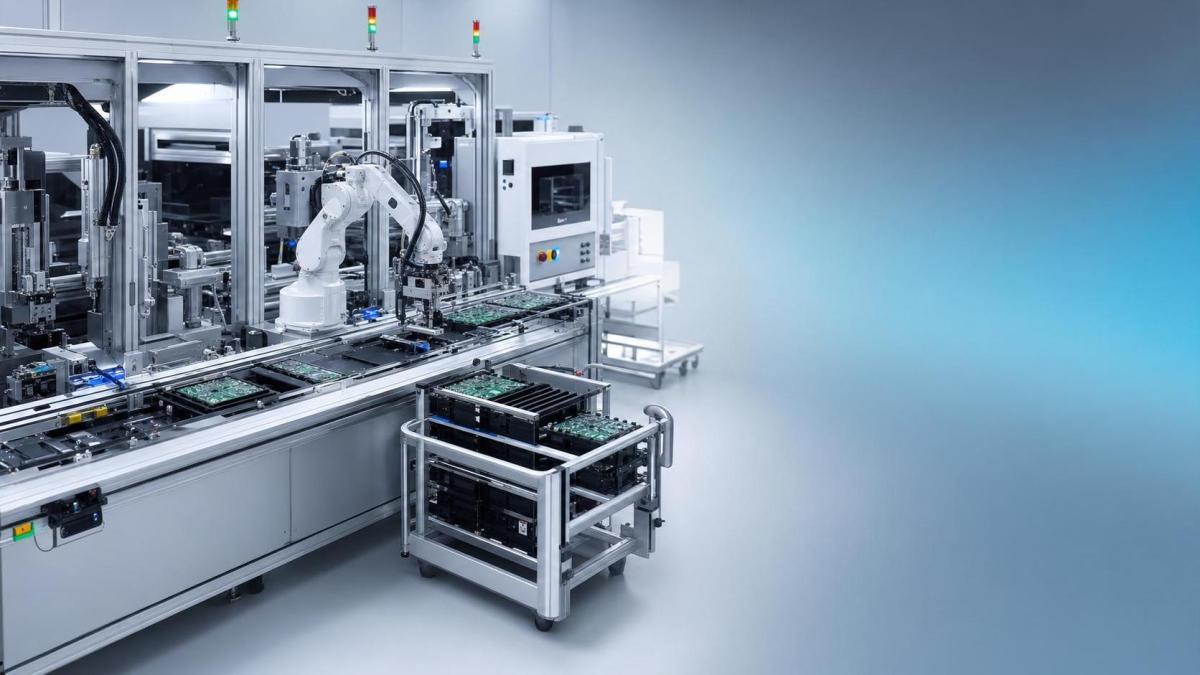
An Automation Line for Electronics Production is not one fixed layout. It is a coordinated system of loading, assembly, handling, inspection, testing, marking, and data collection equipment arranged for a specific manufacturing objective.
Product type defines the process difficulty. Output defines the economic model. A line for fine-pitch control boards behaves very differently from a line producing standard power modules in large batches.
When these two factors are separated, line selection often goes wrong. A fast line may be oversized for a complex low-volume product. A flexible line may become too slow for consumer-scale demand.
In practice, the best line is the one that matches product characteristics, takt requirements, quality risk, and expansion plans at the same time.
What an electronics automation line usually includes
Most systems combine several functional blocks rather than a single machine. The exact mix depends on whether the product is board-level, module-level, or final-device assembly.
- Material feeding and buffering for reels, trays, magazines, or pallets
- Placement, soldering, fastening, dispensing, or press-fit operations
- Conveying or robotic transfer between stations
- AOI, SPI, vision guidance, in-circuit test, and functional test
- Laser marking, serialization, MES connection, and traceability capture
- Rework bypass, unloading, and packaging handoff
This structure reflects the wider shift across smart manufacturing. As in CNC-based production, standalone equipment is increasingly replaced by connected cells and digitally visible workflows.
Different products create different line priorities
Electronics products may share components, but their manufacturing logic can differ sharply. Selection should begin with product geometry, material sensitivity, tolerance demands, and test coverage.
PCB and control board assembly
These lines usually emphasize placement accuracy, feeder capacity, solder process stability, and inspection resolution. Fine-pitch parts, mixed package types, and frequent model changes increase the need for flexible programming.
For this category, a suitable Automation Line for Electronics Production often needs strong AOI integration, reliable board handling, and fast setup validation between runs.
Power electronics and industrial modules
Module assembly often involves heavier parts, thermal materials, fastening torque control, press-fit accuracy, and electrical safety testing. Here, mechanical rigidity and process traceability are often more important than ultra-high placement speed.
These projects may also connect closely with precision-machined housings, fixtures, and custom tooling, linking electronics automation with broader machine tool and production engineering capabilities.
Consumer electronics and compact devices
High output usually dominates this segment. The line must support short takt time, minimal stoppage, stable feeding, and fast defect isolation. Small inefficiencies become expensive very quickly at scale.
Compact devices also raise handling challenges. Fragile connectors, cosmetic surfaces, and battery-related safety rules affect end-of-line design.
Automotive and safety-critical electronics
This category places heavier weight on verification, data retention, and process repeatability. Redundant inspection, barcode tracking, and parameter lockout are commonly justified even when they reduce nominal throughput.
Output level changes the ideal line architecture
Output is more than annual volume. It includes shift pattern, batch size, uptime target, demand volatility, and the acceptable ratio between labor and automation.
A common mistake is buying for peak output without testing the real production rhythm. Buffer strategy, maintenance window, feeder replenishment, and quality checks often reduce the theoretical rate.
A better approach is to calculate effective output under normal operating conditions, then compare line concepts against that baseline.
Selection criteria that matter on the shop floor
When comparing an Automation Line for Electronics Production, brochures rarely tell the full story. Evaluation should focus on performance under production variation, not only under ideal demonstration conditions.
Process capability before speed claims
If placement tolerance, solder quality, dispensing volume, or fastening repeatability are unstable, headline throughput becomes irrelevant. Capability data should be reviewed with real product tolerances in mind.
Changeover and line recovery
In mixed production, recovery from stoppage can cost more than cycle time itself. Recipe management, feeder verification, tooling swaps, and restart logic deserve close attention.
Inspection strategy
Inspection should be placed where defects are cheapest to catch. Overloading the line with poorly positioned checks can slow production without improving outgoing quality.
Data integration
Modern electronics lines increasingly need MES connectivity, parameter history, alarm logs, and traceability by unit or batch. This mirrors the digital integration trend seen across advanced CNC and smart factory environments.
Tooling and maintainability
Custom fixtures, grippers, pallets, and precision components influence uptime as much as the core machines. Local service access, spare part strategy, and tooling life should be included early.
Where broader manufacturing trends affect electronics line decisions
Electronics production does not sit apart from the rest of industrial manufacturing. The same forces reshaping machine tools are changing automation line decisions as well.
- Higher precision expectations push better motion control and tighter process monitoring
- Flexible production demands modular line sections instead of rigid one-model layouts
- Robotics adoption increases where handling complexity exceeds manual consistency
- Global supply chain pressure makes standardized components and remote diagnostics more valuable
- Regional manufacturing clusters improve access to machine builders, tooling, and integration support
That is why line selection often benefits from looking beyond electronics equipment alone. Upstream machining quality, fixture precision, and automation compatibility can strongly influence downstream results.
A practical way to compare line options
A useful evaluation method is to compare candidate lines against one product family and one realistic output case first. That keeps discussions tied to measurable constraints.
- Map the full process route, including test and rework points
- Identify the highest-risk operation for quality and takt
- Check whether the line is modular enough for future variants
- Request effective throughput data, not only design speed
- Review digital interfaces, maintenance access, and tooling replacement logic
- Estimate total operating cost, including labor, scrap, service, and floor space
This approach usually reveals whether a line is genuinely suitable or simply impressive on paper.
Choosing with room for the next production stage
The right Automation Line for Electronics Production should fit current output without blocking the next step in scale, complexity, or digital control. That means balancing present demand with future product evolution.
A clear shortlist usually comes from three checks: whether the line matches the product’s real process needs, whether it sustains required output in normal operation, and whether it connects cleanly to the broader manufacturing system.
From there, the next move is straightforward: define one representative product family, build a realistic output model, and compare line concepts against those conditions before judging price alone.
Recommended for You
![]() FANUC Links FIELD System Data with Copilot to Advance Shop-Floor Data UseCNC Machining Technology Center
FANUC Links FIELD System Data with Copilot to Advance Shop-Floor Data UseCNC Machining Technology Center Smart Manufacturing for Aerospace: Building Traceability Across CNC OperationsCNC Machining Technology Center
![]() Mitsubishi Electric Announces Physical AI System Linking Humanoid Robots and CNC MachinesMachine Tool Industry Editorial Team
Mitsubishi Electric Announces Physical AI System Linking Humanoid Robots and CNC MachinesMachine Tool Industry Editorial Team Precision Machining for Defense: Supplier Quality and Traceability ChecksManufacturing Market Research Center
![]() Nidec Machine Tool Launches MVR-5X Five-Axis Gantry MachineMachine Tool Industry Editorial Team
Nidec Machine Tool Launches MVR-5X Five-Axis Gantry MachineMachine Tool Industry Editorial Team Choosing a Precision Disc Parts Manufacturer in China: Tolerances and Quality ChecksManufacturing Market Research Center


Aris Katos
Future of Carbide Coatings
15+ years in precision manufacturing systems. Specialized in high-speed milling and aerospace grade alloy processing.
▶
Choosing Automated Machine Tools for High-Mix, Low-Volume ProductionMachine Tool Industry Editorial Team▶
Choosing Industrial Robots for Warehouse Picking and PalletizingMachine Tool Industry Editorial Team▶
Digital Manufacturing for Smart Factories: Connecting Legacy Machines to MESMachine Tool Industry Editorial Team▶
Selecting Machine Tools for Automotive Parts: Accuracy, Throughput, and AutomationMachine Tool Industry Editorial Team▶
Smart Manufacturing for Small Businesses: Where Automation Delivers the Fastest ROIMachine Tool Industry Editorial Team
▶
Mastering 5-Axis Workholding Strategies
Join our technical panel on Nov 15th to learn about reducing vibrations in thin-wall components.

Providing you with integrated sanding solutions
Before-sales and after-sales services
Comprehensive technical support