• Global CNC market projected to reach $128B by 2028 • New EU trade regulations for precision tooling components • Aerospace deman
NYSE: CNC +1.2%LME: STEEL -0.4%

What Is an Automation Line? Types, Key Modules, and Best-Fit Applications
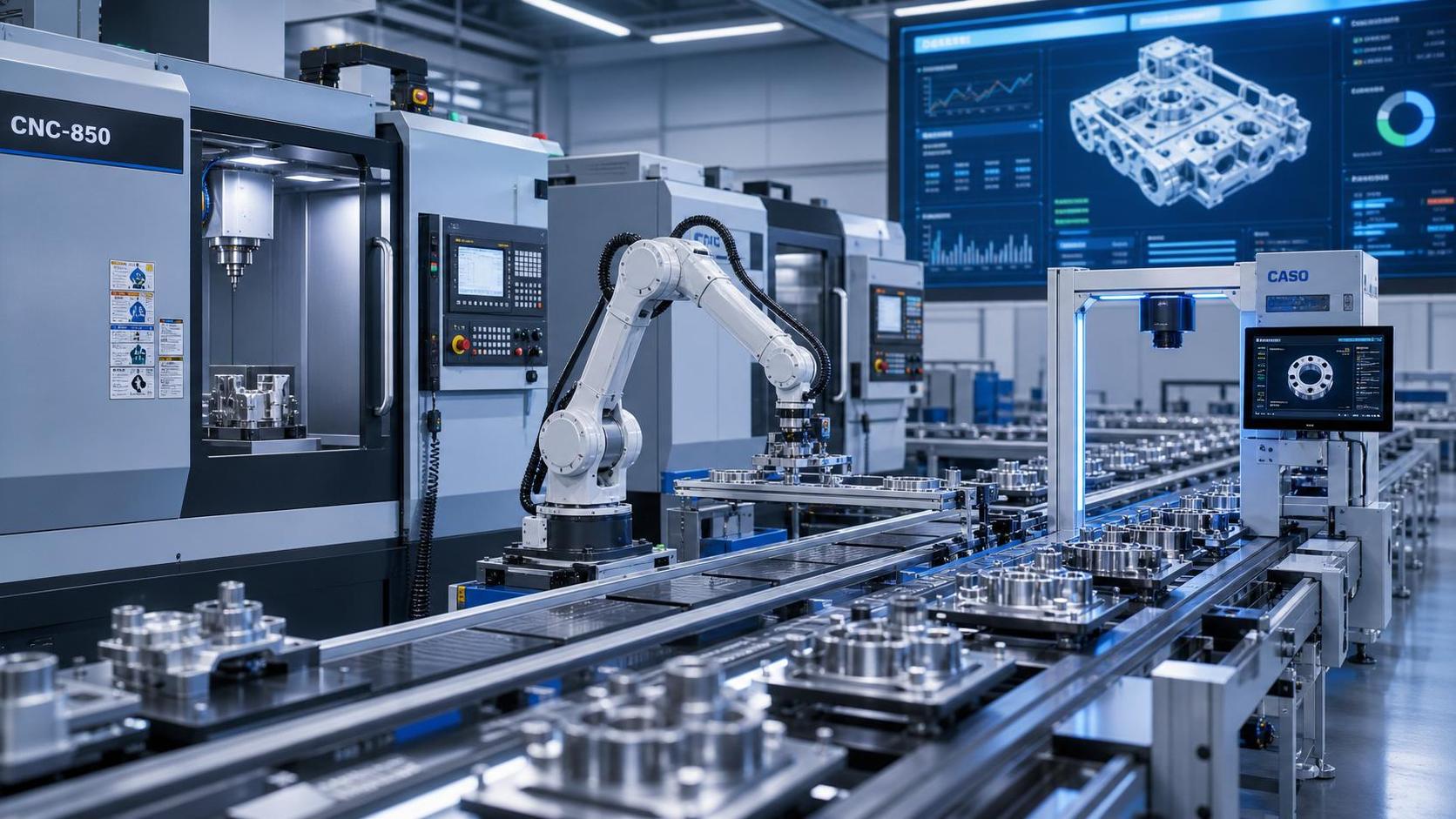
An Automation Line connects machines, robots, material handling equipment, and control systems into one coordinated production flow. In sectors shaped by CNC machining, precision tooling, and smart factory investment, that coordination matters because output quality now depends as much on system integration as on the capability of any single machine.
The concept is especially relevant across automotive, aerospace, electronics, and energy equipment production. These industries face tighter tolerances, shorter lead times, and rising pressure to stabilize throughput. Understanding how an Automation Line is structured helps clarify where automation creates measurable value and where it may introduce unnecessary complexity.
How to Understand an Automation Line in Practical Terms
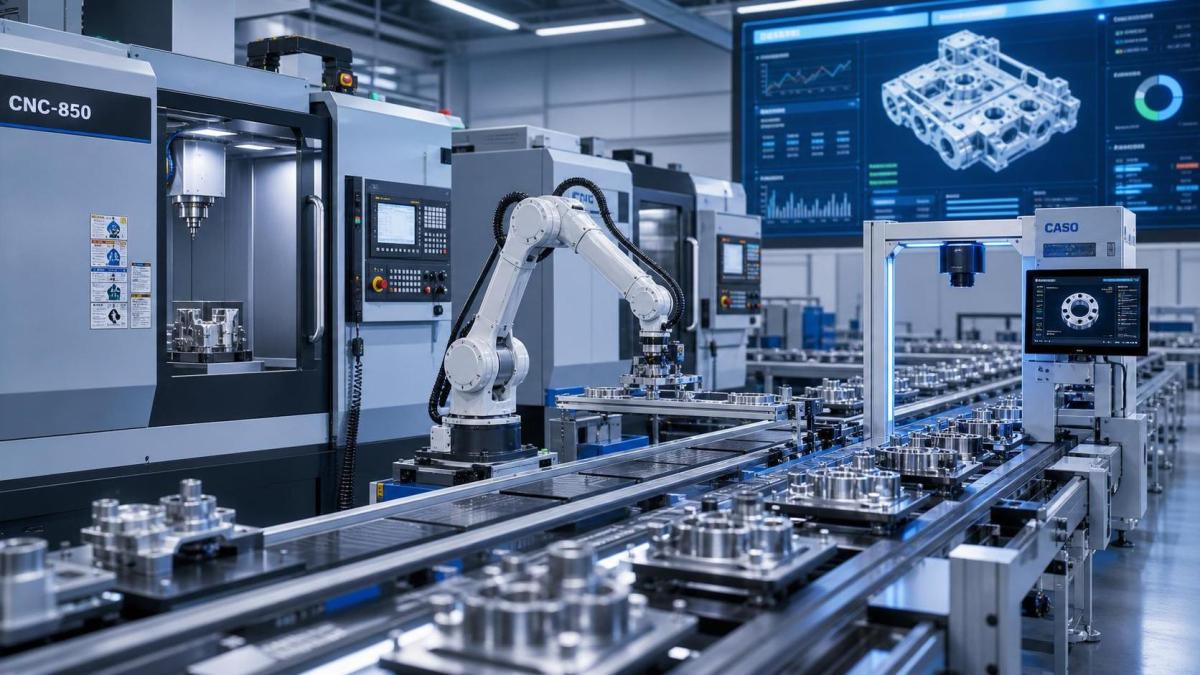
At a basic level, an Automation Line is not just a group of automated machines placed side by side. It is a managed sequence of operations, where each station passes work to the next with defined timing, control logic, and quality requirements.
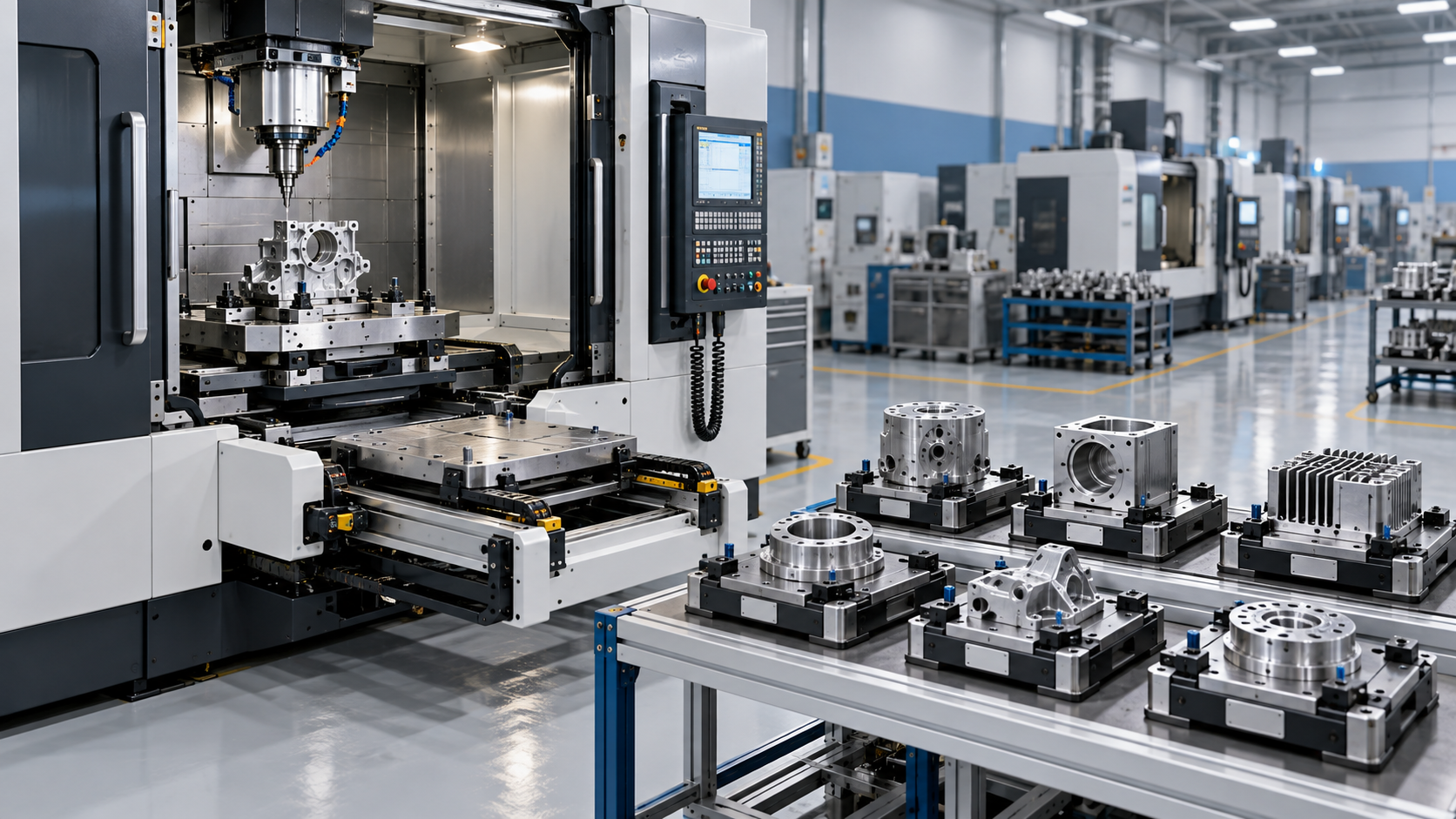
In a machining environment, that may include CNC lathes, machining centers, robotic loading units, conveyors, tool monitoring devices, and in-line inspection stations. The goal is not automation for its own sake. The goal is stable, repeatable production with less manual interruption.
This distinction matters because many production sites already use automated equipment. Yet they still struggle with bottlenecks, work-in-process buildup, inconsistent cycle times, or disconnected data. A true Automation Line addresses the flow between processes, not only the automation inside one machine.
Why the Topic Matters Now
Machine tool manufacturing is moving toward higher precision, greater flexibility, and deeper digital integration. That shift is visible in global industrial clusters, especially in China, Germany, Japan, and South Korea, where equipment suppliers continue to upgrade both hardware and production architecture.
A standalone CNC machine can deliver excellent accuracy. However, when production scales up, the main issue often becomes consistency across multiple steps. Loading, transfer, orientation, clamping, inspection, and traceability all affect final results.
That is why the Automation Line has become a central topic in smart manufacturing. It supports not only labor reduction, but also process discipline, production visibility, and more predictable scheduling. In high-mix or high-volume settings, those benefits can outweigh simple labor savings.
Common Types of Automation Line Systems
Not every Automation Line is built for the same production logic. The right structure depends on part variety, takt time, quality risk, and how often product changeovers occur.
Fixed or dedicated lines
These lines are optimized for one product family or a narrow process range. They are common in automotive component manufacturing, where high volume justifies specialized tooling, fixtures, and transfer systems.
Their main advantage is speed and consistency. Their main limitation is lower flexibility when part design or batch structure changes.
Flexible automation lines
A flexible Automation Line supports multiple part numbers with programmable handling, adaptable fixtures, and software-driven routing. This model fits precision machining, electronics, and aerospace work, where variety is higher and production planning changes more often.
The investment is usually more complex, but the operational resilience is stronger when demand shifts.
Hybrid machining and assembly lines
Some systems combine cutting, washing, deburring, measurement, marking, and final assembly. This type of Automation Line is useful when part quality depends on tightly linked upstream and downstream processes.
In practice, hybrid lines help reduce handling errors and shorten total production lead time.
Key Modules That Shape Performance
The effectiveness of an Automation Line depends on how its modules work together. Weak integration in one area can limit the entire system.
In CNC-heavy applications, fixture design and process control often deserve as much attention as the machines themselves. A fast machine inside a poorly balanced Automation Line usually creates waiting time, not productivity.
Where an Automation Line Fits Best
The best-fit application is usually defined by repetition, precision risk, labor intensity, and the cost of inconsistency. Some environments naturally benefit more than others.
Automotive components
Engine parts, transmission components, brake elements, and shafts often require tightly controlled, high-volume machining. An Automation Line supports stable takt time, traceability, and lower variation across long runs.
Aerospace parts
Aerospace production usually involves lower volume, but high complexity and strict quality demands. Flexible automation is often more suitable here, especially when in-line inspection and digital records are essential.
Energy and heavy equipment
Large structural components, valve bodies, and rotating parts benefit from coordinated handling and process control. In these settings, the Automation Line reduces repositioning errors and supports safer material movement.
Electronics and precision assemblies
Smaller parts, shorter cycles, and stricter cleanliness standards make automation attractive. The line may combine vision inspection, robotic handling, micro-assembly, and final testing within one controlled sequence.
What to Evaluate Before Adoption
An Automation Line should be judged by production logic, not by headline automation level. In many cases, the right question is whether the process is stable enough to automate effectively.
- Check part family consistency. Large variation in geometry or routing may require flexible design from the start.
- Map actual bottlenecks. Manual loading is visible, but fixture instability or tool wear may be the bigger issue.
- Review data needs. A modern Automation Line should support status monitoring, quality tracking, and traceability.
- Estimate changeover frequency. High uptime matters, but rapid switching can matter more in mixed production.
- Assess maintenance capacity. More automation increases dependence on controls, sensors, and integration support.
It is also worth separating attractive concepts from workable solutions. A highly automated layout can underperform if upstream machining capability, tool life control, or operator support remains weak.
The Broader Value Beyond Labor Savings
Labor reduction is often the first visible benefit, but it is rarely the full business case. A well-designed Automation Line can improve process repeatability, reduce scrap exposure, and make production planning more reliable.
This becomes more important when serving international supply chains. Buyers increasingly look for stable quality systems, process documentation, and predictable delivery performance. Automated production architecture helps support those expectations.
For industries tied to CNC machining and precision manufacturing, the line also becomes a data source. Machine status, cycle performance, alarm history, and measurement records can feed broader smart factory initiatives.
A Useful Starting Point for Next-Step Evaluation
A sound evaluation usually starts with process mapping, part segmentation, and a realistic view of production variability. That creates a better foundation than beginning with equipment catalogs alone.
From there, compare whether a dedicated or flexible Automation Line fits the expected product mix, quality requirements, and expansion plan. Pay close attention to integration between CNC equipment, fixtures, robotics, inspection, and control software.
The strongest decisions tend to come from linking automation goals to actual production constraints. When the line design reflects real process needs, an Automation Line becomes less of a trend label and more of a durable manufacturing advantage.
Recommended for You
![]() Mitsubishi Electric Announces Physical AI System Linking Humanoid Robots and CNC MachinesMachine Tool Industry Editorial Team
Mitsubishi Electric Announces Physical AI System Linking Humanoid Robots and CNC MachinesMachine Tool Industry Editorial Team Precision Machining for Defense: Supplier Quality and Traceability ChecksManufacturing Market Research Center
![]() Nidec Machine Tool Launches MVR-5X Five-Axis Gantry MachineMachine Tool Industry Editorial Team
Nidec Machine Tool Launches MVR-5X Five-Axis Gantry MachineMachine Tool Industry Editorial Team Choosing a Precision Disc Parts Manufacturer in China: Tolerances and Quality ChecksManufacturing Market Research Center
![]() Siemens Executive Says AI Could Raise Factory Automation to 80%Manufacturing Market Research Center
Siemens Executive Says AI Could Raise Factory Automation to 80%Manufacturing Market Research Center Choosing Automated Machine Tools for High-Mix, Low-Volume ProductionMachine Tool Industry Editorial Team


Aris Katos
Future of Carbide Coatings
15+ years in precision manufacturing systems. Specialized in high-speed milling and aerospace grade alloy processing.
▶
Choosing Automated Machine Tools for High-Mix, Low-Volume ProductionMachine Tool Industry Editorial Team▶
Choosing Industrial Robots for Warehouse Picking and PalletizingMachine Tool Industry Editorial Team▶
Digital Manufacturing for Smart Factories: Connecting Legacy Machines to MESMachine Tool Industry Editorial Team▶
Selecting Machine Tools for Automotive Parts: Accuracy, Throughput, and AutomationMachine Tool Industry Editorial Team▶
Smart Manufacturing for Small Businesses: Where Automation Delivers the Fastest ROIMachine Tool Industry Editorial Team
▶
Mastering 5-Axis Workholding Strategies
Join our technical panel on Nov 15th to learn about reducing vibrations in thin-wall components.

Providing you with integrated sanding solutions
Before-sales and after-sales services
Comprehensive technical support