• Global CNC market projected to reach $128B by 2028 • New EU trade regulations for precision tooling components • Aerospace deman
NYSE: CNC +1.2%LME: STEEL -0.4%

Industrial Automation Integration for Production Line: When Retrofit Beats Replacement
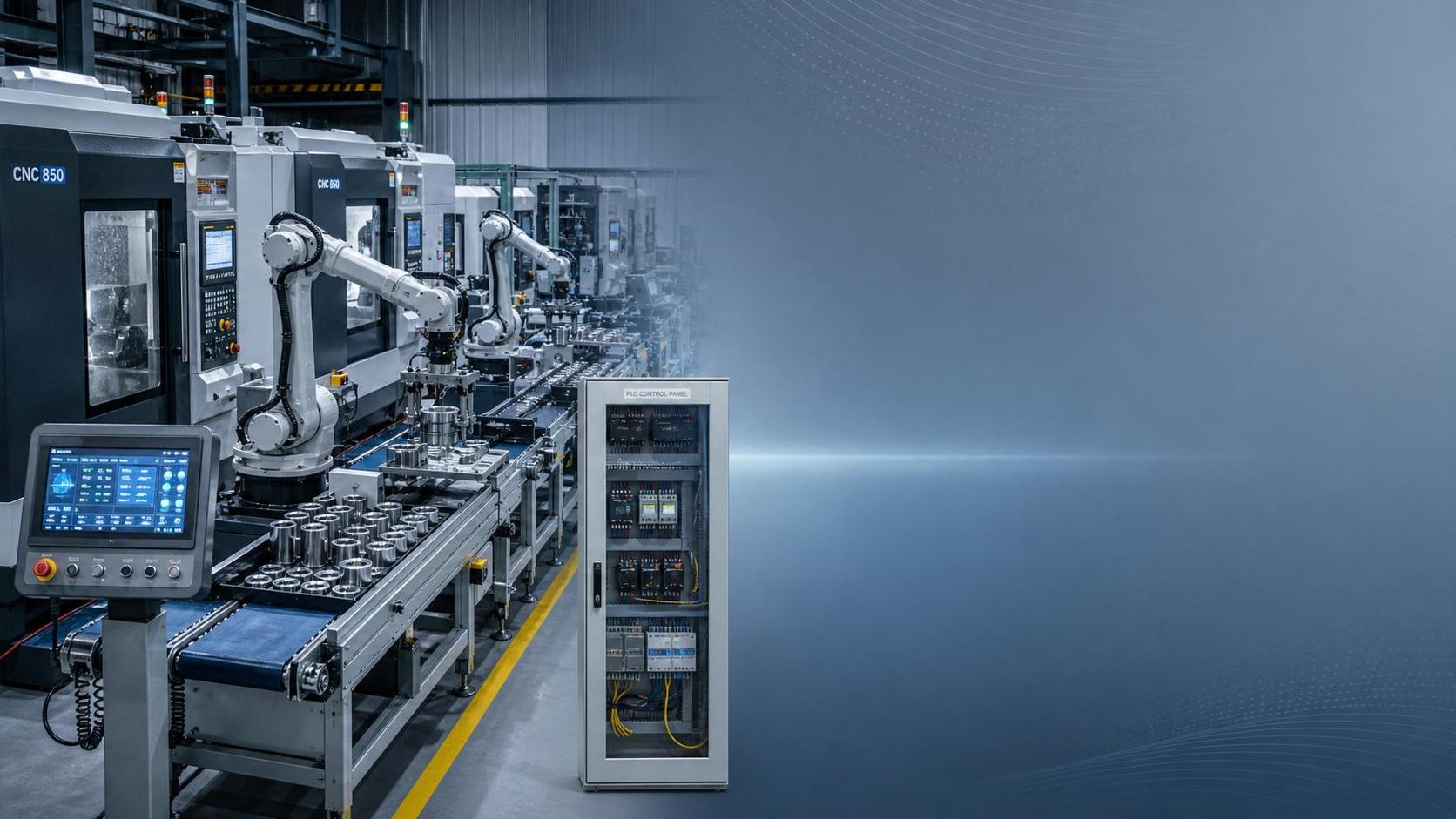
Industrial Automation integration for production line: why retrofit is back on the table
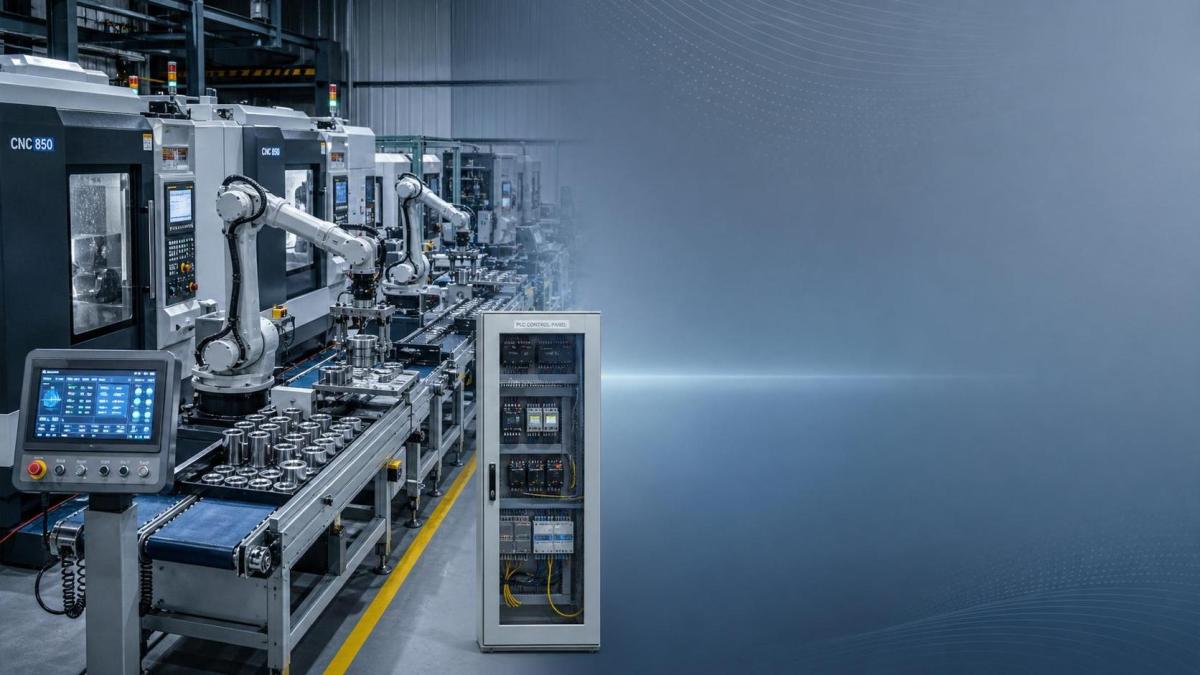
Industrial Automation integration for production line decisions usually begin with one pressure point: output must rise, but disruption must stay controlled.
In CNC machining, that pressure shows up everywhere. Legacy lathes, machining centers, robot cells, and transfer systems still have mechanical life left.
What often falls behind is controls, connectivity, safety logic, data visibility, and line coordination.
That is why Industrial Automation integration for production line upgrades often beats a full rip-and-replace strategy.
A well-planned retrofit can connect older CNC assets to modern PLCs, HMIs, sensors, robots, MES, and traceability platforms.
It can also reduce unplanned downtime, improve changeover discipline, and extend equipment value without freezing production for months.
For sectors such as automotive, aerospace, electronics, and energy equipment, that trade-off matters because tolerances are tight and schedules are tighter.
The better question is not whether new equipment looks attractive. It is whether replacement creates more value than integration in the real operating context.
When does retrofit make more sense than replacement?
The short answer is simple: retrofit wins when the machine structure remains sound, but the automation layer limits performance.
This happens frequently in machine tool environments. Castings, spindles, guideways, and base frames may remain productive for years.
Meanwhile, the control architecture may rely on obsolete drives, isolated islands of data, manual loading steps, or inconsistent inspection feedback.
Industrial Automation integration for production line modernization is most compelling in five situations:
- Cycle time losses come from handling, waiting, or poor coordination rather than spindle capability.
- Quality escapes are linked to inconsistent setup, manual checks, or missing process interlocks.
- A line needs data collection, OEE visibility, or traceability, but the installed machines cannot communicate reliably.
- Lead times for new equipment are too long for current demand or customer launch schedules.
- Capital exposure must stay controlled while capacity is expanded in stages.
In practice, the strongest retrofit cases are not driven by age alone. They are driven by bottlenecks that software, controls, sensing, and line integration can remove.
If the machine cannot hold tolerance, lacks structural rigidity, or has chronic mechanical wear, replacement deserves a harder look.
How can you tell whether Industrial Automation integration for production line upgrades will pay back?
Payback is rarely about one metric. A realistic evaluation combines throughput, scrap, labor utilization, maintenance exposure, and implementation risk.
A useful first screen is shown below. It helps separate lines that need integration from lines that truly need replacement.
Industrial Automation integration for production line programs often show strong returns when the hidden cost of replacement is included.
That hidden cost can include installation delays, building modifications, retraining, new fixturing, fresh process validation, and lost output during ramp-up.
A retrofit model should therefore compare total transition cost, not only equipment price.
What does a smart retrofit usually include on a CNC or automated line?
Not every upgrade needs a dramatic rebuild. More common is a targeted package that removes operational friction without disturbing proven machining capability.
For CNC and precision manufacturing lines, Industrial Automation integration for production line projects often include these elements:
- PLC and HMI modernization for clearer alarms, recipe control, and standard operator workflows.
- Servo, drive, or electrical cabinet renewal where obsolescence creates maintenance risk.
- Robot loading or part transfer integration to stabilize takt time and reduce manual waiting.
- In-process gauging, vision checks, barcode tracking, or torque verification for traceability.
- Machine connectivity for OEE, downtime reason capture, tool life monitoring, and MES reporting.
- Safety system upgrades that support compliance without creating unnecessary operator delays.
The best scope is usually narrow at first. One bottleneck cell, one manual handoff, or one unreliable control layer can become the pilot.
That pilot reveals whether broader Industrial Automation integration for production line deployment will scale cleanly across similar assets.
It also helps confirm whether fixtures, tool management, and inspection systems need parallel changes.
Where do retrofit projects usually go wrong?
The most common mistake is treating integration as an electrical job only. In reality, retrofit performance depends on process logic, maintenance reality, and operator behavior.
Another failure point is poor baseline data. If current scrap, uptime, micro-stops, and changeover losses are not measured, ROI claims become guesswork.
A few risks deserve specific attention:
- Legacy machine documentation may be incomplete, especially on imported or modified equipment.
- Integration can expose hidden wear in clamps, ball screws, pneumatic circuits, or cooling systems.
- New data systems create little value if alarm definitions and downtime categories are inconsistent.
- Robot or conveyor additions may shift the bottleneck downstream instead of removing it.
- Validation can take longer in aerospace, automotive, or regulated traceability environments.
A stronger approach is to define success before hardware arrives. Specify the target cycle time, first-pass yield, alarm response, and data points to be captured.
That makes Industrial Automation integration for production line work measurable rather than theoretical.
How should cost, timeline, and supplier fit be evaluated?
Cost should be modeled in layers. Direct project price matters, but the operational transition cost often determines whether the decision was actually sound.
A practical evaluation should include engineering hours, line stoppage, spare parts strategy, software licensing, validation, and post-startup support.
Timeline should also be separated into phases. Engineering lead time, panel build, factory testing, site installation, and production stabilization do not move at the same speed.
When comparing partners for Industrial Automation integration for production line upgrades, these questions are usually more revealing than brochure claims:
- Have they integrated CNC equipment from different generations and control brands?
- Can they map mechanical condition, control risk, and digital goals into one staged plan?
- Do they offer FAT, SAT, documentation updates, and training tied to actual production scenarios?
- Can they support global component sourcing and long-term spare parts availability?
In global machine tool clusters such as China, Germany, Japan, and South Korea, access to components and cross-border support can materially affect lifecycle cost.
That is especially true where flexible production lines depend on mixed suppliers, imported controls, and tight restart deadlines.
So what is the best next step before choosing retrofit or replacement?
Start with a line-level diagnosis, not an equipment catalog. The decision should follow evidence from bottlenecks, quality losses, maintenance records, and expansion timing.
A good working sequence is straightforward:
- Audit current assets by mechanical health, control obsolescence, and communication capability.
- Quantify where throughput and quality are actually being lost.
- Build a phased Industrial Automation integration for production line roadmap, starting with highest-value constraints.
- Compare that roadmap against a full replacement model using total transition cost.
- Run one pilot cell before scaling across the plant.
For many production environments, retrofit is not the cheaper compromise. It is the more precise decision when proven machine assets still deserve a future.
Industrial Automation integration for production line planning works best when it connects machining performance, automation logic, and digital visibility into one measurable upgrade path.
Before moving forward, confirm the target output, acceptable downtime window, integration scope, and validation burden. Those four points usually reveal the right answer quickly.
Recommended for You
 Industrial Machining: Selecting Processes for Tight-Tolerance Metal PartsCNC Machining Technology Center
 Manufacturing Technology Trends That Improve Throughput and Quality ControlManufacturing Market Research Center
 How to Design Cost-Effective Fixtures That Maintain Cycle Time in Mass ProductionCNC Machining Technology Center
 Is Learning CNC Programming Worth It for Shop Owners Seeking Higher Margins?CNC Machining Technology Center
 CNC Machine Arrival Inspection: Check Shipping Damage, Accuracy, Safety, and DocumentsCNC Machining Technology Center
 How to Select a Machine Tool for Aerospace Parts with Tight Tolerances?Machine Tool Industry Editorial Team

Aris Katos
Future of Carbide Coatings
15+ years in precision manufacturing systems. Specialized in high-speed milling and aerospace grade alloy processing.
▶
Smart Manufacturing for Small Businesses: Where Automation Delivers the Fastest ROIMachine Tool Industry Editorial Team▶
How Smart Manufacturing Technology Improves OEE Across Industry 4.0 Production LinesMachine Tool Industry Editorial Team▶
How to Evaluate an Automation Line for Electronics Production Before InvestmentMachine Tool Industry Editorial Team▶
How to Evaluate an Automated Production Line for Output, Flexibility, and ROIMachine Tool Industry Editorial Team▶
How Smart Manufacturing Improves Traceability and Quality Control in Aerospace?Machine Tool Industry Editorial Team
Mastering 5-Axis Workholding Strategies
Join our technical panel on Nov 15th to learn about reducing vibrations in thin-wall components.

Providing you with integrated sanding solutions
Before-sales and after-sales services
Comprehensive technical support