• Global CNC market projected to reach $128B by 2028 • New EU trade regulations for precision tooling components • Aerospace deman
NYSE: CNC +1.2%LME: STEEL -0.4%

Automated Production Machining: Which Parts and Batch Sizes Are a Good Fit?
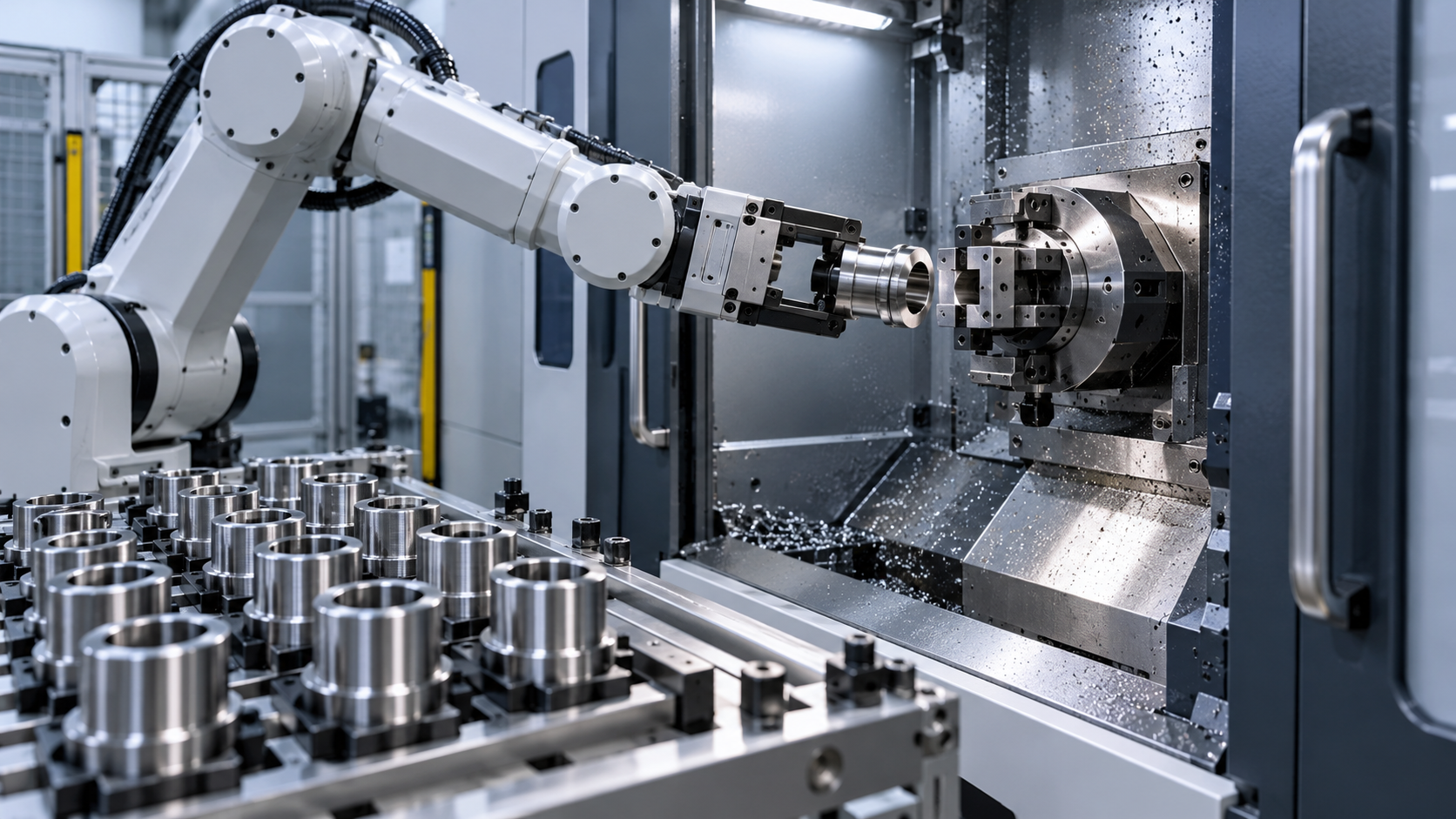
Automated production machining is a strong fit for parts with repeatable locating features, predictable cutting behavior, and enough recurring demand to recover setup and integration costs. Shafts, bushings, discs, and prismatic housings are often suitable candidates. However, a large order does not make an unstable process automation-ready, while a smaller recurring batch may justify automation when fixtures, programs, and handling equipment can be reused.
The selection problem often appears when a CNC machine produces acceptable parts but still depends on an operator to clear chips, adjust seating, or compensate for tool wear. Automating loading alone can turn these small interventions into repeated stoppages or scrap. The practical decision is therefore twofold: can the part run reliably without continuous attention, and will the expected production schedule use the automation enough to justify its cost?
Start with the part’s locating and handling features
A useful first screening question is whether every blank can enter the machine in a known orientation and sit against a repeatable datum. Simple external geometry helps, but reliable location matters more than appearance. A complex housing with accessible datum pads may be easier to automate than a thin, apparently simple ring that distorts during clamping.
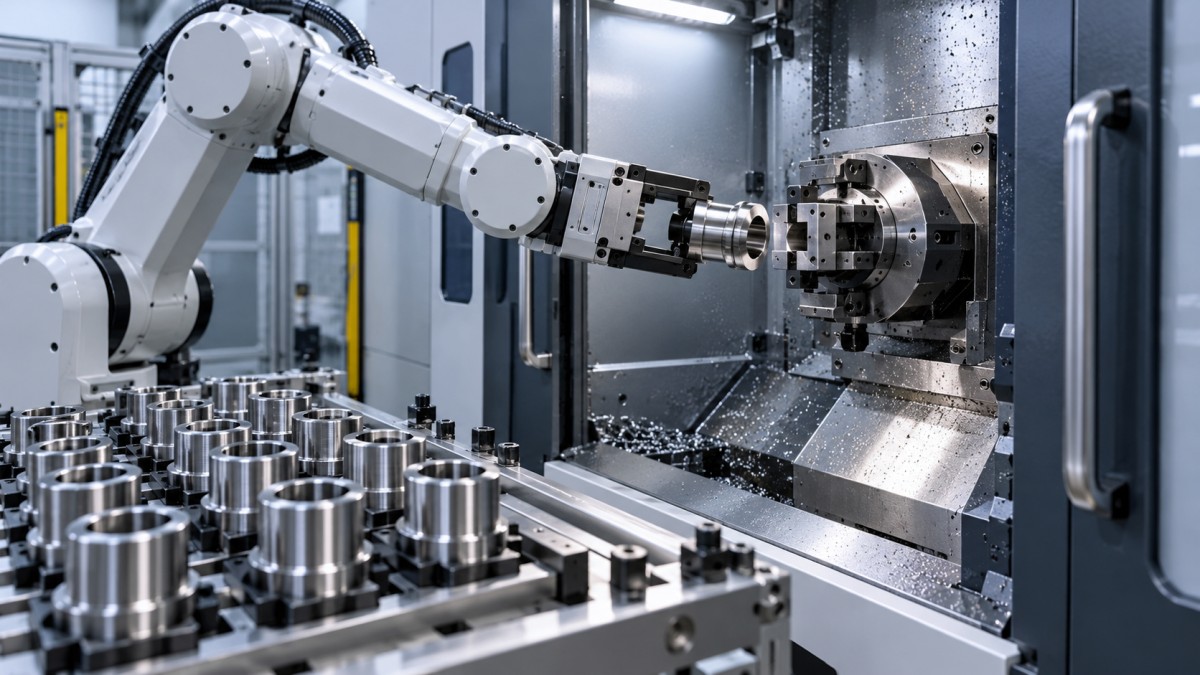
Bar-fed turning is often a relatively direct route for rotational parts because stock presentation is already constrained. Robotic loading of individual blanks introduces additional variables: separation, orientation, gripping, and seating. Pallet automation takes a different approach by moving the fixture with the workpiece, which can suit parts whose direct handling is difficult.
Check the finished part as well as the incoming blank. A gripper must avoid damaging machined surfaces, and the unloading arrangement must prevent collisions, mixing, or cosmetic damage. Thin parts, oily surfaces, and burrs can make an apparently straightforward pick unreliable.
Material and tolerances determine the supervision burden
Material suitability is not a simple division between easy and difficult alloys. The relevant question is whether cutting behavior remains predictable throughout the intended unattended period. Long stringy chips can interrupt an otherwise fast turning process. Abrasive materials may require frequent tool changes, while heat-resistant alloys can make tool-life variation and heat management more demanding.
Evaluate chip control using the actual material condition, stock allowance, tools, and coolant delivery. A program that runs well with one batch of blanks may behave differently when hardness or surface condition changes. Chip conveyors, filtration, and coolant capacity must support the planned run rather than merely the machine’s nominal cutting capability.
Tight tolerances need a control strategy, not just a capable machine
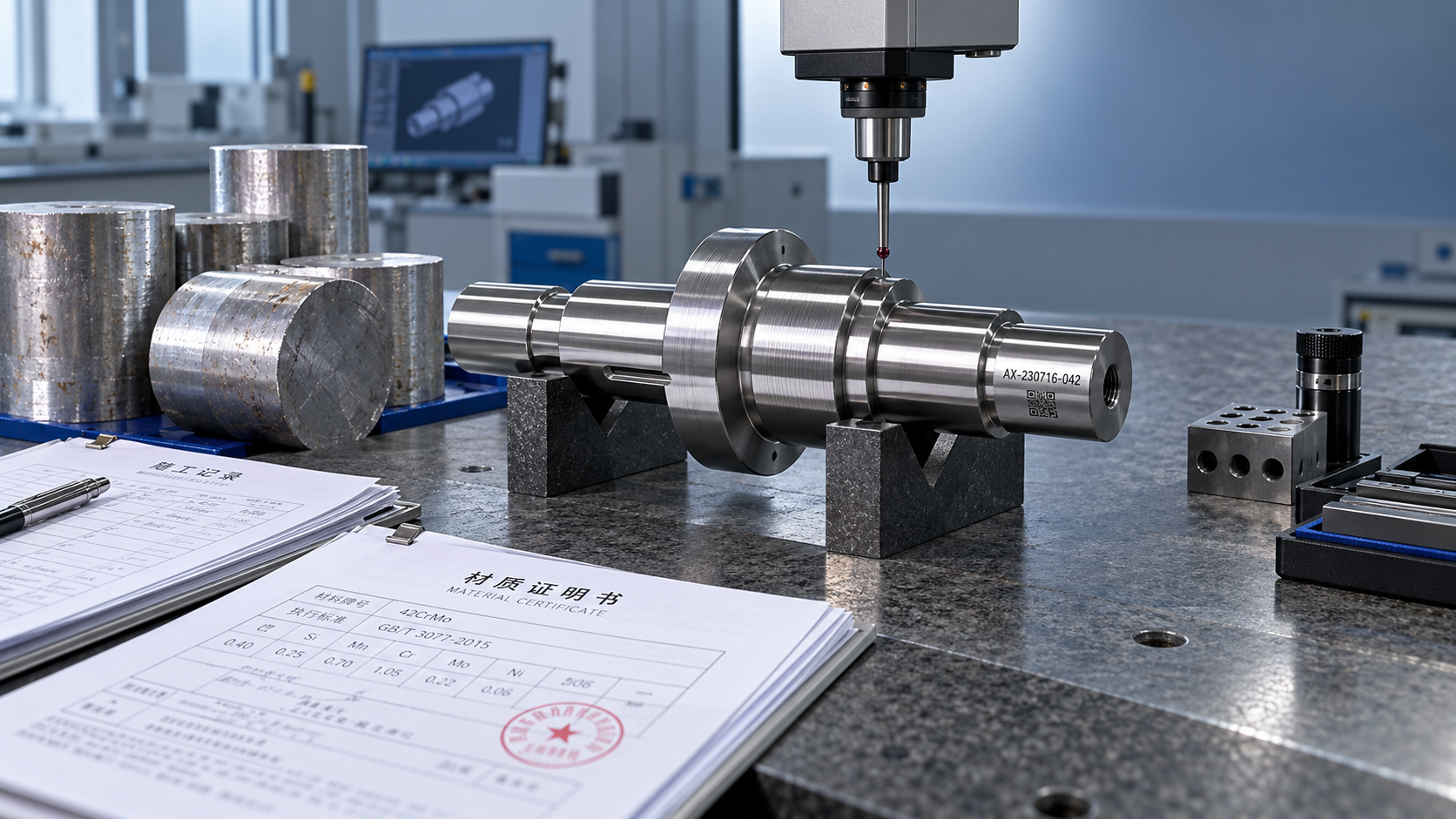
A machine can meet a drawing during a supervised trial yet drift outside tolerance as temperatures change or tools wear. For critical dimensions, establish how the process detects drift, applies permitted corrections, and stops before producing unacceptable parts. Include warm-up behavior, fixture repeatability, and measurement uncertainty in the assessment.
- In-machine probing can confirm location and monitor selected dimensions, but it does not automatically replace independent acceptance inspection.
- Tool-life limits should reflect demonstrated variation, not only the longest successful run.
- Tool-breakage detection and replacement tools can support continued production when their response has been validated.
- Gauging outside the machine may be necessary for features that are inaccessible or unsuitable for reliable in-process measurement.
Thin walls and slender shafts deserve separate attention. Clamping force, cutting load, and stress release can change geometry after unclamping. Measuring a feature while the part remains constrained may therefore give an incomplete picture of final conformity.
Batch size matters—but recurring demand matters more
There is no universal minimum batch size for automated production machining. The economic threshold depends on how much engineering and setup work can be reused, how much operator attendance is actually removed, and whether released machine capacity has a productive use. Evaluate the production family over a realistic planning horizon, not just the next purchase order.
A recurring batch of compatible parts may share jaws, pallets, grippers, and inspection routines. A much larger one-time order may require dedicated equipment that has little use afterward. Annual quantity alone also hides scheduling problems: demand spread across frequent urgent releases creates a different workload from the same quantity produced in a few planned campaigns.
Use quantities from the actual schedule to establish a threshold. Arbitrary rules such as “automation starts at a thousand pieces” ignore machining time, loading effort, fixture capacity, and product life. A long-cycle component can accumulate substantial machine hours in a small batch; a short-cycle component may need far more pieces to create comparable operating time.
Match the automation to the work that limits production
The most elaborate system is not necessarily the best fit. Identify where time is lost before selecting equipment. A robot does little for a process limited by manual deburring after every cycle, and a large pallet pool cannot create unattended production if tools fail unpredictably.
Bar feeding for compatible turned parts
Consider bar feeding when the stock envelope, spindle capacity, and part geometry are compatible. Confirm the complete route: cutoff, second-end features, part collection, and remnant disposal. Subspindle transfer or a secondary operation may be needed, so evaluate finished-part output rather than first-operation cycle time alone.
Pallet systems for long cycles and varied components
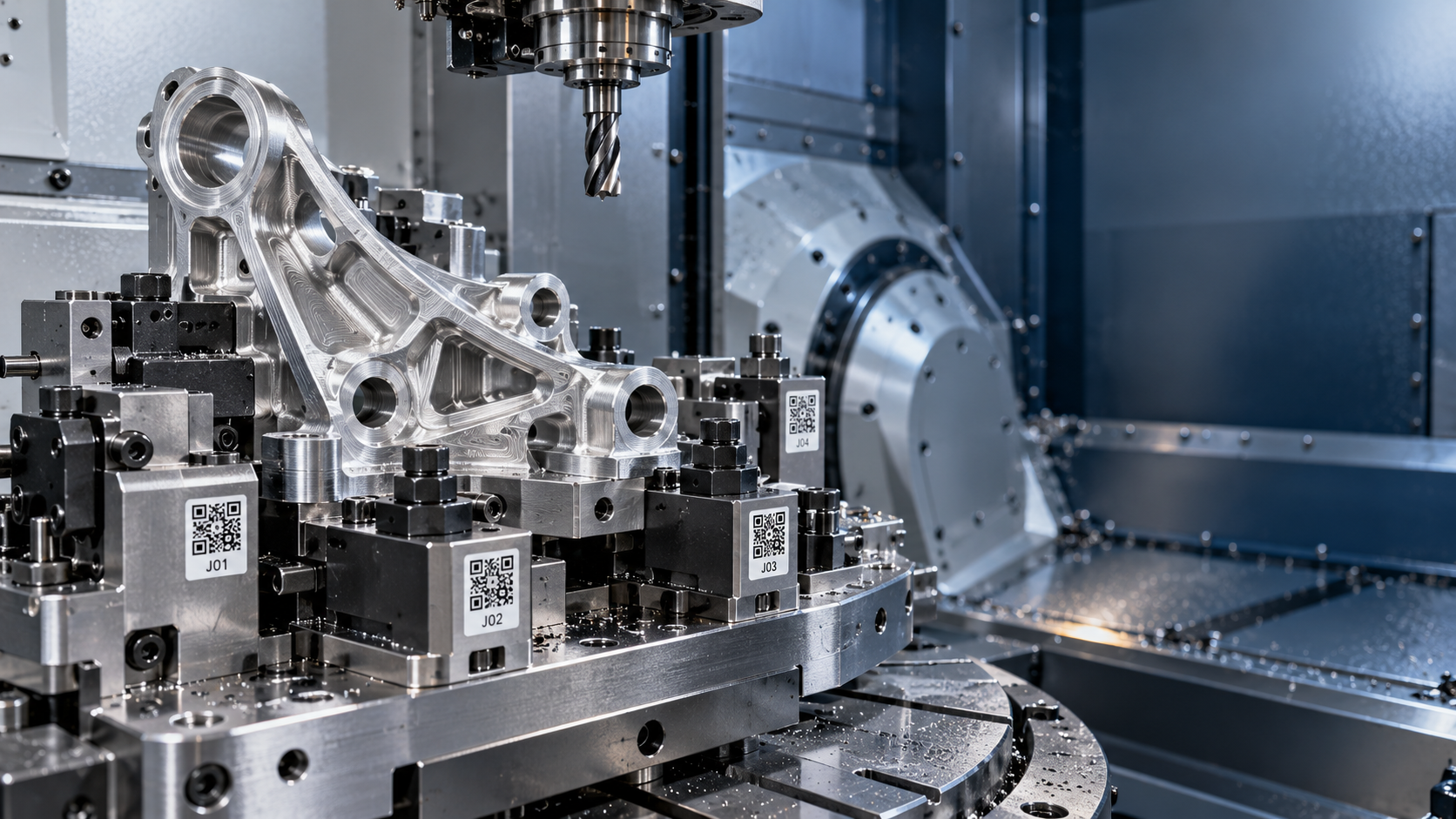
Pallet changers and pools can separate loading activity from machining. They are useful when fixtures can be prepared offline and parts remain securely located through lengthy operations. Their limits include fixture cost, available work envelope, tool capacity, and the number of prepared pallets needed to cover the intended unattended period.
Robotic tending for repeatable individual-part handling
Robot tending suits machines processing discrete blanks when loading and unloading can be standardized. Check door operation, chuck or vise actuation, machine communication, washdown, seating verification, and fault recovery. Robot reach and payload are only part of the selection; the gripper, including its weight and clearance requirements, must work throughout the transfer path.
Where demand changes frequently, favor reusable interfaces over dedicated mechanisms. Adjustable grippers and modular fixtures can broaden applicability, but each additional variant still requires a validated program, collision assessment, and setup procedure.
Build the cost comparison around good parts delivered
Compare the current process and the proposed automated route at the same output and quality requirements. Include programming, fixtures, grippers, guarding, integration, training, maintenance, inspection, and consumables. Account for setup labor and fault recovery rather than treating the cell as permanently unattended.
A useful starting calculation is:
Break-even quantity = additional fixed cost ÷ net saving per accepted part.
The additional fixed cost is the difference between the alternatives over the chosen evaluation period. The saving per accepted part must include changes in labor, tooling, scrap, inspection, maintenance, and other variable costs. If that saving is zero or negative, increasing volume will not recover the investment through unit-cost reduction alone.
For mixed production, calculate by part family and schedule rather than forcing every component into one average. Also separate labor capacity released from cash savings. An operator who tends several machines may increase available production capacity without reducing payroll. That benefit is valuable only when the business can use the released capacity.
Loading time should be compared with cutting time and the proposed tending arrangement. A short-cycle part can leave the machine waiting for a shared robot. A long-cycle part may allow one handling system to serve several machines, provided transfer timing, access, and fault recovery do not create conflicts.
Prove the intended unattended interval before committing
A successful demonstration cycle proves only that the sequence can work once. Acceptance testing should represent production variation and the intended operating window. Define measurable pass conditions before the trial, including part conformity, intervention frequency, changeover duration, and recovery from foreseeable faults.
- Validate incoming blanks. Test expected dimensional, surface, and orientation variation rather than selecting only ideal samples.
- Run through relevant tool-life and thermal conditions. Include fresh and worn tools, planned tool changes, and operating states that can affect accuracy.
- Challenge handling and seating. Verify detection of missing parts, incorrect orientation, incomplete clamping, and contamination at locating surfaces.
- Check supporting capacity. Confirm that coolant, chip storage, raw-part supply, finished-part storage, and tool availability cover the proposed interval.
- Verify safe recovery. Establish how operators identify the machine state, isolate affected parts, and restart without bypassing safeguards.
Guarding and safety-related controls must be assessed for the integrated cell, not assumed adequate because individual machines and robots have their own protective features. Maintenance access, jam clearing, and manual setup modes belong in that assessment.
Approve automation first for parts whose remaining risks are measurable and controllable. Where seating, chip evacuation, or dimensional stability remains inconsistent, stabilize that operation before extending unattended time. Where the process is stable but demand is uncertain, a reusable loading or pallet arrangement may be a more defensible commitment than a dedicated line.
PREVIOUS ARTICLE
NEXT ARTICLE
Recommended for You
![]() Zhongshan Xiaolan Machinery Exhibition Opens With Global Product DebutsMachine Tool Industry Editorial Team
 Automated Production Machining: Which Parts and Batch Sizes Are a Good Fit?Machine Tool Industry Editorial Team
![]() FANUC Links FIELD System Data with Copilot to Advance Shop-Floor Data UseCNC Machining Technology Center
 Smart Manufacturing for Aerospace: Building Traceability Across CNC OperationsCNC Machining Technology Center
![]() Mitsubishi Electric Announces Physical AI System Linking Humanoid Robots and CNC MachinesMachine Tool Industry Editorial Team
 Precision Machining for Defense: Supplier Quality and Traceability ChecksManufacturing Market Research Center


Aris Katos
Future of Carbide Coatings
15+ years in precision manufacturing systems. Specialized in high-speed milling and aerospace grade alloy processing.
▶
Automated Production Machining: Which Parts and Batch Sizes Are a Good Fit?Machine Tool Industry Editorial Team▶
Choosing Automated Machine Tools for High-Mix, Low-Volume ProductionMachine Tool Industry Editorial Team▶
Choosing Industrial Robots for Warehouse Picking and PalletizingMachine Tool Industry Editorial Team▶
Digital Manufacturing for Smart Factories: Connecting Legacy Machines to MESMachine Tool Industry Editorial Team▶
Selecting Machine Tools for Automotive Parts: Accuracy, Throughput, and AutomationMachine Tool Industry Editorial Team
▶
Mastering 5-Axis Workholding Strategies
Join our technical panel on Nov 15th to learn about reducing vibrations in thin-wall components.

Providing you with integrated sanding solutions
Before-sales and after-sales services
Comprehensive technical support