• Global CNC market projected to reach $128B by 2028 • New EU trade regulations for precision tooling components • Aerospace deman
NYSE: CNC +1.2%LME: STEEL -0.4%

What Does a CNC Lathe Price List Really Include?
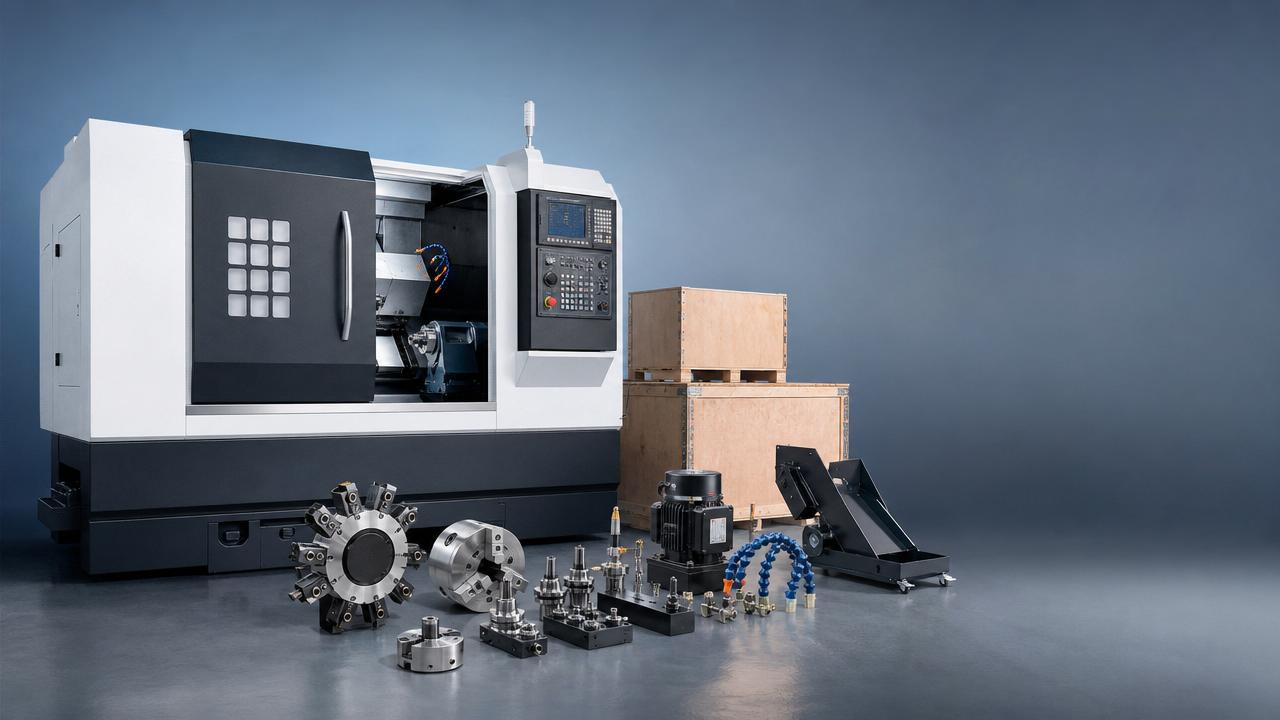
A CNC Lathe Price List is more than a machine cost table. It is the starting point for checking specifications, configurations, delivery terms, service support, and long-term production value.
Reading it correctly helps compare suppliers, identify hidden expenses, and make better investment decisions in automated manufacturing environments.
Why a CNC Lathe Price List Needs Careful Review
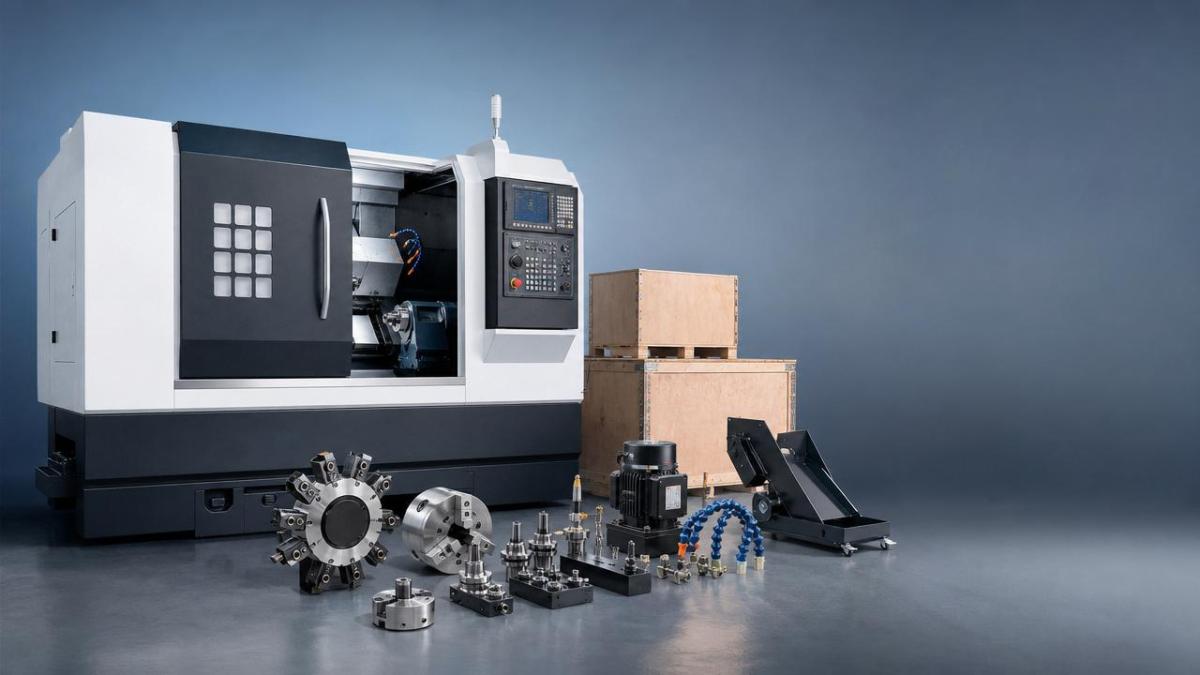
A CNC Lathe Price List often looks simple at first glance. However, two machines with similar base prices may deliver very different production results.
The listed price may include only the standard machine body. Tooling, chip conveyors, bar feeders, probes, and software options may be quoted separately.
In precision manufacturing, the lowest number rarely means the lowest total cost. Cycle time, stability, accuracy, and service access directly affect payback.
A structured review of a CNC Lathe Price List prevents inconsistent comparisons. It also supports clearer supplier communication before purchase approval.
Core Checklist for Reading a CNC Lathe Price List
Use the following checklist to separate real value from incomplete pricing. Each item should be confirmed before comparing multiple quotations.
- Verify the machine model, turning diameter, turning length, spindle bore, chuck size, and bed structure before judging the quoted price.
- Check whether the CNC Lathe Price List includes standard controller brands, servo systems, spindle motor power, and operating interface language.
- Confirm the turret type, tool station quantity, live tooling availability, Y-axis option, and sub-spindle configuration when machining complex parts.
- Ask whether hydraulic systems, lubrication systems, cooling units, chip conveyors, and safety guards are included or charged separately.
- Review precision indicators, including positioning accuracy, repeatability, spindle runout, thermal compensation, and applicable inspection standards.
- Identify included accessories, such as chuck, tailstock, tool holders, sleeves, coolant pump, work light, manuals, and foundation pads.
- Compare controller functions, including conversational programming, macro support, networking, data output, simulation, and remote diagnostic capability.
- Clarify whether the price covers packaging, inland transport, export documents, sea freight, insurance, customs clearance, or final delivery.
- Confirm warranty duration, covered components, response time, spare parts availability, engineer dispatch terms, and online technical support.
- Calculate installation, commissioning, operator training, tooling setup, trial cutting, and acceptance testing as part of total ownership cost.
What Standard Pricing Usually Includes
A standard CNC Lathe Price List usually starts with the basic machine specification. This includes the bed, spindle, guideway, turret, controller, and electrical cabinet.
Some suppliers include a hydraulic chuck and basic tool holders. Others quote these parts as optional accessories to keep the base price lower.
Packaging is another important item. Export wooden cases, anti-rust treatment, vacuum packing, and shock protection can change the final invoice.
When reviewing a CNC Lathe Price List, always request a detailed configuration sheet. It should match the exact model and every listed accessory.
Optional Configurations That Change the Final Price
Many cost differences appear in optional configurations. A CNC Lathe Price List may not show these details unless a complete requirement is submitted.
Live tooling allows milling, drilling, and tapping on one setup. It increases machine price but reduces secondary operations and fixture changes.
A Y-axis improves off-center machining capability. It is useful for complex shafts, valve parts, aerospace fittings, and precision connectors.
A sub-spindle supports complete machining from both ends. It reduces handling time and improves consistency in high-volume production.
Automation options can include bar feeders, gantry loaders, robots, parts catchers, and automatic doors. These items strongly affect total investment.
Key Options to Confirm
- Define the required spindle speed range, torque output, and motor power according to material hardness and cutting depth.
- Select the guideway type by balancing heavy cutting rigidity, fast movement, accuracy retention, and maintenance expectations.
- Specify automation interfaces early, especially if robots, bar feeders, conveyors, or production monitoring systems will be added later.
- Confirm tool presetting, probing, chip management, coolant pressure, and filtration requirements before finalizing the CNC Lathe Price List.
Application Scenarios That Affect Price Comparison
Automotive Component Production
Automotive shafts, bushings, gears, and brake components often require repeatable cycle times. A cheaper machine may become costly if uptime is poor.
For this scenario, the CNC Lathe Price List should include automation readiness, tool life management, chip removal, and stable spindle performance.
Aerospace and High-Precision Parts
Aerospace parts often involve difficult materials, tight tolerances, and strict traceability. Accuracy documentation matters as much as the machine price.
In this case, compare thermal control, machine rigidity, probing systems, inspection reports, and controller data functions in every quotation.
General Job Shop Machining
Job shop work changes frequently. Flexibility, fast setup, programming convenience, and tooling compatibility are critical when reviewing lathe pricing.
A balanced CNC Lathe Price List should show optional tooling packages, common spare parts, and controller functions for varied part types.
Commonly Overlooked Costs in a CNC Lathe Price List
Foundation preparation is often missed. Some CNC lathes need specific floor strength, leveling pads, anchor bolts, or vibration control.
Power supply adaptation can add cost. Voltage, frequency, transformer capacity, grounding, and compressed air requirements should be checked early.
Cutting tools are not always included. Inserts, boring bars, drills, holders, collets, and tool blocks can create a significant startup expense.
Spare parts policies also matter. A low CNC Lathe Price List may be less attractive if critical components require long delivery times.
Training costs should not be ignored. Operator instruction, maintenance training, and programming support reduce early production errors.
Software connectivity may involve extra licenses. Data collection, remote monitoring, and smart factory integration can require additional modules.
Practical Steps for Supplier Comparison
Start by preparing a part-based requirement sheet. Include drawings, material, tolerance, batch size, surface finish, and expected cycle time.
Request every supplier to quote the same specification. This makes the CNC Lathe Price List easier to compare without hidden assumptions.
- Ask for a configuration breakdown that separates the machine, accessories, automation options, freight, installation, training, and warranty terms.
- Request machining videos, test reports, sample cutting records, or customer references for similar materials and part dimensions.
- Compare payment terms, lead time, delivery condition, spare parts stock, and technical response speed before confirming the final offer.
- Evaluate total cost per part instead of purchase price alone, especially for continuous production or multi-shift operation.
A useful comparison method is scoring each offer. Rate capacity, accuracy, automation, service, delivery risk, and long-term support separately.
This approach turns a CNC Lathe Price List into a decision tool rather than a simple price reference.
Warning Signs Before Placing an Order
Be careful when the quotation lacks a clear configuration sheet. Missing details often lead to disputes after payment or shipment.
Avoid relying only on catalog specifications. Actual performance depends on assembly quality, testing standards, controller settings, and after-sales capability.
Check whether warranty wording is specific. Vague service promises may not cover labor, travel, replacement parts, or downtime losses.
Review the delivery terms carefully. EXW, FOB, CIF, DAP, and DDP create very different cost responsibilities.
Question unusually low pricing. A CNC Lathe Price List that excludes essential systems may appear competitive but delay real production readiness.
Summary and Next Action
A CNC Lathe Price List should be read as a complete investment document. It includes far more than the machine base price.
Specifications, options, tooling, logistics, service, training, and spare parts all influence the true cost of ownership.
Before selecting a supplier, create a standardized checklist. Then request detailed quotations based on the same machining requirements.
The best CNC Lathe Price List is transparent, technically complete, and connected to real production goals. Use it to compare value, not just price.
Recommended for You
 How to Select a CNC Metal Lathe for Tight-Tolerance Shaft and Sleeve PartsCNC Machining Technology Center
 How to Select an Industrial Lathe for High-Volume Shaft ProductionMachine Tool Industry Editorial Team
 Selecting Machine Tools for Automotive Parts: Accuracy, Throughput, and AutomationMachine Tool Industry Editorial Team
 Industrial Machining: Selecting Processes for Tight-Tolerance Metal PartsCNC Machining Technology Center
 Manufacturing Technology Trends That Improve Throughput and Quality ControlManufacturing Market Research Center
 How to Design Cost-Effective Fixtures That Maintain Cycle Time in Mass ProductionCNC Machining Technology Center






Aris Katos
Future of Carbide Coatings
15+ years in precision manufacturing systems. Specialized in high-speed milling and aerospace grade alloy processing.
▶
How to Select an Industrial Lathe for High-Volume Shaft ProductionMachine Tool Industry Editorial Team▶
When Does CNC Turning Pay Off? A Break-Even Guide by Annual Part VolumeMachine Tool Industry Editorial Team▶
How to Compare CNC Metal Lathe Brands ObjectivelyMachine Tool Industry Editorial Team▶
CNC Lathe Quick Installation Guide: How to Avoid Alignment and Wiring MistakesMachine Tool Industry Editorial Team▶
CNC Lathe Quick Installation Guide: Common Setup Mistakes and How to Avoid ThemMachine Tool Industry Editorial Team
Mastering 5-Axis Workholding Strategies
Join our technical panel on Nov 15th to learn about reducing vibrations in thin-wall components.

Providing you with integrated sanding solutions
Before-sales and after-sales services
Comprehensive technical support