• Global CNC market projected to reach $128B by 2028 • New EU trade regulations for precision tooling components • Aerospace deman
NYSE: CNC +1.2%LME: STEEL -0.4%

Low Maintenance CNC Manufacturing: What Reduces Downtime and Service Costs?
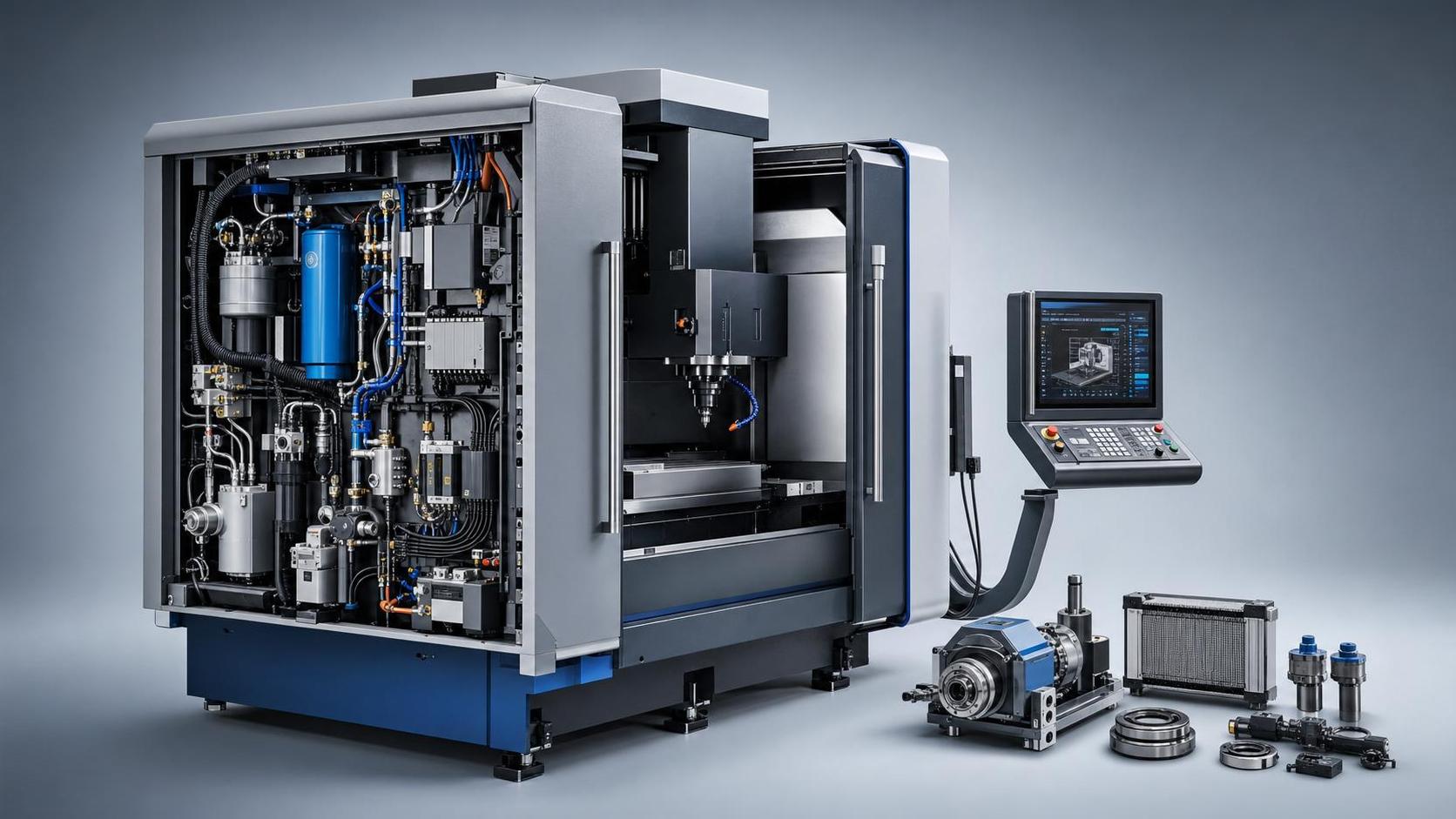
Why Low Maintenance CNC Manufacturing Matters More Than Ever
In low maintenance CNC manufacturing, uptime is not just a service target. It directly affects delivery speed, labor efficiency, spare parts usage, and total ownership cost.
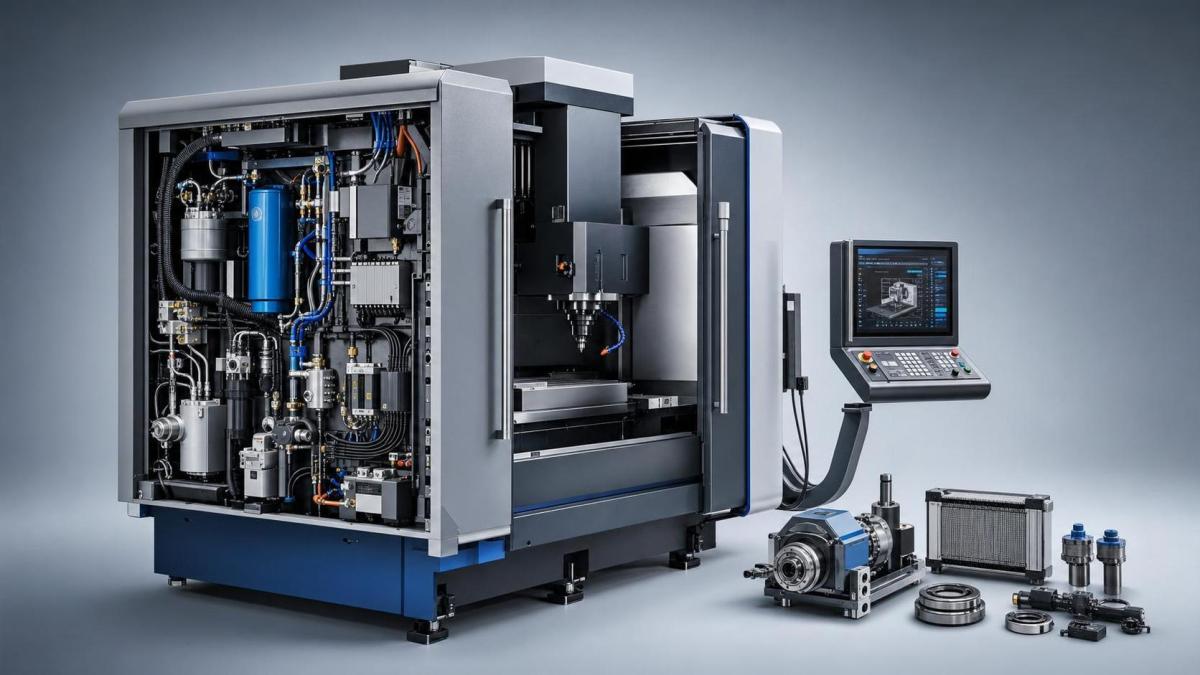
That is why machine buyers now look beyond cutting speed or axis count. They also ask how fast a machine can be inspected, repaired, and returned to production.
For CNC service teams, this shift is important. A machine with smart layout and reliable subsystems can reduce emergency calls, shorten visits, and lower service costs over time.
In real production environments, the biggest losses often come from repeated small failures. Coolant issues, sensor faults, cable wear, and poor access usually create more cost than major breakdowns.
So the core question is simple. What design and maintenance choices make low maintenance CNC manufacturing realistic, not just a sales phrase?
Machine Design Features That Reduce Downtime
The first driver of low maintenance CNC manufacturing is machine architecture. Good design removes failure points before service teams ever see them.
Accessible service zones
Machines should allow quick access to pumps, filters, lubrication units, sensors, and electrical cabinets. If technicians must remove multiple covers, service time rises immediately.
Well-organized layouts also reduce diagnosis errors. When cables, connectors, and pneumatic lines are clearly separated, fault tracing becomes faster and safer.
Protected critical components
Low maintenance CNC manufacturing depends on protecting the parts that fail most often. That includes guideways, ball screws, spindle systems, encoders, and coolant circuits.
Better sealing, chip isolation, and thermal management can dramatically cut contamination. In many workshops, contamination is the hidden source of repeat service calls.
Modular replacement logic
A modular machine is easier to keep running. Standardized drives, plug-in sensors, and replaceable assemblies shorten repair windows and simplify spare parts planning.
This matters even more for global service networks. When parts are shared across models, inventory pressure drops and response speed improves.
The Maintenance Practices That Actually Lower Service Costs
Even the best machine will struggle without disciplined maintenance. Low maintenance CNC manufacturing works when routine tasks are simple, scheduled, and easy to verify.
Use preventive maintenance that fits machine reality
Over-maintenance wastes time. Under-maintenance creates failures. The practical answer is to match maintenance intervals to spindle hours, material type, coolant condition, and production intensity.
For example, aluminum, cast iron, and stainless steel create different chip and dust behavior. That changes the frequency for cleaning, filtration checks, and seal inspection.
Focus on common failure chains
Service costs often come from patterns, not isolated faults. A clogged filter leads to heat. Heat affects lubrication. Poor lubrication then damages motion accuracy.
When teams track failure chains instead of single alarms, low maintenance CNC manufacturing becomes easier to manage and easier to explain to customers.
Standardize field service checklists
Consistent checklists help reduce missed steps. They also make service quality more predictable across regions, shifts, and technician experience levels.
- Check lubrication pressure, reservoir level, and line leakage.
- Inspect coolant concentration, pump noise, and filter blockage.
- Review spindle temperature trend and abnormal vibration.
- Confirm cabinet cleanliness, fan operation, and connector stability.
- Test door switches, limit sensors, and emergency stop response.
These steps sound basic. Yet in practice, they are often where repeat failures begin.
Digital Tools That Support Low Maintenance CNC Manufacturing
A more visible trend is digital integration. It is changing how CNC service teams detect issues, plan visits, and control maintenance spending.
Remote diagnostics save travel and time
Machines with remote alarm access, parameter history, and health monitoring reduce guesswork. Many issues can be isolated before a technician arrives on site.
That lowers visit frequency, improves first-time fix rate, and supports low maintenance CNC manufacturing from a real cost perspective.
Condition-based alerts are more useful than fixed alarms
Static alarms only report failure after it happens. Condition-based alerts look at vibration, load, temperature, pressure, and cycle behavior before the machine stops.
This approach is especially useful for spindle health, coolant flow, lubrication performance, and servo load drift. Those signals often reveal wear earlier than visual inspection.
Maintenance data should be usable, not just collected
Some factories collect huge volumes of machine data but still struggle with downtime. The reason is simple. Data without response rules does not reduce service costs.
Useful systems connect alarms with actions, spare parts, manuals, and service history. That is where low maintenance CNC manufacturing becomes practical instead of theoretical.
What Buyers Should Check Before Choosing a CNC Platform
For procurement and lifecycle cost control, machine selection should include maintainability. Purchase price alone rarely shows the true long-term service burden.
Ask these practical service questions
- How long does it take to replace filters, pumps, or sensors?
- Are wear parts shared across machine models?
- Can spindle, drive, and lubrication data be accessed remotely?
- How many panels must be removed for basic service tasks?
- What is the average lead time for critical spare parts?
- Is the maintenance manual built for field work or only factory reference?
These questions quickly reveal whether a supplier truly supports low maintenance CNC manufacturing or simply promotes it in marketing language.
Compare total service impact, not only machine specs
How to Build a More Reliable Service Strategy
Low maintenance CNC manufacturing is rarely the result of one feature. It usually comes from a combination of practical design, disciplined maintenance, and useful digital support.
The most effective strategy starts with a simple goal. Remove delay at every service stage, from detection to diagnosis, repair, verification, and restart.
That means choosing machines with easy-access layouts, protected components, standardized parts, and remote monitoring that actually helps field decisions.
It also means reviewing maintenance records for patterns. If the same issue appears across sites, the answer may be design improvement, not another temporary repair.
As production becomes more automated, service efficiency becomes a competitive advantage. Companies that support low maintenance CNC manufacturing well will protect uptime and control ownership cost far more effectively.
The next practical step is clear. Audit current downtime causes, rank the repeat failures, and compare them against machine design and maintenance process gaps. That is where measurable savings usually begin.
PREVIOUS ARTICLE
NEXT ARTICLE
Recommended for You
 How to Select a CNC Lathe for Small Parts Without Sacrificing Accuracy or Cycle TimeCNC Machining Technology Center
 How to Select a Slant Bed Lathe for High-Precision Shaft and Chuck WorkCNC Machining Technology Center
 Smart Manufacturing for Small Businesses: Where Automation Delivers the Fastest ROIMachine Tool Industry Editorial Team
 How to Specify a CNC Lathe for High-Volume Automotive Shaft ProductionCNC Machining Technology Center
 How Automated Precision Machining Maintains Tolerance in High-Mix ProductionCNC Machining Technology Center
 How to Evaluate a Machine Tool Factory Before Sourcing CNC EquipmentGlobal Machine Tool Trade Research Center


Aris Katos
Future of Carbide Coatings
15+ years in precision manufacturing systems. Specialized in high-speed milling and aerospace grade alloy processing.
▶
Japan Adds 5-Axis CNC Gear Grinders to Export ControlsMachine Tool Industry Editorial Team▶
How to Choose CNC Industrial Machines for High-Mix Production LinesMachine Tool Industry Editorial Team▶
US Opens 337 Probe Into Chinese CNC CentersMachine Tool Industry Editorial Team▶
US Tightens Export Controls on CNC Motion ModulesMachine Tool Industry Editorial Team▶
US Tightens CNC Export Controls on China SupplyMachine Tool Industry Editorial Team
Mastering 5-Axis Workholding Strategies
Join our technical panel on Nov 15th to learn about reducing vibrations in thin-wall components.

Providing you with integrated sanding solutions
Before-sales and after-sales services
Comprehensive technical support