• Global CNC market projected to reach $128B by 2028 • New EU trade regulations for precision tooling components • Aerospace deman
NYSE: CNC +1.2%LME: STEEL -0.4%

How to Choose Cutting Tools for High-Speed Machining of Steel, Aluminum, and Titanium
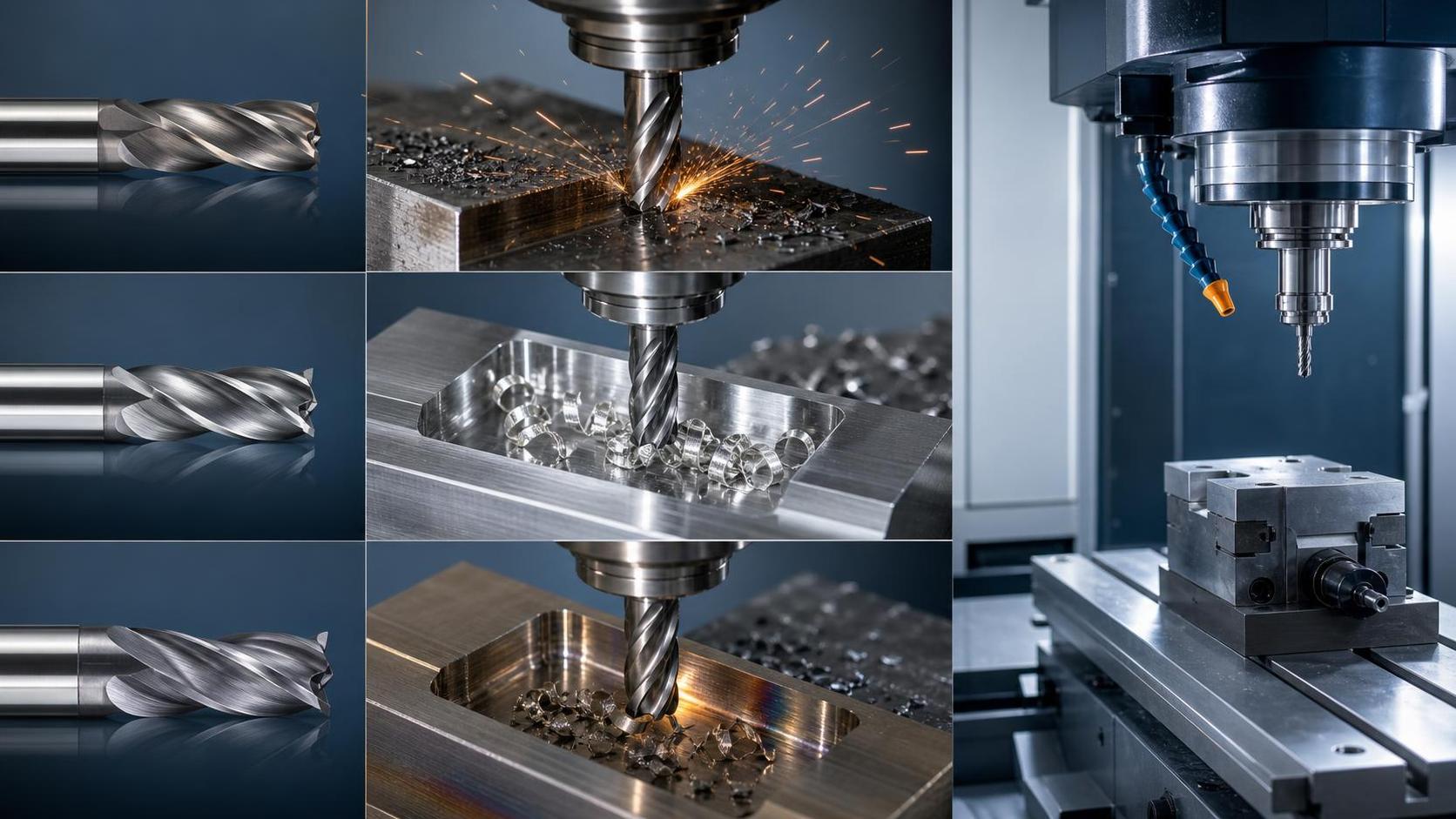
What “Choosing Cutting Tools for High-Speed Machining” Actually Means
In high-speed machining, the wrong tool usually fails long before the spindle reaches its limit. That is why tool selection is not a simple matter of picking carbide for hard materials and sharp edges for soft ones. When steel, aluminum, and titanium are all machined at high cutting speeds, the real decision is about how heat is generated, where it goes, how the chip leaves the cut, and whether the edge stays stable under changing load.
This is where many evaluations go off track. People compare tool catalogs by coating names, flute counts, or advertised speed ranges, but those are only fragments. A cutting tool for high-speed machining has to match the workpiece material, machine rigidity, holder system, coolant strategy, required surface finish, and whether the operation is roughing, semi-finishing, or finishing. A tool that performs well in aerospace titanium profiling may be a poor choice for thin-wall aluminum parts, even if both jobs are run on modern high-speed machining centers.
For technical evaluators, the useful question is not “Which tool is best?” but “Which tool geometry and grade remain stable in this exact cutting environment?” That shift in thinking tends to produce better decisions than chasing nominal speed capability alone.
Material Changes the Tool More Than the Machine Does
Steel, aluminum, and titanium do not ask for incremental changes. They ask for different cutting behavior.
With steel, especially alloy and hardened grades, the tool has to tolerate heat and abrasion while resisting edge chipping. High-speed cutting can be productive, but only if the substrate and coating hold up under sustained temperature. In practice, this often points toward carbide grades with good hot hardness and coatings designed to reduce flank wear and crater wear. Geometry matters too: too sharp an edge may break down quickly, while too blunt an edge raises cutting force and vibration.
Aluminum creates a different problem. Heat is still present, but the bigger risk is built-up edge, chip adhesion, and poor evacuation at high spindle speeds. Tools for aluminum usually benefit from polished flutes, sharper cutting edges, and more open geometries that keep chips moving. A coating is not always the advantage people assume it is. In some aluminum applications, an uncoated or specially optimized low-friction surface can outperform a general-purpose coated tool because chip welding matters more than abrasion resistance.
Titanium is where high-speed language becomes misleading. Titanium alloys have relatively low thermal conductivity, so heat stays concentrated near the cutting edge. That pushes tool wear fast and makes chatter or notch wear much more likely if engagement is unstable. A tool that looks aggressive on paper can collapse in titanium if radial engagement, coolant delivery, or tool overhang are not tightly controlled. In other words, high-speed machining of titanium is rarely just about increasing cutting speed. It is about managing temperature and maintaining a predictable chip load.
A useful way to screen options is to separate tool choice by dominant failure mode rather than by material label alone.
Geometry Is Often More Decisive Than Brand-Level Claims
In tool evaluation, geometry usually deserves more attention than it gets. Diameter, flute count, helix angle, core thickness, edge preparation, corner radius, and rake design all affect whether the tool behaves well at speed.
Take flute count. More flutes can improve feed capability and support higher metal removal in steel when chip thickness is controlled, but the same choice may create trouble in aluminum if the gullets become too tight to clear chips. Titanium adds another constraint: too many flutes can reduce space for evacuation and raise heat concentration, yet too few may lower productivity or stiffness. There is no universal flute count that defines a high-speed tool.
Helix angle is another example. A higher helix can soften entry and improve finish, but it can also increase axial pull and influence stability on thin sections or long-reach setups. For steel finishing, that may be welcome. For titanium slotting with limited rigidity, it may create the wrong force pattern. Technical teams that compare tooling only by substrate and coating often miss these geometry-driven outcomes.
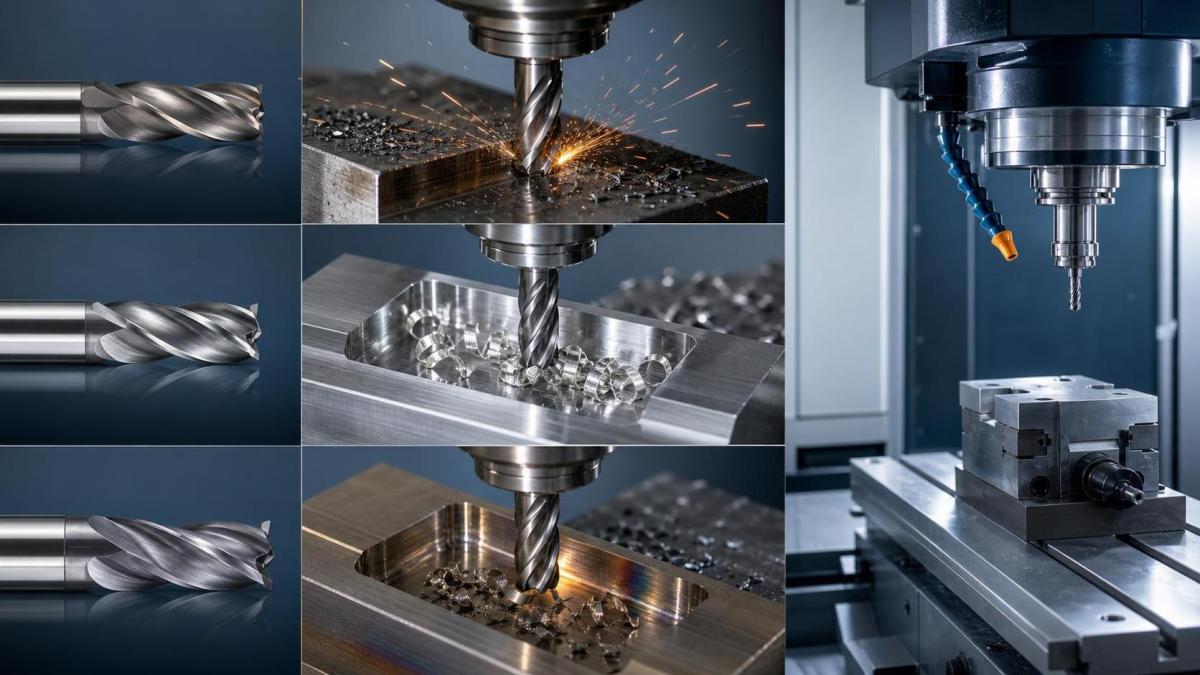
Coatings Help, but They Do Not Rescue a Mismatched Tool
Coating discussions tend to become shorthand for quality, but in high-speed machining they should be treated as one layer of the system, not the system itself. PVD and CVD coatings, aluminum-rich coating families, and low-friction surfaces all have valid roles, yet their effectiveness depends on the base geometry and material behavior.
For steel, coatings often make a clear difference because wear resistance at elevated temperature matters directly. For aluminum, the wrong coating can increase adhesion instead of reducing it. For titanium, a coating may improve heat resistance, but if the edge micro-geometry is too weak or coolant access is poor, wear still accelerates in ways the coating cannot prevent. That is one of the common misconceptions in procurement reviews: the premium coating is expected to compensate for instability elsewhere in the process.
A better approach is to read coatings in context. Ask what failure mode the coating is supposed to delay. If there is no clear answer, the evaluation is still too superficial.
Machine Conditions and Toolholding Change the Real Outcome
A tool may be technically suitable and still underperform because the machine-tool system cannot support the cut. High-speed machining amplifies runout, imbalance, spindle growth, and holder weakness. This matters across all three materials, but the consequences differ.
In aluminum, small runout may still allow acceptable cycle time but hurt surface finish and burr formation. In steel, it can concentrate wear on one tooth and shorten tool life unevenly. In titanium, the same issue can become a chatter trigger or cause local thermal overload. That is why serious tooling selection for high-speed work usually includes holder type, projection length, interface rigidity, and coolant delivery in the evaluation criteria.
This point is especially relevant in multi-axis machining and deep-cavity work. Long overhang changes the meaning of every catalog recommendation. A tool approved for a certain cutting speed in a short, rigid setup may need a very different engagement strategy once the stick-out increases. The cutting tool has not changed, but the practical operating window has.
What Technical Evaluators Should Actually Compare
When the goal is selection rather than simple purchase, the comparison should stay close to measurable shop-floor behavior. Four questions usually expose the difference between a promising tool and a merely acceptable one:
Does it maintain predictable wear, or does it fail abruptly? Sudden chipping is more damaging to process control than gradual flank wear.
Does it hold surface quality across the actual batch, not just on the first few parts? This matters in aluminum finishing and steel semi-finishing alike.
Does it remain stable when engagement changes at corners, entries, or thin-wall sections? A tool that is fast on straight paths but unstable in transitional moves is often expensive in real production.
Can the process window be reproduced by another machine, operator, or shift? If performance depends on a narrow, hard-to-repeat sweet spot, the tool may not be the right standard choice.
These are not marketing questions. They are adoption questions. A cutting tool for high-speed machining should be judged by how controllable it is under production conditions, not only by peak test results.
Common Selection Mistakes
One mistake is treating “high-speed” as a fixed parameter instead of a material-specific process strategy. In aluminum, very high spindle speed may indeed be central to productivity. In titanium, the more important issue may be constant engagement, heat control, and avoiding edge overload.
Another is choosing a general-purpose end mill for mixed materials and expecting only moderate compromise. In low-volume environments that may be acceptable, but for serious evaluation work it often hides the real cost. General-purpose tools simplify inventory, yet they frequently give away tool life, finish consistency, or cutting stability where material behavior is demanding.
A third mistake is separating CAM strategy from tool selection. Modern high-speed machining paths such as adaptive clearing, trochoidal motion, and constant-engagement roughing are not neutral background choices. They directly influence whether a given geometry performs well, particularly in titanium and harder steels. A tool should be assessed with the intended path strategy, not in abstraction from it.
A Practical Decision Frame
A sound evaluation starts with the material group and operation type, then moves quickly to failure risk. If the job is alloy steel roughing, prioritize heat-resistant grade and edge security. If it is aluminum finishing, prioritize sharpness, chip evacuation, and finish control. If it is titanium profiling, prioritize thermal stability, controlled engagement, and setup rigidity. From there, check whether the machine, holder, coolant method, and CAM strategy can actually support the tool’s intended behavior.
That is the practical meaning behind choosing cutting tools for high-speed machining. It is less about finding the fastest catalog number and more about matching edge design, substrate, coating, and process conditions to the way a specific material fails under speed. Teams that evaluate tools on that basis usually make fewer substitutions, stabilize cycle time faster, and get more realistic comparisons across suppliers.
If a tool choice still seems unclear, the best next step is usually not a broader search. It is a narrower test: one material, one operation, one holder setup, one wear criterion. High-speed machining rewards precision in evaluation before it rewards speed in production.
Recommended for You
 How to Select a Slant Bed Lathe for High-Precision Shaft and Chuck WorkCNC Machining Technology Center
 Smart Manufacturing for Small Businesses: Where Automation Delivers the Fastest ROIMachine Tool Industry Editorial Team
 How to Specify a CNC Lathe for High-Volume Automotive Shaft ProductionCNC Machining Technology Center
 How Automated Precision Machining Maintains Tolerance in High-Mix ProductionCNC Machining Technology Center
 How to Evaluate a Machine Tool Factory Before Sourcing CNC EquipmentGlobal Machine Tool Trade Research Center
 CNC Programming Explained: From CAD Models to Reliable Shop-Floor ToolpathsCNC Machining Technology Center




Aris Katos
Future of Carbide Coatings
15+ years in precision manufacturing systems. Specialized in high-speed milling and aerospace grade alloy processing.
▶
Which Metals Are Hardest to Machine With Standard Tools?CNC Machining Technology Center▶
How to Choose Cutting Tools for High-Speed Machining of Steel, Aluminum, and TitaniumCNC Machining Technology Center▶
How to Choose a CNC Tooling System for Titanium Machining by Tool Life and StabilityCNC Machining Technology Center▶
Cutting Tools Selection Guide: How Tool Material, Coating, and Geometry Affect PerformanceCNC Machining Technology Center▶
Cutting Tools for High Temperature Alloys: How to Reduce Tool Wear and Edge ChippingCNC Machining Technology Center
Mastering 5-Axis Workholding Strategies
Join our technical panel on Nov 15th to learn about reducing vibrations in thin-wall components.

Providing you with integrated sanding solutions
Before-sales and after-sales services
Comprehensive technical support