• Global CNC market projected to reach $128B by 2028 • New EU trade regulations for precision tooling components • Aerospace deman
NYSE: CNC +1.2%LME: STEEL -0.4%

Industrial Robotics ROI: Cost Drivers, Integration Risks, and Payback Benchmarks for Buyers
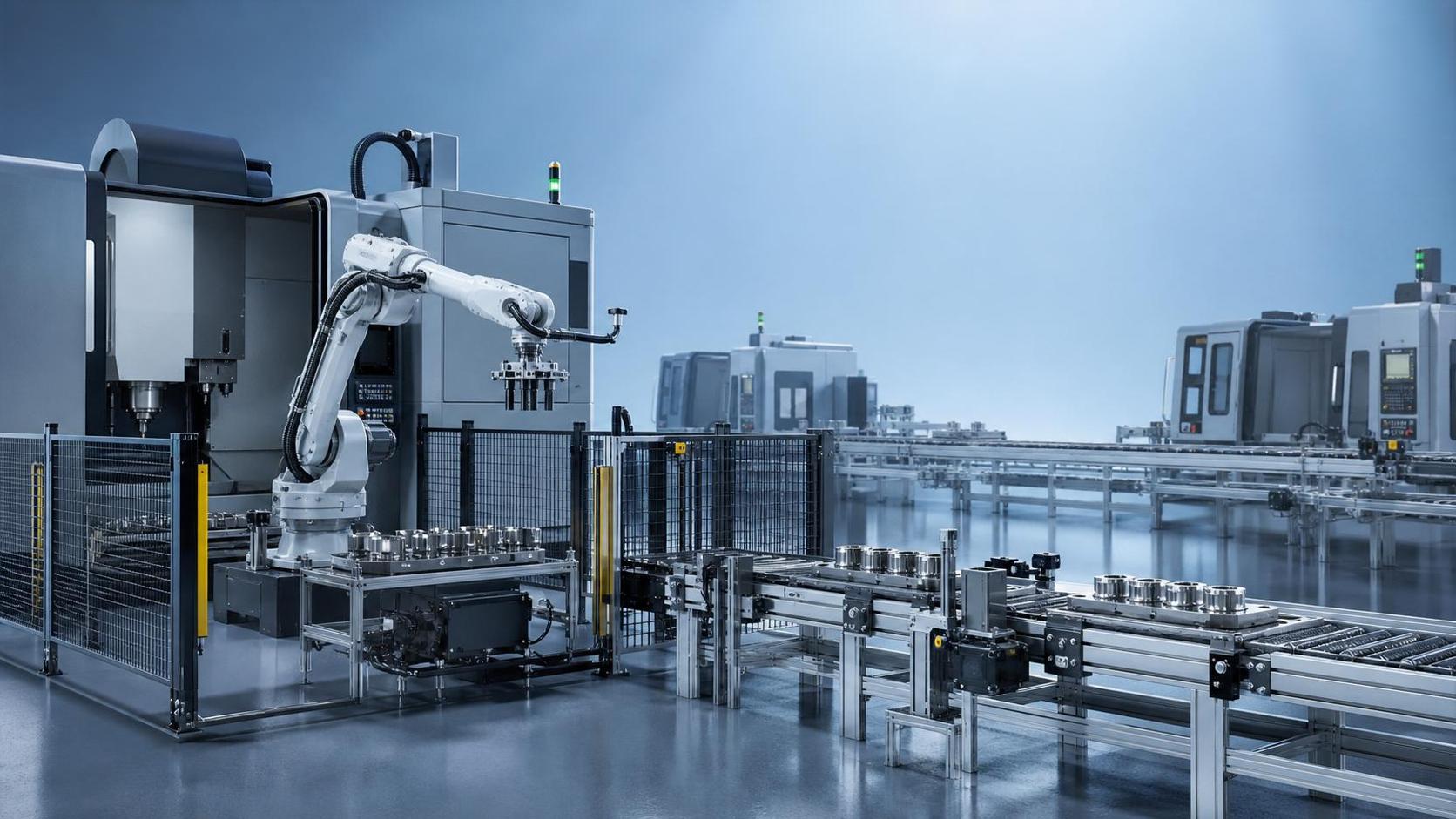
Industrial Robotics ROI: Cost Drivers, Integration Risks, and Payback Benchmarks for Buyers
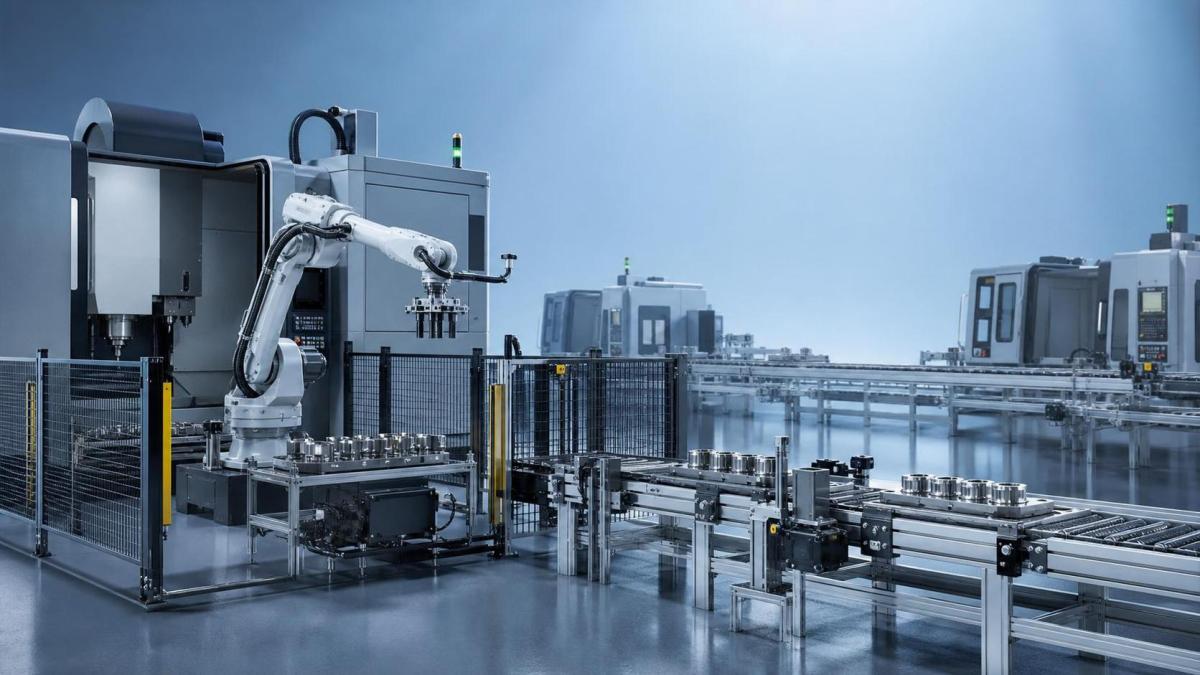
Industrial Robotics can raise output, stabilize quality, and reduce labor pressure. Yet ROI is rarely decided by robot price alone.
In CNC machining, precision manufacturing, and automated lines, the bigger question is how fast value appears after installation.
That depends on integration effort, tooling changes, production balance, maintenance discipline, and the real uptime achieved on the shop floor.
For procurement decisions, Industrial Robotics should be assessed as a full operating system investment, not a standalone machine purchase.
A low equipment quote can become expensive if cycle times disappoint, programming takes longer, or integration interrupts existing CNC capacity.
A higher initial quote may still deliver stronger ROI if it includes proven tooling, faster commissioning, and better support coverage.
What Actually Drives Industrial Robotics ROI
Most ROI models start with capital expenditure. That is necessary, but incomplete.
In practical manufacturing environments, Industrial Robotics ROI is shaped by six cost layers working together.
- Robot, controller, safety hardware, end-of-arm tooling, and sensors.
- Integration engineering, PLC work, CNC interface development, and cell layout changes.
- Fixture redesign, part presentation, conveyors, vision systems, or feeding equipment.
- Production downtime during installation, debugging, and ramp-up.
- Operator training, programmer training, and maintenance staffing.
- Ongoing spare parts, preventive maintenance, software updates, and service visits.
This also means two projects with similar robot models can produce very different payback periods.
A simple machine tending cell for repeatable CNC parts may pay back quickly. A complex mixed-part line may take much longer.
The difference usually comes from application stability, not robot branding alone.
Cost Drivers Buyers Often Underestimate
The most common budgeting mistake is underestimating everything around the robot.
In the CNC machine tool sector, part handling is rarely as uniform as it looks in a proposal.
1. End-of-arm tooling and grippers
Grippers must match part geometry, weight, finish, oil conditions, and clamping repeatability.
If the product mix changes often, tooling cost rises fast. Quick-change grippers help, but they increase upfront investment.
2. Vision and sensing
Vision can improve flexibility, especially for random part orientation. It can also add calibration work and troubleshooting time.
3. Cell safety and compliance
Fencing, scanners, interlocks, and local compliance reviews are not optional line items. They affect both budget and layout.
4. Utility and floor changes
Compressed air, power distribution, chip evacuation, coolant management, and floor space can reshape project economics.
5. Production engineering time
Internal engineering hours are often ignored in ROI models. They should not be.
When process engineers, maintenance leads, and CNC programmers spend weeks supporting launch, that is real project cost.
Integration Risks That Delay Payback
Industrial Robotics ROI weakens when the installation looks complete, but the process remains unstable.
From recent market activity, the clearer signal is that integration risk now matters as much as hardware cost.
Process variation
If incoming parts vary too much, the robot spends time compensating for upstream inconsistency.
That usually lowers throughput and creates more manual intervention than expected.
Cycle-time mismatch
A robot can be fast, but the total cell may still be slow.
Door opening, chuck actuation, gauging, tool change delays, and part confirmation often become the hidden bottlenecks.
Downtime during commissioning
A weekend installation estimate can become a multi-week production disruption if interfaces are not tested early.
Skill dependency
Some Industrial Robotics cells perform well only when a few specialists are available.
That creates risk for night shifts, expansion plans, and cross-site replication.
Realistic Payback Benchmarks for Industrial Robotics
There is no universal ROI number, but broad benchmarks are still useful for screening projects.
In machining and automated handling, many buyers target payback in 18 to 36 months.
Shorter than 18 months is possible in stable, labor-intensive, multi-shift applications.
Longer than 36 months may still make sense when quality losses are high or labor availability is structurally limited.
These benchmarks assume reasonable uptime, trained staff, and no major rework after acceptance.
How to Compare Investment Scenarios
A better purchasing method is to compare scenarios, not just supplier quotes.
Use at least three cases in the business model.
- Base case: current labor, output, scrap, and downtime.
- Expected case: realistic gains after ramp-up.
- Stress case: slower launch, lower uptime, and extra support cost.
This approach keeps Industrial Robotics discussions grounded in operating reality.
It also helps separate attractive demos from dependable production outcomes.
Check these numbers before approval
- Loaded labor cost by shift, not wage alone.
- Expected spindle utilization increase.
- Scrap and rework reduction percentage.
- Planned and unplanned maintenance hours.
- Consumables and spare parts budget.
- Ramp-up time until stable output.
- Internal engineering support cost.
Questions to Ask Suppliers Before Signing
Industrial Robotics suppliers often present similar performance claims. The useful differences appear in project detail.
- What cycle time has been proven on similar CNC parts?
- What assumptions were used in the ROI estimate?
- Which interfaces are standard, and which require custom engineering?
- What acceptance criteria define a successful handover?
- How many operator and maintenance training hours are included?
- What spare parts should be stocked locally?
- What support response time is guaranteed after startup?
- Can the cell scale to more part numbers later?
These questions reduce uncertainty and improve negotiating leverage before hidden cost becomes a post-installation problem.
A Practical Decision Framework
The best Industrial Robotics investment is not always the most advanced cell. It is the one that reaches stable output fastest.
For procurement planning, focus on application fit, launch risk, service capability, and measurable payback logic.
In actual operations, predictable throughput and maintainable automation usually outperform ambitious systems that remain difficult to run.
When Industrial Robotics is evaluated through total cost, realistic downtime exposure, and proven benchmark ranges, investment decisions become clearer.
That makes it easier to compare suppliers, defend budget assumptions, and move toward automation with fewer surprises.
Start with one stable use case, validate the economics, and build future expansion on demonstrated shop-floor results.
PREVIOUS ARTICLE
NEXT ARTICLE
Recommended for You
 How to Select a Machine Tool for Aerospace Parts with Tight Tolerances?Machine Tool Industry Editorial Team
 How to Select CNC Equipment for High-Mix, Low-Volume ProductionCNC Machining Technology Center
 Can CNC Machining Inconel Control Tool Wear in High-Temperature Aerospace Parts?CNC Machining Technology Center
 Machine Tool Market Outlook: Demand Drivers, Capacity Shifts, and Investment RisksManufacturing Market Research Center
 Zero-Point Clamping or Modular Fixtures? Choosing a Faster CNC Changeover SystemCNC Machining Technology Center
 How to Cut CNC Fixture Changeover Time Without Sacrificing Part AccuracyCNC Machining Technology Center

Aris Katos
Future of Carbide Coatings
15+ years in precision manufacturing systems. Specialized in high-speed milling and aerospace grade alloy processing.
▶
Japan Subsidy Plan Narrows CNC Export OpeningsManufacturing Market Research Center▶
Industrial Robotics ROI: Cost Drivers, Integration Risks, and Payback Benchmarks for BuyersManufacturing Market Research Center▶
India’s 20% Rice Export Tax Lifts Demand for Processing EquipmentManufacturing Market Research Center▶
Anhui Growth Lifts Demand for High-End Machine ToolsManufacturing Market Research Center▶
China CNC Rate to Hit 75% by 2027Manufacturing Market Research Center
Mastering 5-Axis Workholding Strategies
Join our technical panel on Nov 15th to learn about reducing vibrations in thin-wall components.

Providing you with integrated sanding solutions
Before-sales and after-sales services
Comprehensive technical support