• Global CNC market projected to reach $128B by 2028 • New EU trade regulations for precision tooling components • Aerospace deman
NYSE: CNC +1.2%LME: STEEL -0.4%

Are CNC Milling Centers Worth the Cost for Job Shops?
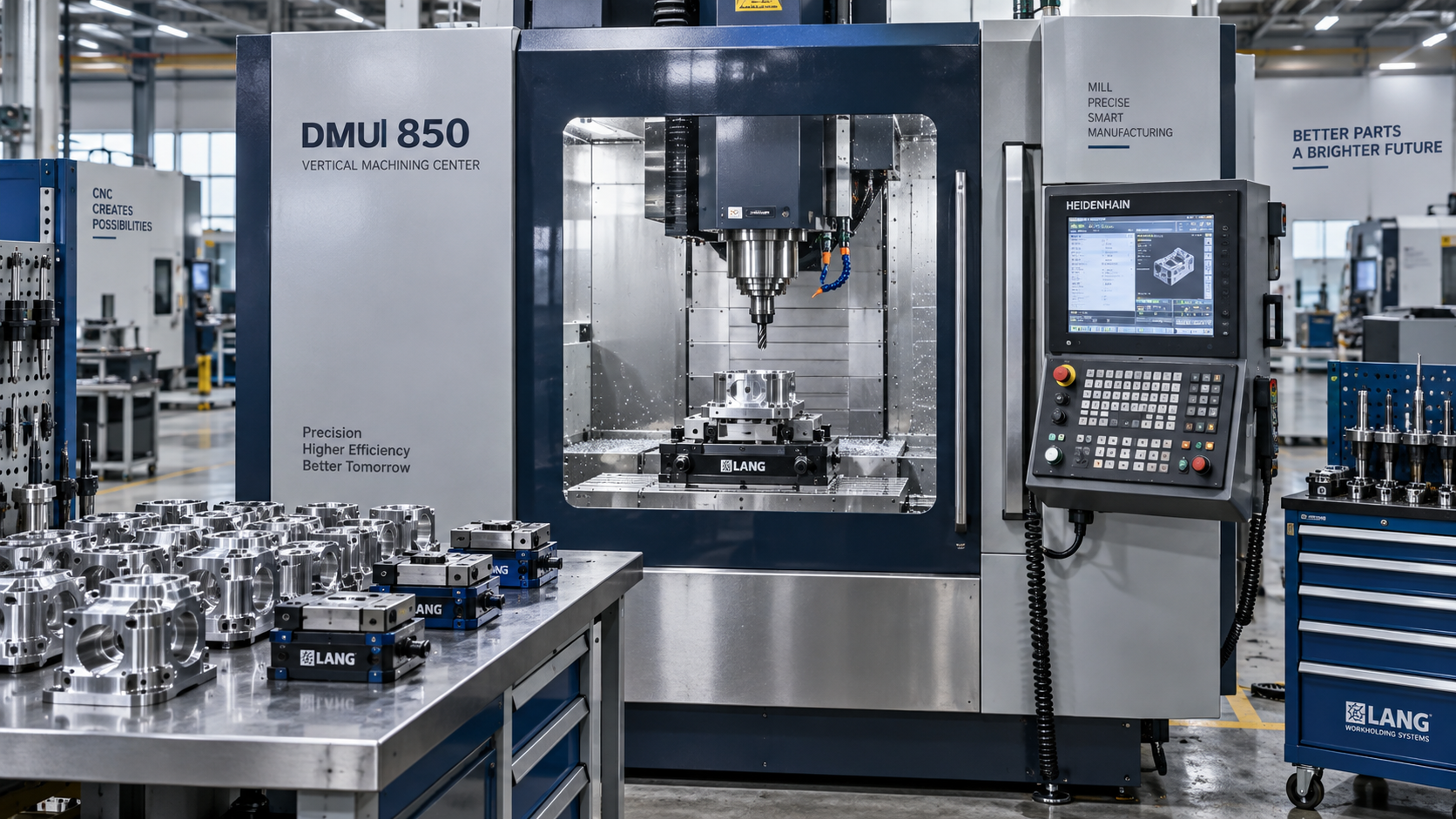
A CNC milling center can be worth the cost for a job shop when it converts a proven production constraint into profitable, deliverable work. That might mean reducing repeated setups, bringing suitable subcontracted parts in-house, or adding capacity where existing machines are already limiting shipments. The investment becomes harder to justify when expected orders are speculative, programming resources are stretched, or the shop already has usable capacity sitting idle.
For owners asking “are CNC milling centers worth the cost for job shops,” the practical test is whether the machine will improve earnings enough to cover its full ownership cost without putting cash flow under excessive pressure. Faster cutting and better positioning accuracy can help, but the return depends on the complete route from drawing to accepted part.
What makes a milling center a worthwhile investment?
A strong investment case starts with identifiable work. Repeat orders, recurring part families, and a documented backlog provide a firmer basis for forecasting than a general expectation that a better machine will attract customers. A job shop does not need long production runs to justify the purchase, but it does need a credible way to keep converting available machine time into paid work.
Consider a shop producing parts that require several fixture changes on existing equipment. A suitable machining center may combine operations, reduce handling, and preserve relationships between features by machining them in fewer setups. The financial benefit can extend beyond shorter cycles: less operator involvement, fewer opportunities for loading errors, and more predictable completion dates may all matter.
Another credible case is bringing outsourced milling in-house. This can improve control over scheduling and quality, provided the shop can reproduce the supplier’s process reliably. The comparison must include internal programming, inspection, tooling, scrap exposure, and supervision. The subcontractor’s invoice is not automatically the amount the shop will save.
Expansion is less convincing when the underlying problem is outside machining. If jobs wait for drawings, material, approvals, or inspection, another spindle may simply produce more work in progress. Before buying, identify where orders actually lose time and whether the proposed machine can change that constraint.
Which costs belong in the ownership calculation?
The machine quotation is only the starting point. A realistic budget needs to cover installation and the resources required to produce acceptable parts consistently. Some expenses occur before the first invoice goes out; others continue throughout ownership.
- Acquisition and installation: purchase cost, delivery, rigging, electrical work, and any required air supply or foundation preparation.
- Production readiness: toolholders, cutting tools, fixtures, workholding, probing where appropriate, CAM capability, postprocessor preparation, and operator training.
- Ongoing operation: maintenance, service, coolant, lubrication, energy, consumables, software fees where applicable, and insurance.
- Supporting capacity: programming, inspection, material handling, and the working capital needed to carry additional jobs through production.
A machine with a lower purchase price can require more supporting investment if its configuration does not fit the work. Limited tool capacity may force interruptions on complex jobs. Inadequate coolant delivery or chip evacuation may constrain otherwise suitable cutting conditions. A work envelope that barely accommodates a component may leave too little room for practical fixturing.
Financing also needs a separate cash-flow assessment. Loan payments arrive on schedule even when customers delay orders or payments. Evaluate the down payment, repayment obligations, and cash needed during installation and ramp-up. Accounting profit and cash available to meet a monthly payment are different measures.
Keep the analysis consistent. A cash-flow model can include purchase payments or financing cash flows; an accounting model may include depreciation and interest. Counting the full purchase price, loan principal repayments, and depreciation as separate costs in the same calculation would overstate the burden.
How should a job shop estimate payback?
Build the estimate around a representative group of parts. Include routine work, difficult setups, and the smaller batches that consume disproportionate attention. For each part family, compare the existing production route with the proposed route, including programming, setup, machining, handling, inspection, and expected rework.
Then separate the sources of financial benefit. Additional sales contribute only the amount remaining after the associated costs. Existing work may generate savings through reduced outsourcing, overtime, consumables, or scrap. Released operator time has value, but its effect on earnings depends on whether the shop can use that time productively or reduce an actual expense.
Simple payback equals the initial investment divided by the annual incremental cash benefit. That annual benefit should be calculated after additional operating costs. Simple payback is useful for an initial comparison, but it does not account for the timing of cash flows, financing structure, or the value of money over time.
The most common source of optimism is treating every saved machining hour as a new billable hour. If a faster cycle frees capacity but demand remains unchanged, the shop may gain scheduling flexibility without generating additional revenue. If labor is fixed and the operator cannot move to other useful work, much of the projected labor saving may also remain unrealized.
Prepare a conservative case alongside the expected case. Allow for slower initial programming, lower order volume, interruptions, and a less favorable part mix. A project that works only when everything goes well leaves little room for the variability that job shops must absorb.
Resale value can be considered in a longer-term investment analysis, but it should not rescue weak operating economics. The eventual sale proceeds will depend on condition, configuration, serviceability, and the market when the machine is sold.
How much utilization is enough?
There is no universal utilization percentage that makes a milling center profitable. A shop doing demanding work at healthy margins may justify fewer productive hours than one competing on straightforward parts with thin margins. What matters is the contribution those hours generate and whether it covers the machine’s financial burden.
Distinguish scheduled hours, occupied hours, cutting hours, and hours producing accepted parts. A machine can appear busy while an operator struggles with fixturing or corrects a program. Setup is necessary work, but high occupancy alone does not demonstrate a strong return.
High-mix shops should examine capacity by job family. Several customers may order different components that share material, tooling, and fixture concepts, creating a useful recurring workload. By contrast, a collection of unrelated jobs can demand fresh programming and preparation every time, even when the total quoted machining hours look attractive.
Trace several recent orders through preparation, setup, machining, and inspection before deciding how much capacity a new machine would create. This makes the distinction between a spindle shortage and a shortage of ready-to-run jobs visible.
Reserve time for maintenance, tool replacement, first-article checks, and unexpected work. A forecast built around uninterrupted production will exaggerate capacity. It can also encourage the shop to accept delivery commitments that become difficult to meet when the schedule changes.
When are additional axes or automation worth paying for?
Choose the configuration around the operations that constrain the target parts. A three-axis vertical machining center can be an effective choice for accessible features and manageable setups. Additional axes become valuable when they reduce repeated repositioning, reach difficult features, or support geometry that the existing process handles inefficiently.
For some parts, five-axis capability primarily enables several faces to be machined in one setup. For others, simultaneous motion is necessary to produce the geometry. Those uses place different demands on programming, tool access, workholding, and verification. A demonstration on a visually impressive sample part provides limited evidence about the economics of the shop’s actual workload.
Horizontal configurations and pallet systems can improve access, chip management, and preparation outside the cutting cycle for suitable work. Their value depends on having fixtures, tools, and programs ready when the machine needs them. Higher capacity can remain unused if job preparation cannot keep pace.
Automation requires similar discipline. A loading system can reduce operator attendance when the process is stable, but it also needs reliable workholding, predictable tool life, controlled chips, sufficient tool coverage, and a workable response to faults. Variable raw material or frequent manual adjustments can limit unattended operation.
Ask for trials using representative components, materials, and realistic workholding. Evaluate setup effort, access, tool changes, chip behavior, and inspection results alongside cycle time. The relevant comparison is the complete production process the shop can sustain.
Does a machining center solve skilled-labor shortages?
It can reduce labor required per accepted part, especially where automatic tool changes, fewer setups, probing, or stable unattended cycles remove repetitive intervention. It still requires capable people to prepare and maintain the process.
A more sophisticated machine may increase demands on programming, fixture design, process troubleshooting, and inspection. If one person handles all of those tasks, adding equipment can intensify that person’s workload before it creates useful output. The investment plan should identify who will prepare jobs, who will support production, and how their time will be made available.
Probe routines can help establish offsets and check selected features, but they do not automatically replace a suitable inspection strategy. Results depend on calibration, access, measurement conditions, and the requirements of the part. Machine positioning capability alone does not guarantee compliance with every drawing requirement.
Include training and process development in the ramp-up schedule. Assuming full productivity immediately after installation can distort both payback and customer commitments. A modest machine supported by a repeatable process may produce a better return than more advanced equipment that the team cannot use consistently.
Should the shop buy new, buy used, or keep subcontracting?
New equipment may offer warranty coverage, a known starting condition, and a configuration selected for the intended work. Used equipment can reduce the initial outlay, although condition, support, and commissioning costs can materially affect the result. Neither option is inherently the better investment.
For a used machine, assess spindle condition, axis behavior, toolchanger operation, control support, maintenance records, and the availability of parts and service. Inspection should relate to the tolerances and processes the shop needs. An apparently economical purchase can become expensive if repairs delay production or consume the cash reserved for tooling.
Continuing to subcontract can make sense when demand is irregular, specialized work is infrequent, or internal programming and inspection resources are already constrained. Compare the supplier’s total cost and delivery performance with a realistic internal process. Include the value of keeping scarce cash and technical attention available for other work.
Before committing, assemble a decision file with actual part routes, representative supplier trials, installation requirements, tooling and fixture estimates, staffing responsibilities, and a cash-flow forecast tied to credible demand. Those documents should explain where the additional earnings will come from and what happens if the workload falls short.
A milling center earns its place when the shop can feed it suitable work, support it with prepared processes, and collect enough contribution to carry the investment. If that case remains unclear after reviewing real jobs, improving scheduling, workholding, or programming may be the more productive next purchase.
Recommended for You
![]() US Decides Against New Tariffs on Robots, Industrial Machinery and PartsManufacturing Policy Research Center
![]() White House Section 232 Ruling: No New Machine Tool or Robot Tariffs, Calls for TalksManufacturing Policy Research Center
 How to Integrate Warehouse Palletizing Robots with Minimal DowntimeMachine Tool Industry Editorial Team
![]() AI Investment Lifts US September Equipment Demand; Core Capital Goods Orders Rise 0.5%Manufacturing Market Research Center
 Why Heavy Machinery Shafts Fail Under Cyclic Loads and How to Prevent ItCNC Machining Technology Center
![]() JTEKT Introduces G5 Series Large CNC Cylindrical Grinder, Sales Begin October 26, 2026Machine Tool Industry Editorial Team


Aris Katos
Future of Carbide Coatings
15+ years in precision manufacturing systems. Specialized in high-speed milling and aerospace grade alloy processing.
▶
Southeast Asia Machine Tool Market: Comparing Automotive Demand by CountryManufacturing Market Research Center▶
Are CNC Milling Centers Worth the Cost for Job Shops?Manufacturing Market Research Center▶
Machine Tool Market Outlook: Demand Drivers, Capacity Shifts, and Investment RisksManufacturing Market Research Center▶
Global Machine Tool Backlog Falls 12% as Automation Shifts DemandManufacturing Market Research Center▶
What Drives Machine Tool Price: 7 Cost Factors Buyers Should Compare Before OrderingManufacturing Market Research Center
▶
Mastering 5-Axis Workholding Strategies
Join our technical panel on Nov 15th to learn about reducing vibrations in thin-wall components.

Providing you with integrated sanding solutions
Before-sales and after-sales services
Comprehensive technical support