• Global CNC market projected to reach $128B by 2028 • New EU trade regulations for precision tooling components • Aerospace deman
NYSE: CNC +1.2%LME: STEEL -0.4%

Machine Tool Market Outlook: Demand Drivers, Capacity Shifts, and Investment Risks
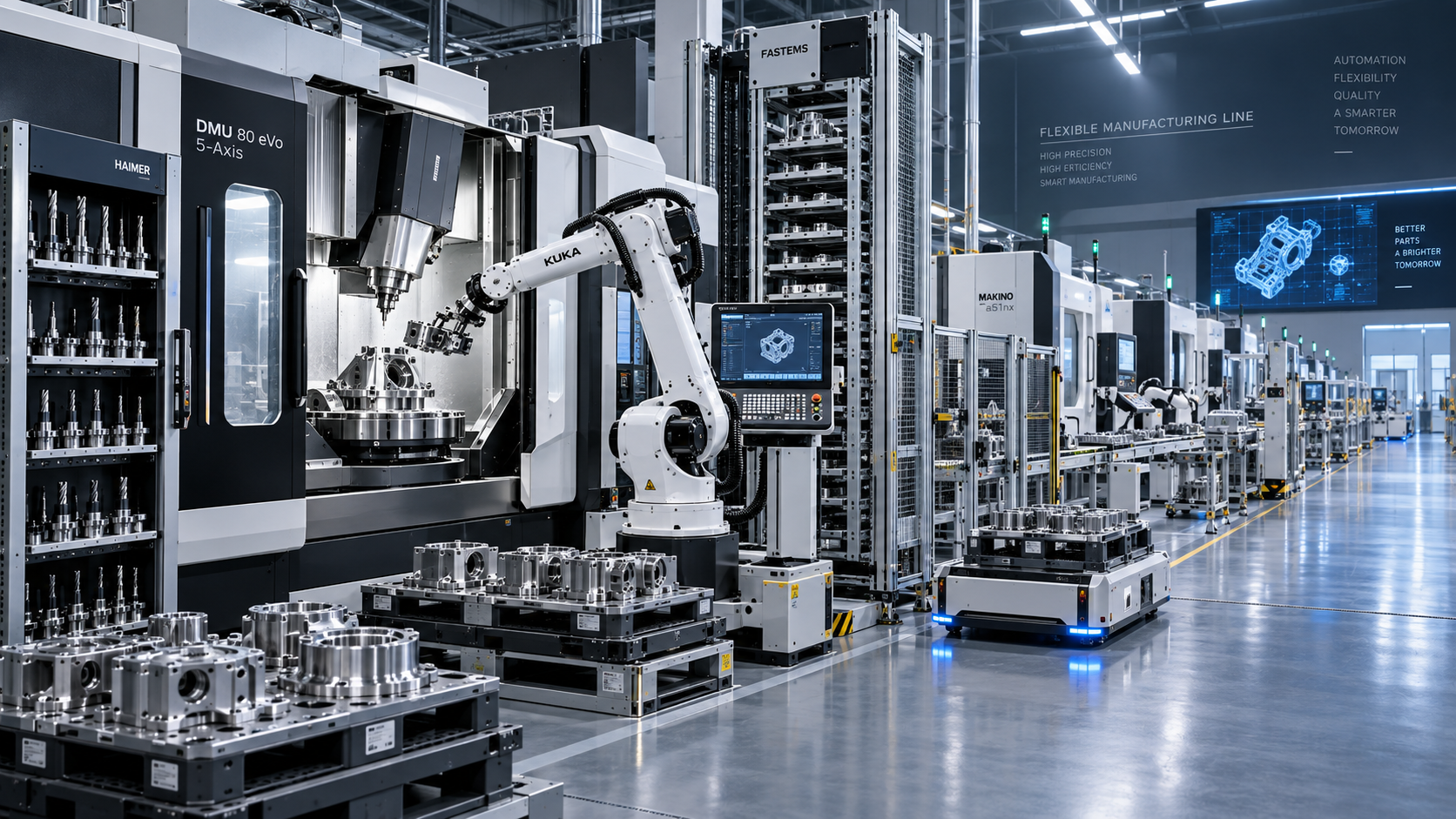
The machine tool market is no longer shaped mainly by the question of how many machines factories need. The more useful question is whether new capacity can produce the right parts, at the required tolerance, with enough flexibility to remain profitable when demand changes. That distinction explains why investment is moving toward CNC machining centers, multi-axis systems, automation cells, and digitally connected production equipment, while some conventional capacity faces weaker economics.
Demand remains closely tied to manufacturing investment, but it is becoming more selective. Automotive suppliers need efficient production of powertrain, chassis, transmission, and increasingly complex electrification components. Aerospace and defense programs require repeatable accuracy for difficult materials and tight-tolerance structural parts. Energy equipment producers need large, durable components, while electronics and precision engineering companies often need smaller, more intricate parts with short product cycles. These requirements do not create the same demand for every machine category.
For companies planning equipment purchases, plant expansion, or supply-chain commitments, the market outlook is therefore less about a single growth direction and more about identifying where utilization, technology requirements, and service support can sustain the investment.
Demand is shifting toward capability, not just machine count
The strongest demand drivers in the machine tool market are precision, labor efficiency, part complexity, and the need to shorten production lead times. A manufacturer that once relied on several standalone machines may now evaluate whether a machining center, turning-milling platform, or automated cell can complete more operations in one setup. Reducing setups can improve part consistency, reduce handling, and free skilled operators for higher-value work.
This does not mean every factory needs the most advanced multi-axis platform available. A high-volume producer of stable, simple components may gain more from dependable CNC lathes, standardized fixtures, tool management, and automation for loading and unloading than from a complex machine whose full capability is rarely used. By contrast, a producer with frequent engineering changes, complex geometries, or low-to-medium-volume production may find that flexibility has more value than maximum cycle-speed performance on one part family.
The practical implication is important: demand for machine tools is increasingly linked to the economics of the complete process. Buyers are assessing programming time, tooling availability, fixture changes, inspection requirements, operator skills, and material flow alongside the machine itself. Equipment that appears less expensive at purchase can become more costly if it requires frequent manual intervention or cannot adapt to changing part demand.
Automation demand is real, but the business case varies
Automation is a central force in CNC manufacturing, yet it is often discussed too broadly. A robot, pallet system, bar feeder, automated inspection station, or flexible production line solves different problems. The right choice depends on where production loses time and where quality risk enters the process.
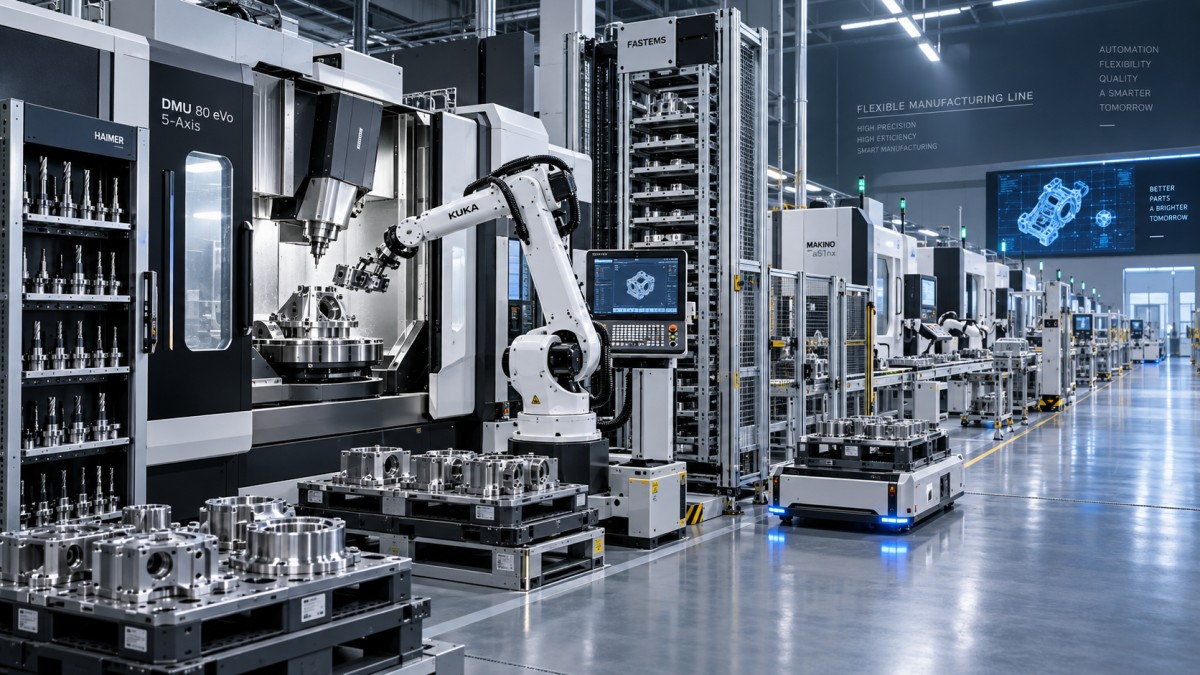
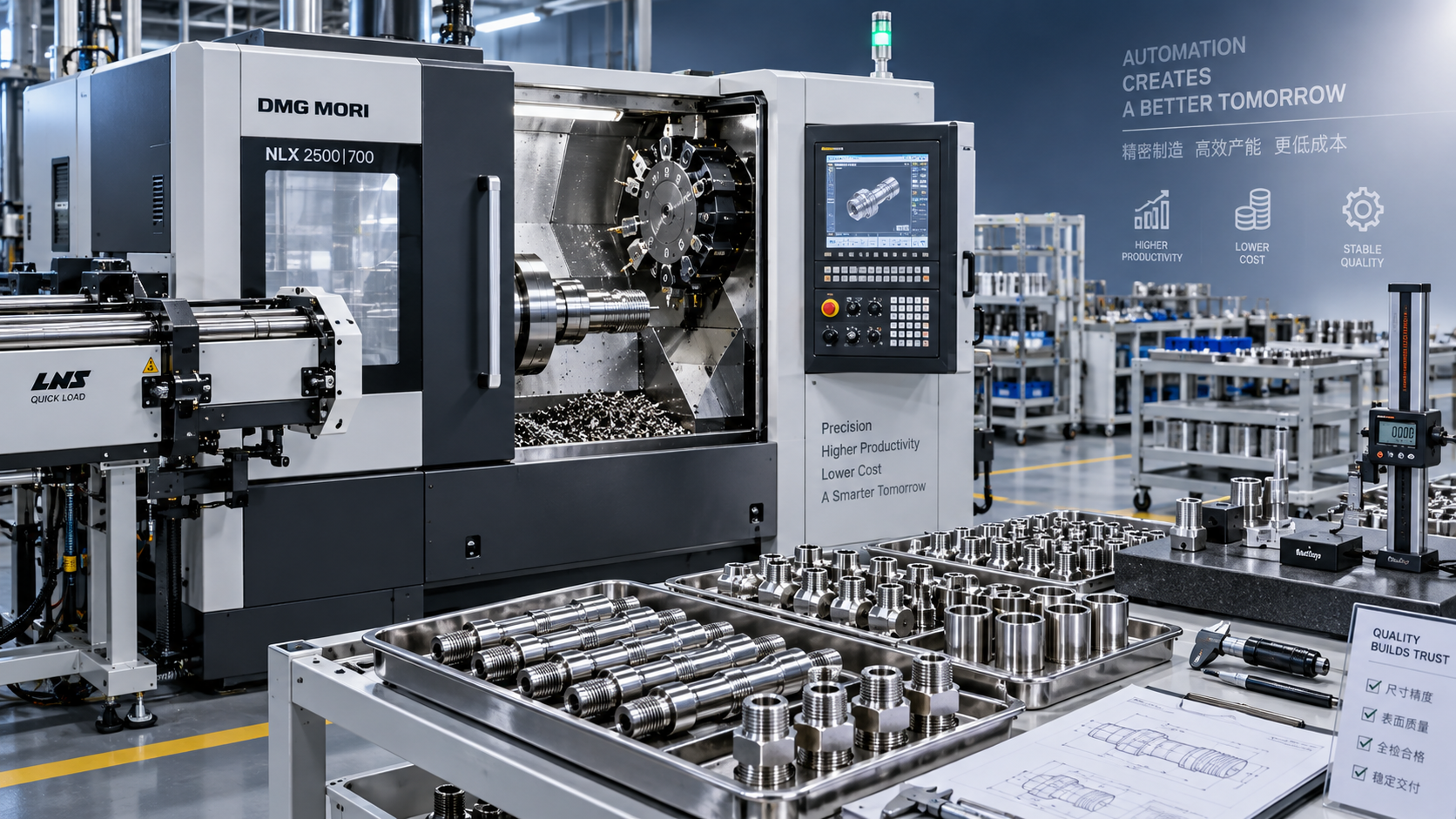
For repetitive turning work, automatic bar feeding and part collection may offer a straightforward route to longer unattended operation. For machining centers making families of related components, pallet pools can reduce waiting time between jobs and support better spindle utilization. In a mixed-product environment, a robot may be useful only when fixtures, part presentation, gripper changes, and program control are designed around realistic production variation. Adding a robot to an unstable process does not create a stable automated cell.
Automation also changes the investment horizon. The return is not limited to reducing direct labor. It may come from more predictable output, improved overnight utilization, less work-in-process, faster response to order changes, and better traceability. Those benefits are meaningful only when upstream materials, tooling, maintenance, and inspection can keep pace. A cell that waits for tools, fixtures, or quality approval is still idle capacity.
Capacity shifts are changing sourcing decisions
Machine tool production and component supply are concentrated in established industrial clusters, particularly across China, Germany, Japan, and South Korea. Each region has developed different strengths across machine platforms, controls, components, tooling ecosystems, automation, and service networks. For buyers, the key issue is not national reputation alone. It is whether the selected supplier can provide dependable access to the parts, applications support, and technical response needed throughout the equipment lifecycle.
Regionalization is affecting both machine builders and their customers. Manufacturers are seeking shorter supply routes for critical equipment, replacement spindles, control components, cutting tools, and service expertise. At the same time, many production networks remain international because specialized machines, high-end controls, and precision components are not always available locally.
This produces a more nuanced sourcing strategy. A factory may purchase globally while maintaining local support agreements, strategic spare parts, and alternative supply routes for consumables. Another may standardize selected machine platforms across sites to simplify training, programs, tooling, and maintenance. Neither approach is automatically superior. The better choice depends on production criticality, local technical capabilities, and how costly extended downtime would be.
Capacity shifts also matter on the customer side. Manufacturers are placing more machining capacity closer to their end markets or assembly sites to reduce transport exposure and improve delivery responsiveness. This can create opportunities for local machine shops and component producers, but it can also intensify competition. New regional capacity needs a credible reason to exist: faster lead times, specialized process knowledge, stronger quality performance, or the ability to manufacture parts that existing suppliers cannot produce efficiently.
Digital integration is becoming a purchasing requirement
Digital features are often presented as an upgrade layer, but they increasingly affect daily operating performance. Connected CNC equipment can support production scheduling, machine monitoring, tool-life management, maintenance planning, and traceability. The value is not the dashboard itself. Value comes from using reliable operating data to make better decisions about utilization, quality losses, setup time, and maintenance priorities.
A useful digital investment begins with a defined operational question. For example: Are machines losing capacity because of unplanned stoppages? Are tool failures causing scrap? Is actual cycle time drifting from the quoted process? Are palletized machines waiting because production scheduling does not match fixture availability? Without this link to a specific decision, data collection can become another system that operators are expected to maintain without receiving practical benefit.
Interoperability deserves the same attention as the machine specification. A factory with equipment from multiple builders may need its monitoring, manufacturing execution, quality, and enterprise systems to exchange usable information. Proprietary data formats, incomplete access to control data, and unclear responsibility between software and machine suppliers can limit the expected benefit. Digital integration should be tested against the intended workflow before it becomes a major capital assumption.
Where investment risk is commonly underestimated
The most visible risk is buying equipment shortly before demand softens. However, the more persistent risks often sit inside the operating model.
A common mistake is to model payback using machine cycle time alone. The relevant number is productive throughput: completed, accepted parts produced across actual shifts after setups, tool changes, inspection, material delays, and planned maintenance. This is especially important for automated systems, where a small recurring interruption can erase much of the expected unattended capacity.
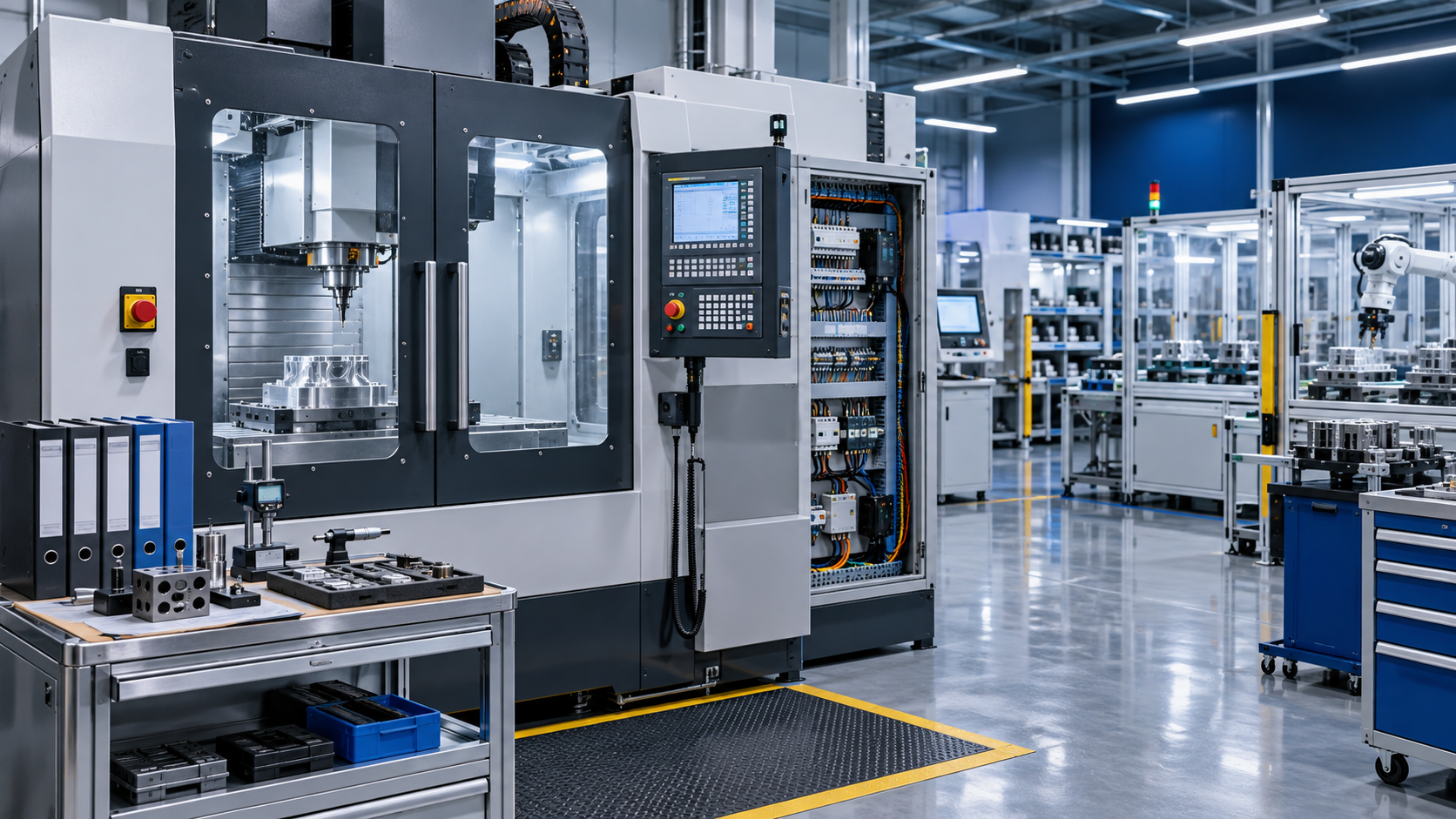
Another mistake is treating machine purchase, tooling purchase, and automation purchase as independent decisions. They are linked. A five-axis machining center may justify its cost by consolidating operations, but only if fixtures provide access to the required features, tool paths are stable, inspection can verify the part efficiently, and programmers can use the machine’s capability. A low-cost fixture or inadequate probing strategy can undermine an otherwise sophisticated investment.
How to read the market through end-use segments
Automotive demand is likely to remain important, but its equipment needs are changing. Conventional engine and transmission production has different machining requirements from battery housings, electric drive components, thermal management parts, and lightweight structural elements. Suppliers should avoid assuming that all vehicle-related demand translates into the same replacement cycle for machine tools. The relevant question is which parts will be made, where they will be made, and whether the process favors dedicated high-volume equipment or flexible CNC capacity.
Aerospace, energy, medical, and advanced industrial equipment generally place greater emphasis on material capability, accuracy, process documentation, and repeatability. Their production volumes may be lower than mass manufacturing, but the value of reliable process control can be higher. These sectors often support investment in multi-axis machining, advanced workholding, in-process measurement, and stronger quality integration. They also require patience: qualification cycles and engineering approvals can extend the time before new capacity reaches full output.
Electronics-related manufacturing and precision components place different pressure on the market. Shorter product cycles, compact geometries, and strict consistency requirements can favor high-speed machining, automation, and rapid fixture changeovers. Here, speed is useful only when thermal stability, tool performance, and inspection discipline prevent quality variation.
A more disciplined capital decision
Before committing to new machine capacity, connect the investment to a production portfolio rather than a single headline opportunity. Identify the current parts that will run on the asset, the likely next parts it can absorb, the operations it can replace, and the bottlenecks it will leave untouched. A new machining center cannot solve a finishing, inspection, material handling, or engineering-release bottleneck unless those constraints are addressed as part of the project.
It is also useful to separate three decisions that are often blended together: whether to add capacity, which process route to use, and whether to automate. Capacity may be justified while full automation is premature. Alternatively, a factory may not need more spindles but may need better scheduling, palletization, or tooling control to unlock output from existing equipment. The order of these decisions affects capital efficiency.
The machine tool market rewards manufacturers that treat equipment as part of a production system. Precision machine tools, cutting tools, fixtures, automated assembly, robots, measurement equipment, and digital controls all contribute to output quality and cost. The strongest investments are usually those that match a clear part mix, a verified process, and an operating team prepared to sustain the technology after installation.
Questions that clarify the next move
Is it better to buy a flexible machine or dedicated capacity?
Dedicated capacity is appropriate when volumes are stable, part designs are unlikely to change materially, and the process is mature. Flexible CNC capacity is more suitable when part families vary, demand is uncertain, or rapid engineering changes are expected. The higher initial complexity of flexible equipment must be balanced against the value of redeployment.
When does a multi-axis machine make financial sense?
It makes sense when it reduces setups, improves access to complex features, shortens overall lead time, or replaces multiple operations. It is less compelling when parts are simple, workholding remains difficult, or available programming and inspection resources cannot support the process.
Should service availability outweigh the initial purchase price?
For production-critical equipment, it often should. The purchase price is only one part of lifecycle cost. Technical response time, spare-parts access, applications support, and internal maintenance capability determine how quickly a factory recovers from disruption.
The next phase of the market will favor capacity that is accurate, connected, maintainable, and adaptable. The most resilient investment is not necessarily the newest or most automated machine. It is the one whose capabilities match the parts, workflow, and risk tolerance of the operation that will depend on it.
PREVIOUS ARTICLE
NEXT ARTICLE
Recommended for You
 Machine Tool Market Outlook: Demand Drivers, Capacity Shifts, and Investment RisksManufacturing Market Research Center
 Zero-Point Clamping or Modular Fixtures? Choosing a Faster CNC Changeover SystemCNC Machining Technology Center
 How to Cut CNC Fixture Changeover Time Without Sacrificing Part AccuracyCNC Machining Technology Center
 When Does CNC Turning Pay Off? A Break-Even Guide by Annual Part VolumeMachine Tool Industry Editorial Team
 Machine Tool Standards by Country: What Importers Must Verify Before PurchaseManufacturing Policy Research Center
 CNC Lathe Quick Installation Guide: Alignment Checks Before First Production RunCNC Machining Technology Center

Aris Katos
Future of Carbide Coatings
15+ years in precision manufacturing systems. Specialized in high-speed milling and aerospace grade alloy processing.
▶
Machine Tool Market Outlook: Demand Drivers, Capacity Shifts, and Investment RisksManufacturing Market Research Center▶
Global Machine Tool Backlog Falls 12% as Automation Shifts DemandManufacturing Market Research Center▶
What Drives Machine Tool Price: 7 Cost Factors Buyers Should Compare Before OrderingManufacturing Market Research Center▶
Manufacturing Industry Cost Drivers in 2025: Labor, Energy, Freight, and Sourcing RisksManufacturing Market Research Center▶
CCMT2026 Ends With 40.2% Rise in Five-Axis Export PricesManufacturing Market Research Center
Mastering 5-Axis Workholding Strategies
Join our technical panel on Nov 15th to learn about reducing vibrations in thin-wall components.

Providing you with integrated sanding solutions
Before-sales and after-sales services
Comprehensive technical support