• Global CNC market projected to reach $128B by 2028 • New EU trade regulations for precision tooling components • Aerospace deman
NYSE: CNC +1.2%LME: STEEL -0.4%

How Smart Manufacturing Benefits Reduce Downtime and Scrap in Metal Parts Production
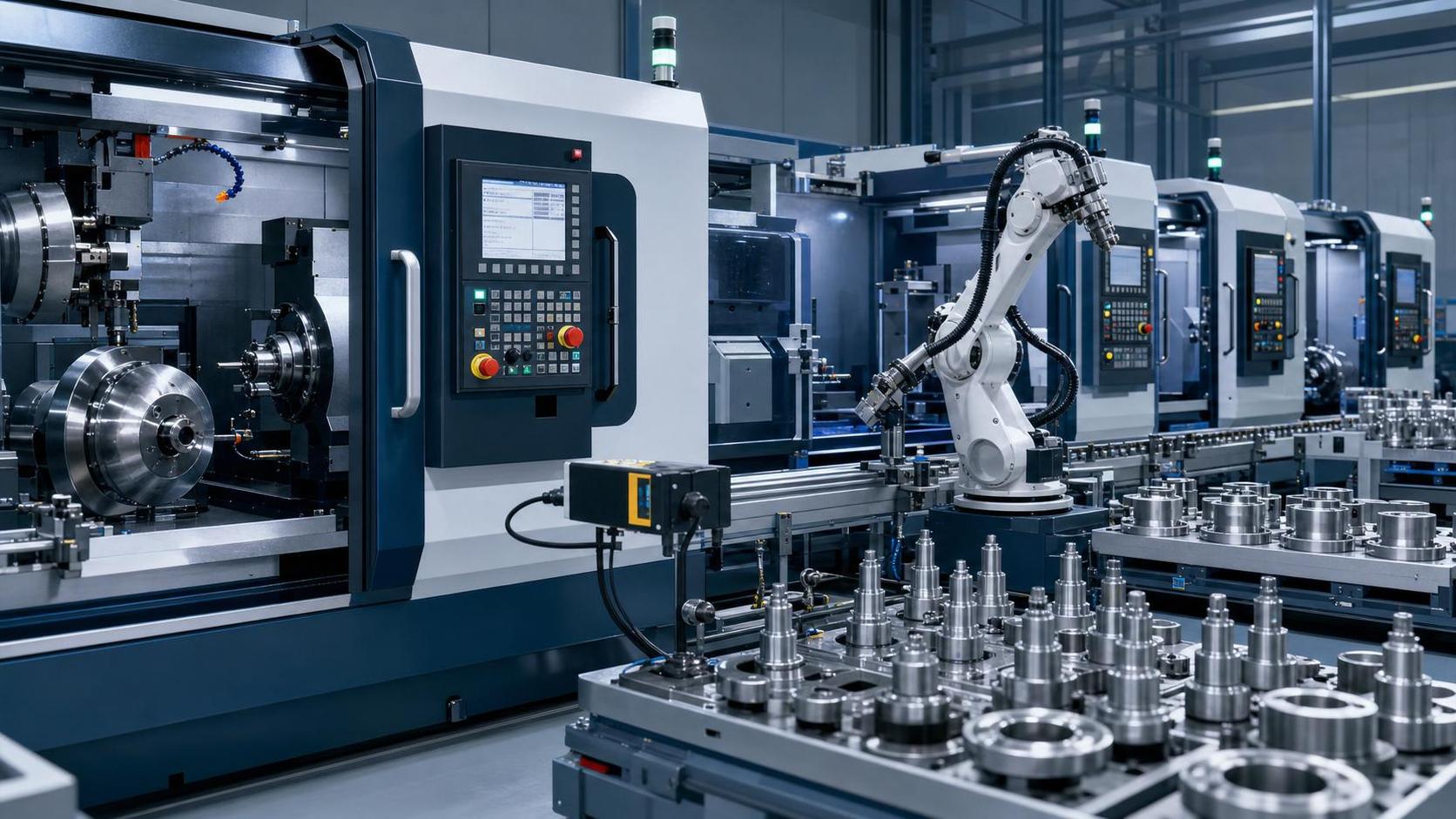
Why Smart Manufacturing Benefits matter most when downtime and scrap hit at the same time
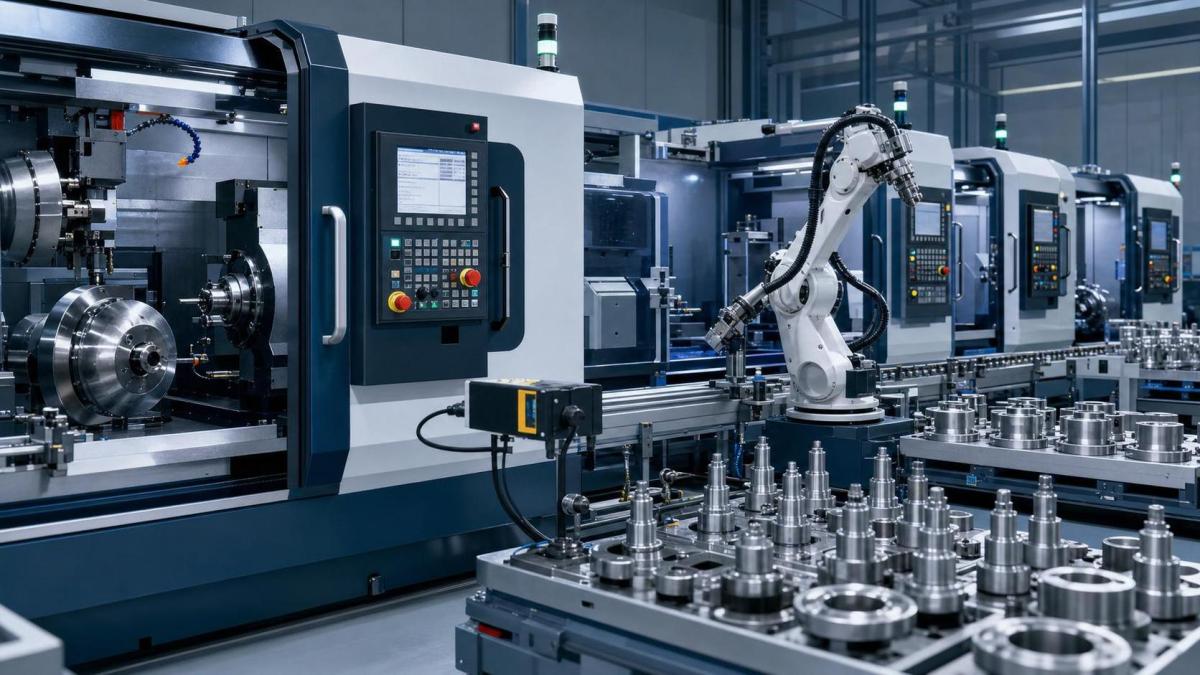
Unplanned stoppages and material loss rarely appear as isolated issues in metal parts production.
They often come from the same weak points: unstable machining conditions, poor visibility, and delayed process response.
That is where Smart Manufacturing Benefits become practical rather than theoretical.
In CNC machining, every interrupted spindle cycle affects delivery, labor utilization, tool life, and customer confidence.
Scrap creates a second layer of pressure because it consumes raw material, machine capacity, inspection time, and energy.
For plants producing shafts, housings, discs, or structural parts, Smart Manufacturing Benefits usually start with better control of variation.
Real-time monitoring, connected CNC systems, automated data capture, and predictive maintenance help expose hidden losses before they escalate.
In global machine tool markets, this matters even more.
Producers now operate across tighter tolerances, shorter lead times, and more complex international supply expectations.
The value of Smart Manufacturing Benefits is not identical in every workshop, though.
The right priorities depend on part mix, batch size, machine age, automation level, and the cost of a single defect.
The same technology looks different in different production settings
A high-volume automotive line does not judge downtime the same way as an aerospace cell producing low-volume precision parts.
An energy equipment supplier may accept longer cycle times, yet reject any quality drift that threatens traceability.
Electronics-related metal components often sit between those extremes, where precision is tight and schedule changes are frequent.
In actual operations, Smart Manufacturing Benefits should be judged by where interruption starts.
Sometimes the root issue is spindle overload and tool wear.
Sometimes it is fixture instability, manual offset changes, coolant inconsistency, or poor coordination between machining and inspection.
That is why digital integration alone is not enough.
Useful Smart Manufacturing Benefits appear when machine data, quality feedback, and maintenance signals are connected to operational decisions.
A workshop with multi-axis machining centers may need adaptive tool management first.
A line with older CNC lathes may gain more from simple condition monitoring and alarm pattern analysis.
Where high-volume machining gains the clearest Smart Manufacturing Benefits
High-volume production usually feels downtime immediately.
A short machine stop repeated across shifts can erase output faster than a single long failure in a low-mix environment.
In these settings, Smart Manufacturing Benefits often come from detecting small disruptions early.
Tool life monitoring, spindle load trends, automated part counting, and machine state dashboards help reveal whether losses come from equipment or process discipline.
Scrap control is also different here.
When the same part runs continuously, one offset error or worn insert can produce dozens of defective pieces before manual inspection reacts.
Closed-loop quality data reduces that delay.
More importantly, it prevents teams from treating recurring scrap as an operator issue when the deeper cause is process drift.
- Prioritize machine uptime by tracking micro-stoppages, not only major failures.
- Connect in-process measurement with tool compensation rules.
- Use scrap trend alerts by machine, material lot, and shift pattern.
- Review maintenance timing against actual load rather than fixed intervals only.
Low-volume precision work needs control depth more than dashboard volume
For complex aerospace parts, precision discs, and high-accuracy structural components, scrap has a different meaning.
One rejected part may represent hours of machining, expensive material, and delayed downstream assembly.
Here, the strongest Smart Manufacturing Benefits often come from process traceability and stable setup execution.
The focus shifts from output speed to deviation control.
Real-time spindle behavior, thermal compensation, fixture verification, and digital records of parameter changes become more valuable than broad productivity charts.
This is also where many projects make a poor assumption.
They deploy software visibility, yet leave setup approval, probing routines, and inspection feedback disconnected.
The result is more data without stronger process protection.
In practical terms, Smart Manufacturing Benefits should reduce uncertainty at every handoff.
If they do not improve first-pass yield, the implementation is incomplete.
Different production conditions change what should be measured first
A simple comparison helps clarify where Smart Manufacturing Benefits deliver the fastest return.
The key is to match measurement depth with the true loss pattern.
Too many plants start with broad KPI displays and ignore the bottleneck that actually generates scrap.
The most common misread is treating similar parts as similar processes
Parts may look similar on a drawing, yet behave differently in production.
Material hardness, clamping behavior, heat generation, and surface finish requirements can change failure patterns quickly.
That is why Smart Manufacturing Benefits depend on context, not on a generic digital package.
Another frequent mistake is focusing only on acquisition cost.
A lower-cost system may seem attractive until integration gaps create manual workarounds, delayed maintenance response, or inconsistent data quality.
There is also a timing issue.
If historical machine data is never linked to tool usage, coolant condition, or inspection records, recurring scrap stays hidden inside separate departments.
In practical deployment, the most useful question is not whether a system is advanced.
It is whether the system can reveal why a machine stopped, why a part drifted, and what action should follow next.
A workable path usually starts with a narrower scope than expected
Smart Manufacturing Benefits are easier to capture when implementation follows one production pain point at a time.
In many metal parts facilities, a focused rollout performs better than a plant-wide digital launch.
A sensible starting point may include one family of CNC machines, one critical part type, and one measurable loss target.
- Map the top downtime causes by duration and recurrence.
- Identify where scrap is detected versus where it actually begins.
- Confirm whether existing machines can export reliable operational data.
- Check compatibility with probes, sensors, tool management, and quality systems.
- Set review intervals that compare data insight with shop-floor action speed.
This approach fits the broader direction of the machine tool industry.
Across China, Germany, Japan, South Korea, and other manufacturing hubs, competitive advantage increasingly comes from better integration, not only better hardware.
CNC lathes, machining centers, robots, and flexible production lines already provide precision capability.
The next performance gap is how intelligently those assets are managed under real production pressure.
What to clarify before expanding Smart Manufacturing Benefits across more lines
Before scaling, it helps to test whether the first implementation changed daily decisions or only improved reporting.
If downtime response is faster, scrap causes are clearer, and process adjustments are more consistent, expansion becomes easier to justify.
If not, the issue is usually not the idea of Smart Manufacturing Benefits.
It is the mismatch between site conditions, data discipline, and implementation scope.
A practical next step is to compare lines with different uptime patterns, part complexity, and maintenance demands.
That makes it easier to define where predictive maintenance, process monitoring, or quality feedback loops should go first.
The strongest Smart Manufacturing Benefits come from this kind of disciplined matching.
Not every line needs the same level of digital depth, but every line benefits from clearer cause-and-effect visibility.
Start by ranking downtime events, scrap triggers, and integration limits.
Then build a site-specific standard for what data matters, what action follows, and how success will be measured over time.
Recommended for You
 Zero-Point Clamping or Modular Fixtures? Choosing a Faster CNC Changeover SystemCNC Machining Technology Center
 How to Cut CNC Fixture Changeover Time Without Sacrificing Part AccuracyCNC Machining Technology Center
 When Does CNC Turning Pay Off? A Break-Even Guide by Annual Part VolumeMachine Tool Industry Editorial Team
 Machine Tool Standards by Country: What Importers Must Verify Before PurchaseManufacturing Policy Research Center
 CNC Lathe Quick Installation Guide: Alignment Checks Before First Production RunCNC Machining Technology Center
 How to Select a CNC Lathe for Small Parts Without Sacrificing Accuracy or Cycle TimeCNC Machining Technology Center

Aris Katos
Future of Carbide Coatings
15+ years in precision manufacturing systems. Specialized in high-speed milling and aerospace grade alloy processing.
▶
Global Manufacturing Trends: How Supply Chains and Regional Shifts Affect SourcingManufacturing Market Research Center▶
Small-Batch Production and Smart Manufacturing for Small Businesses: Where to Start FirstManufacturing Market Research Center▶
What Smart Manufacturing Technology for Industry 4.0 Means for Mid-Sized FactoriesManufacturing Market Research Center▶
How Smart Manufacturing Benefits Reduce Downtime and Scrap in Metal Parts ProductionManufacturing Market Research Center▶
Advanced Manufacturing Technology for Energy Equipment: Key Processes and Use CasesManufacturing Market Research Center
Mastering 5-Axis Workholding Strategies
Join our technical panel on Nov 15th to learn about reducing vibrations in thin-wall components.

Providing you with integrated sanding solutions
Before-sales and after-sales services
Comprehensive technical support