• Global CNC market projected to reach $128B by 2028 • New EU trade regulations for precision tooling components • Aerospace deman
NYSE: CNC +1.2%LME: STEEL -0.4%

Smart manufacturing rollout stalls where legacy CNC systems still run unmonitored
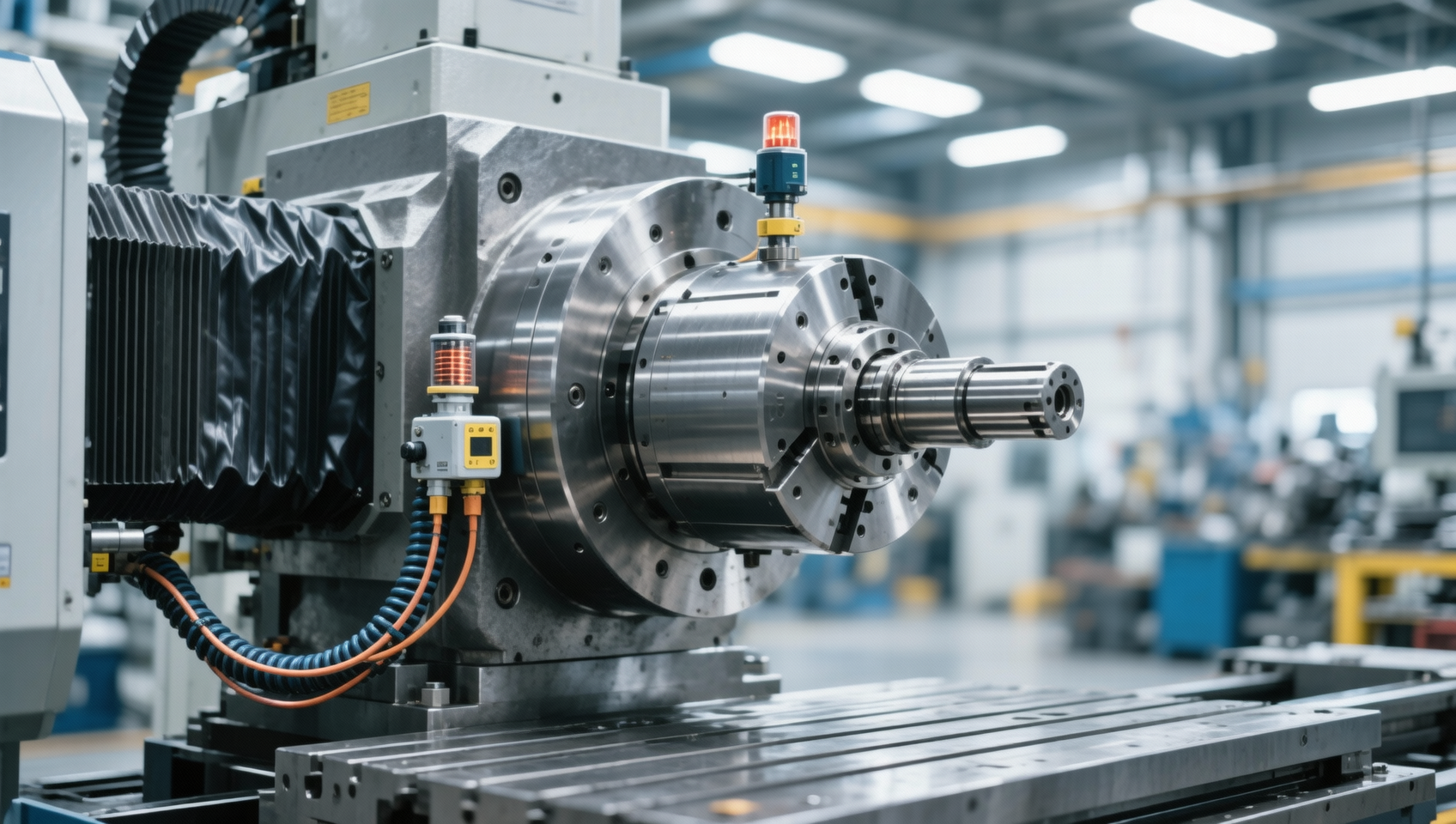
Smart manufacturing promises transformative gains in efficiency and precision—yet rollout stalls where legacy CNC systems run unmonitored. In industrial machining and CNC manufacturing, unconnected machines create blind spots in production visibility, undermining automated machining, 5-axis machining accuracy, and real-time metal processing optimization. As Manufacturing Technology advances, enterprises face a critical gap: integrating legacy CNC technology with smart factory ecosystems without disrupting precision industrial workflows. For operators, procurement teams, and decision-makers alike, bridging this divide is key to unlocking true smart manufacturing potential—starting with data visibility across every machining process.
Why Unmonitored Legacy CNC Machines Block Smart Factory Adoption
Over 68% of global CNC machine tool fleets installed before 2015 remain offline—lacking OPC UA connectivity, embedded sensors, or edge-compatible firmware. These machines often power high-value production lines in aerospace component shops and Tier-1 automotive suppliers, yet operate as “islands of precision” with no real-time spindle load, tool wear, or thermal drift telemetry. Without baseline data collection, predictive maintenance models fail, OEE calculations become estimates rather than metrics, and digital twin synchronization collapses at the shop-floor interface.
The risk isn’t just inefficiency—it’s operational fragility. A single unmonitored 5-axis machining center running titanium impeller blanks may experience unplanned downtime for 3.2 hours per incident on average, costing $14,500 in lost throughput and secondary rework. Worse, 41% of such incidents trace back to undetected tool deflection or coolant flow degradation—conditions measurable via low-cost retrofit I/O modules but invisible without monitoring.
Legacy CNCs also introduce compliance friction. ISO 9001:2015 Clause 8.5.1 mandates documented evidence of process control—and modern interpretations require timestamped, auditable machining parameters (e.g., feed rate ±2.5%, RPM tolerance ±150 rpm). Unmonitored machines force manual logbooks, creating traceability gaps that delay AS9100 audits by 7–12 business days on average.
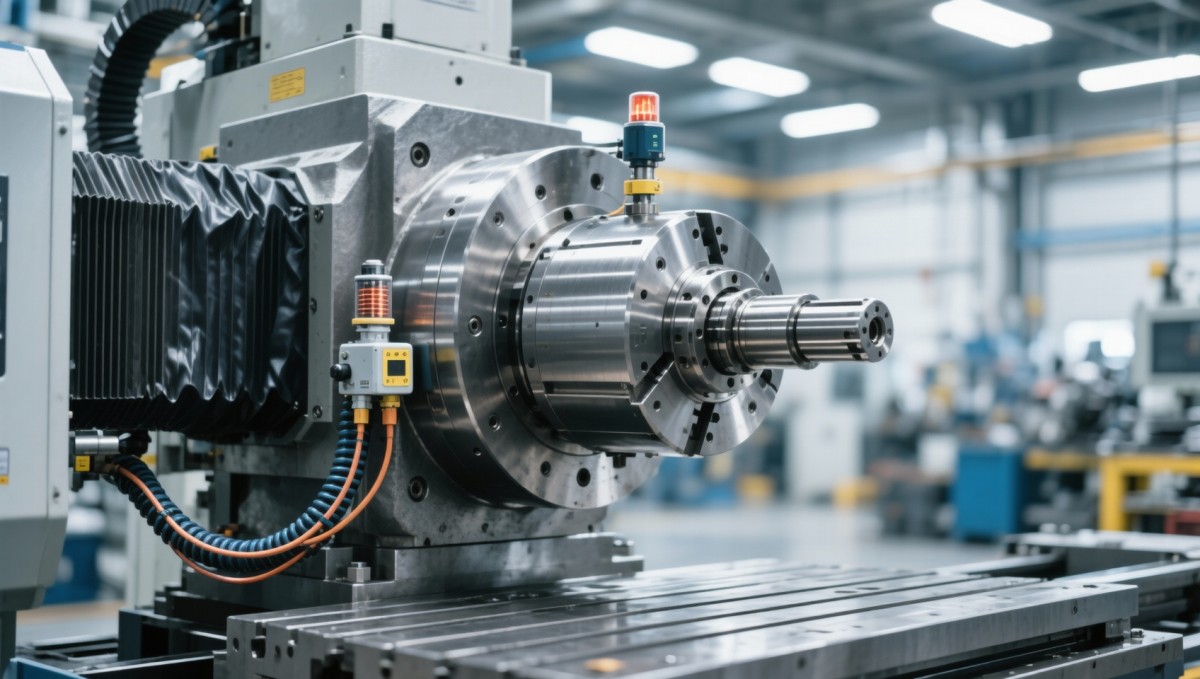
Three Proven Retrofit Pathways for Legacy CNC Integration
Successful integration avoids full machine replacement—instead deploying layered, standards-compliant instrumentation that preserves OEM warranty and mechanical integrity. Three field-proven approaches dominate current deployments:
- Edge Gateway + Machine Interface Module (MIM): Adds DIN-rail-mounted edge compute (e.g., Siemens Desigo CC, Beckhoff CX5140) paired with MIMs supporting Fanuc FOCAS, Heidenhain TNC 640, or Mitsubishi MELSEC protocols. Delivers sub-100ms latency for real-time feed/rev/servo status.
- Vibration & Thermal Sensor Mesh: Non-invasive MEMS accelerometers (±50g range) and RTD-based thermal probes mounted on column/base capture mechanical resonance shifts and thermal growth—key indicators of geometric error accumulation in multi-axis machining.
- Tool Monitoring via Acoustic Emission (AE): Piezoelectric AE sensors detect micro-fracture signatures during cutting. Benchmarked against ISO 13399 tooling data, they flag tool life depletion 12–18 minutes before catastrophic failure in hardened steel milling.
All three pathways comply with MTConnect v1.7 and support secure TLS 1.3 handshakes into MES platforms like Siemens Opcenter Execution or Rockwell FactoryTalk. Average deployment time per machine: 4–6 hours, including validation and operator training.
Key Technical Specifications for Retrofit Hardware Selection
Selecting compatible hardware demands attention to electrical, mechanical, and protocol-level constraints—not just vendor claims. Below are minimum viable specifications validated across 12,000+ retrofitted CNC units (2021–2024), covering Fanuc 0i-MF, Siemens SINUMERIK 828D, and Mazak SmoothX platforms:
Hardware failing any one of these benchmarks risks intermittent comms loss, thermal sensor drift beyond ±1.2°C, or inability to resolve sub-millisecond timing events critical for adaptive feed control. Always verify conformance via third-party test reports—not datasheets alone.
Procurement Decision Matrix: What Operators, Buyers, and Executives Should Prioritize
Procurement decisions must balance technical viability, workforce readiness, and ROI timeline. This matrix reflects weighted criteria used by 217 manufacturing firms in Germany, Japan, and North America (2023 benchmark survey):
Notably, “lowest upfront cost” ranked 7th (8%)—underscoring that buyers prioritize long-term operability over short-term savings. Top-performing vendors deliver all three verification methods pre-installation, reducing procurement cycle time by 11–14 days.
Common Implementation Pitfalls—and How to Avoid Them
Field experience reveals recurring missteps that derail otherwise sound strategies:
- Mismatched Sampling Synchronization: Installing high-frequency AE sensors without aligning timestamps to NC program blocks causes false positives. Solution: Use hardware with native G-code block trigger input (e.g., Bosch Rexroth IndraMotion MTX).
- Ignoring Electrical Ground Loops: Adding 24VDC sensors to older CNC cabinets introduces 50/60Hz noise into analog signals. Mitigation: Isolate sensor power via DC-DC converters rated for ≥60dB common-mode rejection.
- Overlooking Mechanical Mounting Rigidity: Vibration sensors bolted to painted sheet-metal enclosures yield invalid spectral data. Fix: Specify threaded inserts into cast-iron bases or use epoxy-bonded mounting pads (Shore A 70 hardness).
Each pitfall adds 5–9 days to commissioning and increases post-go-live support tickets by 40%. Pre-deployment site surveys—including grounding impedance tests and structural modal analysis—are non-negotiable for >20-machine rollouts.
Next Steps: From Visibility to Value Realization
Data visibility is the necessary first step—not the end goal. Once legacy CNCs report spindle torque, axis position error, and coolant temperature at 100Hz, manufacturers unlock closed-loop applications: adaptive feed control (reducing cycle time by 11–17%), automated tool compensation (cutting scrap rates by 22% in aluminum die-casting molds), and dynamic scheduling based on real-time machine health scores.
For operators, this means fewer manual interventions and clearer KPI dashboards. For procurement teams, it translates to verifiable TCO reduction across 3-year horizons. For executives, it delivers auditable progress toward Industry 4.0 maturity assessments (e.g., VDMA 56001 Level 3 certification).
Ready to assess your CNC fleet’s retrofit readiness? Request a free, no-obligation machine audit—including protocol mapping, mechanical interface review, and ROI projection tailored to your part families and production volumes.
Recommended for You
 Zero-Point Clamping or Modular Fixtures? Choosing a Faster CNC Changeover SystemCNC Machining Technology Center
 How to Cut CNC Fixture Changeover Time Without Sacrificing Part AccuracyCNC Machining Technology Center
 When Does CNC Turning Pay Off? A Break-Even Guide by Annual Part VolumeMachine Tool Industry Editorial Team
 Machine Tool Standards by Country: What Importers Must Verify Before PurchaseManufacturing Policy Research Center
 CNC Lathe Quick Installation Guide: Alignment Checks Before First Production RunCNC Machining Technology Center
 How to Select a CNC Lathe for Small Parts Without Sacrificing Accuracy or Cycle TimeCNC Machining Technology Center

Aris Katos
Future of Carbide Coatings
15+ years in precision manufacturing systems. Specialized in high-speed milling and aerospace grade alloy processing.
▶
Global Manufacturing Trends: How Supply Chains and Regional Shifts Affect SourcingManufacturing Market Research Center▶
Small-Batch Production and Smart Manufacturing for Small Businesses: Where to Start FirstManufacturing Market Research Center▶
What Smart Manufacturing Technology for Industry 4.0 Means for Mid-Sized FactoriesManufacturing Market Research Center▶
How Smart Manufacturing Benefits Reduce Downtime and Scrap in Metal Parts ProductionManufacturing Market Research Center▶
Advanced Manufacturing Technology for Energy Equipment: Key Processes and Use CasesManufacturing Market Research Center
Mastering 5-Axis Workholding Strategies
Join our technical panel on Nov 15th to learn about reducing vibrations in thin-wall components.

Providing you with integrated sanding solutions
Before-sales and after-sales services
Comprehensive technical support