• Global CNC market projected to reach $128B by 2028 • New EU trade regulations for precision tooling components • Aerospace deman
NYSE: CNC +1.2%LME: STEEL -0.4%

Choosing a Machine Tool Distributor: Service and Support Checklist
Choosing a Machine Tool Distributor: Service and Support Checklist
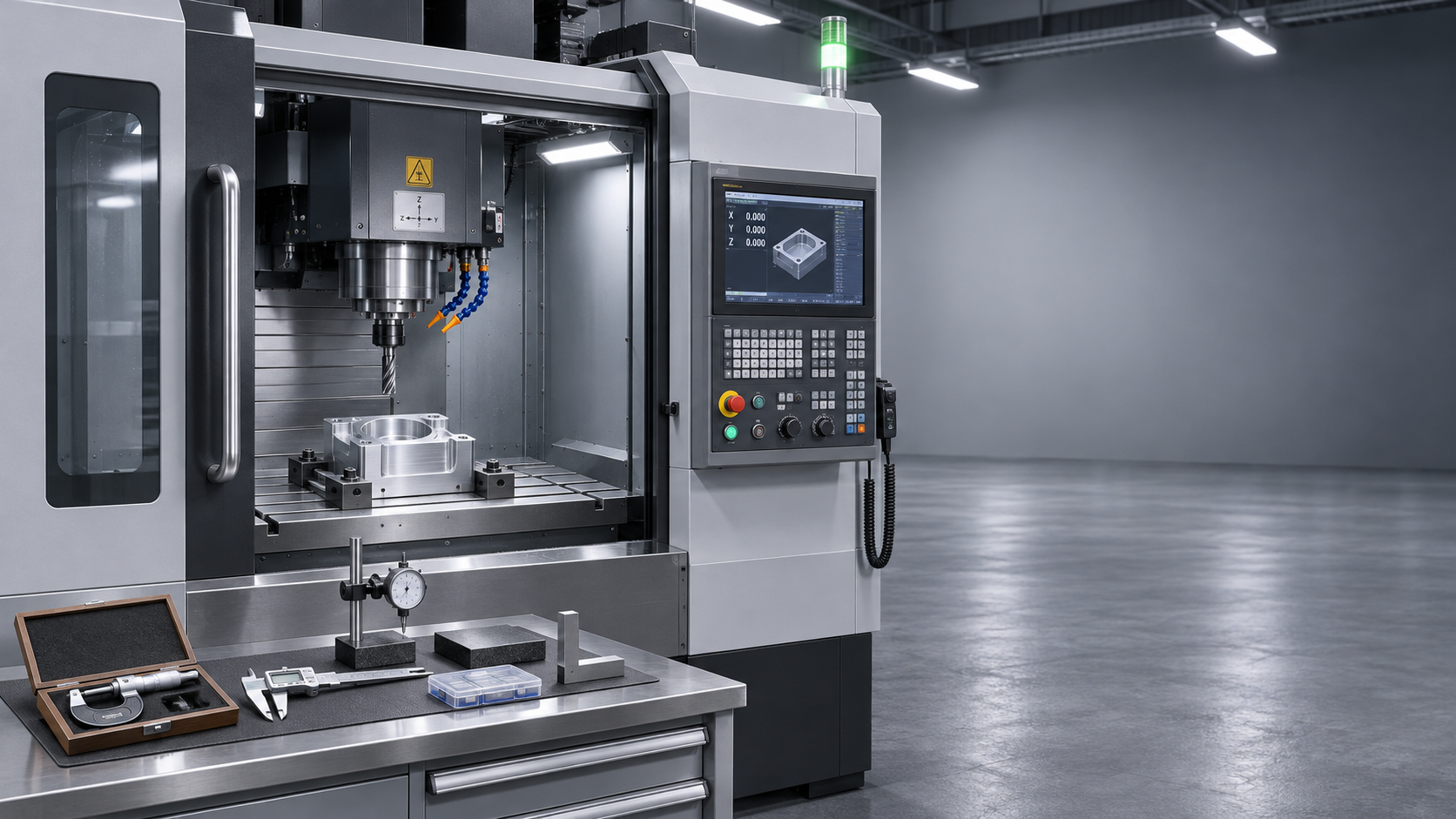
Choosing a machine tool distributor involves more than comparing equipment prices and specifications. Responsive technical support, reliable spare parts availability, and effective installation and training can make the difference between consistent production and costly downtime. Before committing to a CNC machine, examine how each supplier will support it from site preparation through years of operation—and put those commitments in writing.
The distinction matters whether the purchase is a CNC lathe for shaft components, a machining center for precision discs, or a multi-axis system for complex structural parts. The machine may be built by one company, sold by another, and supported by a combination of local technicians, control-system specialists, and the original manufacturer. Procurement needs to understand who takes responsibility when something goes wrong.
Start with the support model, not the sales presentation
A machine tool distributor can provide a useful local link to a manufacturer, but the scope of that link varies. One supplier may employ its own field service engineers; another may rely on the machine builder or an independent contractor. Neither arrangement is automatically better. The question is whether the people assigned to your machine have the right skills, access, and availability.
Ask for the service structure for the exact machine and location being quoted. A distributor experienced with a basic turning center may need additional support for a five-axis machine, probing system, bar feeder, or robot interface. Confirm who handles the CNC control, spindle, drives, automation, and software, and whether the distributor can obtain technical assistance and parts directly from the relevant manufacturers.
It is also worth checking the current authorization status for the brand and the proposed territory. A distributor may be able to sell a machine without having the same access to technical documentation, warranty decisions, or replacement parts as an authorized service partner. Ask for evidence of the arrangement and clarify what happens if the relationship with the machine builder changes.
Test the response process before a breakdown
“Fast support” is not a service commitment. Request the actual escalation route: the contact channel, working hours, required information, and the point at which a remote issue becomes an on-site visit. If your facility operates multiple shifts, check whether support covers those hours or only standard business hours.
Separate response time from resolution time. A technician acknowledging a fault is not the same as diagnosing it, arriving on site, or returning the machine to production. On-site attendance can depend on travel, technician availability, and parts; a credible agreement should state these conditions rather than imply that every fault can be fixed within a single window.
Give shortlisted suppliers a realistic scenario: a machine stops with a control alarm during a critical run. Ask what information they need, who reviews it, what remote diagnostics are possible, and how they decide whether to dispatch an engineer. Their answer will reveal more than a general promise about customer care.
Remote access deserves its own review. Establish whether the connection requires customer approval, which network arrangements are supported, and who is responsible for cybersecurity checks. A convenient diagnostic tool is of little use if it cannot pass the plant’s IT requirements.
Follow the spare parts all the way to the machine
Parts availability is often described too broadly to help with purchasing decisions. “Available from the manufacturer” does not say whether an item is on a local shelf, at an overseas warehouse, or made to order. Ask for the stocking location and expected replenishment route for components relevant to the proposed configuration.
Pay particular attention to parts that can stop production or take specialist work to replace: spindle assemblies, drives, encoders, control modules, pumps, sensors, and tool changer components. Not every item needs to be held at your site. The right inventory depends on machine utilization, the availability of alternative capacity, replacement lead time, and the cost of a production interruption.
Request a recommended spare parts list with part numbers, current prices, shelf-life or storage requirements where relevant, and indicative lead times. Ask which items are interchangeable with equipment you already own. For imported machines, clarify who handles freight, customs clearance, and any applicable duties or taxes. Lead times should be treated as estimates unless the supplier has made a specific contractual commitment.
Also ask about long-term support: how parts are sourced after a model is discontinued, whether control components can be repaired or replaced, and how the customer will be notified of obsolescence. A low initial price can become less attractive if the parts pathway is uncertain.
Make installation and acceptance measurable
Delivery is not the same as a production-ready machine. The quotation should identify who handles unloading, rigging, positioning, leveling, utility connections, commissioning, and removal of packing materials. Check floor loading, foundation requirements, access routes, electrical supply, compressed air, coolant arrangements, and environmental conditions against the machine builder’s site-preparation documents.
The handoff between suppliers is a frequent source of delay. If a separate contractor installs extraction, a robot, or a pallet system, name the party responsible for coordinating interfaces and resolving conflicts. For imported equipment, confirm when ownership and risk transfer under the agreed delivery terms and who arranges insurance.
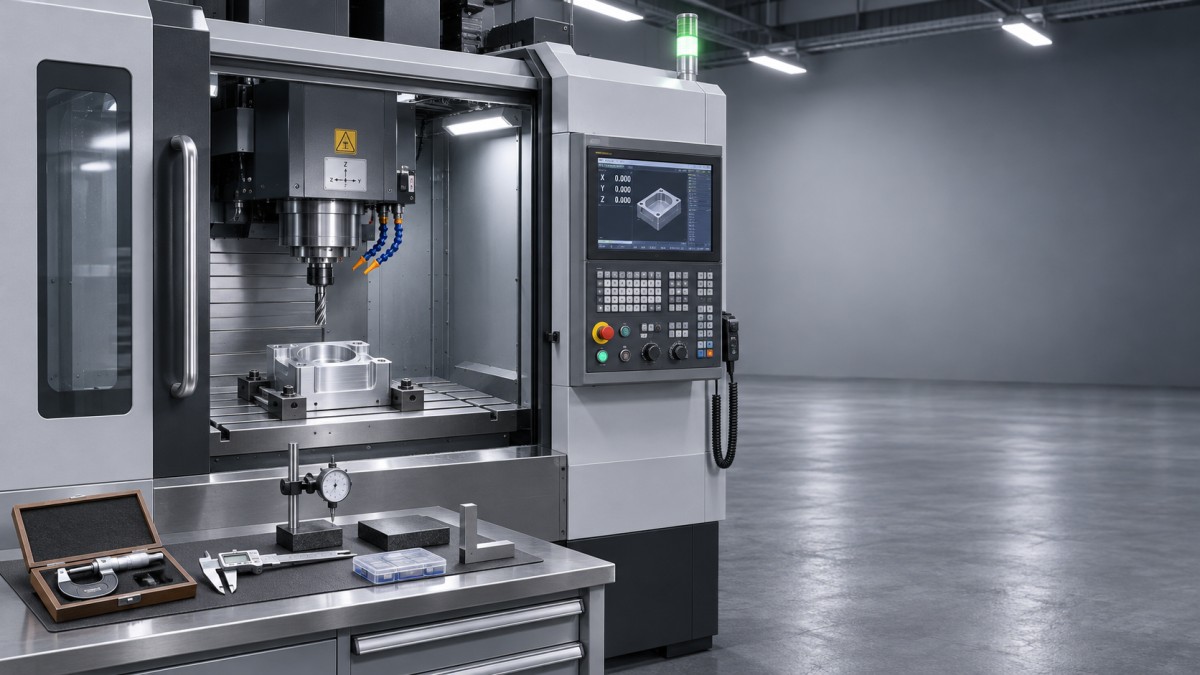
Acceptance criteria should be agreed before the purchase order, not negotiated while the machine is on the floor. Depending on the application, they may include a documented machine inspection, functional checks, geometry verification, or a trial cut on an agreed workpiece. Specify the material, tooling, fixtures, measurement method, and responsibilities for supplying them. If a part must meet a particular tolerance, define how and under what conditions it will be measured.
A trial cut demonstrates performance under the agreed conditions; it does not automatically guarantee cycle time or quality for every future part. Record any unresolved items, the owner of each correction, and the procedure for retesting before final acceptance.
Check whether training covers production, not just startup
Basic control orientation may be enough for an experienced team buying a familiar machine. It is unlikely to be enough when operators are moving to a new control platform, a multi-axis process, or an automated cell. Ask for a training agenda rather than accepting a line item labeled “operator training.”
The agenda should distinguish operator, programmer, and maintenance needs. Depending on the machine, useful topics include safe startup and recovery, work offsets, tooling setup, alarm handling, probing routines, backups, lubrication checks, and basic troubleshooting. Confirm the number of participants, location, language, training materials, and whether instruction uses the delivered machine or a separate system.
Ask what happens if installation is completed before the production team is available, or if additional shifts need training later. Include the cost of extra sessions and application engineering support in the comparison. For complex parts, a distributor’s ability to help with workholding, tooling, and process prove-out can matter as much as its ability to explain the control screen.
Read warranty and service terms alongside the quotation
A warranty period alone says very little about the actual cost of a failure. Check when coverage starts, which components are included, and whether travel, labor, freight, consumables, and replacement parts are covered. Ask how claims are approved and whether the distributor can authorize repairs or must wait for the machine builder.
Exclusions need particular attention. Damage associated with unsuitable utilities, incorrect operation, unauthorized modification, or missed maintenance may be treated differently under different contracts. Request the required maintenance schedule and identify which tasks your team can perform without affecting coverage. If preventive maintenance must be completed by an approved provider, include that expense in the ownership calculation.
For post-warranty service, obtain current rates or a clear pricing mechanism for labor, travel, remote support, emergency visits, and software assistance. Check whether a service agreement reserves technician capacity, includes scheduled visits, or simply offers discounted rates. Avoid assuming that a maintenance contract includes replacement parts or priority attendance unless the terms say so.
Compare the full cost—and the exposure that remains
A useful comparison puts all suppliers on the same scope. Start with the quoted machine and options, then add the costs needed to reach the agreed acceptance point and keep the equipment operating. Where figures are uncertain, show them as estimates and identify who bears the risk if they change.
- Acquisition and delivery: freight, insurance, import charges where applicable, rigging, installation, and utility work.
- Production readiness: fixtures, cutting tools, probing, programming, integration, trial material, and acceptance testing.
- People and maintenance: initial and follow-up training, preventive maintenance, calibration where required, and planned service visits.
- Support and continuity: spare parts, travel charges, software support, repair lead times, and the cost of alternative production capacity.
- Commercial conditions: payment milestones, acceptance conditions, exclusions, change-order rates, and warranty start date.
Do not add a precise downtime cost unless your organization has a defensible way to calculate it. Instead, work with operations and finance to identify the likely consequences of a stopped machine: delayed shipments, subcontracting, overtime, or lost capacity. A machine with a backup process may justify a different support package from one that will produce a bottleneck component.
For international purchases, compare the support structure in the destination market rather than judging it by the machine’s country of origin. Manufacturers in China, Germany, Japan, South Korea, and elsewhere may have very different local arrangements depending on the distributor, product line, and location.
Turn the shortlist into comparable commitments
Before awarding the order, send each shortlisted supplier the same machine configuration, production requirements, site conditions, and acceptance expectations. Ask for a written response to the open items: named support contacts, escalation procedures, parts sourcing, installation responsibilities, training scope, warranty exclusions, and service charges.
Involve maintenance, production, engineering, and IT in reviewing the answers. Procurement can then compare not only price but also the gaps between what is promised and what the plant needs. Any material promise made during negotiations should appear in the quotation, service agreement, or purchase contract, with assumptions and exclusions visible.
The practical test is straightforward: if the machine cannot be installed, accepted, or repaired as expected, does the agreement identify who acts next and who pays? Resolve that question before the purchase order, while the scope and commercial terms can still be adjusted.
PREVIOUS ARTICLE
NEXT ARTICLE
Recommended for You
 Choosing a Machine Tool Distributor: Service and Support ChecklistManufacturing Market Research Center
![]() Overseas Buyers Bring Drawings and Samples to Yangtze River Delta FactoriesGlobal Machine Tool Trade Research Center
![]() Chinese Five-Axis Machine Tool Prices Reach Around 40,000 YuanMachine Tool Industry Editorial Team
 Choosing a Machine Tool Exporter: Delivery, Warranty and Support ChecksGlobal Machine Tool Trade Research Center
![]() US Lawmakers Warn China Has Overtaken US in Four Manufacturing SectorsManufacturing Policy Research Center
 What Is CNC Cutting? How It Works and Which Materials It Can CutCNC Machining Technology Center


Aris Katos
Future of Carbide Coatings
15+ years in precision manufacturing systems. Specialized in high-speed milling and aerospace grade alloy processing.
▶
Choosing a Machine Tool Distributor: Service and Support ChecklistManufacturing Market Research Center▶
Perpetua Resources Signs MOU to Evaluate US Tungsten Supply ChainManufacturing Market Research Center▶
Choosing a Machine Tool Supplier: Service, Lead Times and Total CostManufacturing Market Research Center▶
Report: 56% of China's Key Steelmakers Lost Money in SeptemberManufacturing Market Research Center▶
Precision Machining for Defense: Supplier Quality and Traceability ChecksManufacturing Market Research Center
▶
Mastering 5-Axis Workholding Strategies
Join our technical panel on Nov 15th to learn about reducing vibrations in thin-wall components.

Providing you with integrated sanding solutions
Before-sales and after-sales services
Comprehensive technical support