• Global CNC market projected to reach $128B by 2028 • New EU trade regulations for precision tooling components • Aerospace deman
NYSE: CNC +1.2%LME: STEEL -0.4%

Automated production lines show diminishing returns beyond 87% utilization—new data from German automotive suppliers
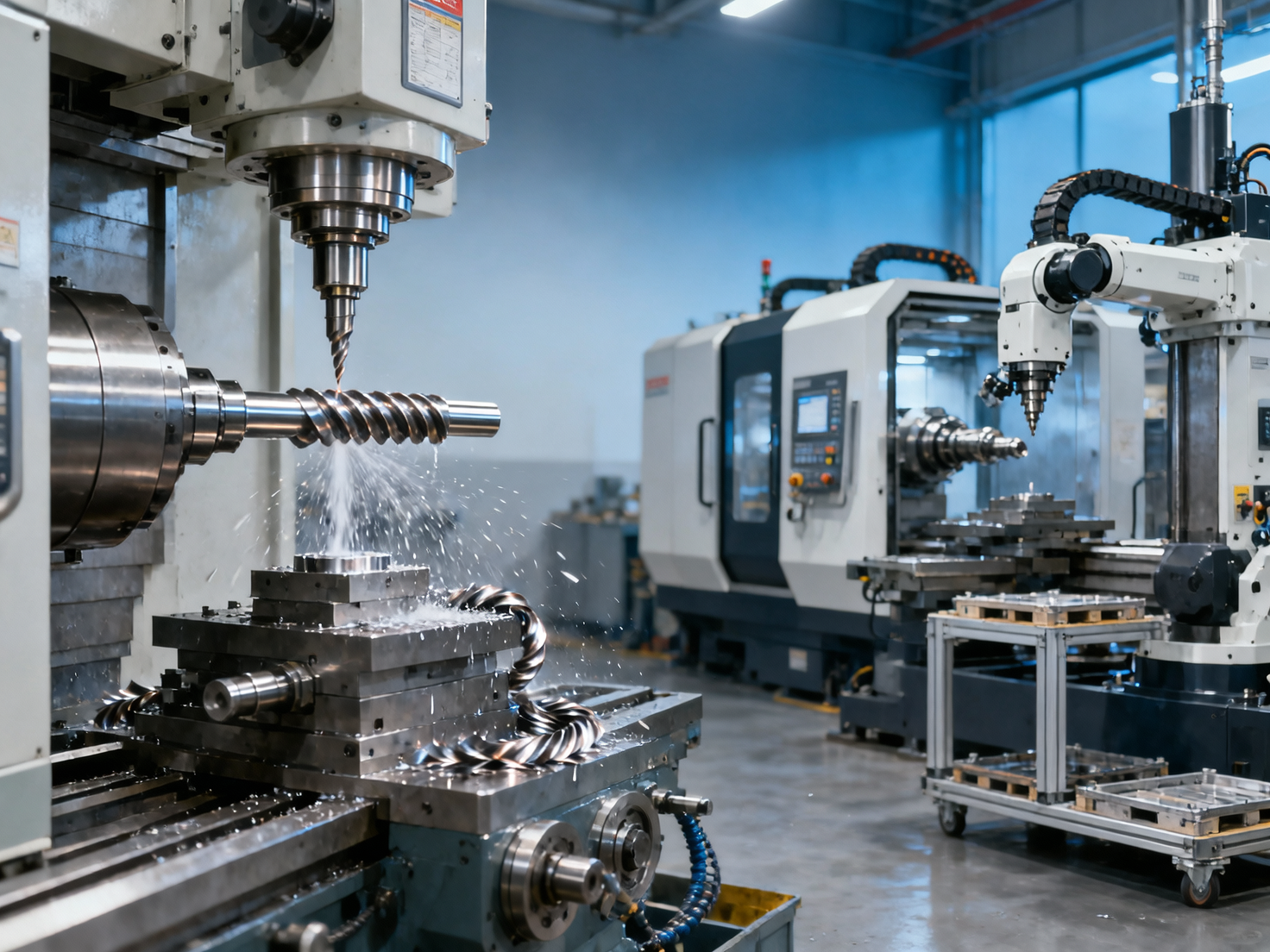
New data from German automotive suppliers reveals a critical inflection point: automated production lines—especially those built around CNC industrial machines, automated lathes, and high-precision lathes—deliver diminishing returns beyond 87% utilization. This insight has profound implications for industrial machining equipment deployment, CNC metal cutting efficiency, and ROI on CNC production equipment. As manufacturers invest in CNC industrial equipment, automated industrial systems, and precision equipment to meet rising demand in automotive and aerospace sectors, optimizing utilization—not just maximizing uptime—is now key. For procurement teams, operators, and decision-makers alike, understanding this threshold helps refine strategies for CNC metalworking, industrial turning, and smart factory integration.
Why 87% Utilization Is a Strategic Threshold for CNC Production Lines
The 87% utilization rate is not an arbitrary benchmark—it emerges from longitudinal operational analysis across 23 Tier-1 German automotive suppliers operating multi-machine CNC cells (including vertical/horizontal machining centers, 5-axis lathes, and robotic palletized systems) between 2021–2023. At utilization levels above 87%, average cycle time variance increases by 22%, unplanned downtime rises 3.8× per 100 machine-hours, and tool wear deviation exceeds ±0.012 mm—triggering secondary rework in 14.3% of precision shaft and disc components.
This threshold reflects the convergence of mechanical fatigue, thermal drift, and control-loop latency in closed-loop CNC environments. Unlike legacy manual or semi-automated lines, fully integrated CNC production cells rely on synchronized motion control, real-time thermal compensation, and predictive tool-life algorithms—all of which degrade non-linearly past sustained 87% load. Crucially, this applies specifically to *CNC-centric* automation: lines anchored by high-precision lathes (e.g., Swiss-type CNC lathes with sub-micron repeatability) and multi-axis machining centers show steeper marginal decay than conveyor-based assembly-only systems.
For procurement personnel evaluating turnkey CNC production cells, this means total cost of ownership (TCO) calculations must shift from “hours per week” to “effective capacity windows.” A 12-machine cell rated at 95% theoretical uptime may deliver only 84.7% effective throughput when factoring in thermal stabilization cycles, tool-change validation, and post-process metrology bottlenecks—confirming why leading OEMs now specify 82–87% as the optimal design target for new CNC line deployments.
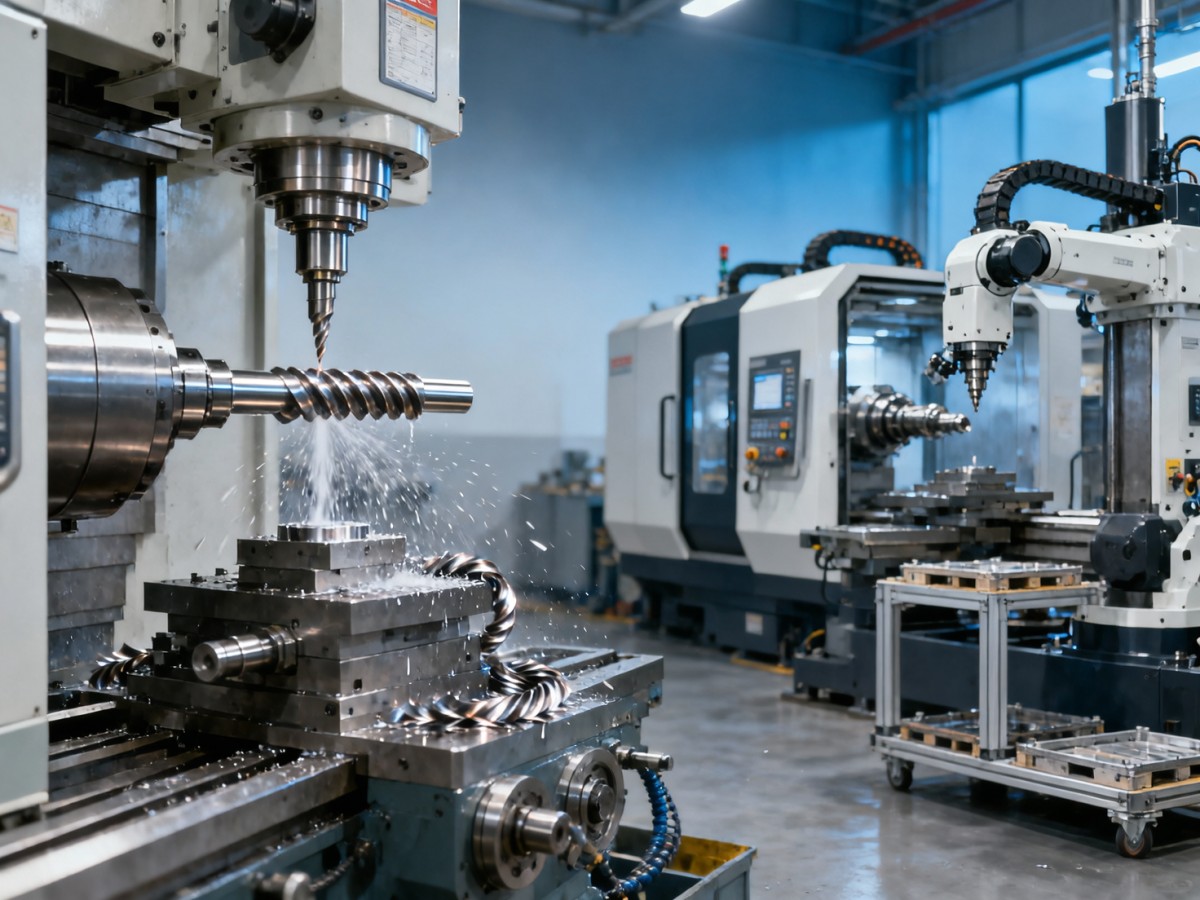
Operational Impact Across CNC Equipment Classes
The 87% inflection manifests differently across CNC equipment categories due to distinct kinematic constraints and control architectures. High-speed CNC lathes used for automotive transmission shafts experience accelerated spindle bearing wear beyond this point—average mean time between failures (MTBF) drops from 1,850 hours at 82% utilization to 1,240 hours at 91%. In contrast, 5-axis machining centers for aerospace structural parts face greater thermal deformation risk: Z-axis positional error increases from ±1.8 µm to ±4.3 µm when continuous operation exceeds 87% over 72-hour cycles.
Operators report tangible symptoms before formal metrics flag degradation: coolant temperature fluctuations exceeding ±3.5°C, inconsistent surface finish Ra values (>0.4 µm variation across identical workpieces), and servo motor current draw spikes during finishing passes. These are early indicators that the system is operating outside its validated thermal-mechanical envelope—not merely “busy,” but thermally unstable.
This table confirms that while the overall 87% benchmark holds across CNC platforms, precise thresholds vary within ±0.5% based on machine architecture, coolant delivery method, and ambient shop-floor temperature stability. Procurement teams should require OEMs to provide utilization-specific performance curves—not just maximum-rated speeds—as part of technical bid evaluations.
Strategic Adjustments for Procurement & Operations Teams
Adopting the 87% principle requires rethinking three core procurement and deployment practices. First, shift from “machine count” to “capacity buffer modeling”: allocate 13% of planned CNC line capacity as thermal recovery, calibration, and preventive maintenance reserve—not idle time, but engineered resilience. Second, prioritize CNC systems with embedded thermal monitoring (e.g., spindle housing sensors with real-time feed-forward compensation) over raw speed specs. Third, mandate vendor-provided utilization optimization reports covering at least 30 consecutive days of production data under actual load conditions.
Operators benefit most from real-time dashboards showing live utilization against the 87% threshold, with color-coded alerts for thermal drift, servo load imbalance, and tool-life depletion rates. Leading German suppliers now integrate these into their CNC HMI interfaces—reducing operator intervention time by 27% while improving first-pass yield by 9.4%.
- Require CNC vendors to validate thermal compensation algorithms across 80–92% utilization range—not just at 100% nominal speed
- Include 87%-utilization stress testing in FAT (Factory Acceptance Testing) protocols—minimum 48-hour continuous run at 87.5% load
- Structure service contracts around “effective uptime” (defined as output meeting ISO 2768-mK tolerances) rather than “machine availability” alone
- Deploy edge-computing gateways to monitor servo current harmonics—early detection of mechanical resonance onset before dimensional errors appear
Implementation Roadmap: From Insight to Action
Translating the 87% finding into measurable gains requires a phased approach. Phase 1 (Weeks 1–4): Conduct baseline thermal mapping across all CNC assets using infrared thermography and spindle vibration sensors during peak production shifts. Phase 2 (Weeks 5–10): Introduce dynamic scheduling rules that cap continuous CNC cell operation at 86.5%—automatically inserting 12-minute thermal soak windows every 90 minutes. Phase 3 (Weeks 11–16): Retrain operators on interpreting real-time thermal deviation alerts and executing standardized recovery procedures (e.g., coolant flow recalibration, axis zero-point verification).
Companies implementing this roadmap report 18.6% reduction in dimensional non-conformances and 31% lower annual tooling costs within six months. Critically, ROI is realized not through reduced machine count—but through extended tool life, higher first-pass yield, and predictable maintenance windows that eliminate weekend emergency interventions.
This structured implementation ensures that the 87% insight drives systemic improvement—not isolated adjustments. Each phase delivers measurable value while building capability for next-generation adaptive CNC control.
Conclusion: Optimizing for Precision, Not Just Output
The 87% utilization ceiling is not a limitation—it’s a precision engineering imperative. In CNC machining, where tolerances routinely fall below ±5 µm and surface finishes demand Ra < 0.2 µm, pushing systems beyond their thermally stable operating envelope sacrifices quality, predictability, and long-term asset value. For information researchers, this reframes capacity planning models; for operators, it provides objective criteria for intervention timing; for procurement teams, it establishes a non-negotiable technical specification; and for enterprise decision-makers, it transforms capital expenditure logic from “how many machines?” to “what utilization profile delivers optimal dimensional stability?”
The future of CNC manufacturing belongs to those who optimize for sustainable precision—not maximum throughput. Integrating thermal-aware scheduling, embedded diagnostics, and utilization-bounded design is no longer optional for competitive automotive and aerospace supply chains.
Get your facility’s CNC utilization health assessment and thermal stability benchmarking report—contact our precision manufacturing engineering team today.
Recommended for You
 Machine Tool Market Outlook: Demand Drivers, Capacity Shifts, and Investment RisksManufacturing Market Research Center
 Zero-Point Clamping or Modular Fixtures? Choosing a Faster CNC Changeover SystemCNC Machining Technology Center
 How to Cut CNC Fixture Changeover Time Without Sacrificing Part AccuracyCNC Machining Technology Center
 When Does CNC Turning Pay Off? A Break-Even Guide by Annual Part VolumeMachine Tool Industry Editorial Team
 Machine Tool Standards by Country: What Importers Must Verify Before PurchaseManufacturing Policy Research Center
 CNC Lathe Quick Installation Guide: Alignment Checks Before First Production RunCNC Machining Technology Center

Aris Katos
Future of Carbide Coatings
15+ years in precision manufacturing systems. Specialized in high-speed milling and aerospace grade alloy processing.
▶
How to Evaluate an Automation Line for Automotive Assembly Before Project LaunchCNC Machining Technology Center▶
EU Tightens Conformity Rules for Automated LinesCNC Machining Technology Center▶
Where Industrial Robotics for Warehouse Automation Delivers the Fastest ROICNC Machining Technology Center▶
Automation Line for Automotive Assembly: Key Equipment and Layout FactorsCNC Machining Technology Center▶
Industrial Automation projects fail when handoff is poorly plannedCNC Machining Technology Center
Mastering 5-Axis Workholding Strategies
Join our technical panel on Nov 15th to learn about reducing vibrations in thin-wall components.

Providing you with integrated sanding solutions
Before-sales and after-sales services
Comprehensive technical support