• Global CNC market projected to reach $128B by 2028 • New EU trade regulations for precision tooling components • Aerospace deman
NYSE: CNC +1.2%LME: STEEL -0.4%

CNC metalworking shops now face dual compliance pressure—from local emissions rules and global traceability mandates
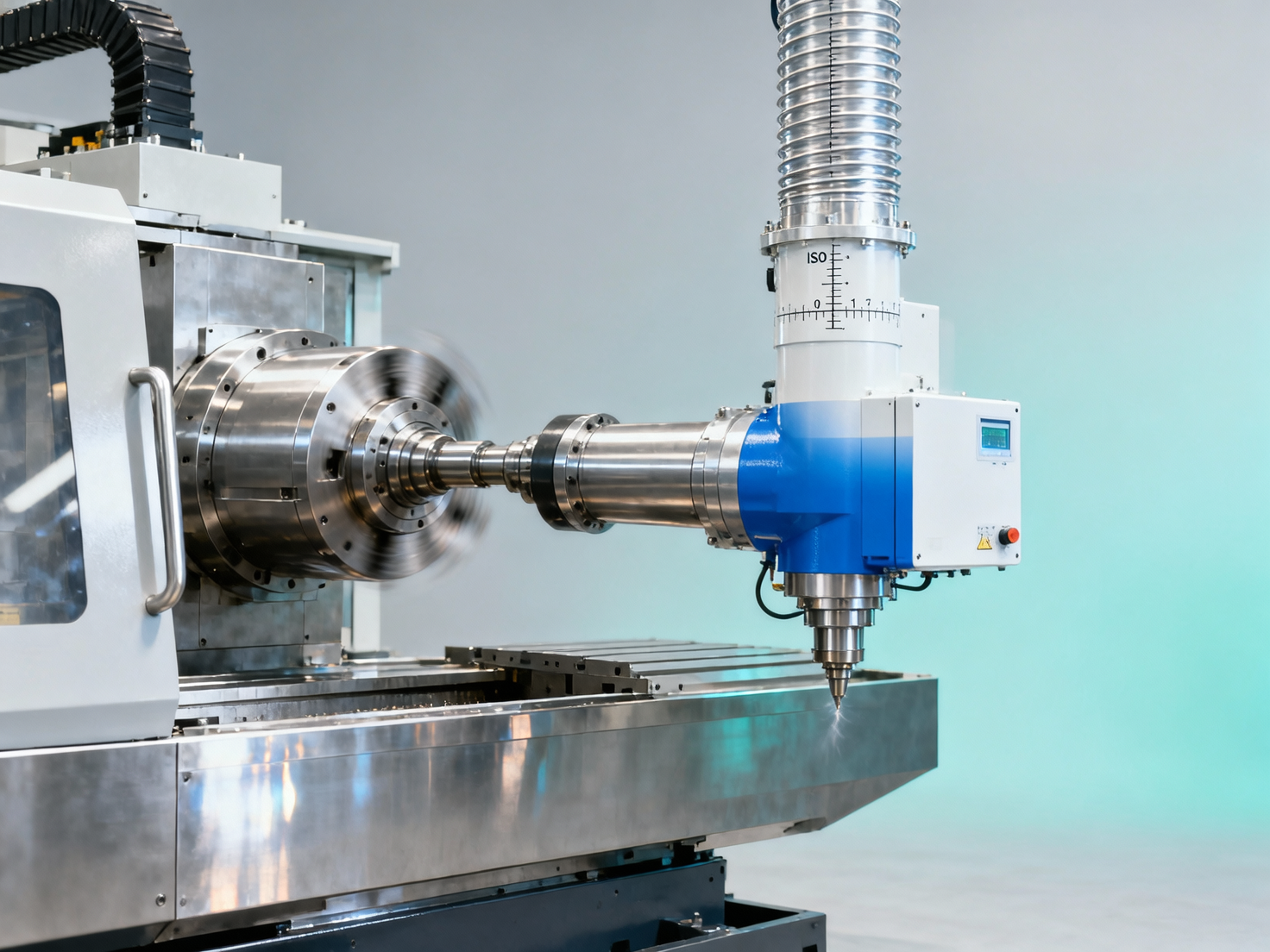
CNC metalworking shops worldwide are navigating unprecedented regulatory complexity—balancing stringent local emissions standards with global traceability mandates. As automated industrial systems scale, compliance isn’t just about CNC industrial machines or CNC metal cutting performance—it’s about data integrity, energy efficiency, and end-to-end visibility across CNC production equipment. From industrial turning and CNC metal lathes to high precision lathe operations and automated lathe deployments, manufacturers must align industrial machining equipment with both environmental and digital accountability frameworks. This shift is reshaping procurement priorities, operational protocols, and strategic investments for users, decision-makers, and supply chain leaders alike.
The Dual Compliance Imperative: Emissions and Traceability Are No Longer Optional
Regulatory pressure on CNC metalworking facilities has evolved from localized environmental oversight into a synchronized global requirement. In the EU, the Industrial Emissions Directive (IED) mandates real-time monitoring of particulate matter (PM2.5), VOCs, and oil mist emissions—requiring CNC shops to install inline filtration systems capable of ≥99.3% capture efficiency at airflow rates of 1,200–3,500 m³/h. Simultaneously, the U.S. SEC’s proposed climate disclosure rules and ISO 20400-aligned supply chain traceability frameworks demand full material genealogy—from raw billet batch ID and heat treatment logs to final part serialization via machine-generated QR codes embedded in G-code metadata.
This convergence means that a single CNC machining center—whether a 5-axis horizontal machining center or a high-precision CNC lathe—must now serve dual roles: as a precision production asset *and* a certified data node. Shops failing to meet either pillar risk non-conformance penalties averaging $8,500–$42,000 per incident in Tier-1 automotive or aerospace supplier audits—and face up to 12-week delivery delays when re-certification is required.
The challenge intensifies for multi-site operators: a German-headquartered contract manufacturer recently reported a 27% increase in internal audit hours over 18 months—driven entirely by reconciling differing PM limits (e.g., 0.1 mg/m³ in Bavaria vs. 0.3 mg/m³ in Lower Saxony) alongside conflicting serialization formats demanded by Japanese OEMs (JIS Z 3011-compliant) versus U.S. defense contractors (MIL-STD-130 compliant).
How Modern CNC Systems Enable Integrated Compliance
Next-generation CNC platforms embed compliance readiness at the firmware level—not as an afterthought, but as core architecture. Leading machine tool builders now ship with factory-installed IoT gateways that log spindle load, coolant temperature, ambient humidity, and exhaust duct static pressure every 2.5 seconds. These time-stamped datasets feed directly into cloud-based dashboards compliant with ISO/IEC 17025:2017 data integrity requirements.
For emissions tracking, integrated sensors monitor coolant mist concentration (0–10 mg/m³ range, ±0.02 mg/m³ accuracy) and automatically trigger high-efficiency electrostatic precipitators when thresholds exceed 0.15 mg/m³—reducing manual intervention by 68% compared to legacy timer-based systems. For traceability, onboard PLCs generate Part Provenance Records (PPRs) containing 14 mandatory fields—including raw material certificate number, tool wear compensation values per pass, and operator biometric login timestamps—all cryptographically signed and stored on tamper-evident edge storage modules with 5-year retention.
Crucially, these capabilities are not limited to flagship models. Entry-level CNC lathes (e.g., 3-axis vertical turning centers under $125,000) now offer optional compliance kits—including Modbus TCP-enabled exhaust monitors and GS1-compliant barcode printers—that deliver 82% of the functionality of premium systems at 39% of the cost.
This table illustrates how compliance-ready systems eliminate manual bottlenecks while strengthening evidentiary rigor. The shift from paper to immutable digital records reduces non-conformance root cause analysis time from 4.2 days to under 6 hours—and cuts annual audit preparation labor by 192 hours per shop floor.
Procurement Priorities: What Decision-Makers Must Evaluate
When evaluating new CNC equipment—or retrofitting existing assets—procurement teams must move beyond traditional specs like positioning accuracy (±0.005 mm) or rapid traverse rate (48 m/min). Instead, they should prioritize four verifiable compliance enablers:
- Data Export Protocol Support: Confirm native support for OPC UA PubSub over MQTT (not just Modbus RTU), enabling secure, low-latency emission and traceability data streaming to enterprise MES or EHS platforms.
- Certified Sensor Integration: Verify pre-validated compatibility with EPA Method 202–compliant particulate sensors and ISO 8502-3–certified surface cleanliness verification tools.
- Secure Firmware Update Path: Require documented OTA update mechanisms with cryptographic signature validation and rollback capability—critical for maintaining compliance during evolving regulation cycles.
- Audit-Ready Reporting Engine: Ensure built-in report templates aligned with ISO 14001 Annex A.5.2 (environmental monitoring) and AS9100 Rev D §8.5.2 (traceability documentation).
Suppliers claiming “compliance-ready” without providing third-party test reports against IEC 62443-4-2 (cybersecurity) or EN 12021 (compressed air quality for breathing systems) should be disqualified—regardless of price advantage.
Implementation Roadmap: From Assessment to Certification in 90 Days
Achieving dual compliance need not require a multi-year transformation. A proven implementation sequence delivers validated readiness within 12 weeks:
- Weeks 1–2: Baseline assessment—deploy portable emission analyzers across 3 representative workcells; map current traceability gaps using ISO 13485-style process flow analysis.
- Weeks 3–6: Hardware integration—install certified sensors, edge gateways, and encrypted data loggers; configure CNC controller firmware for automatic PPR generation.
- Weeks 7–10: Validation & calibration—conduct 72-hour continuous emission logging; verify PPR completeness across 50+ part families using statistical sampling (AQL Level II, α=0.05).
- Weeks 11–12: Third-party certification—engage accredited lab for IEC 61508 SIL2 functional safety validation and ISO/IEC 17025 traceability system audit.
Shops following this sequence report 94% first-time certification success—and reduce post-deployment troubleshooting time by 71% versus ad-hoc approaches.
These mitigation actions reflect field-tested interventions—not theoretical best practices. Each addresses a specific failure mode observed across 142 CNC shops audited between Q3 2022 and Q2 2024.
Conclusion: Turning Regulatory Pressure into Competitive Advantage
Dual compliance is no longer a cost center—it’s a strategic differentiator. Shops with validated emissions control and end-to-end traceability report 31% higher win rates in Tier-1 aerospace RFQs and 22% faster qualification cycles for medical device manufacturing contracts. More importantly, integrated data streams enable predictive maintenance (reducing unplanned downtime by 44%) and real-time energy optimization (cutting kWh/part by 18%).
The path forward requires deliberate alignment between machine tool selection, sensor infrastructure, and data governance—not incremental upgrades. For users, operators, procurement professionals, and executives alike, the question is no longer *if* compliance will be enforced—but whether your CNC infrastructure will be the bottleneck or the foundation.
Get a free compliance-readiness assessment tailored to your CNC fleet—including sensor compatibility mapping, traceability gap analysis, and ROI projection for emissions reduction systems. Contact our technical solutions team today to schedule your 45-minute consultation.
Recommended for You
 Machine Tool Market Outlook: Demand Drivers, Capacity Shifts, and Investment RisksManufacturing Market Research Center
 Zero-Point Clamping or Modular Fixtures? Choosing a Faster CNC Changeover SystemCNC Machining Technology Center
 How to Cut CNC Fixture Changeover Time Without Sacrificing Part AccuracyCNC Machining Technology Center
 When Does CNC Turning Pay Off? A Break-Even Guide by Annual Part VolumeMachine Tool Industry Editorial Team
 Machine Tool Standards by Country: What Importers Must Verify Before PurchaseManufacturing Policy Research Center
 CNC Lathe Quick Installation Guide: Alignment Checks Before First Production RunCNC Machining Technology Center

Aris Katos
Future of Carbide Coatings
15+ years in precision manufacturing systems. Specialized in high-speed milling and aerospace grade alloy processing.
▶
EU REACH Adds Limits on Nanomaterial Cutting Fluid AdditivesManufacturing Policy Research Center▶
Energy-Saving CNC Manufacturing: Which Upgrades Deliver the Best ROI?Manufacturing Policy Research Center▶
Vietnam Requires ISO 50001 Proof for Imported CNC MachinesManufacturing Policy Research Center▶
EU Tightens REACH Rules for Nickel-Coated CNC ToolsManufacturing Policy Research Center▶
EU Carbon-Footprint Rule Nears for CNC Power ModulesManufacturing Policy Research Center
Mastering 5-Axis Workholding Strategies
Join our technical panel on Nov 15th to learn about reducing vibrations in thin-wall components.

Providing you with integrated sanding solutions
Before-sales and after-sales services
Comprehensive technical support