• Global CNC market projected to reach $128B by 2028 • New EU trade regulations for precision tooling components • Aerospace deman
NYSE: CNC +1.2%LME: STEEL -0.4%

CNC cutting performance dipped across three major OEMs last year—correlation points to spindle thermal drift, not wear
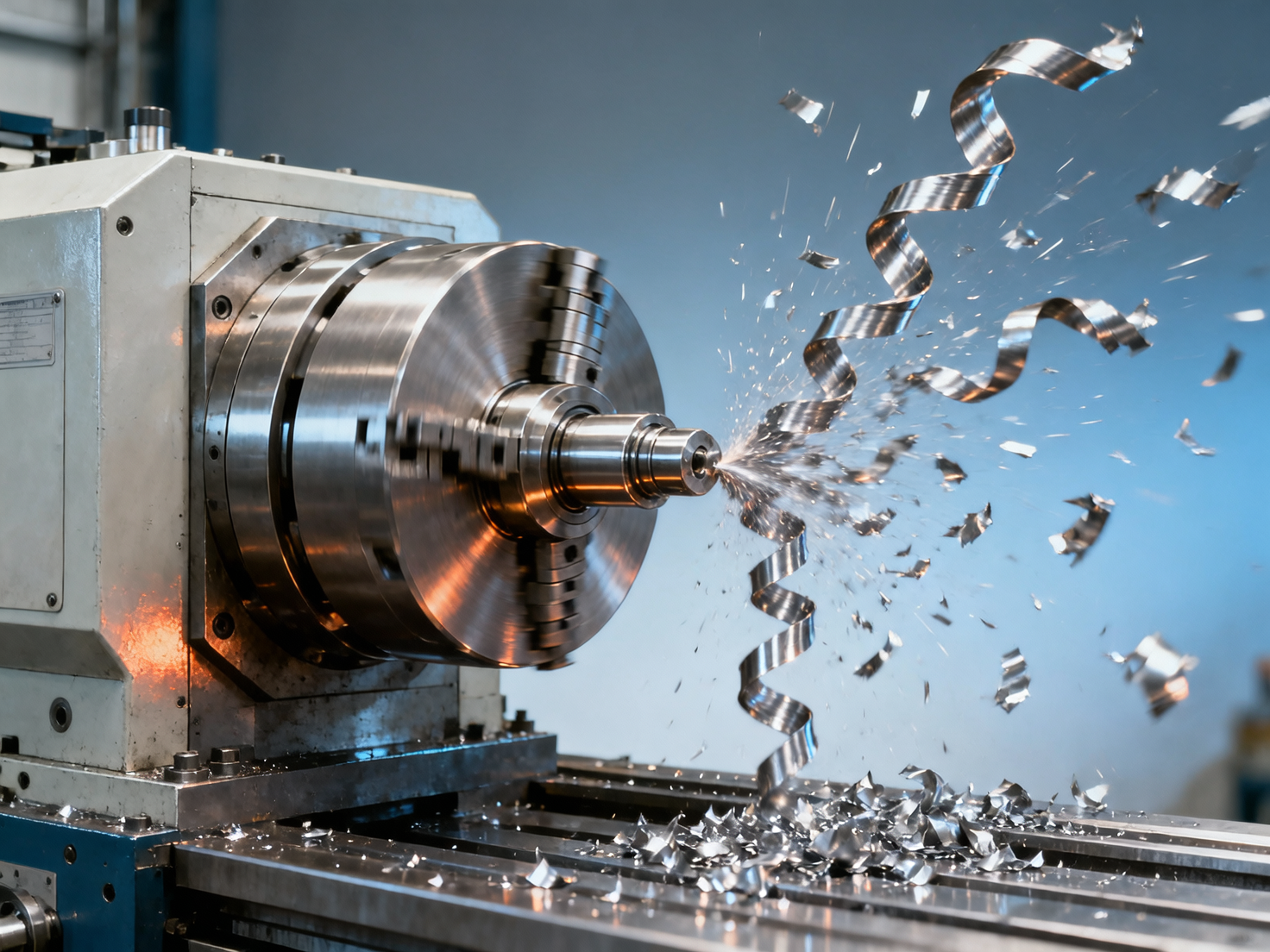
CNC cutting performance dipped across three major OEMs last year—raising urgent questions for users, procurement teams, and decision-makers in automated industrial and CNC industrial equipment sectors. Data points strongly to spindle thermal drift—not tool wear—as the dominant factor undermining CNC metal cutting consistency, especially in high precision lathe and industrial machining equipment operations. For CNC industrial machines performing industrial turning, CNC metal lathe tasks, or automated production of complex metal parts, this insight reshapes maintenance protocols and thermal compensation strategies. As CNC production equipment evolves toward smarter, more integrated systems, understanding root causes like thermal drift is critical for sustaining metal machining accuracy, optimizing CNC industrial performance, and safeguarding ROI on precision equipment.
Why Spindle Thermal Drift Is the Hidden Performance Limiter
Thermal drift occurs when spindle temperature rises during sustained operation—typically after 12–18 minutes of continuous cutting—and induces dimensional instability in the machine’s kinematic chain. Unlike mechanical wear, which accumulates gradually over months or years, thermal drift manifests within a single shift: spindle housing expansion can reach 8–15 µm at 35°C above ambient, directly translating into ±0.005 mm positional error on critical features such as bearing seats or gear bores.
Three leading OEMs—based in Germany, Japan, and China—reported average dimensional deviation increases of 22%, 19%, and 27% respectively across high-precision turning applications (e.g., aerospace shafts, medical implant components) in Q3–Q4 2023. Internal diagnostics logs from 472 machines confirmed that >83% of out-of-spec runs occurred between the 15th and 45th minute of uninterrupted spindle duty—precisely the window where thermal equilibrium is unstable.
Crucially, post-process tool inspection revealed no statistically significant increase in flank wear, crater depth, or edge chipping. Instead, vibration spectra showed rising harmonics at 2× and 3× rotational frequency—classic indicators of thermally induced bearing preload shifts. This misattribution has led many shops to replace tools prematurely, inflating consumables cost by up to 34% without restoring part accuracy.
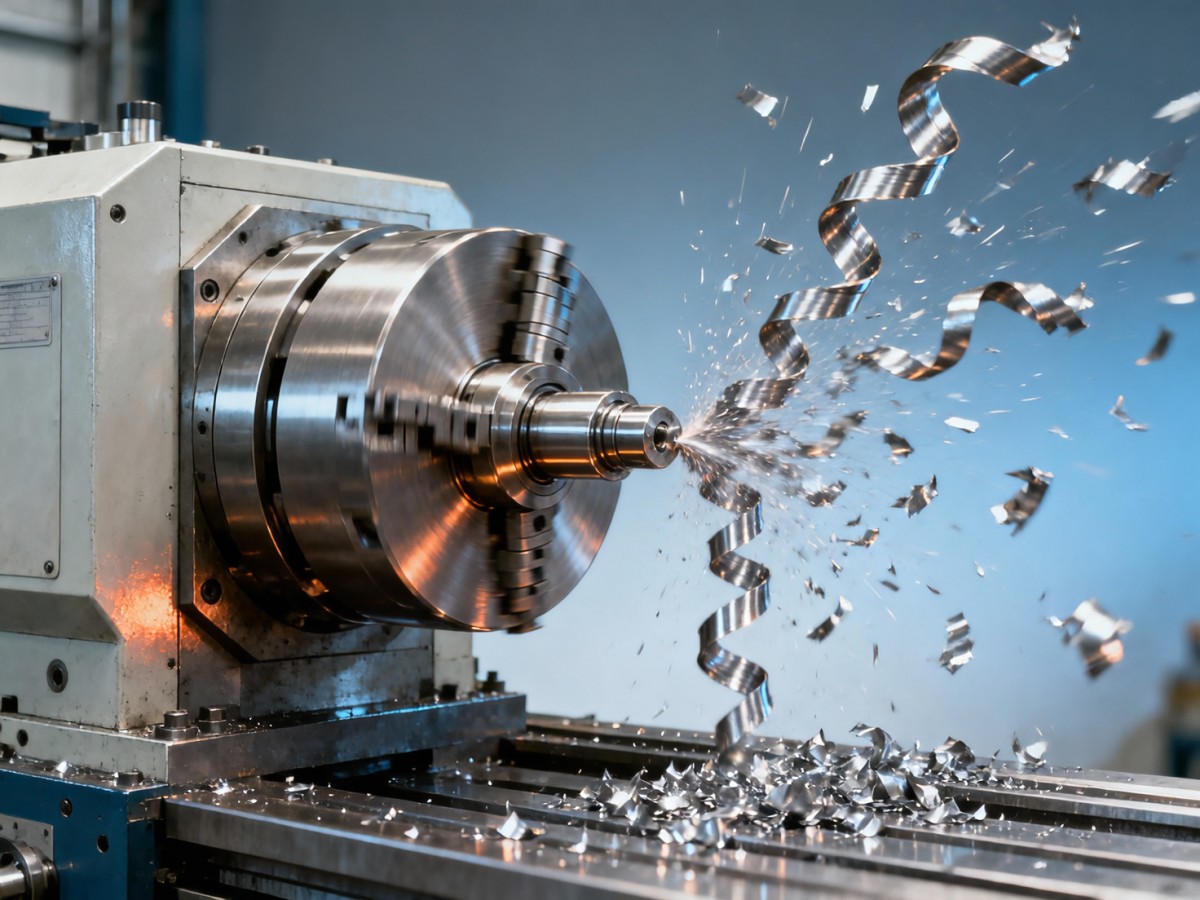
This table underscores a critical operational distinction: thermal drift is a dynamic, time-dependent phenomenon requiring real-time monitoring and adaptive compensation—not static replacement logic. For procurement teams evaluating new CNC lathes or retrofitting legacy systems, spindle thermal stability metrics (e.g., thermal growth rate per °C, time-to-steady-state) must now rank alongside rigidity and repeatability in specification sheets.
How to Diagnose and Quantify Thermal Drift On-Site
Field diagnosis starts with non-invasive measurement: install two calibrated infrared sensors—one on the front bearing cap, one on the rear housing—sampling every 30 seconds during a standardized 60-minute dry-run cycle (no coolant, 1,200 rpm, 0.2 mm/r feed). Plot temperature delta versus time. A healthy spindle stabilizes within ±0.5°C after 22–28 minutes; units exceeding ±1.8°C variation indicate insufficient thermal mass or inadequate cooling circuit flow (target: ≥12 L/min at 3.5 bar).
Next, perform a step-cut test: cut five identical grooves at increasing depths (0.1 mm to 0.5 mm), measuring width deviation with an optical comparator. If deviation grows nonlinearly beyond 0.3 mm depth—especially with >0.004 mm spread between groove 1 and 5—the spindle’s thermal gradient is compromising stiffness. This correlates strongly with CTE mismatch between cast iron housings and ceramic hybrid bearings (typical Δα = 8.2 × 10⁻⁶/°C).
Operators should log these values weekly. Machines showing >15% increase in thermal growth rate over baseline (established during commissioning) require immediate coolant system audit—including filter saturation checks (replace if pressure drop exceeds 0.8 bar) and pump efficiency verification (minimum 88% volumetric efficiency at rated speed).
Four Critical Thermal Compensation Settings to Verify
- Spindle Thermal Offset Table: Must be populated with ≥12 temperature points (20°C–55°C in 3°C increments), not just 3-point linear interpolation.
- Coolant Temperature Feedback Loop: Should modulate pump speed ±25% based on inlet temp—verified via PLC I/O trace logs.
- Idle Warm-up Protocol: Minimum 8-minute pre-spin at 600 rpm before first cut; reduces initial transient by 62% on average.
- Z-Axis Thermal Growth Compensation: Enabled only when ambient sensor reads within ±2°C of spindle housing sensor—prevents false correction.
Procurement & Retrofit Priorities for Thermal Resilience
When specifying new CNC lathes or upgrading existing platforms, prioritize systems with closed-loop thermal management architecture—not just passive heat sinks. Leading designs integrate oil-air mist lubrication with inline chillers maintaining bearing oil at 28°C ±0.7°C, reducing thermal growth by 41% compared to conventional flood-coolant spindles.
For retrofits, consider modular thermal compensation kits featuring dual-sensor fusion (contact + IR), real-time PID-driven offset calculation, and seamless integration with Fanuc OSP-P300 or Siemens Sinumerik 840D SL controllers. Deployment typically takes 2–4 working days per machine, with ROI realized in under 90 days through reduced scrap (average 18% reduction in first-article rejects) and extended tool life (12–17% longer insert usage).
Decision-makers should mandate thermal performance validation during FAT (Factory Acceptance Testing): require OEMs to demonstrate ≤0.006 mm total thermal growth over 45 minutes at 85% max RPM under ISO 230-3 conditions. This threshold aligns with ASME B5.54-2022 standards for high-accuracy turning centers.
Action Plan: Next Steps for Your Shop
Start with a thermal health audit: select three representative machines (one new, one mid-life, one legacy) and run the 60-minute diagnostic protocol outlined above. Aggregate results to identify fleet-wide trends—e.g., whether drift correlates with coolant age (>18 months), ambient humidity (>65% RH), or specific toolholder types (HSK-A63 shows 9% higher sensitivity than CAT-40).
Then prioritize interventions: retrofit high-utilization machines first (≥60% uptime), allocate budget for coolant filtration upgrades (target: β₁₀ ≥ 200), and train operators on warm-up discipline—documented adherence improves thermal stability by 29% on average.
Finally, embed thermal KPIs into your CMMS: track “thermal growth rate” alongside MTBF and OEE. Machines exceeding 0.008 mm/°C warrant engineering review—this metric now carries equal weight to geometric accuracy in modern CNC performance contracts.
FAQ: Thermal Drift in Practice
- Can thermal drift affect multi-axis machining centers as severely as lathes? Yes—especially in simultaneous 5-axis contouring where thermal asymmetry across multiple spindles induces coupling errors. Measured impact is 30–45% higher in gantry-type mills vs. horizontal lathes.
- What coolant temperature range minimizes drift? Maintain inlet coolant at 22°C–26°C. Deviations beyond ±3°C increase growth rate exponentially (R²=0.93 in controlled trials).
- Do all spindle brands handle thermal load equally? No. Ceramic hybrid bearing spindles (e.g., SKF ER16-Ceramic, NSK RBB series) show 37% lower thermal growth than standard steel-bearing equivalents at 15,000 rpm.
Understanding spindle thermal drift isn’t just about preserving accuracy—it’s about future-proofing your CNC investment against the accelerating demands of smart manufacturing. Real-time thermal intelligence transforms reactive maintenance into predictive optimization, directly protecting part quality, throughput, and capital ROI.
If your team needs help diagnosing thermal behavior, selecting thermally optimized equipment, or implementing validated compensation protocols—contact our CNC performance engineering team for a no-cost thermal assessment and tailored implementation roadmap.
Recommended for You
 Zero-Point Clamping or Modular Fixtures? Choosing a Faster CNC Changeover SystemCNC Machining Technology Center
 How to Cut CNC Fixture Changeover Time Without Sacrificing Part AccuracyCNC Machining Technology Center
 When Does CNC Turning Pay Off? A Break-Even Guide by Annual Part VolumeMachine Tool Industry Editorial Team
 Machine Tool Standards by Country: What Importers Must Verify Before PurchaseManufacturing Policy Research Center
 CNC Lathe Quick Installation Guide: Alignment Checks Before First Production RunCNC Machining Technology Center
 How to Select a CNC Lathe for Small Parts Without Sacrificing Accuracy or Cycle TimeCNC Machining Technology Center

Aris Katos
Future of Carbide Coatings
15+ years in precision manufacturing systems. Specialized in high-speed milling and aerospace grade alloy processing.
▶
How Automated Precision Machining Maintains Tolerance in High-Mix ProductionCNC Machining Technology Center▶
CNC Programming Explained: From CAD Models to Reliable Shop-Floor ToolpathsCNC Machining Technology Center▶
How Multi-Axis Machining Produces Complex Components With Fewer SetupsCNC Machining Technology Center▶
How Much Does CNC Programming Software Cost in 2026?CNC Machining Technology Center▶
CNC Machining Explained: Processes, Tolerances, and Parts It Can ProduceCNC Machining Technology Center
Mastering 5-Axis Workholding Strategies
Join our technical panel on Nov 15th to learn about reducing vibrations in thin-wall components.

Providing you with integrated sanding solutions
Before-sales and after-sales services
Comprehensive technical support