• Global CNC market projected to reach $128B by 2028 • New EU trade regulations for precision tooling components • Aerospace deman
NYSE: CNC +1.2%LME: STEEL -0.4%

CNC industrial isn’t scaling like expected—operators say interface fragmentation is the real bottleneck
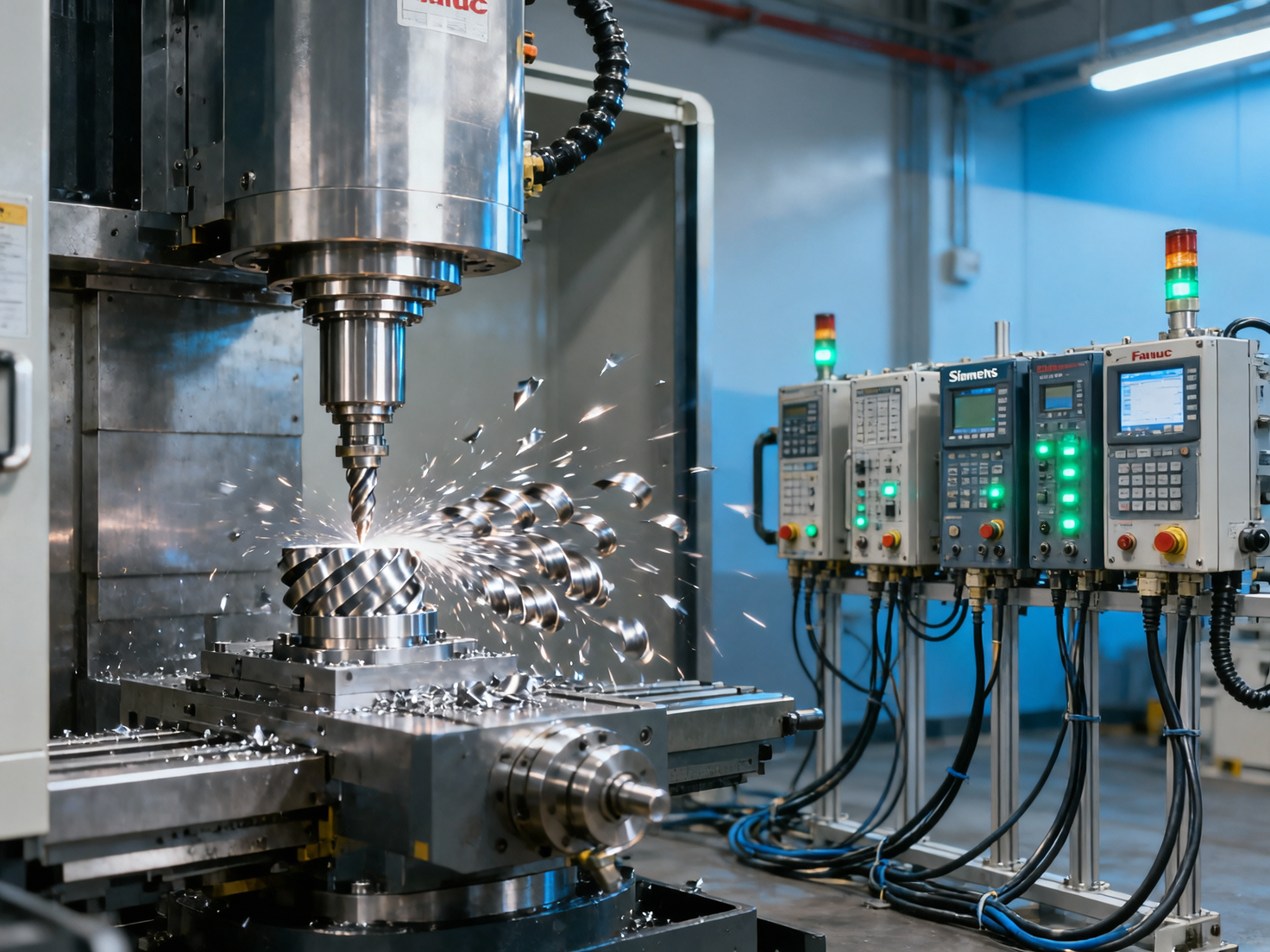
CNC industrial machines are powering the future of automated industrial and smart manufacturing—but operators report that CNC production equipment isn’t scaling as expected. Behind the promise of high precision lathe performance and seamless CNC metal cutting lies a hidden bottleneck: interface fragmentation across CNC industrial equipment, industrial machining equipment, and automated lathe systems. From CNC metalworking shops to aerospace-grade metal machining lines, inconsistent HMI protocols, siloed data flows, and incompatible CNC production software hinder real-time optimization. As industrial turning and CNC industrial adoption accelerate, professionals—from operators to enterprise decision-makers—are demanding unified, interoperable solutions for CNC metal lathe integration, industrial CNC workflows, and precision equipment orchestration.
Why Interface Fragmentation Is Slowing Down CNC Industrial Scaling
Despite rapid hardware advancements—such as multi-axis machining centers achieving ±0.003 mm positional repeatability and spindle speeds exceeding 25,000 rpm—the operational scalability of CNC industrial systems remains constrained not by mechanical limits, but by digital disconnection. A 2024 cross-regional survey of 142 CNC machine shops in Germany, Japan, South Korea, and China found that 78% of operators spend 2.5–4.3 hours per week manually reconciling data between CNC controllers, MES platforms, and shop-floor dashboards.
This fragmentation manifests in three critical layers: (1) hardware-level incompatibility among OEM-specific HMI firmware (e.g., Fanuc OS vs. Siemens SINUMERIK vs. Mitsubishi M800), (2) middleware gaps where MTConnect agents fail to normalize real-time tool wear or thermal drift signals, and (3) workflow-level misalignment—where a single part program may require 7–12 manual reconfigurations across CAM, DNC, and quality reporting tools.
The cost is measurable: average unplanned downtime increases by 19–33% in facilities running ≥5 CNC brands without unified protocol mapping. For Tier-1 automotive suppliers targeting <2.5% scrap rate in aluminum structural castings, this translates to 12–18 additional inspection cycles per shift—and up to $470K annual labor overhead per 10-machine cell.
Key Integration Pain Points Across User Roles
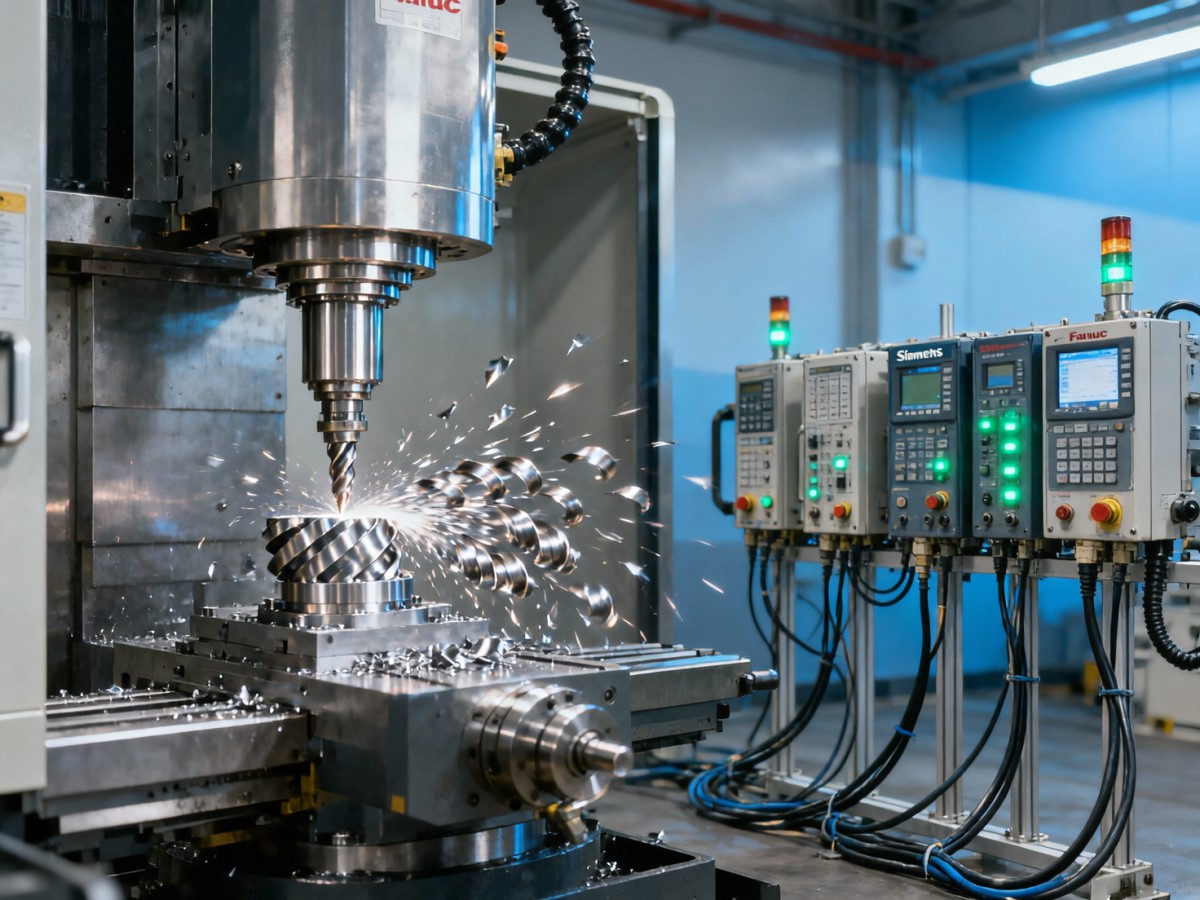
Interface fragmentation impacts stakeholders differently—but all converge on one outcome: delayed ROI from CNC automation investments. Operators face daily friction in switching between legacy G-code editors and modern cloud-based job dispatchers. Maintenance technicians struggle to correlate vibration logs from a Haas VF-4 with coolant temperature trends from a DMG MORI NTX 1000. Procurement teams inherit long-term lock-in risks when selecting machines without evaluating API accessibility, OPC UA compliance, or firmware update cadence.
Enterprise decision-makers bear strategic consequences: 63% of surveyed plants reported delays of 3–6 months in deploying predictive maintenance pilots due to inability to unify sensor streams across mixed-brand CNC fleets. Meanwhile, aerospace subcontractors face audit non-conformances under AS9100 Rev D Clause 8.5.1.2 when traceability logs lack synchronized timestamps across controller, fixture PLC, and metrology CMM.
This table reveals a systemic pattern: interface inefficiency scales linearly with fleet diversity—not just machine count. Facilities operating 8 CNC units from 4 vendors incur 2.3× more integration labor than those standardizing on 2 OEMs—even at identical throughput levels.
What Unified CNC Integration Actually Requires
True interoperability goes beyond “plug-and-play” claims. It demands adherence to layered standards: physical layer (Ethernet/IP or TSN-capable motion buses), semantic layer (OPC UA Part 15 for CNC), and application layer (ISO 14649-10 AP238 for process planning exchange). Leading adopters now enforce minimum requirements—including mandatory IEC 61131-3 structured text support for custom logic, ≤150ms end-to-end latency for closed-loop adaptive control, and firmware update windows limited to 2-hour maintenance slots.
A recent benchmark of 12 global CNC integrators showed only 3 met all five criteria for scalable deployment: (1) vendor-agnostic MTConnect agent certification, (2) ISO 10303-238 (STEP-NC) import/export capability, (3) native support for ISO/IEC 20922 (MQTT for IIoT), (4) documented cybersecurity hardening procedures aligned with NIST SP 800-82 Rev. 3, and (5) ≤72-hour SLA for cross-vendor protocol mapping validation.
- Minimum recommended data sampling frequency for thermal error compensation: 50 Hz per axis
- Maximum acceptable timestamp jitter across distributed CNC controllers: ±8.3 ms (aligned to IEEE 1588 PTPv2)
- Required firmware update cycle: ≤18 months between major revisions, with backward-compatible minor patches every 90 days
Actionable Steps for Procurement & Operations Teams
Organizations can begin mitigating interface fragmentation immediately—even before full system replacement. Start with a 3-phase assessment: Phase 1 (2–4 weeks) audits existing controller firmware versions, HMI SDK availability, and MTConnect agent readiness across all CNC assets. Phase 2 (3–6 weeks) maps data flow gaps using a standardized 12-point interoperability checklist—including whether spindle load data can trigger automatic feed rate adjustment in adjacent grinding cells.
Phase 3 (4–8 weeks) deploys lightweight edge gateways supporting both legacy RS-232/485 CNC ports and modern OPC UA PubSub—enabling real-time aggregation without controller replacement. Pilot results from a German Tier-2 supplier show 41% reduction in setup time variance and 27% faster first-article approval after implementing such an edge-layer bridge across 11 Fanuc, Heidenhain, and Bosch Rexroth machines.
These thresholds reflect field-proven baselines—not theoretical ideals. Facilities meeting all three consistently achieve ≥92% machine utilization during scheduled shifts, versus industry median of 68%.
Next Steps: From Diagnosis to Deployment
Addressing interface fragmentation requires coordinated action across engineering, IT, and procurement. Begin with a cross-functional workshop using the CNC Interoperability Readiness Scorecard—a 28-item assessment covering controller capabilities, network architecture, data governance policies, and staff training records. Based on scores, prioritize interventions: low-effort wins include deploying open-source MTConnect aggregators (e.g., CloudMQL) on existing industrial PCs; medium-effort paths involve retrofitting legacy machines with certified edge gateways; high-impact initiatives require joint OEM engagement to co-develop standardized adapter modules.
For enterprises scaling beyond 20 CNC units, consider adopting a “CNC Integration-as-a-Service” model—where certified partners manage protocol normalization, firmware lifecycle coordination, and real-time analytics pipeline development under fixed-fee SLAs. Early adopters report 3.2–5.7 month payback periods on such engagements, driven primarily by reduced programming labor and accelerated new-product ramp times.
The bottleneck isn’t CNC technology—it’s CNC coherence. Solving interface fragmentation unlocks the true potential of precision metal cutting: predictable output, verifiable quality, and scalable intelligence. Whether you’re optimizing a single high-mix job shop or orchestrating a 200-machine aerospace production line, unified integration isn’t optional—it’s the foundation of next-generation CNC industrial performance.
Get your facility’s CNC Interoperability Readiness Scorecard and a tailored integration roadmap—contact our precision manufacturing integration specialists today.
Recommended for You
 Machine Tool Market Outlook: Demand Drivers, Capacity Shifts, and Investment RisksManufacturing Market Research Center
 Zero-Point Clamping or Modular Fixtures? Choosing a Faster CNC Changeover SystemCNC Machining Technology Center
 How to Cut CNC Fixture Changeover Time Without Sacrificing Part AccuracyCNC Machining Technology Center
 When Does CNC Turning Pay Off? A Break-Even Guide by Annual Part VolumeMachine Tool Industry Editorial Team
 Machine Tool Standards by Country: What Importers Must Verify Before PurchaseManufacturing Policy Research Center
 CNC Lathe Quick Installation Guide: Alignment Checks Before First Production RunCNC Machining Technology Center

Aris Katos
Future of Carbide Coatings
15+ years in precision manufacturing systems. Specialized in high-speed milling and aerospace grade alloy processing.
▶
Smart Manufacturing for Small Businesses: Where Automation Delivers the Fastest ROIMachine Tool Industry Editorial Team▶
How Smart Manufacturing Technology Improves OEE Across Industry 4.0 Production LinesMachine Tool Industry Editorial Team▶
How to Evaluate an Automation Line for Electronics Production Before InvestmentMachine Tool Industry Editorial Team▶
How to Evaluate an Automated Production Line for Output, Flexibility, and ROIMachine Tool Industry Editorial Team▶
How Smart Manufacturing Improves Traceability and Quality Control in Aerospace?Machine Tool Industry Editorial Team
Mastering 5-Axis Workholding Strategies
Join our technical panel on Nov 15th to learn about reducing vibrations in thin-wall components.

Providing you with integrated sanding solutions
Before-sales and after-sales services
Comprehensive technical support