• Global CNC market projected to reach $128B by 2028 • New EU trade regulations for precision tooling components • Aerospace deman
NYSE: CNC +1.2%LME: STEEL -0.4%

CNC Industrial Equipment Selection Guide: Key Specs for Output, Accuracy, and Floor Space
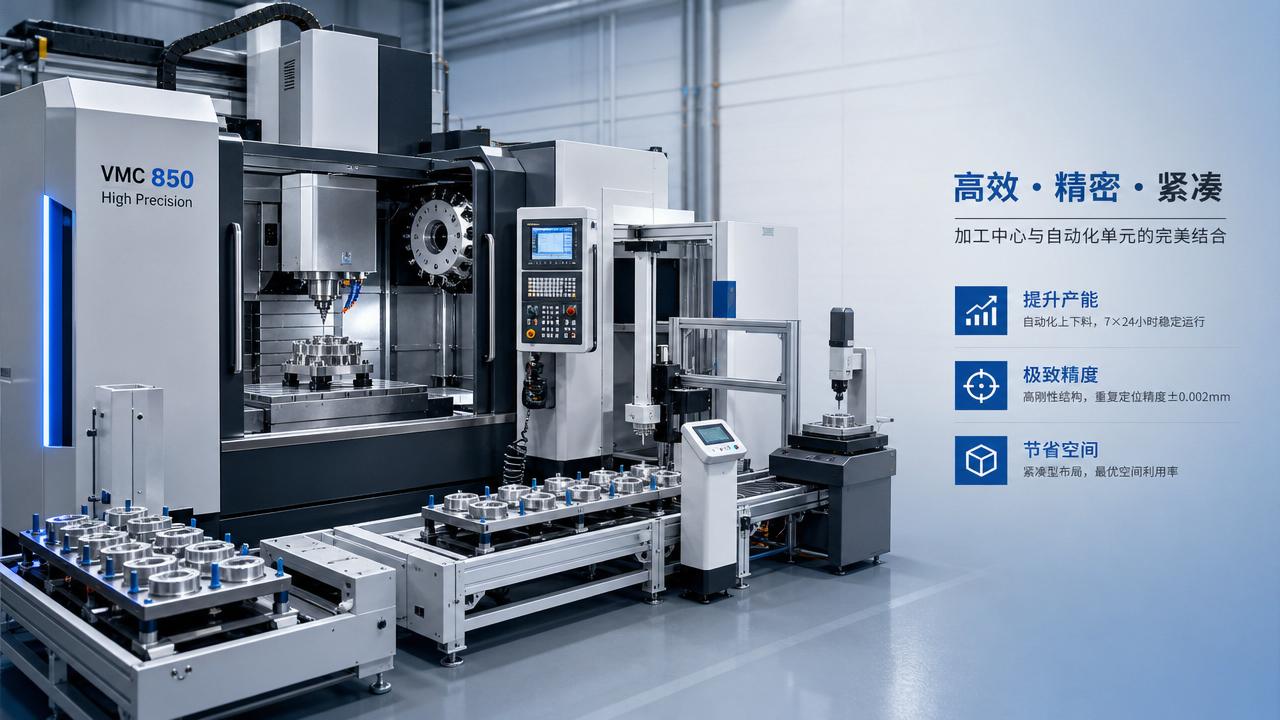
Why CNC industrial equipment selection has become more strategic
CNC industrial equipment used to be selected mainly by spindle power and machine size.
That is no longer enough.
Across automotive, aerospace, electronics, and energy equipment, part designs are becoming tighter, batches are changing faster, and factory layouts are under pressure.
This shift is changing how CNC industrial equipment should be evaluated.
Output still matters, but output without repeatable accuracy creates hidden cost.
Accuracy still matters, but precision without practical throughput can delay delivery schedules.
And floor space, often treated as a late-stage constraint, now shapes the full equipment decision.
In many facilities, the best CNC industrial equipment is not the biggest machine.
It is the machine that fits process flow, staffing reality, automation plans, and future product mix.
That broader view reflects where the machine tool industry is heading: higher precision, deeper automation, and tighter digital integration.
The market signal is clear: one machine now carries more expectations
Recent demand shows a noticeable pattern.
A machining center or turning system is no longer judged only by cutting capability.
It is expected to support stable quality, unattended hours, fast changeover, and data visibility.
This is especially true where global supply chains are pushing shorter lead times.
Industrial clusters in China, Germany, Japan, and South Korea have accelerated that benchmark.
Equipment users are comparing not just machine models, but production concepts.
More compact cells, robot-ready interfaces, and multi-axis flexibility are becoming practical decision points.
That means CNC industrial equipment selection is moving closer to overall factory planning.
Why this shift is happening now
- Part geometry is more complex, especially in lightweight structures and compact assemblies.
- Labor constraints make automation compatibility more valuable than before.
- Energy and facility costs increase the penalty of oversized machines.
- Traceability expectations favor digitally connected CNC industrial equipment.
- Mixed-volume production rewards flexible setups over single-purpose capacity.
Seen together, these changes explain why equipment specs now need to be read in context, not in isolation.
Output is no longer a simple capacity number
Many equipment comparisons still begin with cycle time.
That remains important, but real output comes from a wider combination of factors.
A machine can post impressive cutting speed and still underperform on the floor.
Tool change time, pallet handling, chip evacuation, thermal stability, and recovery after alarms all affect daily throughput.
For CNC industrial equipment, output should be measured as consistent completed parts per shift.
That perspective often changes machine ranking.
Key output-related specs worth checking
In actual operations, these details often separate a fast machine from a productive one.
Accuracy now depends on system behavior, not just brochure tolerance
Precision expectations are rising across nearly every major application.
Yet published positioning accuracy alone rarely tells the full story.
The more useful question is whether CNC industrial equipment can hold tolerance after hours of cutting, tool wear, and temperature change.
This matters even more in multi-axis machining, where complex motion increases sensitivity to calibration and structure.
More advanced manufacturing has made thermal behavior a central issue.
A compact machine with strong thermal control can outperform a larger platform with weaker stability.
What accuracy evaluation should include
- Repeatability under continuous production, not only single-test conditions.
- Thermal compensation strategy and spindle growth control.
- Machine base rigidity and vibration response for target materials.
- Axis interpolation quality for contouring work.
- Compatibility with probing, in-process measurement, and correction loops.
This is why the best CNC industrial equipment decision often involves process capability testing, not only specification review.
Floor space has become a production variable, not a layout afterthought
Space pressure is increasing in both new plants and established workshops.
Expansion is expensive, utilities are tighter, and internal logistics need cleaner flow.
As a result, CNC industrial equipment must be evaluated by output per square meter.
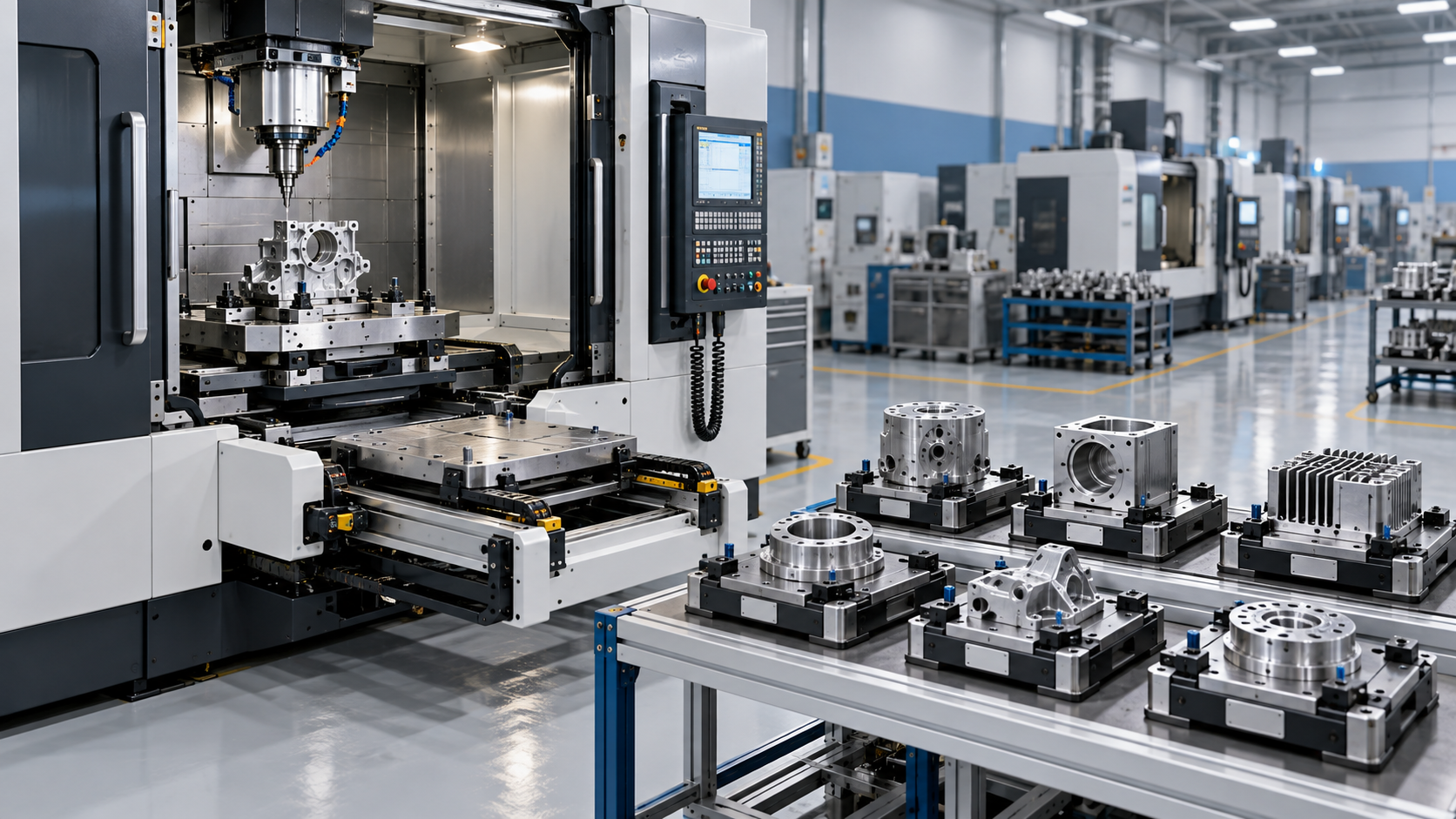
That changes the value of machine footprint, service clearance, chip handling layout, and automation attachment space.
A machine that seems compact on paper may still create congestion around loading, maintenance, or material transfer.
The opposite can also happen.
Some larger CNC industrial equipment delivers better space efficiency because it combines multiple operations in one enclosure.
Questions that reveal real floor space impact
- How much surrounding area is needed for tooling, access, and safe maintenance?
- Can the machine reduce transfers between turning, milling, and inspection steps?
- Will future automation require extra lanes, guarding, or buffer stations?
- Does the layout support smooth raw material and finished part movement?
When space is limited, process consolidation can be more valuable than adding another standalone unit.
The strongest equipment choices usually balance three tensions
Most selection mistakes come from overcommitting to one priority.
A high-output machine may introduce accuracy risk in thin-wall parts.
An ultra-precise platform may be too slow for mid-volume programs.
A compact machine may save floor space but limit automation growth later.
The more resilient CNC industrial equipment decision balances output, accuracy, and footprint against actual manufacturing mix.
A practical comparison lens
Use expected part families rather than ideal sample parts.
Compare setup frequency, tolerance stack sensitivity, unattended run potential, and floor space productivity together.
That approach reflects how flexible production lines are now being designed.
What to watch next as CNC industrial equipment keeps evolving
The next phase will likely favor machines that combine mechanical capability with digital usefulness.
Remote diagnostics, predictive maintenance signals, and energy monitoring are becoming selection factors, not optional extras.
This is especially relevant in global operations where uptime visibility affects planning across sites.
Another visible direction is modular automation.
CNC industrial equipment that accepts staged upgrades offers more protection against uncertain volume changes.
That flexibility matters when product programs shift faster than depreciation cycles.
Useful next steps for evaluation
- Map target parts by tolerance risk, cycle demand, and setup frequency.
- Estimate output per square meter, not only output per hour.
- Request test data under realistic thermal and loading conditions.
- Check whether the CNC industrial equipment can scale into automation later.
- Review service access, software openness, and spare parts support by region.
CNC industrial equipment selection now sits at the intersection of production strategy and factory design.
The strongest decisions are rarely based on a single headline specification.
They come from reading how output, accuracy, and floor space interact over time.
If demand patterns, part complexity, or automation plans are changing, the evaluation model should change as well.
That is the clearest way to choose CNC industrial equipment that remains productive beyond the current project cycle.
PREVIOUS ARTICLE
Recommended for You
![]() Mitsubishi Electric Announces Physical AI System Linking Humanoid Robots and CNC MachinesMachine Tool Industry Editorial Team
Mitsubishi Electric Announces Physical AI System Linking Humanoid Robots and CNC MachinesMachine Tool Industry Editorial Team Precision Machining for Defense: Supplier Quality and Traceability ChecksManufacturing Market Research Center
![]() Nidec Machine Tool Launches MVR-5X Five-Axis Gantry MachineMachine Tool Industry Editorial Team
Nidec Machine Tool Launches MVR-5X Five-Axis Gantry MachineMachine Tool Industry Editorial Team Choosing a Precision Disc Parts Manufacturer in China: Tolerances and Quality ChecksManufacturing Market Research Center
![]() Siemens Executive Says AI Could Raise Factory Automation to 80%Manufacturing Market Research Center
Siemens Executive Says AI Could Raise Factory Automation to 80%Manufacturing Market Research Center Choosing Automated Machine Tools for High-Mix, Low-Volume ProductionMachine Tool Industry Editorial Team

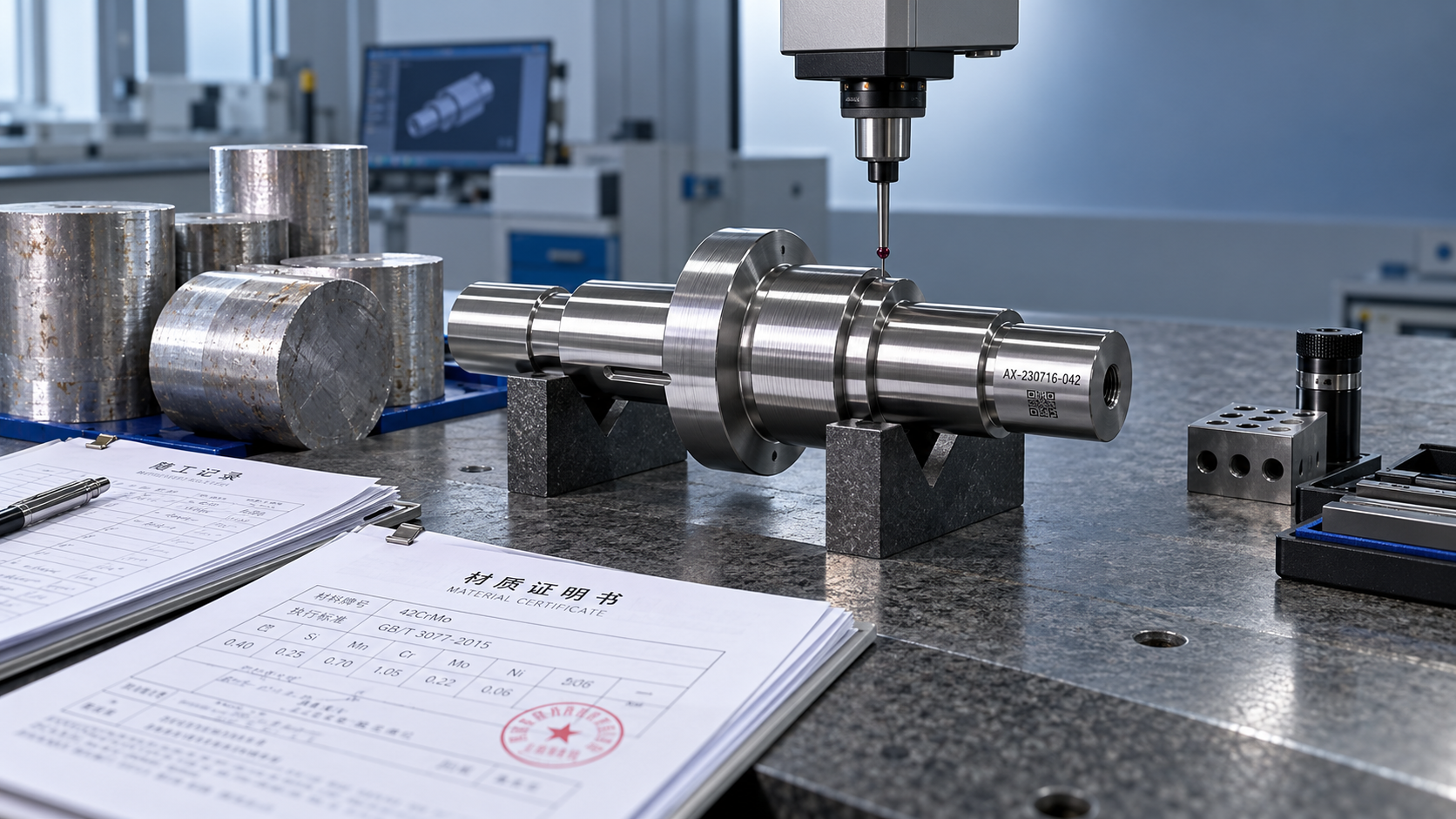
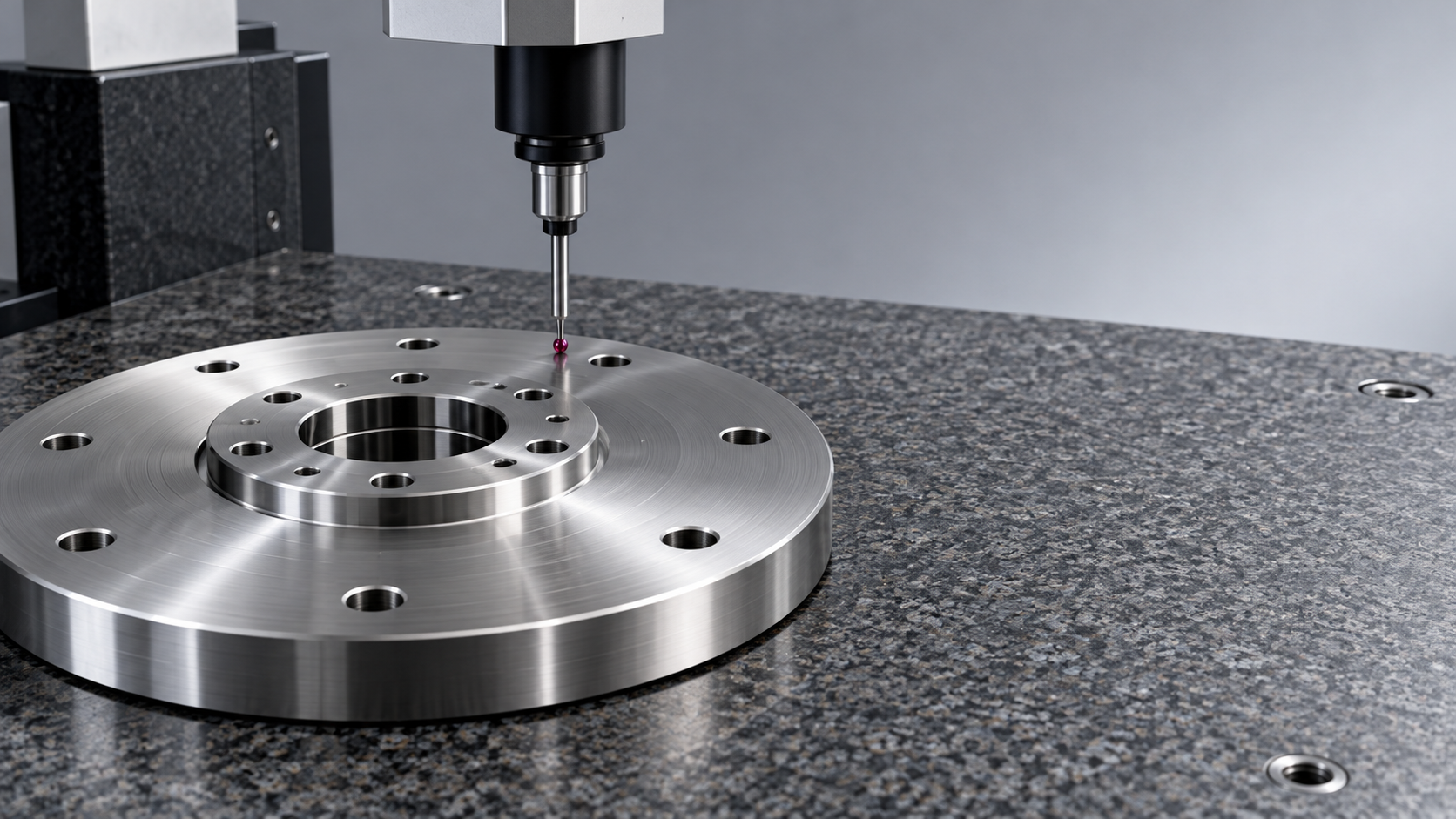

Aris Katos
Future of Carbide Coatings
15+ years in precision manufacturing systems. Specialized in high-speed milling and aerospace grade alloy processing.
▶
Choosing a CNC Machine for Mold Making: Accuracy, Rigidity, and Surface FinishCNC Machining Technology Center▶
How to Cut CNC Machining Energy Use per Part Without Longer Cycle TimesCNC Machining Technology Center▶
Will a Mazak CNC retrofit work with your existing servo drives?CNC Machining Technology Center▶
Do energy-efficient machine tools reduce power use at partial load?CNC Machining Technology Center▶
Comparing energy-efficient machine tools by energy use per partCNC Machining Technology Center
▶
Mastering 5-Axis Workholding Strategies
Join our technical panel on Nov 15th to learn about reducing vibrations in thin-wall components.

Providing you with integrated sanding solutions
Before-sales and after-sales services
Comprehensive technical support