• Global CNC market projected to reach $128B by 2028 • New EU trade regulations for precision tooling components • Aerospace deman
NYSE: CNC +1.2%LME: STEEL -0.4%

Multi-axis Machining Explained: When 3-Axis, 4-Axis, and 5-Axis Each Make Sense
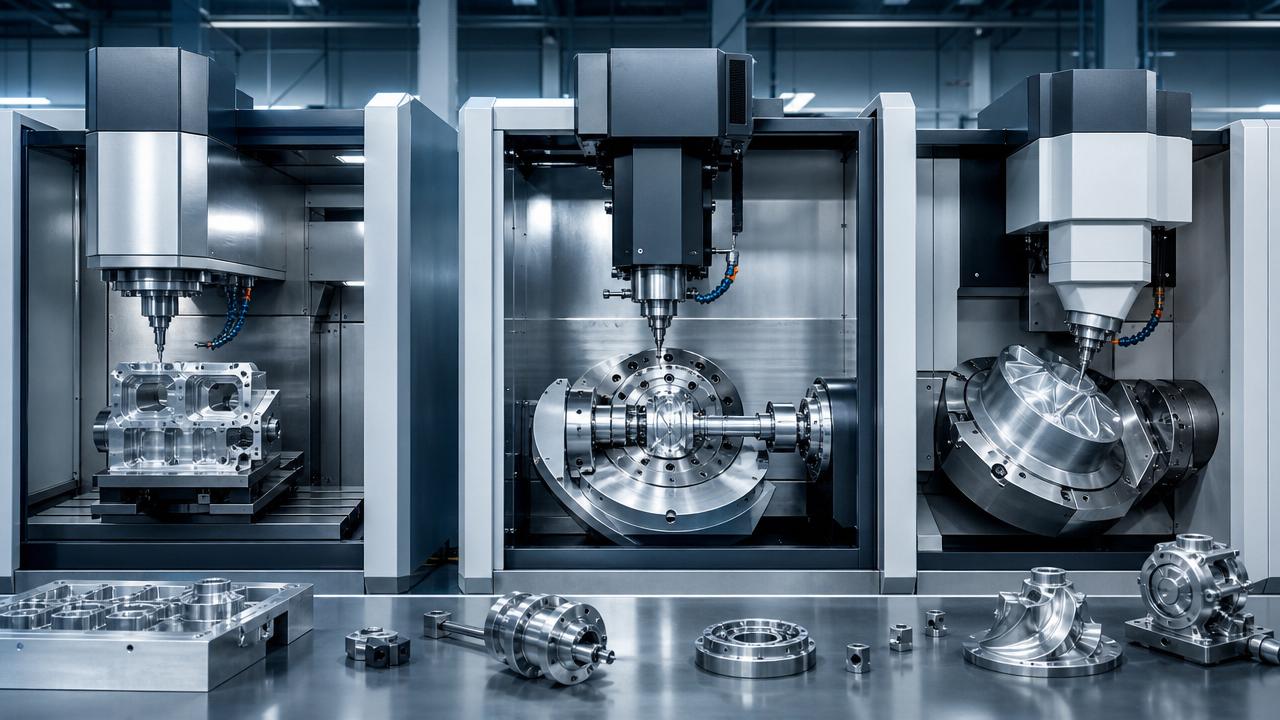
Multi-axis Machining Explained: When 3-Axis, 4-Axis, and 5-Axis Each Make Sense
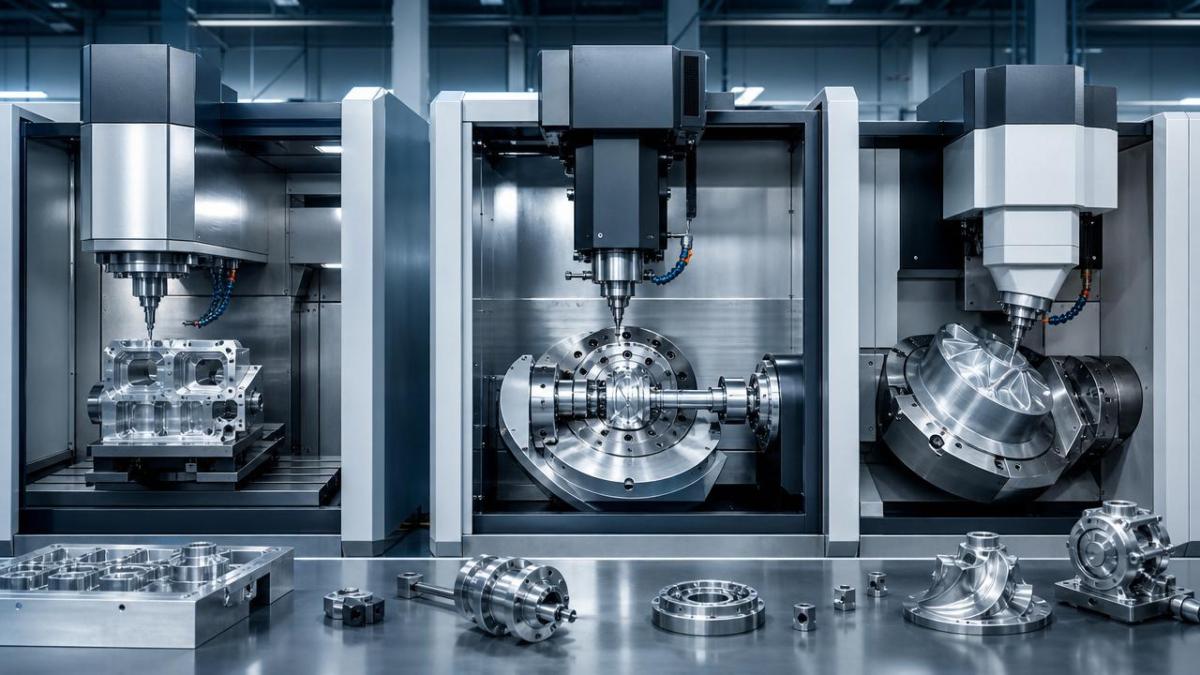
Multi-axis Machining is not just about adding motion. It is about choosing the right capability for the part, the tolerance, and the budget.
That choice matters more now. Precision manufacturing keeps moving toward tighter geometry, shorter lead times, and fewer process interruptions.
In real production, 3-axis, 4-axis, and 5-axis setups all have valid roles. The best option depends on the workpiece, not on the highest machine specification.
A smart evaluation looks at more than machine travel. It also considers setup count, tool access, cycle time, fixture design, and downstream quality risk.
This is where Multi-axis Machining becomes a process decision. It connects machine capability with manufacturing stability and overall part economics.
What Multi-axis Machining Really Means
At a basic level, axes describe how a tool or part moves. Standard linear motion uses X, Y, and Z directions.
Multi-axis Machining adds rotation. That rotation is usually around one or more linear axes, often called A, B, or C.
The point is not complexity for its own sake. The point is better access to surfaces that are hard to reach in a simple setup.
In practical terms, more axes can reduce repositioning. They can also improve consistency when multiple faces must relate tightly to one datum scheme.
Still, more axes do not automatically mean better results. They increase programming demands, machine investment, maintenance needs, and operator training requirements.
Why the axis count alone is not enough
Two 5-axis machines may deliver very different outcomes. Kinematics, spindle behavior, control quality, probing, and rigidity all influence actual machining performance.
The same applies to 4-axis and 3-axis systems. A strong process on a simpler platform can outperform a poorly matched advanced machine.
When 3-Axis Machining Makes Sense
3-axis machining remains the backbone of many shops. It is cost-effective, familiar, and highly capable for a wide range of parts.
If a part is mainly prismatic, flat-sided, or open from the top, 3-axis machining often makes the most sense.
Typical examples include plates, brackets, covers, simple housings, and many fixture components. These parts rarely need continuous rotary positioning.
For technical evaluations, 3-axis machining should stay on the table when geometry is straightforward and setup changes are manageable.
Best-fit conditions for 3-axis
- Most features sit on one primary plane.
- Secondary faces are limited and easy to re-clamp.
- Tolerance chains between faces are not extremely tight.
- Part volumes support simple fixturing and repeatable loading.
- Programming speed and low capital cost matter more than maximum flexibility.
This also fits many medium-volume jobs. Shops can standardize tools, fixtures, and workflows without introducing unnecessary process complexity.
Limits to watch
The main drawback is multiple setups. Every re-clamp adds time, alignment risk, and possible variation between machined faces.
If deep side features, angled surfaces, or wrapped geometry become common, 3-axis machining can start creating bottlenecks.
When 4-Axis Machining Is the Better Middle Ground
4-axis machining adds one rotary axis, usually to rotate the part around a horizontal or vertical direction. That simple addition changes a lot.
It is often the most practical step up from 3-axis machining. Costs rise, but not as sharply as with full 5-axis systems.
For many components, 4-axis machining improves access and reduces setups without making programming excessively demanding.
Where 4-axis machining performs well
- Parts need machining on several sides around one centerline.
- Cylindrical or shaft-like components require indexed features.
- Hole patterns repeat around the part circumference.
- Fixtures benefit from one loading position with rotary indexing.
- Production targets call for less manual handling.
Examples include valve bodies, shafts with flats, manifolds, impeller blanks, and structural parts with multiple indexed faces.
In these cases, Multi-axis Machining at the 4-axis level can remove repeated repositioning while keeping the process relatively stable.
Where 4-axis still falls short
A single rotary axis does not solve every access problem. Undercuts, compound angles, and freeform surfaces may still be difficult or inefficient.
That is the point where 5-axis machining begins to justify itself, especially when part complexity keeps increasing.
When 5-Axis Machining Delivers Real Value
5-axis machining adds two rotary movements. This gives the tool much better approach angles and allows highly complex surfaces to be machined more directly.
This is where Multi-axis Machining becomes a strategic capability, not just a machine feature. It supports difficult geometry and stronger process consolidation.
Aerospace, energy, medical, and advanced automotive applications often benefit most. Complex structural parts and precision contours are common use cases.
Strong reasons to choose 5-axis machining
- Multiple angled surfaces must hold tight positional relationships.
- Complex curved geometry needs smooth surface generation.
- Deep cavities need shorter tools and better tool orientation.
- Setup reduction is critical for accuracy and lead time.
- One-machine completion improves quality flow and traceability.
In many situations, 5-axis machining reduces cumulative error by limiting re-fixturing. That can matter more than raw cycle time.
It can also improve surface finish because better tool angles reduce chatter, tool deflection, and poor cutter engagement.
The trade-offs are real
5-axis machining requires more than a premium machine. It needs stronger CAM capability, postprocessor quality, skilled setup logic, and disciplined verification.
Collision risk is higher. Kinematic accuracy matters more. Maintenance, calibration, and operator training must be treated as part of the investment.
How to Compare 3-Axis, 4-Axis, and 5-Axis in Practice
A good technical comparison should focus on application fit. Axis count alone does not explain throughput, quality, or manufacturing risk.
This kind of comparison helps separate true process need from specification-driven purchasing.
Key Evaluation Questions Before Choosing a Multi-axis Machining Strategy
Before selecting a machine platform, it helps to ask a few direct questions. These usually reveal whether Multi-axis Machining adds value or simply adds cost.
- How many setups does the current process require?
- Which tolerances are lost during re-clamping?
- Do angled surfaces drive special tooling or long cutters?
- Will future part families become more complex?
- Can programming and inspection resources support the new process?
- Is machine utilization high enough to justify the investment?
From a business perspective, those questions matter because machine capability should match both current work and the likely production roadmap.
Common decision mistakes
- Buying 5-axis capacity for parts that rarely need it.
- Ignoring fixture simplification benefits from 4-axis machining.
- Underestimating CAM, probing, and verification requirements.
- Comparing machines without looking at part family evolution.
- Focusing only on purchase price instead of process cost.
A Practical Way to Decide
A practical evaluation starts with representative parts, not with brochures. Review the geometry, datum flow, setup plan, tooling length, and inspection path.
Then compare three things: setup reduction, quality stability, and total process time. These usually show the real value of Multi-axis Machining.
If the part family is simple, 3-axis machining often remains the right answer. If indexing solves the issue, 4-axis is often the smartest balance.
If the geometry, tolerance stack, and access challenges are severe, 5-axis machining usually earns its place through consolidation and better control.
The best decision is rarely the most advanced machine on paper. It is the platform that delivers stable output, scalable process control, and a justifiable return.
In other words, choose Multi-axis Machining based on part reality. That approach leads to better equipment decisions and stronger manufacturing performance over time.
Recommended for You
![]() 33rd JIMTOF 2026 Set to Open in Tokyo as Taiwanese Exhibitors Seek OrdersGlobal Machine Tool Trade Research Center
33rd JIMTOF 2026 Set to Open in Tokyo as Taiwanese Exhibitors Seek OrdersGlobal Machine Tool Trade Research Center Which Fixture Type Cuts Changeover Time Most in High-Mix CNC Machining?CNC Machining Technology Center
![]() FANUC Invests $18 Million in Largest U.S. Corporate Automation Training CenterMachine Tool Industry Editorial Team
FANUC Invests $18 Million in Largest U.S. Corporate Automation Training CenterMachine Tool Industry Editorial Team Southeast Asia Machine Tool Market: Comparing Automotive Demand by CountryManufacturing Market Research Center
![]() Zhongshan Xiaolan Machinery Exhibition Opens With Global Product DebutsMachine Tool Industry Editorial Team
Zhongshan Xiaolan Machinery Exhibition Opens With Global Product DebutsMachine Tool Industry Editorial Team Automated Production Machining: Which Parts and Batch Sizes Are a Good Fit?Machine Tool Industry Editorial Team


Aris Katos
Future of Carbide Coatings
15+ years in precision manufacturing systems. Specialized in high-speed milling and aerospace grade alloy processing.
▶
FANUC Links FIELD System Data with Copilot to Advance Shop-Floor Data UseCNC Machining Technology Center▶
Smart Manufacturing for Aerospace: Building Traceability Across CNC OperationsCNC Machining Technology Center▶
Choosing a CNC Machine for Mold Making: Accuracy, Rigidity, and Surface FinishCNC Machining Technology Center▶
How to Cut CNC Machining Energy Use per Part Without Longer Cycle TimesCNC Machining Technology Center▶
Will a Mazak CNC retrofit work with your existing servo drives?CNC Machining Technology Center
▶
Mastering 5-Axis Workholding Strategies
Join our technical panel on Nov 15th to learn about reducing vibrations in thin-wall components.

Providing you with integrated sanding solutions
Before-sales and after-sales services
Comprehensive technical support