• Global CNC market projected to reach $128B by 2028 • New EU trade regulations for precision tooling components • Aerospace deman
NYSE: CNC +1.2%LME: STEEL -0.4%

What Is Multi-axis Machining and When Does It Make Sense for Complex Parts?
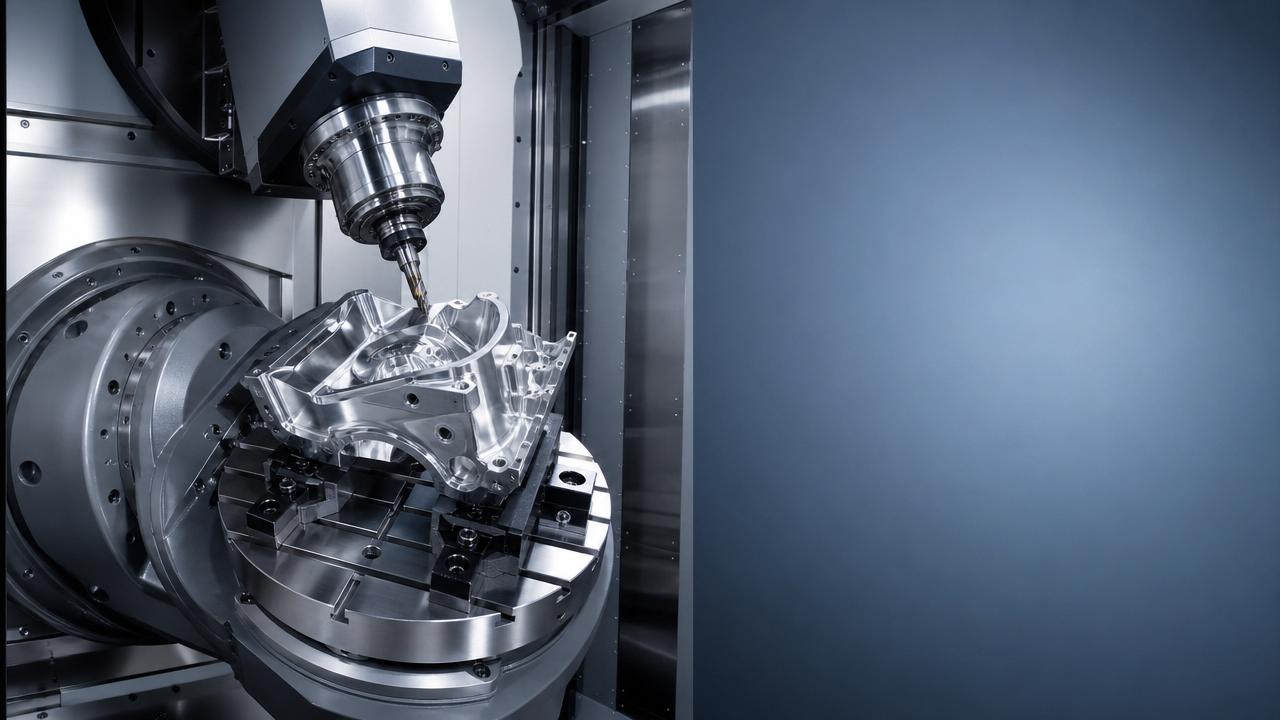
Why is Multi-axis Machining getting so much attention?
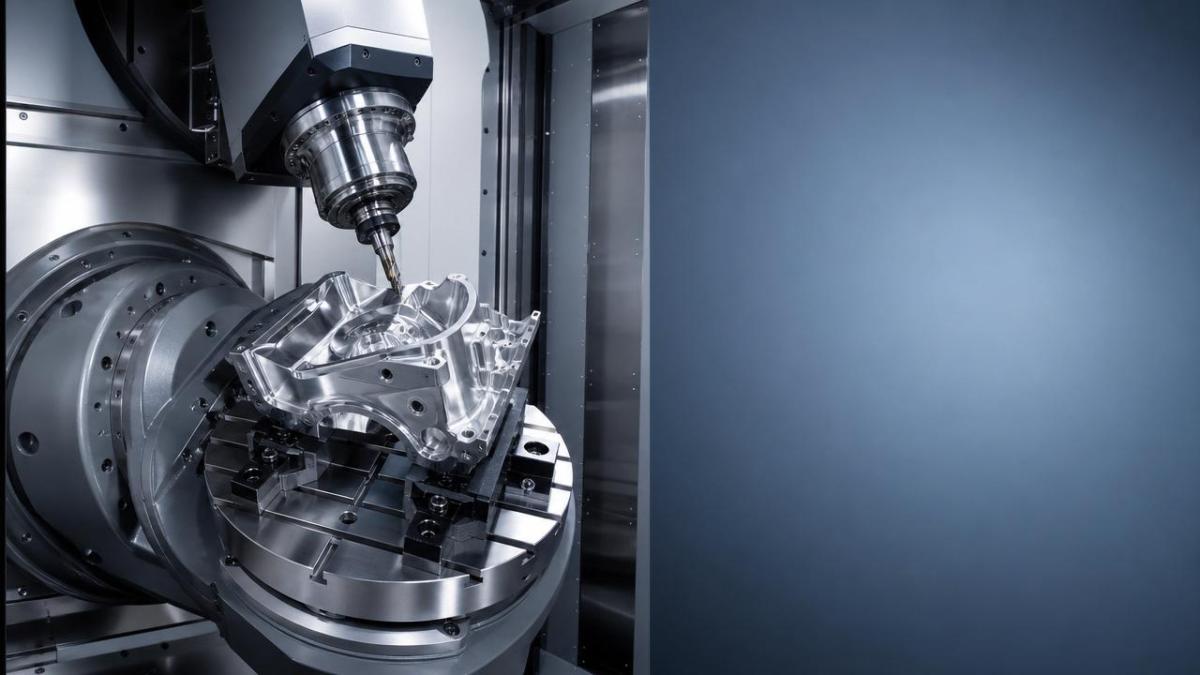
Multi-axis Machining matters because part geometry is no longer simple. Designs now demand tighter tolerances, cleaner surfaces, and fewer assembly steps.
In practical terms, it allows a cutting tool or workpiece to move across several axes during one machining cycle.
That capability is especially relevant in global CNC production, where automation, precision machine tools, and smart factory systems keep pushing complexity upward.
Automotive, aerospace, electronics, and energy equipment all rely on parts with angled features, deep cavities, compound curves, or tight positional accuracy.
A conventional three-axis setup can still do a lot. The problem appears when repeated repositioning adds error, handling time, and process risk.
That is where Multi-axis Machining starts to make business sense, not just technical sense.
What exactly does Multi-axis Machining mean?
The basic idea is simple. Standard CNC machining usually moves along X, Y, and Z.
Multi-axis Machining adds rotary motion, often through A, B, or C axes. This lets the tool approach the part from more angles.
The most common formats are 4-axis and 5-axis systems. Some production environments also use mill-turn or more advanced configurations.
People often ask whether this means the machine is always moving all axes together. Not necessarily.
In indexed machining, the part rotates to a fixed angle, then cutting continues. In simultaneous machining, multiple axes move at once.
That distinction matters because cost, programming effort, and achievable geometry can differ quite a lot.
In the broader machine tool industry, this technology supports the shift toward higher precision, digital integration, and more flexible automated production.
A quick comparison helps
When teams compare machining routes, the question is usually not which technology is better in theory.
The more useful question is which setup fits the part, tolerance strategy, and production volume.
When does it actually make sense for complex parts?
This is the real decision point. Multi-axis Machining makes sense when part difficulty creates measurable problems for simpler methods.
A common case is a part with features on several faces that must stay precisely related to one another.
Another case involves sculpted surfaces, impellers, housings, medical-style contours, turbine components, or complex structural parts.
It also becomes attractive when reducing setups saves more than the extra machine and programming cost.
That benefit can show up in short-run prototyping, but also in repeat production where consistency matters.
Signs the part is a strong candidate
- Critical features sit at compound angles.
- Surface finish must remain stable across curved areas.
- Manual refixturing creates alignment concerns.
- Tool access is poor in deep or narrow areas.
- Cycle time is inflated by repeated handling.
- The part combines milling, drilling, and angled finishing steps.
In real production planning, the geometry alone is not enough. Volume, tolerance, material, and inspection requirements also shape the answer.
Is Multi-axis Machining always faster and more accurate?
Not always, and this is where many assumptions go wrong. The technology is powerful, but its value depends on how the process is built.
For complex parts, Multi-axis Machining often improves accuracy because fewer setups mean fewer opportunities for positional error.
It can also shorten total lead time by combining operations that would otherwise be split across several fixtures.
Still, programming takes longer. Simulation becomes more important. Toolpath collisions and kinematic limits must be checked carefully.
For simple rectangular parts, a standard machining center may stay more economical and easier to schedule.
So the smarter question is not whether multi-axis is superior. It is whether it removes the biggest bottleneck in the current process.
A practical way to judge the trade-off
What should be checked before choosing a multi-axis process?
Start with the part, not the machine. If the geometry can be produced reliably with fewer axes, forcing a complex route adds cost without real gain.
Next, review material behavior. Hard alloys, thin walls, and heat-sensitive features can change tooling strategy and spindle requirements.
Then look at fixture logic. One major promise of Multi-axis Machining is fewer setups, but that only works if clamping stays secure and accessible.
Inspection planning matters too. Complex parts often need probing, datum control, or post-process verification that matches the machining strategy.
In advanced manufacturing environments, digital workflow is part of the decision. CAM software, simulation, post-processing, and machine calibration all need to align.
Common mistakes to avoid
- Assuming five-axis automatically lowers total cost.
- Ignoring tool reach, holder clearance, or machine travel limits.
- Choosing simultaneous machining when indexed machining is enough.
- Underestimating setup verification and simulation time.
- Focusing on cycle time while missing inspection or scrap risk.
These checks are especially relevant as global machine tool markets move toward automation, flexible production lines, and smarter process control.
Where does Multi-axis Machining fit in the broader manufacturing shift?
It fits where precision, flexibility, and digital coordination meet. That is why the topic keeps appearing across international machining discussions.
Countries with strong machine tool clusters have pushed this transition through equipment design, cutting tools, controls, and automation integration.
In sectors such as aerospace, energy equipment, automotive systems, and electronics production, complex parts are no longer niche work.
They are becoming standard requirements, especially when lighter structures, fewer assemblies, and tighter consistency are expected.
That does not mean every shop or every project needs full simultaneous five-axis capability. More often, the right answer is selective adoption.
A balanced evaluation usually considers geometry difficulty, tolerance risk, lead time pressure, tooling, inspection, and available programming depth.
So, when is the right time to use it?
The right time is when complexity creates real cost, not just engineering curiosity. Multi-axis Machining earns its place when it removes setup burden and protects accuracy.
It is usually worth a closer look for parts with multi-face relationships, curved surfaces, difficult access, or demanding finish requirements.
If the current route depends on repeated refixturing, manual alignment, or extra secondary operations, the case becomes even stronger.
A useful next step is to compare one representative part across two process plans: conventional CNC versus Multi-axis Machining.
Check setup count, cycle time, tolerance risk, tooling access, inspection effort, and programming burden. That comparison usually reveals the real answer.
When the numbers and process stability line up, Multi-axis Machining stops being a premium option and becomes a practical manufacturing choice.
Recommended for You
![]() AI Investment Lifts US September Equipment Demand; Core Capital Goods Orders Rise 0.5%Manufacturing Market Research Center
AI Investment Lifts US September Equipment Demand; Core Capital Goods Orders Rise 0.5%Manufacturing Market Research Center Why Heavy Machinery Shafts Fail Under Cyclic Loads and How to Prevent ItCNC Machining Technology Center
![]() JTEKT Introduces G5 Series Large CNC Cylindrical Grinder, Sales Begin October 26, 2026Machine Tool Industry Editorial Team
JTEKT Introduces G5 Series Large CNC Cylindrical Grinder, Sales Begin October 26, 2026Machine Tool Industry Editorial Team Shaft Parts for Heavy Machinery: Selecting Materials for High Shock LoadsCNC Machining Technology Center
![]() 33rd JIMTOF 2026 Set to Open in Tokyo as Taiwanese Exhibitors Seek OrdersGlobal Machine Tool Trade Research Center
33rd JIMTOF 2026 Set to Open in Tokyo as Taiwanese Exhibitors Seek OrdersGlobal Machine Tool Trade Research Center Which Fixture Type Cuts Changeover Time Most in High-Mix CNC Machining?CNC Machining Technology Center


Aris Katos
Future of Carbide Coatings
15+ years in precision manufacturing systems. Specialized in high-speed milling and aerospace grade alloy processing.
▶
FANUC Links FIELD System Data with Copilot to Advance Shop-Floor Data UseCNC Machining Technology Center▶
Smart Manufacturing for Aerospace: Building Traceability Across CNC OperationsCNC Machining Technology Center▶
Choosing a CNC Machine for Mold Making: Accuracy, Rigidity, and Surface FinishCNC Machining Technology Center▶
How to Cut CNC Machining Energy Use per Part Without Longer Cycle TimesCNC Machining Technology Center▶
Will a Mazak CNC retrofit work with your existing servo drives?CNC Machining Technology Center
▶
Mastering 5-Axis Workholding Strategies
Join our technical panel on Nov 15th to learn about reducing vibrations in thin-wall components.

Providing you with integrated sanding solutions
Before-sales and after-sales services
Comprehensive technical support