• Global CNC market projected to reach $128B by 2028 • New EU trade regulations for precision tooling components • Aerospace deman
NYSE: CNC +1.2%LME: STEEL -0.4%

Why Can a CNC Tooling System for titanium machining Fail?
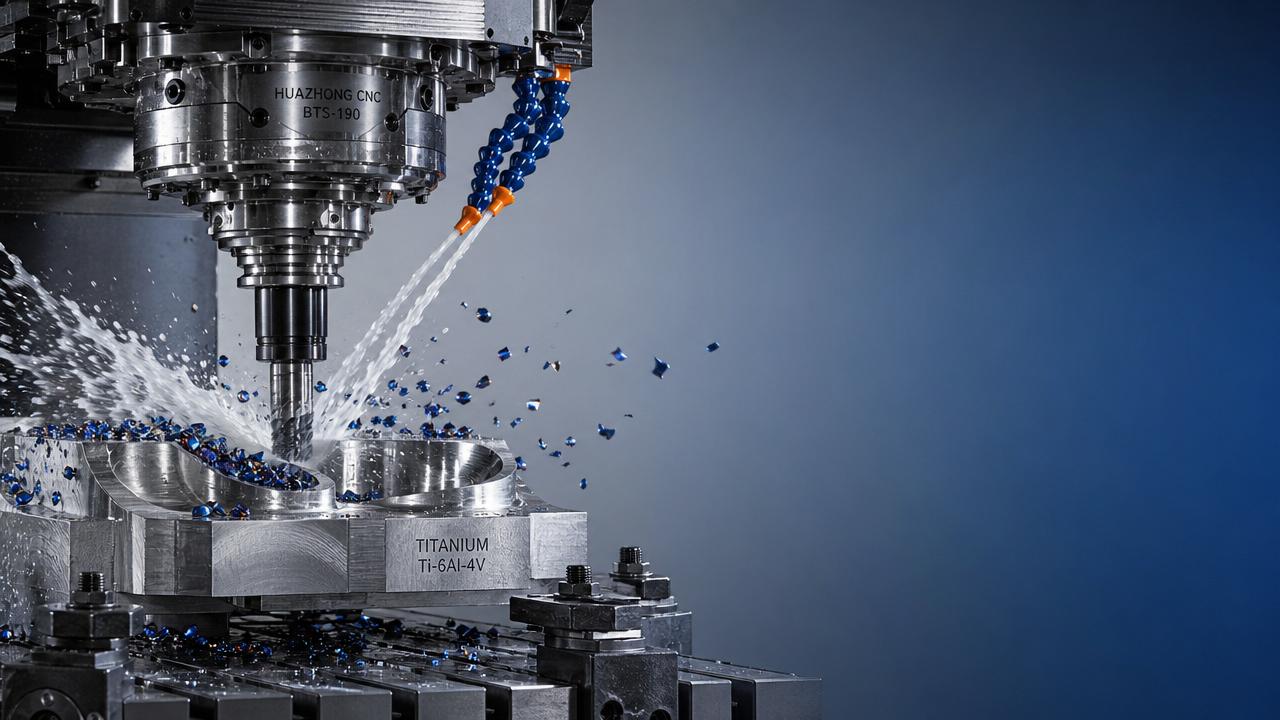
A CNC Tooling System for titanium machining can fail for reasons that are often more complex than simple tool wear. Titanium’s low thermal conductivity, high chemical reactivity, and tendency to work-harden place extreme demands on cutting tools, holders, coolant delivery, machine rigidity, and process parameters. For technical evaluators, understanding these failure mechanisms is essential to selecting reliable tooling, reducing downtime, and improving part quality in aerospace, medical, energy, and precision manufacturing applications.
Where Does a CNC Tooling System for Titanium Machining Usually Fail?
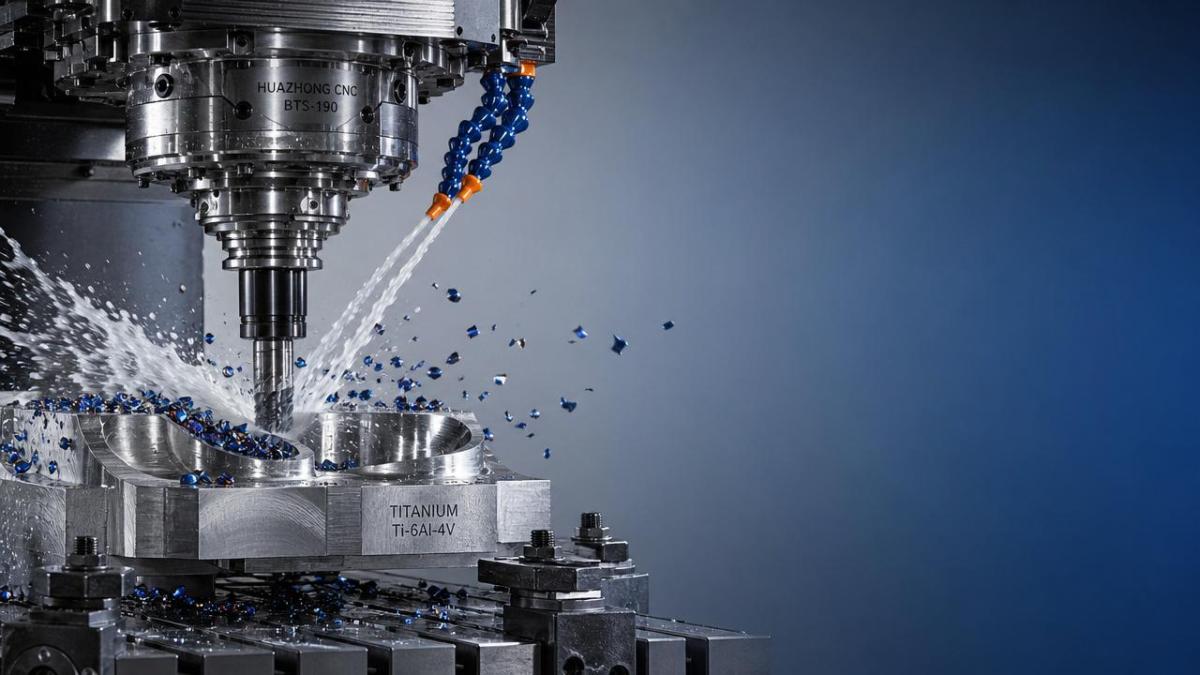
Failure rarely starts from one isolated component. In titanium machining, the tool, holder, spindle, coolant path, fixture, and cutting strategy behave as one connected system.
A technically acceptable insert can still fail early if radial runout, poor clamping, insufficient coolant pressure, or unstable engagement creates local thermal overload.
Common failure zones evaluators should inspect first
- Cutting edge failure caused by crater wear, notch wear, chipping, built-up edge, or thermal cracking during interrupted engagement.
- Tool holder instability caused by excessive overhang, poor taper contact, weak clamping force, or unbalanced high-speed rotation.
- Coolant delivery failure caused by wrong nozzle direction, low pressure, blocked internal channels, or poor chip evacuation.
- Process failure caused by conservative speeds but excessive dwell, rubbing, incorrect feed per tooth, or unstable toolpath transitions.
For buyers, this means evaluating a CNC Tooling System for titanium machining as an integrated manufacturing solution, not as a catalog item.
Why Titanium Creates Higher Tooling Risk Than Aluminum or Steel
Titanium alloys such as Ti-6Al-4V are valued for high strength-to-weight ratio, corrosion resistance, and biocompatibility, but these properties complicate machining.
Heat concentrates near the cutting edge because titanium transfers heat poorly into the chip. The result is fast coating degradation and edge softening.
The table below summarizes why a CNC Tooling System for titanium machining must be judged differently from tooling for general-purpose materials.
This comparison shows why material behavior must guide tooling selection. A low-price tool may become expensive if it causes scrap, rework, or spindle downtime.
Technical Warning Signs Before Complete Tooling Failure
Most failures send early signals. Technical evaluators should connect inspection data, sound changes, spindle load, surface finish, and chip color before breakdown occurs.
Signals from the cutting edge
Notch wear near the depth-of-cut line often indicates thermal and mechanical concentration. In titanium, this can quickly become edge chipping.
Built-up edge is another warning. It changes geometry, increases cutting force, and may tear the surface when the welded material breaks away.
Signals from the machine and process
- Rising spindle load at unchanged parameters suggests increasing friction, tool wear, or chip evacuation problems.
- Blue or dark chips can indicate excessive heat, especially when coolant is expected to maintain stable thermal conditions.
- Chatter marks on thin-wall components may show insufficient holder rigidity or poor toolpath engagement.
- Dimensional drift during a production batch may point to thermal growth, tool deflection, or unstable workholding.
A reliable CNC Tooling System for titanium machining should allow predictable wear patterns, measurable tool life, and repeatable part quality under defined conditions.
How to Evaluate Tooling, Holders, Coolant, and Machine Rigidity Together
Procurement teams often compare insert grades or cutter prices first. For titanium, that approach misses the interaction between rigidity, heat, chip flow, and programming.
The following evaluation matrix helps technical teams compare a CNC Tooling System for titanium machining before trial production or supplier qualification.
The matrix is useful during supplier audits, sample cutting, and quotation reviews. It turns vague promises into measurable technical confirmation points.
Cutting Parameters: When “Safe” Settings Still Cause Failure
Many failures occur because parameters look conservative but create rubbing instead of cutting. Low feed can be as dangerous as excessive speed.
Titanium machining generally benefits from controlled engagement, sufficient chip thickness, sharp cutting edges, and strong coolant access at the cutting zone.
Parameter decisions that need technical validation
- Confirm cutting speed according to alloy grade, tool diameter, coating type, and machine stability rather than using generic steel data.
- Set feed per tooth high enough to avoid rubbing, while staying within the edge strength and fixture capability.
- Use radial engagement strategies that reduce heat concentration and maintain stable chip formation during milling.
- Avoid dwell, repeated spring passes, and abrupt toolpath direction changes on critical aerospace or medical surfaces.
A CNC Tooling System for titanium machining should be delivered with parameter guidance, not only physical tools. This reduces trial cost and implementation uncertainty.
Application Scenarios Where Failure Costs Are Highest
Failure impact depends on the part. A broken tool in roughing is inconvenient; a failed tool on a near-finished titanium implant may be costly.
Technical evaluators should connect tooling choices with product risk, inspection requirements, batch size, and delivery commitments in each application scenario.
High-value titanium machining scenarios
- Aerospace structural parts require stable machining of pockets, ribs, and thin walls with strict control of distortion and surface integrity.
- Medical components require clean cutting, burr control, repeatable finish, and process consistency for regulated manufacturing environments.
- Energy equipment parts often involve deep cavities, difficult access, and demanding reliability under limited maintenance windows.
- Precision industrial components may require mixed operations, including turning, milling, drilling, threading, and finishing in one workflow.
In these scenarios, tool life alone is not enough. Dimensional stability, predictable replacement intervals, and process traceability become purchasing priorities.
Procurement Checklist for a Reliable CNC Tooling System for Titanium Machining
A sound procurement decision should balance unit price, engineering support, process evidence, spare availability, and compatibility with existing CNC machines.
The checklist below helps teams compare suppliers when budgets are limited, delivery schedules are tight, and certification expectations are high.
This checklist does not replace cutting trials. It helps identify whether a supplier can support engineering decisions, not only provide a quotation.
Cost, Alternatives, and the Hidden Price of Tooling Failure
The cheapest cutter is rarely the lowest-cost solution in titanium machining. Scrap titanium stock, machine stoppage, and urgent rework can exceed tool savings.
Technical teams should calculate cost per qualified part, not cost per insert. This view better reflects production reality in precision manufacturing.
Cost elements often missed in early comparison
- Machine downtime during tool failure recovery, spindle inspection, part removal, and program correction.
- Quality inspection burden caused by unstable dimensions, surface defects, burrs, or unpredictable tool wear.
- Operator intervention required to adjust coolant nozzles, change tools early, or manually remove packed chips.
- Inventory complexity when different operations use incompatible holders, inserts, screws, and replacement parts.
Alternatives may include high-pressure coolant, trochoidal milling, shorter holders, improved fixtures, or different tool geometries. The right option depends on failure evidence.
Standards, Documentation, and Quality Expectations
A CNC Tooling System for titanium machining may be used inside supply chains with strict quality expectations, especially in aerospace and medical manufacturing.
Although tooling itself may not require the same certification as final parts, documentation supports traceability, repeatability, and supplier qualification.
Practical documentation to request
- Tool drawings or geometry descriptions that clarify diameter, flute count, corner radius, insert style, and cutting length.
- Recommended operating windows for speed, feed, depth of cut, coolant pressure, and toolpath type.
- Inspection or quality control records where available, especially for holders, runout-sensitive tools, and precision assemblies.
- Compatibility notes for CNC lathes, machining centers, multi-axis machines, and automated tool management systems.
For international trade, clear documentation also reduces communication errors between buyers, machine builders, tooling suppliers, and production teams.
FAQ: Practical Questions About CNC Tooling System for Titanium Machining
How do I know whether failure is caused by the tool or the process?
Start with wear pattern analysis. Uniform flank wear suggests predictable tool life, while chipping, adhesion, and notch wear often indicate parameter, coolant, or rigidity problems.
Is high-pressure coolant always necessary for titanium machining?
Not always, but it is often helpful for deep holes, difficult pockets, and long cuts. Direction, filtration, and flow stability matter as much as pressure.
Should I choose carbide, ceramic, or coated tools for titanium?
Carbide tools with suitable coatings are common for many titanium operations. The final choice depends on alloy, operation type, machine rigidity, and surface requirements.
What should be tested before approving a new tooling supplier?
Test tool life, surface finish, dimensional stability, chip evacuation, repeatability, and support response. A short trial should represent real production conditions.
Why Choose Us for Technical Evaluation and Sourcing Support?
Choosing a CNC Tooling System for titanium machining is a technical decision with purchasing consequences. We help evaluators compare options with process logic.
Our platform focuses on CNC machining, precision machine tools, automated production, and global manufacturing supply chains across China, Germany, Japan, South Korea, and beyond.
You can contact us for focused support on:
- Parameter confirmation for titanium milling, turning, drilling, threading, and finishing operations.
- Tooling selection based on part geometry, CNC machine capability, coolant system, and production batch size.
- Custom solution discussion for holders, fixtures, cutting tools, automated lines, and multi-axis machining processes.
- Delivery cycle, sample support, quotation communication, and documentation requirements for international purchasing teams.
If your current tooling fails unpredictably, share the alloy, machine type, operation, toolpath, coolant condition, and failure photos. A structured review can reveal the real cause.
Recommended for You
 How to Select a CNC Metal Lathe for Tight-Tolerance Shaft and Sleeve PartsCNC Machining Technology Center
 How to Select an Industrial Lathe for High-Volume Shaft ProductionMachine Tool Industry Editorial Team
 Selecting Machine Tools for Automotive Parts: Accuracy, Throughput, and AutomationMachine Tool Industry Editorial Team
 Industrial Machining: Selecting Processes for Tight-Tolerance Metal PartsCNC Machining Technology Center
 Manufacturing Technology Trends That Improve Throughput and Quality ControlManufacturing Market Research Center
 How to Design Cost-Effective Fixtures That Maintain Cycle Time in Mass ProductionCNC Machining Technology Center

Aris Katos
Future of Carbide Coatings
15+ years in precision manufacturing systems. Specialized in high-speed milling and aerospace grade alloy processing.
▶
Which Metals Are Hardest to Machine With Standard Tools?CNC Machining Technology Center▶
How to Choose Cutting Tools for High-Speed Machining of Steel, Aluminum, and TitaniumCNC Machining Technology Center▶
How to Choose a CNC Tooling System for Titanium Machining by Tool Life and StabilityCNC Machining Technology Center▶
Cutting Tools Selection Guide: How Tool Material, Coating, and Geometry Affect PerformanceCNC Machining Technology Center▶
Cutting Tools for High Temperature Alloys: How to Reduce Tool Wear and Edge ChippingCNC Machining Technology Center
Mastering 5-Axis Workholding Strategies
Join our technical panel on Nov 15th to learn about reducing vibrations in thin-wall components.

Providing you with integrated sanding solutions
Before-sales and after-sales services
Comprehensive technical support