• Global CNC market projected to reach $128B by 2028 • New EU trade regulations for precision tooling components • Aerospace deman
NYSE: CNC +1.2%LME: STEEL -0.4%

What Are Machine Tools? Common Types, Functions, and Typical Shop Applications
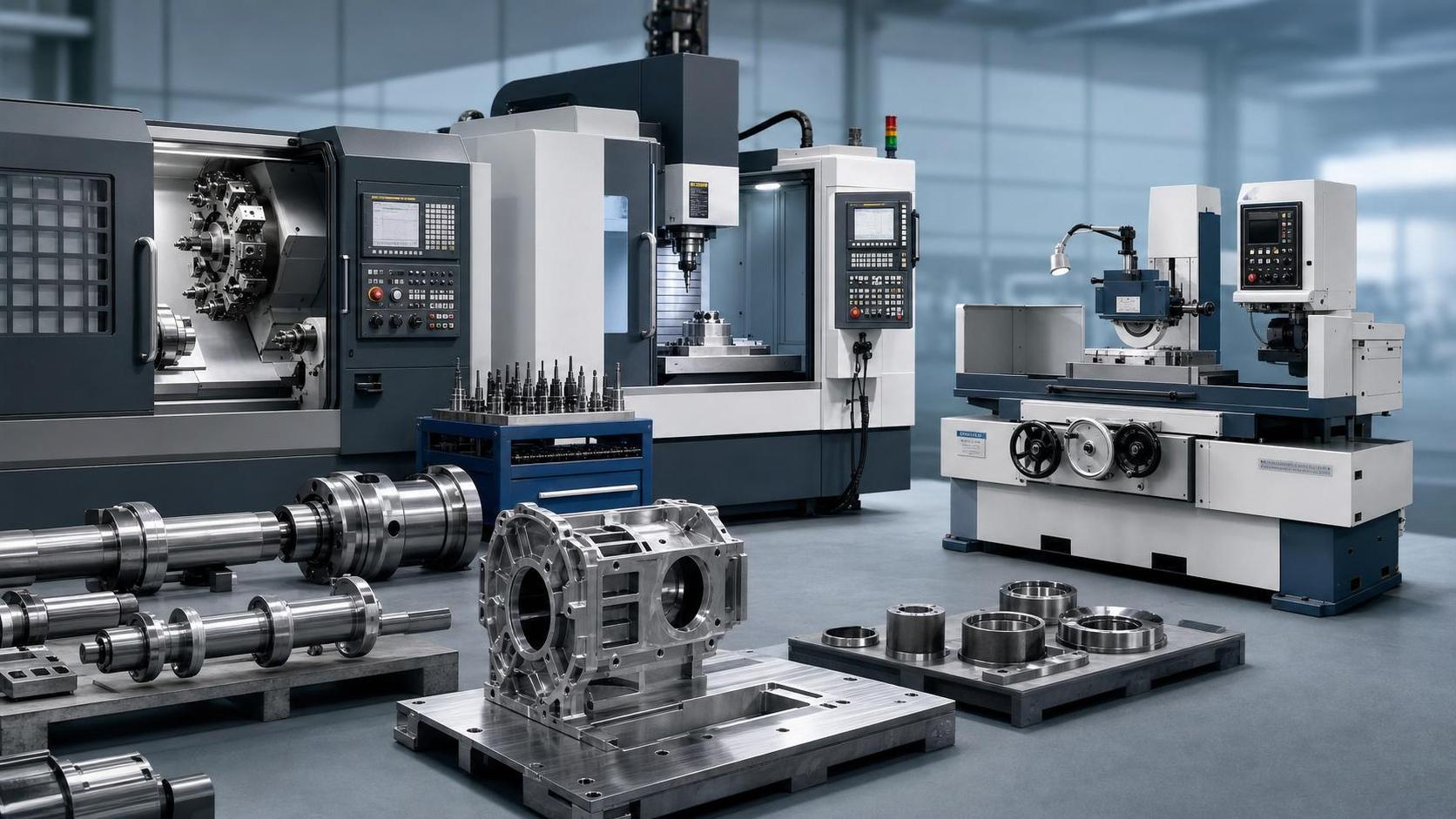
Machine tools are the backbone of modern manufacturing, helping operators shape, cut, drill, and finish parts with speed and precision. From manual machines to advanced CNC systems, understanding common machine tools, their functions, and where they are used in a typical shop is essential for improving productivity, accuracy, and day-to-day machining performance.
For operators, setup technicians, and shop-floor supervisors, machine tools are not abstract equipment categories. They directly affect cycle time, dimensional accuracy, tool life, part consistency, and safety. In a shop handling shafts, plates, housings, molds, or structural parts, selecting the right machine often determines whether a job runs in 20 minutes or 2 hours.
As manufacturing moves toward higher precision and automation, machine tools now range from basic bench machines to 3-axis, 4-axis, and 5-axis CNC systems integrated with robots, probes, and digital monitoring. This article explains what machine tools are, the most common types, what each one does, and how they are typically used in real shop environments.
What Machine Tools Are and Why They Matter in Daily Production
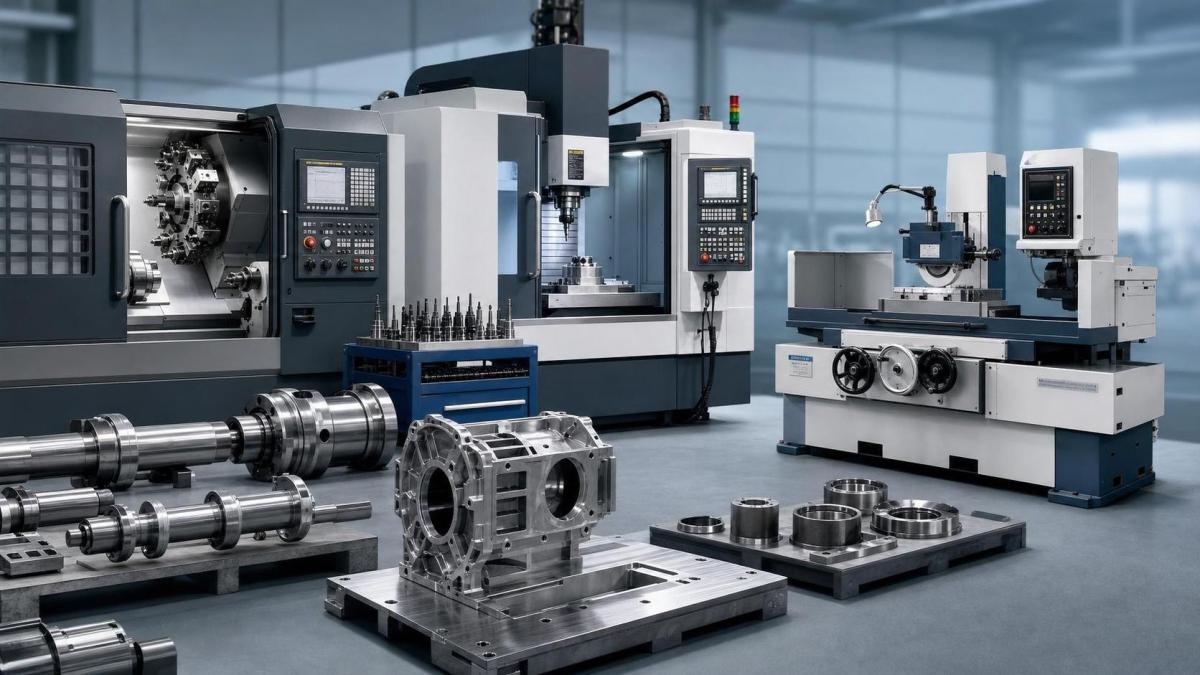
Machine tools are power-driven machines used to remove, form, or finish material with controlled motion. In most metalworking shops, they cut steel, aluminum, brass, titanium, cast iron, and engineering plastics into parts with tolerances that often range from ±0.01 mm to ±0.05 mm, depending on the process and machine condition.
The term covers both conventional equipment and CNC machine tools. Manual machines depend more on operator skill for feed, depth, and positioning. CNC systems use programmed tool paths, repeatable positioning, and automated cycles, which makes them especially valuable for batch sizes from 10 pieces to 10,000 pieces.
Core Functions of Machine Tools
Most machine tools perform one or more of five basic functions: turning, milling, drilling, grinding, and sawing. Some machines specialize in one process, while others combine several processes in one setup. Reducing setups from 3 operations to 1 or 2 often improves accuracy because the part is re-clamped fewer times.
- Turning: rotates the workpiece while the tool cuts the outside or inside diameter.
- Milling: rotates the cutting tool to remove material from flat, contoured, or pocketed surfaces.
- Drilling and boring: creates or refines holes for bolts, shafts, bearings, or fluid passages.
- Grinding: improves surface finish and achieves tighter tolerances, often below ±0.01 mm.
- Sawing and cutting: prepares raw stock before machining and reduces wasted material.
Why Operators Need a Practical Understanding
A good operator does more than press cycle start. Understanding machine tools helps with job loading, tool offset checks, fixture selection, coolant use, spindle warm-up, and inspection planning. It also reduces common problems such as chatter, taper, burrs, thermal drift, and premature tool wear.
In a typical production cell, even a 5% improvement in cycle time or a 10% reduction in tool changes can create meaningful output gains over a 2-shift operation. That is why machine knowledge remains valuable even in highly automated shops.
Typical Shop Performance Targets
Shops usually track a few simple indicators to evaluate whether machine tools are being used effectively. The table below shows common floor-level targets that operators and supervisors often monitor during repeat production.
These numbers vary by material, part geometry, and machine class, but they show a useful point: machine tools are not only about cutting metal. They are also about repeatability, throughput, and process control across every shift.
Common Types of Machine Tools and What They Do
Most shops do not rely on one machine alone. They use a mix of machine tools to process raw material, create features, hold tolerances, and finish surfaces. The best mix depends on part families, annual volume, material type, and whether the shop runs prototypes, repair work, or full production.
Lathes
Lathes are among the most common machine tools in any machining environment. They rotate the workpiece while a stationary or moving cutting tool removes material. Operators use lathes for shafts, bushings, threaded components, pins, rollers, and many round parts from 10 mm to 500 mm in diameter.
Manual lathes remain useful for maintenance shops, one-off jobs, and repair work. CNC lathes are preferred for repeat production because they provide stable offsets, automatic tool changes, and predictable cycle times. Many turning centers also include live tooling for drilling, tapping, and light milling.
Milling Machines and Machining Centers
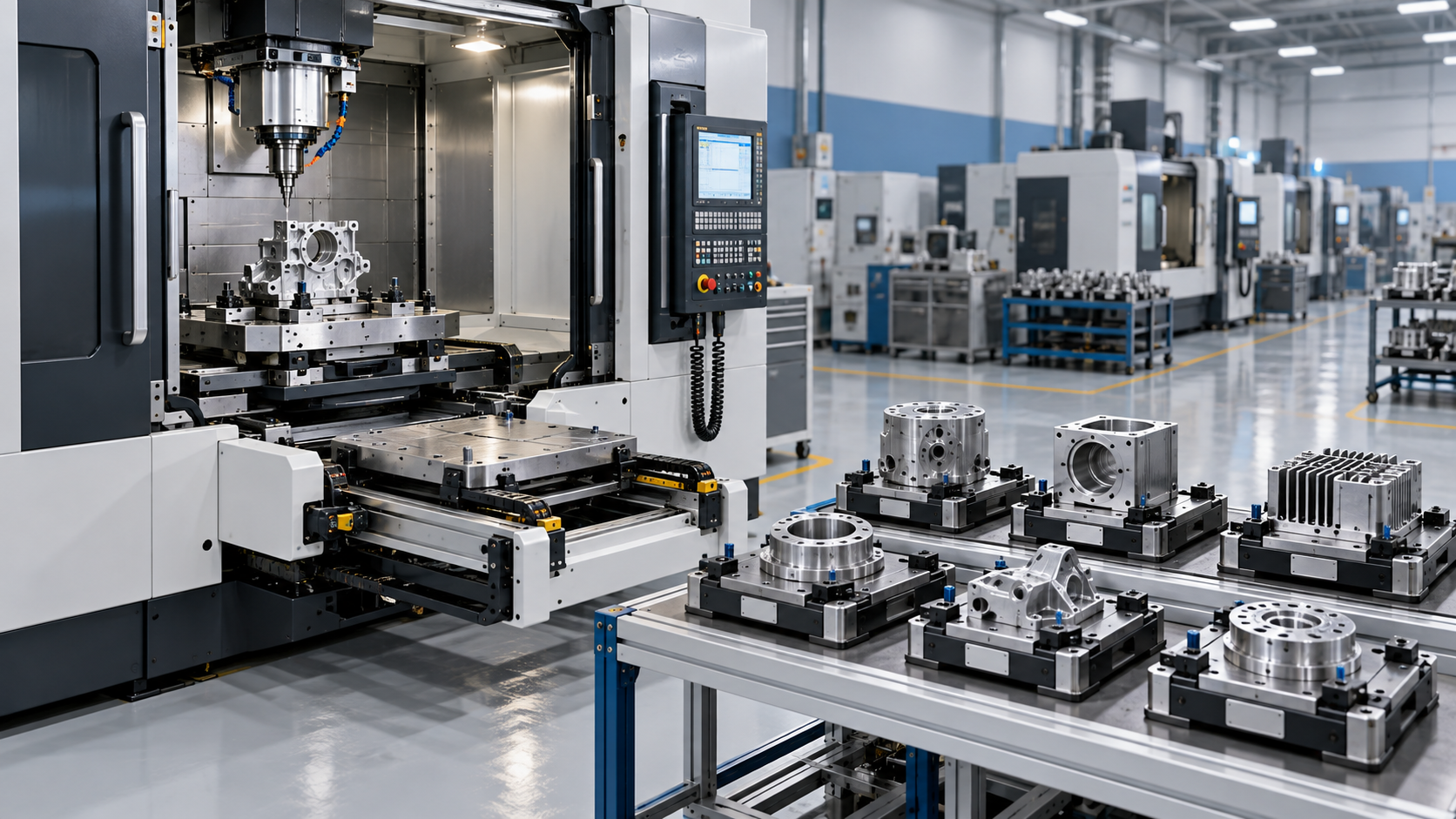
Milling machines remove material with a rotating cutter and are ideal for flat faces, pockets, slots, contours, and bolt-hole patterns. Vertical machining centers are common in general job shops, while horizontal machining centers are often selected for higher-volume work and better chip evacuation.
A 3-axis machine is enough for many plates and housings. A 4-axis machine improves access to side features. A 5-axis machine can cut complex aerospace, medical, and energy parts in fewer setups, which is especially useful when positional accuracy between features must stay within 0.02 mm to 0.05 mm.
Drilling, Boring, and Tapping Machines
Dedicated drilling and tapping machines still have value in repetitive production, especially when the same hole pattern appears across hundreds or thousands of parts. Boring machines refine hole size, roundness, and alignment after rough drilling. In shops making gearbox housings or hydraulic blocks, bore location can be one of the most critical dimensions.
Grinding Machines
Grinding machine tools are used when parts require tighter tolerance or smoother surface finish than standard cutting alone can provide. Surface grinders, cylindrical grinders, and internal grinders are common. For bearing seats, sealing surfaces, or hardened components, grinding can bring surface finish down to Ra 0.2 to 0.8 µm.
Sawing and Cutoff Equipment
Band saws and cutoff saws are simple but important machine tools. They prepare raw bars, tubes, and billets before precision machining begins. Accurate cutting at the start can reduce material waste, improve fixture loading, and save 5 to 15 minutes of handling time per batch.
Quick Comparison of Common Machine Tools
The table below gives operators a practical way to compare common machine tools by part shape, main process, and typical shop use. This helps when deciding which machine should take a job first or where a process bottleneck may be forming.
For many operators, the key takeaway is simple: machine tools should match part geometry and tolerance demand. Using a grinder for a rough blank or a basic drill for a precision bore often creates extra work later in the process.
Typical Shop Applications for Different Machine Tools
In real production, machine tools are arranged around workflow, not textbook categories. A shop may cut material in the saw area, rough machine on a lathe or VMC, move parts to a second operation for holes or side features, then send critical surfaces to grinding or inspection. Every step must support throughput and accuracy.
Automotive and General Industrial Parts
Automotive suppliers and general industrial shops often use CNC lathes for shafts, hubs, and threaded connectors, while machining centers handle brackets, covers, and transmission housings. In medium-volume work, fixture repeatability within 0.02 mm to 0.05 mm is often necessary to maintain stable quality across 500 to 2,000 parts per run.
Aerospace and High-Complexity Parts
Aerospace components usually involve harder materials, thinner walls, and tighter feature relationships. Here, advanced machine tools such as 5-axis machining centers reduce repositioning and improve access to compound angles. Operators must pay closer attention to tool deflection, heat buildup, and in-process measurement because small errors can affect expensive workpieces.
Energy, Electronics, and Precision Assemblies
Energy equipment often includes larger flanges, valve bodies, and pump parts that need stable boring and face milling. Electronics and precision assembly work usually involve smaller aluminum or stainless parts with close hole patterns, thin walls, and cosmetic finish requirements. In these cases, spindle speed, chip control, and burr management matter as much as raw material removal rate.
Common Process Flow in a Machine Shop
Even when parts vary, many machine shops follow a similar 5-step workflow. Understanding where each machine tool fits into the sequence helps operators reduce idle time and avoid unnecessary handling between operations.
- Cut raw stock to near size using a saw or cutoff machine.
- Rough machine major features on a lathe or machining center.
- Finish holes, side faces, or secondary features in a second setup.
- Grind or fine-finish critical surfaces when tolerance or finish demands it.
- Inspect, deburr, clean, and prepare parts for assembly or shipment.
When this flow is balanced correctly, operators spend less time waiting for the next machine, and parts spend less time sitting between processes. In shops running two shifts, reducing handling by even 30 seconds per part can add up quickly over 1,000 pieces.
How Operators and Buyers Should Choose the Right Machine Tools
Choosing machine tools is not only a purchasing issue. It is a production decision that affects programming difficulty, maintenance load, staffing, floor space, and delivery reliability. A machine that looks powerful on paper may still be the wrong choice if it cannot match your part mix or operator skill level.
Four Practical Selection Factors
- Part size and geometry: round parts need turning capability; complex prismatic parts need milling access.
- Tolerance and finish: parts requiring Ra below 0.8 µm or very fine bore control may need grinding or precision boring.
- Batch volume: low-volume work favors flexibility; high-volume work favors automation and reduced setup time.
- Operator capability: advanced machine tools require training in offsets, probing, tooling strategy, and basic troubleshooting.
Questions to Ask Before Purchase or Deployment
Before adding new machine tools to a shop, buyers and users should ask practical questions. What is the largest part size? How many setups are needed today? What is the typical material hardness? Does the shop need 3-axis flexibility or 5-axis access? Is delivery driven by prototype work, weekly production, or long-run contracts?
For many operations, a useful benchmark is to compare setup time, spindle utilization, and scrap rate over a 30-day period. If one machine family repeatedly causes bottlenecks, the solution may involve better fixturing, a different tooling package, or a more suitable machine platform rather than simply adding labor.
Selection Checklist for Common Shop Needs
The following table summarizes how common production priorities align with machine tool decisions. It can help both operators and purchasing teams narrow down options without relying on generic performance claims.
The most effective machine tool choice usually balances capability with real shop conditions. A simpler, reliable machine with predictable maintenance can outperform a more complex system if staffing, programming support, or tooling discipline is limited.
Common Operator Challenges, Maintenance Priorities, and Risk Control
Even high-quality machine tools can underperform when daily control is weak. Many shop-floor problems come from avoidable causes such as poor workholding, worn tools, insufficient coolant concentration, dirty way covers, or skipped warm-up routines. These issues may seem small, but they can quickly affect part accuracy and downtime.
Frequent Problems in Typical Shops
- Chatter caused by long tool overhang, weak clamping, or unstable feeds and speeds.
- Drifting dimensions caused by thermal growth after 30 to 60 minutes of continuous cutting.
- Burr formation due to dull tools, incorrect exit strategy, or poor toolpath sequencing.
- Unexpected stoppages caused by chip buildup, coolant blockage, or missed lubrication checks.
Basic Maintenance Habits That Protect Accuracy
Operators do not need to perform full service tasks, but they should follow basic care routines consistently. Daily cleaning, visual checks, spindle warm-up, coolant verification, and offset review can prevent many quality problems. Weekly checks on filters, chip conveyors, air supply, and fixture condition also help maintain stable output.
A practical rule in many shops is to inspect first-off parts, check a critical dimension every 10 to 20 parts during unstable runs, and verify tool wear at defined intervals rather than waiting for visible failure. This approach reduces scrap and protects machine tools from overload or crashes.
Simple Risk-Control Priorities
- Confirm clamping force and part seating before every cycle restart.
- Use standard offset and tool-life management for repeat jobs.
- Separate roughing and finishing tools when tolerance risk is high.
- Record recurring alarms and link them to material, program, or setup conditions.
- Schedule preventive maintenance at fixed intervals such as every 250 to 500 operating hours.
These steps are especially important in shops using CNC machine tools in continuous production. As automation increases, process discipline becomes more important, not less, because one unnoticed issue can affect dozens of parts before the next manual check.
Practical FAQ for Users and Shop Teams
Are manual machine tools still useful?
Yes. Manual lathes, mills, and drills remain useful for repair work, one-piece jobs, training, and quick modifications. They are less efficient for repeat production, but they are still valuable where flexibility matters more than throughput.
When should a shop move from conventional machines to CNC machine tools?
The move usually makes sense when repeatability, labor efficiency, and batch consistency become more important than manual flexibility. If the same part runs regularly, setup is documented, and dimensional control needs to stay within a tight range, CNC machine tools usually provide better long-term value.
What is the biggest mistake operators make with machine tools?
One common mistake is treating all machines as if they respond the same way. Feed rates, rigidity, spindle behavior, and thermal stability vary. A toolpath that works on one machine may need adjustment on another. Good operators learn the behavior of each machine tool and adapt accordingly.
How often should machine accuracy be checked?
Basic checks should happen daily through part inspection and machine observation. More formal verification intervals depend on workload, but many shops review alignment, backlash trends, or repeatability monthly or quarterly, especially on high-precision equipment.
Machine tools remain central to every serious machining operation, from simple cutoff work to multi-axis precision manufacturing. Knowing the common machine types, their main functions, and their best shop applications helps operators reduce setup errors, improve part quality, and support more efficient production across automotive, aerospace, energy, electronics, and general industrial work.
If you are evaluating machine tools, improving shop workflow, or planning CNC upgrades for higher precision and automation, now is the right time to compare your current process against actual part requirements. Contact us to discuss machine tool options, get a tailored production solution, or learn more about practical machining strategies for your operation.
Recommended for You
![]() Mitsubishi Electric Announces Physical AI System Linking Humanoid Robots and CNC MachinesMachine Tool Industry Editorial Team
Mitsubishi Electric Announces Physical AI System Linking Humanoid Robots and CNC MachinesMachine Tool Industry Editorial Team Precision Machining for Defense: Supplier Quality and Traceability ChecksManufacturing Market Research Center
![]() Nidec Machine Tool Launches MVR-5X Five-Axis Gantry MachineMachine Tool Industry Editorial Team
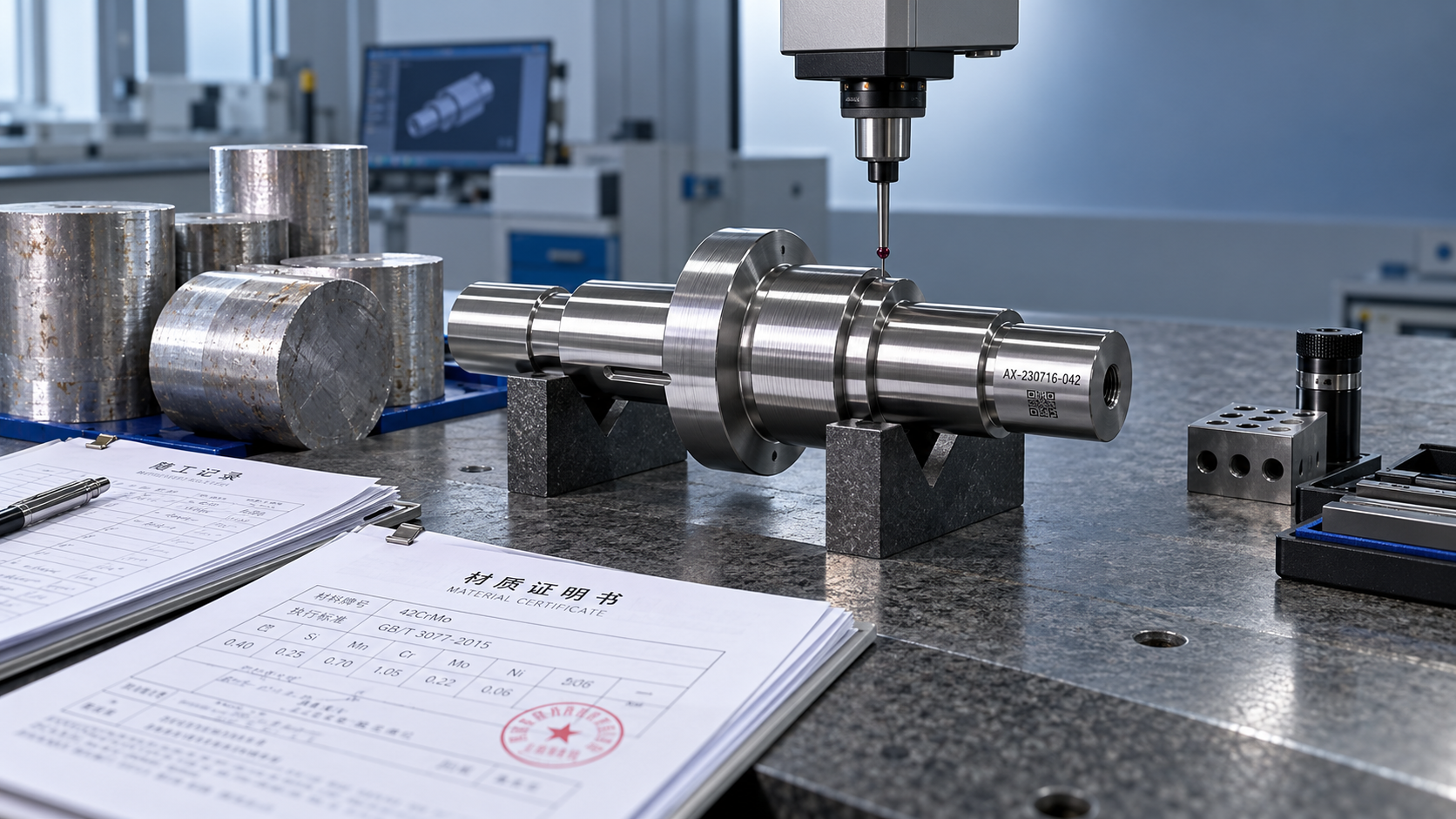
Nidec Machine Tool Launches MVR-5X Five-Axis Gantry MachineMachine Tool Industry Editorial Team Choosing a Precision Disc Parts Manufacturer in China: Tolerances and Quality ChecksManufacturing Market Research Center
![]() Siemens Executive Says AI Could Raise Factory Automation to 80%Manufacturing Market Research Center
Siemens Executive Says AI Could Raise Factory Automation to 80%Manufacturing Market Research Center Choosing Automated Machine Tools for High-Mix, Low-Volume ProductionMachine Tool Industry Editorial Team


Aris Katos
Future of Carbide Coatings
15+ years in precision manufacturing systems. Specialized in high-speed milling and aerospace grade alloy processing.
▶
What Is Metal Processing? From Raw Material to Finished Machine PartsCNC Machining Technology Center▶
How long does CNC machine delivery and installation usually take?CNC Machining Technology Center▶
CNC Machine Arrival Inspection: Check Shipping Damage, Accuracy, Safety, and DocumentsCNC Machining Technology Center▶
What Should You Check When a CNC Machine Arrives at Your Factory?CNC Machining Technology Center▶
What Safety Checks Are Required for CNC Cutting Operations?CNC Machining Technology Center
▶
Mastering 5-Axis Workholding Strategies
Join our technical panel on Nov 15th to learn about reducing vibrations in thin-wall components.

Providing you with integrated sanding solutions
Before-sales and after-sales services
Comprehensive technical support