• Global CNC market projected to reach $128B by 2028 • New EU trade regulations for precision tooling components • Aerospace deman
NYSE: CNC +1.2%LME: STEEL -0.4%

CNC metalworking tolerances that affect part approval rates
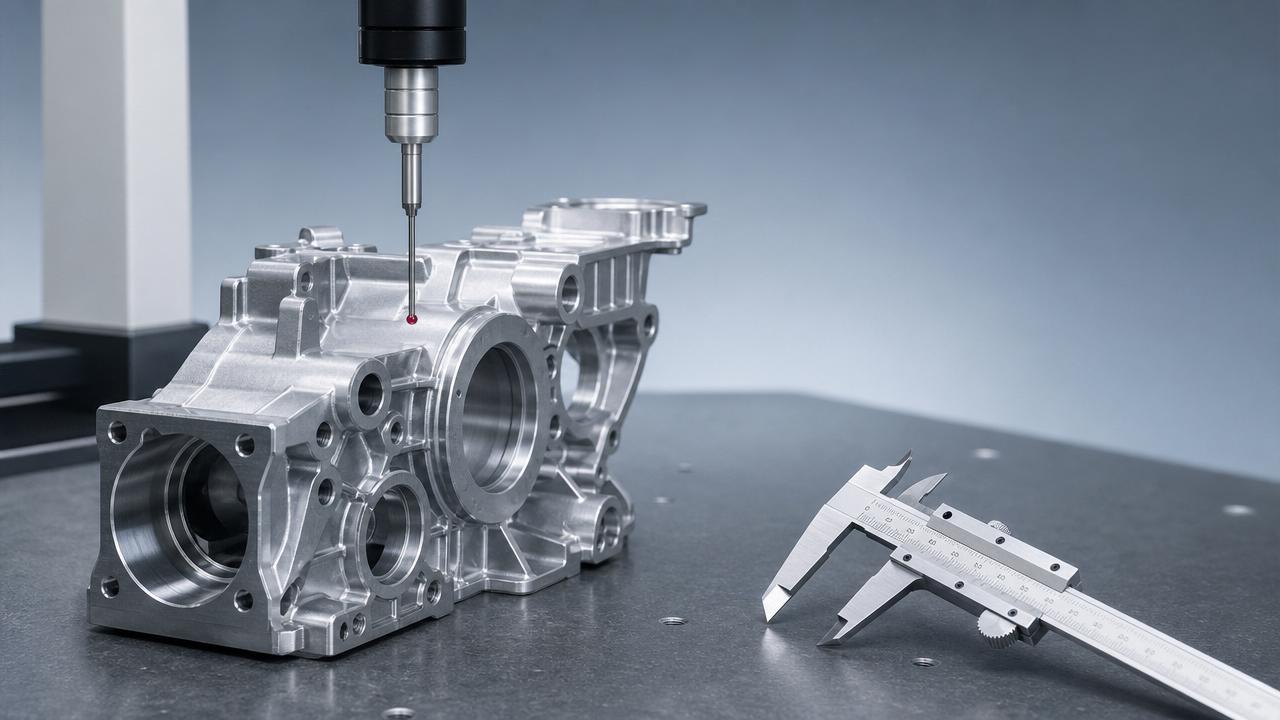
In CNC metalworking, tolerances do more than define dimensional accuracy—they directly influence part approval rates, inspection outcomes, and production risk. For quality control and safety managers, understanding how tolerance decisions affect consistency, fit, and compliance is essential to reducing rework and preventing costly failures. This article explores the tolerance factors that most often determine whether a machined part passes or gets rejected.
Why tolerance decisions are gaining more strategic weight
A clear shift is taking place across CNC metalworking. Tolerance planning is no longer treated as a drawing detail checked at the end of production. It is becoming a front-end quality decision tied to approval rates, supply chain reliability, and operational safety. As manufacturers in automotive, aerospace, electronics, energy equipment, and industrial machinery move toward tighter process control, even small tolerance mismatches can trigger larger consequences: delayed shipments, repeated inspections, assembly problems, warranty claims, or safety-related nonconformance.
Several industry signals explain this change. First, more parts are now produced for automated or semi-automated assemblies, where dimensional variation has less room to hide. Second, digital inspection systems and statistical process control are making deviation more visible than before. Third, global sourcing means CNC metalworking suppliers must meet tolerance expectations that differ by customer, market, and standard. For quality control teams, the practical result is simple: approval rates increasingly depend on how realistic, measurable, and function-driven the tolerance strategy is.
This matters especially to safety managers because rejected or marginal parts are not only a productivity issue. In critical applications, unstable tolerance performance can lead to poor fit, vibration, leakage, fatigue, overload, or unsafe equipment behavior during service. The approval decision, therefore, is becoming a risk filter as much as a dimensional check.
The strongest trend signals affecting part approval rates
In today’s CNC metalworking environment, approval rates are being shaped by a combination of technical and commercial changes. Buyers are asking for more complex part geometry, shorter lead times, and stronger traceability at the same time. That combination tends to expose weaknesses in tolerance management. A part may be machinable, but if the tolerance scheme does not match process capability, inspection method, or assembly function, the probability of rejection rises sharply.
For CNC metalworking suppliers, this means part approval can no longer be protected by machining precision alone. Interpretation discipline, process capability, fixture stability, tool wear control, and measurement alignment all influence whether the same part is approved consistently across lots.
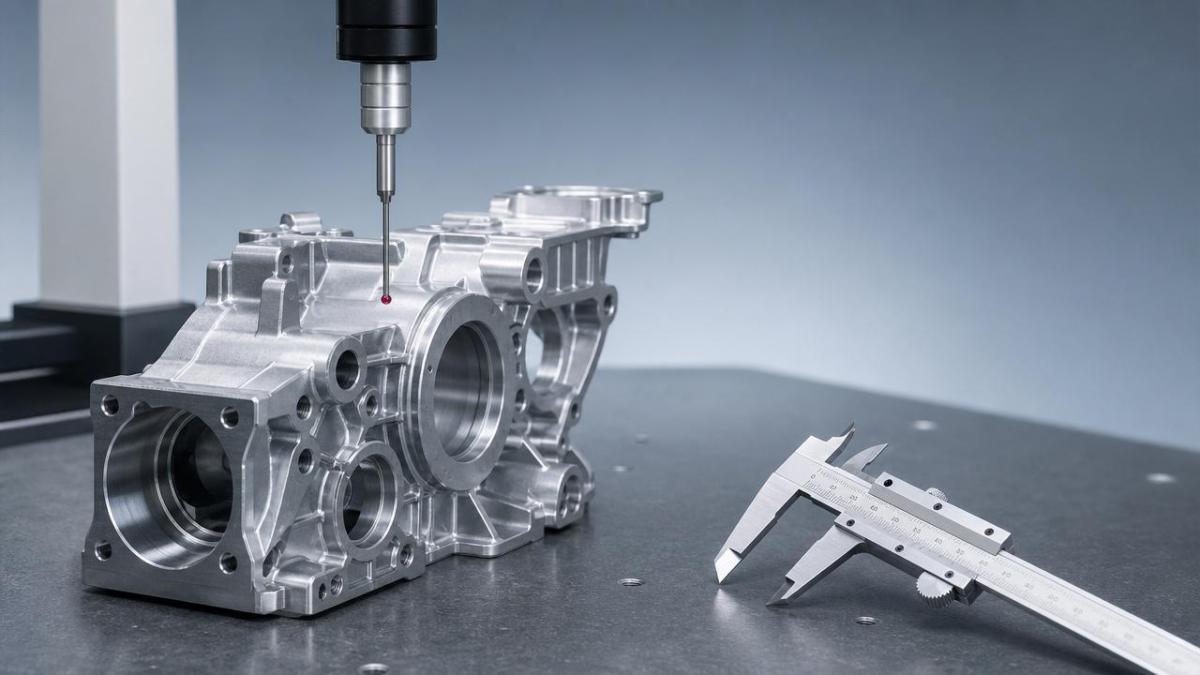
Which tolerance factors most often decide pass or reject outcomes
Not all tolerances carry equal approval risk. In many rejection cases, a small group of tolerance-related issues repeatedly appears. Understanding these factors helps quality and safety personnel focus on the dimensions that actually drive downstream failure.
1. Overly tight tolerances without process capability support
One of the most common problems in CNC metalworking is the use of tight dimensional limits that exceed the natural stability of the machine, tooling, material, or setup. If a drawing demands precision beyond what the production process can hold repeatedly, approval rates will drop even if the nominal machining result looks good. This is not only a cost issue. It also creates unstable inspection outcomes, operator frustration, and pressure to release borderline parts.
2. Poor datum selection and geometric relationship control
Many parts fail not because a single size is wrong, but because positional or geometric relationships drift from the intended functional reference. Flatness, perpendicularity, concentricity, runout, and true position are especially important in assemblies involving shafts, bores, sealing faces, and rotating components. In CNC metalworking, a part can meet basic linear dimensions yet still be rejected if the datum structure does not support actual function.
3. Tolerance stack-up across multiple features
As parts become more complex, cumulative variation becomes a major approval driver. A single dimension may remain within limit, but the interaction of several acceptable variations can create assembly failure. This issue is becoming more visible in multi-component systems, especially where CNC metalworking parts interface with castings, welded structures, or molded components from other suppliers.
4. Surface condition and form affecting measurement results
Approval rates are also affected by conditions that sit between dimensional and surface quality. Burrs, chatter, tool marks, edge break inconsistency, distortion from clamping, and thermal growth may alter measurement outcomes or part function. In practical CNC metalworking inspection, the drawing may specify size, but the real pass-or-fail decision often depends on whether the measured size is influenced by surface instability.
5. Measurement method mismatch
A rising source of rejection disputes is the gap between design intent and inspection method. Hand tools, gauges, CMM programs, optical systems, and shop-floor probing can produce different conclusions when feature access, datum simulation, or temperature conditions vary. In CNC metalworking, approval risk increases when the supplier and customer are not aligned on how the tolerance should be verified.
Why these changes matter more for quality control and safety roles
For quality control managers, the trend is moving from end-of-line sorting toward prevention based on tolerance intelligence. That means approval rates should be read as a process capability signal, not just an inspection statistic. If the same tolerance zones repeatedly create scrap or deviation, the issue may point to drawing assumptions, fixture design, machine condition, or supplier variation rather than operator execution alone.
For safety managers, the importance is equally clear. A part that barely passes dimensionally may still create operational risk if tolerance variation affects stress concentration, alignment, sealing, motion stability, or protective clearances. In sectors using high-speed rotation, pressure retention, thermal cycling, or repetitive loading, tolerance drift can become a latent hazard. The broader trend in CNC metalworking is therefore a move toward function-based acceptance, where safety-critical features receive stronger monitoring than cosmetic or nonfunctional dimensions.
What is driving the shift in CNC metalworking tolerance control
The tightening link between tolerances and approval rates is not happening by accident. It is being driven by structural changes in manufacturing. Smart factory systems make variation visible faster. Multi-axis CNC metalworking introduces more geometric complexity per setup. Global competition rewards suppliers that can document repeatable quality, not only produce individual good parts. At the same time, customer audits are putting more emphasis on process evidence, gauge discipline, and traceable nonconformance handling.
Another important driver is the shift from tolerance as a print requirement to tolerance as a lifecycle requirement. A feature that appears acceptable at machining may fail later in coating, assembly, transport, or field operation. This is why many manufacturers are re-evaluating legacy tolerance schemes. They are asking whether each requirement protects function, whether it can be measured reliably, and whether the process can hold it across volume production.
Practical judgment points for reducing rejection risk
For companies working in CNC metalworking, the most useful response is not simply to tighten controls everywhere. A better approach is to identify the tolerance conditions most likely to reduce approval rates and then act where the quality and safety payoff is highest.
- Separate critical-to-function tolerances from general dimensions so inspection resources follow risk.
- Compare drawing tolerances with actual machine capability before release to production.
- Review datum strategy to confirm that measurement reflects assembly conditions.
- Use trend data, not only pass/fail counts, to detect drift before rejection rates rise.
- Align supplier and customer measurement methods on difficult features in advance.
- Investigate recurring marginal dimensions for links to tool wear, heat, clamping, or material behavior.
How to judge the next stage of tolerance management
Looking ahead, CNC metalworking quality systems will likely place more value on predictive tolerance control. That includes in-process monitoring, digital twins for machining variation, smarter fixture validation, and more integrated design-for-manufacture reviews. But the near-term opportunity is more basic and more urgent: reduce the gap between tolerance intent and production reality.
If approval rates are unstable, companies should ask a set of practical questions. Which rejected dimensions are truly functional? Which tolerance zones produce the most repeat issues? Are measurement disputes masking design or process problems? Are safety-critical features monitored with the same discipline as cosmetic ones? In CNC metalworking, these questions often reveal that the problem is not a lack of precision effort, but a lack of tolerance prioritization.
FAQ on CNC metalworking tolerances and approval trends
Do tighter tolerances always improve quality?
No. In CNC metalworking, tighter tolerances only improve quality when they protect actual function and can be held consistently by the process. Unnecessary tightness often lowers approval rates and increases cost without improving performance.
Why do some parts pass machining but fail inspection later?
Delayed rejection can result from thermal change, burrs, distortion, coating buildup, tolerance stack-up, or different measurement methods. This is common when CNC metalworking parts move between shop-floor checks and formal metrology.
What should quality teams monitor first?
Start with features tied to fit, alignment, sealing, rotation, and load transfer. Then review recurring nonconformance patterns by machine, setup, and supplier lot. These signals usually show where approval risk is building.
Final takeaway for decision-makers
The direction of travel in CNC metalworking is clear: tolerances are becoming a strategic quality and safety issue, not just a drawing notation. As part complexity rises and inspection becomes more data-driven, approval rates will increasingly depend on whether tolerance requirements are functional, measurable, and aligned with process capability. For quality control and safety managers, the most valuable next step is to identify which tolerances create the greatest rejection, assembly, or operational risk—and then verify whether current machining and inspection systems are truly built around those priorities. If a business wants to judge how these changes may affect its own production, it should begin by reviewing its most disputed features, most repeated rejections, and most safety-sensitive dimensions.
PREVIOUS ARTICLE
Recommended for You
 Machine Tool Standards by Country: What Importers Must Verify Before PurchaseManufacturing Policy Research Center
 CNC Lathe Quick Installation Guide: Alignment Checks Before First Production RunCNC Machining Technology Center
 How to Select a CNC Lathe for Small Parts Without Sacrificing Accuracy or Cycle TimeCNC Machining Technology Center
 How to Select a Slant Bed Lathe for High-Precision Shaft and Chuck WorkCNC Machining Technology Center
 Smart Manufacturing for Small Businesses: Where Automation Delivers the Fastest ROIMachine Tool Industry Editorial Team
 How to Specify a CNC Lathe for High-Volume Automotive Shaft ProductionCNC Machining Technology Center

Aris Katos
Future of Carbide Coatings
15+ years in precision manufacturing systems. Specialized in high-speed milling and aerospace grade alloy processing.
▶
How Does Precision Machining Differ From Standard Machining?CNC Machining Technology Center▶
CNC Precision: Which Tolerances, Materials, and Processes Fit Your Part?CNC Machining Technology Center▶
How to Choose Metal Machining Processes for Tight Tolerances and Production VolumeCNC Machining Technology Center▶
Production Process Explained: Key Stages, Controls, and Quality CheckpointsCNC Machining Technology Center▶
How to Select a Machine Tool for Electronics Manufacturing with Tight Tolerance NeedsCNC Machining Technology Center
Mastering 5-Axis Workholding Strategies
Join our technical panel on Nov 15th to learn about reducing vibrations in thin-wall components.

Providing you with integrated sanding solutions
Before-sales and after-sales services
Comprehensive technical support