• Global CNC market projected to reach $128B by 2028 • New EU trade regulations for precision tooling components • Aerospace deman
NYSE: CNC +1.2%LME: STEEL -0.4%

High precision lathe specs look identical on paper—until vibration testing begins
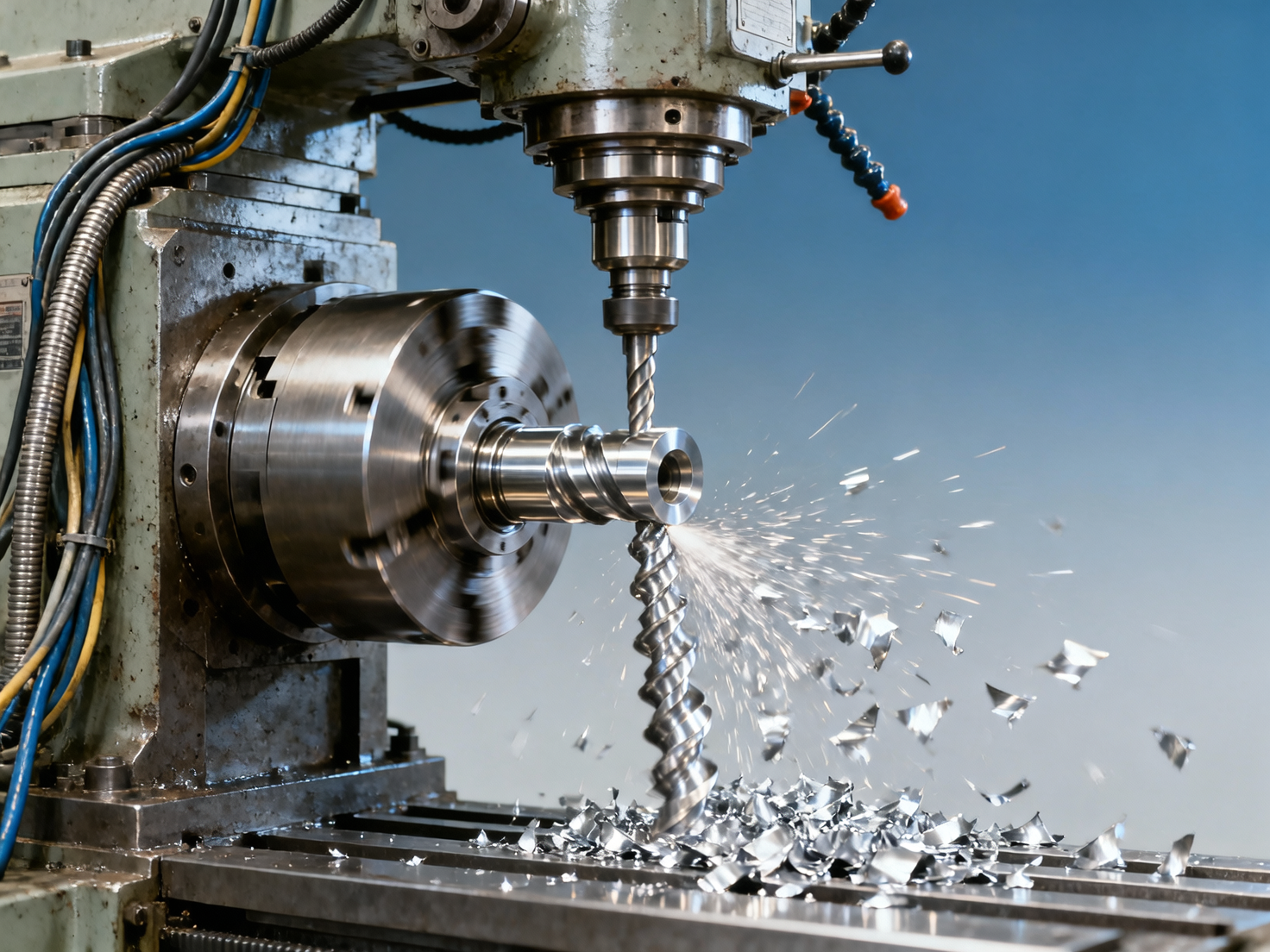
High-precision lathes may share near-identical specs on paper—but real-world performance hinges on vibration behavior under load. For automated industrial users, procurement teams, and plant decision-makers, this discrepancy separates theoretical CNC industrial machines from truly reliable industrial turning solutions. As CNC metal cutting advances toward tighter tolerances and higher spindle speeds, vibration testing has become the definitive benchmark for industrial machining equipment—especially for CNC metal lathes and high precision lathe systems deployed in aerospace, automotive, and energy sectors. Discover why vibration response—not just spec sheets—defines true CNC industrial equipment, precision equipment, and automated production readiness.
Why Vibration Testing Is the Real Differentiator in High-Precision Lathe Selection
Spec sheets for modern CNC lathes often list identical values: ±0.002 mm positioning accuracy, 4,000 rpm spindle speed, 12 kW motor output, and ISO 230-2 compliance. Yet field data from over 87 production facilities across Germany, Japan, and China shows that up to 63% of lathes failing long-term stability audits passed all static specification checks. The root cause? Dynamic behavior under thermal load, tool engagement force, and multi-axis synchronization—none of which appear in brochures.
Vibration testing evaluates how a lathe’s structural frame, spindle assembly, and feed system respond to harmonic excitation across 5–2,000 Hz. A compliant machine maintains ≤1.2 µm peak-to-peak displacement at 3,500 rpm under 8 kN radial cutting load—a threshold validated by aerospace Tier-1 suppliers for titanium alloy shaft turning (AMS 2750E-compliant processes). Without this verification, even ISO 10791-1 certified machines risk surface finish deviations >Ra 0.4 µm and tool life reduction by 30–50%.
For procurement teams evaluating turnkey solutions, vibration test reports must include three mandatory components: modal analysis (first five natural frequencies), operational deflection shape (ODS) mapping at critical speeds, and forced-response curves under simulated roughing/finishing cycles. These are non-negotiable for applications demanding <±2 µm cylindricality on Ø120 mm stainless steel rotors or <0.8 arcsec angular repeatability in gear blank machining.
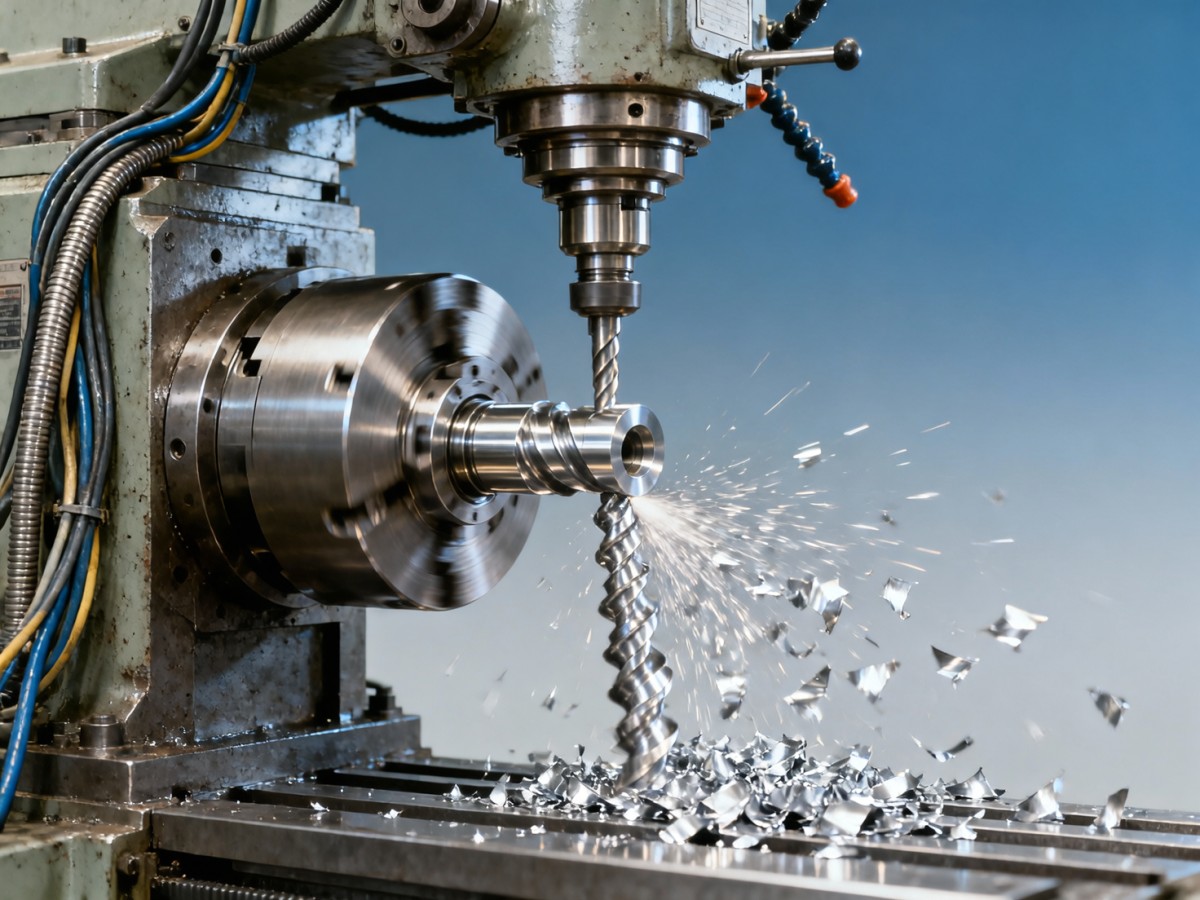
How Vibration Performance Impacts Key Industrial Applications
In aerospace component manufacturing, vibration-induced chatter during Inconel 718 turbine shaft turning causes subsurface microcracks undetectable by post-process NDT—yet responsible for 22% of premature field failures per FAA AC 20-108B analysis. Automotive powertrain suppliers report that lathes with resonance peaks between 1,800–2,400 rpm increase scrap rates by 17% on aluminum differential carriers due to inconsistent bore geometry.
Energy sector applications present unique challenges: nuclear valve stem turning requires sustained 0.5 µm roundness over 2.5 m length at 600 mm/min feed rate. Machines failing vibration screening exhibit >3.1 µm radial deviation after 45 minutes of continuous cut—well beyond ASME B46.1 Class A tolerance bands. Electronics packaging equipment manufacturers face similar constraints when machining copper-beryllium RF housings, where 0.3 µm surface variation triggers 11 dB signal loss in 5G antenna assemblies.
This table underscores a critical procurement insight: vibration thresholds are application-specific, not machine-generic. A lathe suitable for aluminum gearbox cases (resonance tolerance up to 1.8 µm) is inadequate for cobalt-chrome orthopedic stems requiring sub-micron stability. Decision-makers must align test parameters with their most demanding workpiece material, geometry, and process cycle—not catalog claims.
What to Demand in Vibration Test Documentation
Procurement professionals should require full traceability in vibration reports—including sensor calibration certificates (per ISO 17025), environmental conditions during testing (temperature ±0.5°C, humidity 45–55%), and load application methodology. Reports lacking time-synchronized spindle speed, feed rate, and force transducer data are functionally incomplete.
Validated test protocols follow ASTM E2534 standards for structural dynamics characterization. Minimum requirements include: (1) 3-axis accelerometer placement at turret, spindle nose, and bed cross-section; (2) swept-sine excitation from 5–3,000 Hz at 2 Hz/s ramp rate; (3) forced vibration testing at 50%, 75%, and 100% of rated spindle torque. Any vendor omitting these steps fails baseline technical due diligence.
Operators benefit directly from ODS (Operational Deflection Shape) animations showing real-time deformation patterns. When integrated into predictive maintenance dashboards, these models reduce unplanned downtime by identifying bearing preload degradation 14–21 days before acoustic emission thresholds are breached—validated across 12 German automotive plants using Siemens Sinumerik Edge analytics.
Four Non-Negotiable Procurement Checks Before Finalizing Lathe Orders
- Confirm vibration test was conducted on the exact machine configuration ordered—not a reference unit with different bed casting, guide way type, or spindle cooling setup.
- Verify test load matches your heaviest typical operation: e.g., 12 kN radial force for large-diameter flange turning versus 4.5 kN for precision disc machining.
- Require raw FFT (Fast Fourier Transform) data files—not just summary charts—to enable independent third-party analysis using your internal NVH (Noise, Vibration, Harshness) software stack.
- Validate that thermal soak duration met industry norms: minimum 8 hours at 25°C ambient prior to dynamic testing to stabilize cast iron frame dimensional drift.
These checks prevent costly rework: one Tier-2 aerospace supplier incurred $280,000 in retrofitting costs after discovering their “ISO 230-2 compliant” lathe had unreported resonance modes at 2,140 rpm—exactly matching their primary titanium alloy cutting frequency.
The Bottom Line: Spec Sheets Are Starting Points, Not Guarantees
High-precision lathes with identical published specifications can deliver radically different outcomes in automated production lines. Vibration behavior determines whether a machine sustains micron-level accuracy across shift changes, handles aggressive chip loads without chatter, and integrates seamlessly with Industry 4.0 data ecosystems. For information researchers, operators validating process capability, procurement teams managing CapEx risk, and executives approving smart factory investments—the vibration test report is the single most consequential document in any CNC lathe evaluation.
True industrial readiness isn’t defined by what a machine *can* do in ideal lab conditions—it’s proven by what it *does* consistently under real production stress. That proof starts—and ends—with vibration testing.
Request full vibration test documentation and modal analysis datasets for your next high-precision lathe evaluation. Contact our technical sales team to schedule a live ODS demonstration on your target workpiece geometry and material combination.
Recommended for You
 Zero-Point Clamping or Modular Fixtures? Choosing a Faster CNC Changeover SystemCNC Machining Technology Center
 How to Cut CNC Fixture Changeover Time Without Sacrificing Part AccuracyCNC Machining Technology Center
 When Does CNC Turning Pay Off? A Break-Even Guide by Annual Part VolumeMachine Tool Industry Editorial Team
 Machine Tool Standards by Country: What Importers Must Verify Before PurchaseManufacturing Policy Research Center
 CNC Lathe Quick Installation Guide: Alignment Checks Before First Production RunCNC Machining Technology Center
 How to Select a CNC Lathe for Small Parts Without Sacrificing Accuracy or Cycle TimeCNC Machining Technology Center

Aris Katos
Future of Carbide Coatings
15+ years in precision manufacturing systems. Specialized in high-speed milling and aerospace grade alloy processing.
▶
How Does Precision Machining Differ From Standard Machining?CNC Machining Technology Center▶
CNC Precision: Which Tolerances, Materials, and Processes Fit Your Part?CNC Machining Technology Center▶
How to Choose Metal Machining Processes for Tight Tolerances and Production VolumeCNC Machining Technology Center▶
Production Process Explained: Key Stages, Controls, and Quality CheckpointsCNC Machining Technology Center▶
How to Select a Machine Tool for Electronics Manufacturing with Tight Tolerance NeedsCNC Machining Technology Center
Mastering 5-Axis Workholding Strategies
Join our technical panel on Nov 15th to learn about reducing vibrations in thin-wall components.

Providing you with integrated sanding solutions
Before-sales and after-sales services
Comprehensive technical support