• Global CNC market projected to reach $128B by 2028 • New EU trade regulations for precision tooling components • Aerospace deman
NYSE: CNC +1.2%LME: STEEL -0.4%

The ‘standard’ machine tool for electronics manufacturing no longer exists — here’s why specs keep diverging
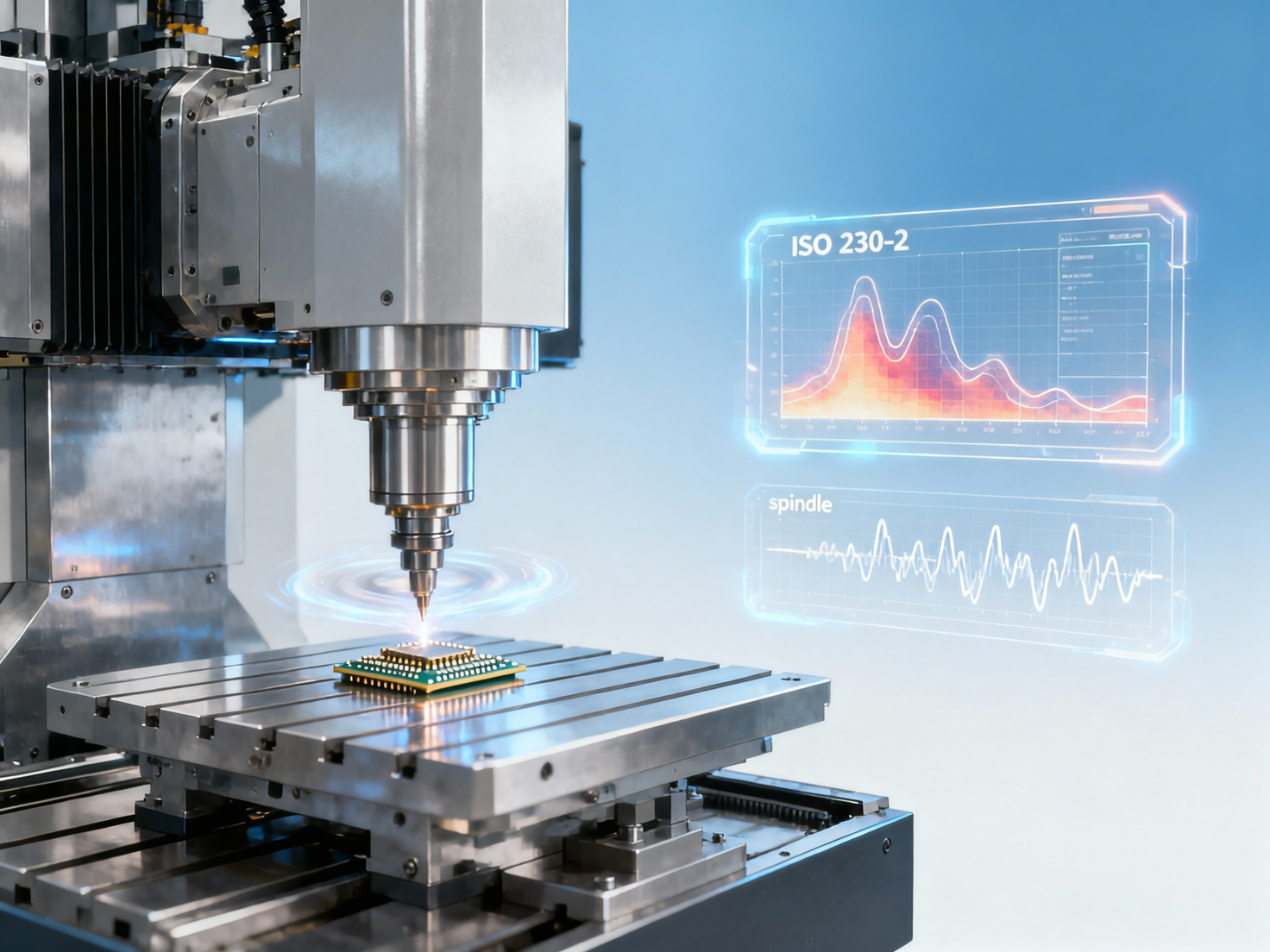
The ‘standard’ machine tool for electronics manufacturing no longer exists — and it’s not just electronics. From high precision machine tool demands in aerospace and automotive industries to heavy duty machine tool requirements in energy equipment, specs are rapidly diverging. As machine tool exporters and CNC machine tool manufacturers respond to sector-specific needs — multi-axis machine tool flexibility for micro-components, tight-tolerance capabilities for semiconductors, or scalable automation for smart factories — one-size-fits-all is obsolete. Whether you’re a procurement professional evaluating machine tool price, an operator selecting a machine tool for electronics manufacturing, or a decision-maker sourcing a trusted machine tool supplier, understanding this fragmentation is critical.
Why “Standard” CNC Machine Tools Are Disappearing Across Industries
The notion of a universal “standard” CNC machine tool has eroded—not due to technical regression, but because end-user requirements have intensified and diversified. Electronics manufacturing now demands sub-micron positional repeatability (±0.3μm), while aerospace structural part machining requires dynamic rigidity under 50kN cutting forces. Automotive powertrain production prioritizes cycle time consistency within ±0.8 seconds across 10,000-part batches. These aren’t edge cases—they’re baseline expectations in their respective sectors.
This divergence is driven by three converging forces: miniaturization (e.g., semiconductor packaging tools with ≤10nm feature resolution), functional integration (e.g., turning-milling-grinding hybrid systems for medical implants), and digital twin readiness (real-time spindle load feedback, thermal drift compensation, and OPC UA–compliant data export). A single machine architecture cannot simultaneously optimize for all three.
Global supply chain shifts further accelerate specialization. For example, Tier-1 electronics EMS providers in Vietnam now specify machines with IP54-rated enclosures and 12-month mean time between failures (MTBF) for 24/7 SMT line support—requirements rarely seen in German automotive OEMs, where ISO 230-2 geometric accuracy certification and laser interferometer–verified volumetric error mapping dominate procurement checklists.
How Key Sectors Drive Distinct CNC Machine Tool Specifications
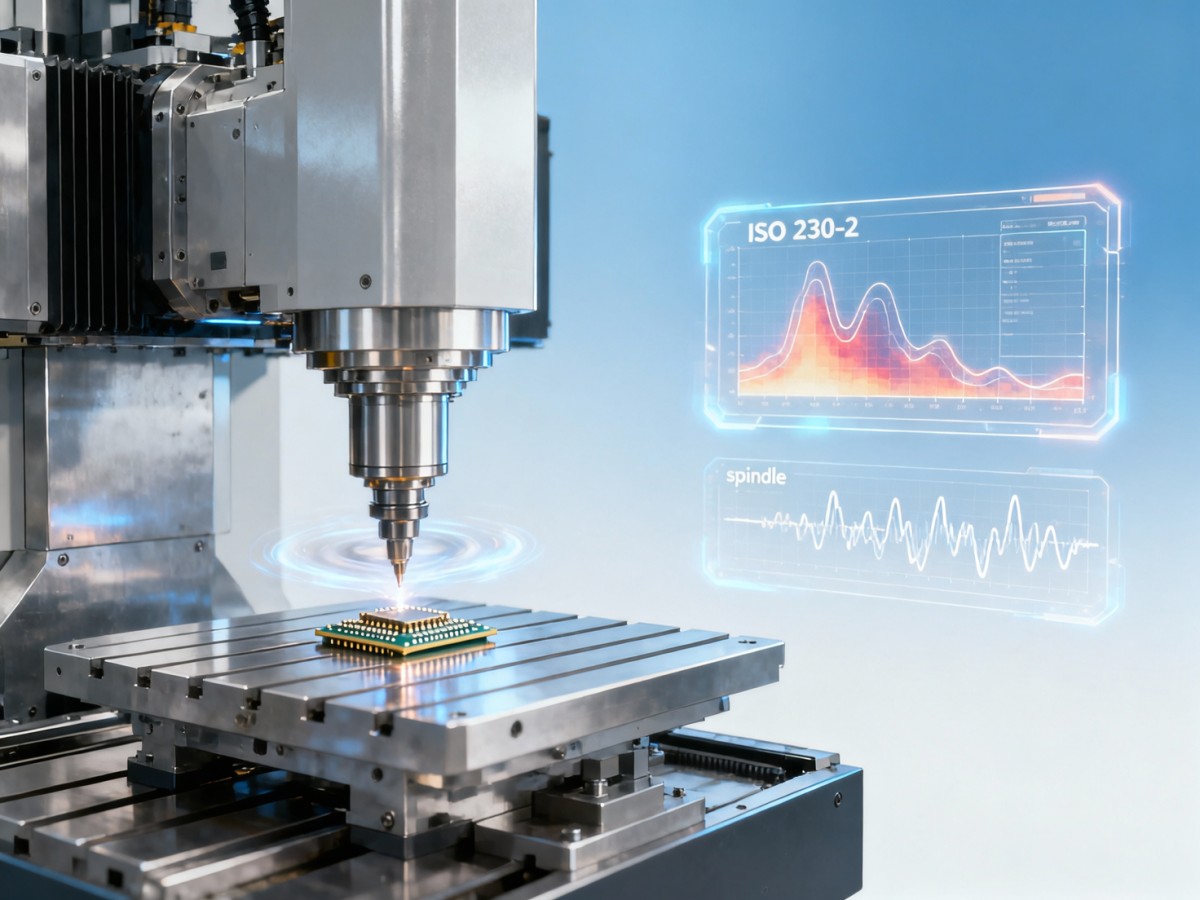
Electronics manufacturing isn’t the sole driver—but it’s the most visible inflection point. Its unique constraints expose how deeply application context reshapes machine design. Below is a comparison of core specification priorities across four major end-use industries:
This table illustrates why “CNC machine tool price” alone fails as a procurement metric. A high-speed micro-machining center priced at $420,000 may be non-viable for turbine housing work—even if technically capable—because its structural mass (≤3,200 kg) prevents stable 20mm depth-of-cut milling at 800 rpm. Conversely, a 15-ton gantry mill optimized for energy equipment would struggle to maintain 0.001mm roundness on a 0.8mm-diameter PCB drill shank. Specification alignment must precede budget evaluation.
What This Means for Procurement Professionals
- “Machine tool price” is only meaningful when anchored to defined process capability envelopes—not brochure specs.
- Request full ISO 230-2 test reports—not just “meets Class A”—with documented environmental conditions (temperature, humidity, vibration).
- Verify spindle thermal stability over ≥8-hour continuous operation, not just 30-minute lab tests.
- Confirm data interface compatibility: MTConnect v1.5+, OPC UA Part 100, or proprietary protocols—and whether native drivers exist for your MES/SCADA stack.
Selecting the Right Machine Tool: A 4-Step Evaluation Framework
For operators and decision-makers facing fragmented specifications, a structured evaluation prevents costly misalignment. Begin not with vendors, but with your process:
- Map Critical Dimensions & Tolerances: Identify every feature requiring ≤±2μm, ≥Rz 0.4 surface finish, or <0.005° angular deviation. Group by material family (e.g., Al6061-T6 vs. Inconel 718) and lot size (batch ≤50 vs. >5,000 units).
- Quantify Operational Constraints: Define required uptime (≥92% for Tier-1 electronics lines), coolant delivery pressure (≥6 bar for deep-hole drilling), and shop-floor ambient range (18℃–25℃ vs. 10℃–35℃).
- Validate Digital Integration Needs: Determine whether real-time tool wear prediction, adaptive feed control, or AI-based chatter detection are mandatory—not “nice-to-have.”
- Assess Service Readiness: Confirm local technical support response time (<4 hours for critical downtime), spare parts lead time (≤72 hours for spindle motors), and firmware update frequency (quarterly minimum).
This framework shifts focus from “which brand?” to “what capability must this machine deliver, consistently, in my environment?” It surfaces hidden cost drivers—like retrofitting coolant chillers for semiconductor-grade thermal stability—that often exceed base machine tool price by 18–25%.
Why Partner With a Global CNC Machine Tool Specialist?
We serve procurement teams, operators, and engineering leaders across China, Germany, Japan, and South Korea—not with catalogues, but with application-aligned solutions. Our engineers co-develop machine specifications with your process team, validate performance against your actual workpiece geometry and material batch variance, and embed factory acceptance testing (FAT) protocols aligned to ISO 230-2, VDI/VDE 2617, and SEMI E10 standards.
Whether you need to verify spindle thermal drift compensation for 300mm silicon wafer handling, assess multi-axis synchronization for micro-optical lens arrays, or define scalable automation interfaces for Industry 4.0 rollout—we provide parameter confirmation, custom configuration review, delivery timeline validation (standard: 14–18 weeks; expedited: 8–10 weeks), and pre-installation site survey support.
Contact us today to discuss your specific machine tool requirements—including tolerance bands, material challenges, throughput targets, and digital integration scope. We’ll help you move beyond “standard” to precisely specified, proven, and supported CNC solutions.
Recommended for You
 Zero-Point Clamping or Modular Fixtures? Choosing a Faster CNC Changeover SystemCNC Machining Technology Center
 How to Cut CNC Fixture Changeover Time Without Sacrificing Part AccuracyCNC Machining Technology Center
 When Does CNC Turning Pay Off? A Break-Even Guide by Annual Part VolumeMachine Tool Industry Editorial Team
 Machine Tool Standards by Country: What Importers Must Verify Before PurchaseManufacturing Policy Research Center
 CNC Lathe Quick Installation Guide: Alignment Checks Before First Production RunCNC Machining Technology Center
 How to Select a CNC Lathe for Small Parts Without Sacrificing Accuracy or Cycle TimeCNC Machining Technology Center

Aris Katos
Future of Carbide Coatings
15+ years in precision manufacturing systems. Specialized in high-speed milling and aerospace grade alloy processing.
▶
How Does Precision Machining Differ From Standard Machining?CNC Machining Technology Center▶
CNC Precision: Which Tolerances, Materials, and Processes Fit Your Part?CNC Machining Technology Center▶
How to Choose Metal Machining Processes for Tight Tolerances and Production VolumeCNC Machining Technology Center▶
Production Process Explained: Key Stages, Controls, and Quality CheckpointsCNC Machining Technology Center▶
How to Select a Machine Tool for Electronics Manufacturing with Tight Tolerance NeedsCNC Machining Technology Center
Mastering 5-Axis Workholding Strategies
Join our technical panel on Nov 15th to learn about reducing vibrations in thin-wall components.

Providing you with integrated sanding solutions
Before-sales and after-sales services
Comprehensive technical support