• Global CNC market projected to reach $128B by 2028 • New EU trade regulations for precision tooling components • Aerospace deman
NYSE: CNC +1.2%LME: STEEL -0.4%

High precision machining of thin-walled disc parts: Where material springback defies even sub-micron programs
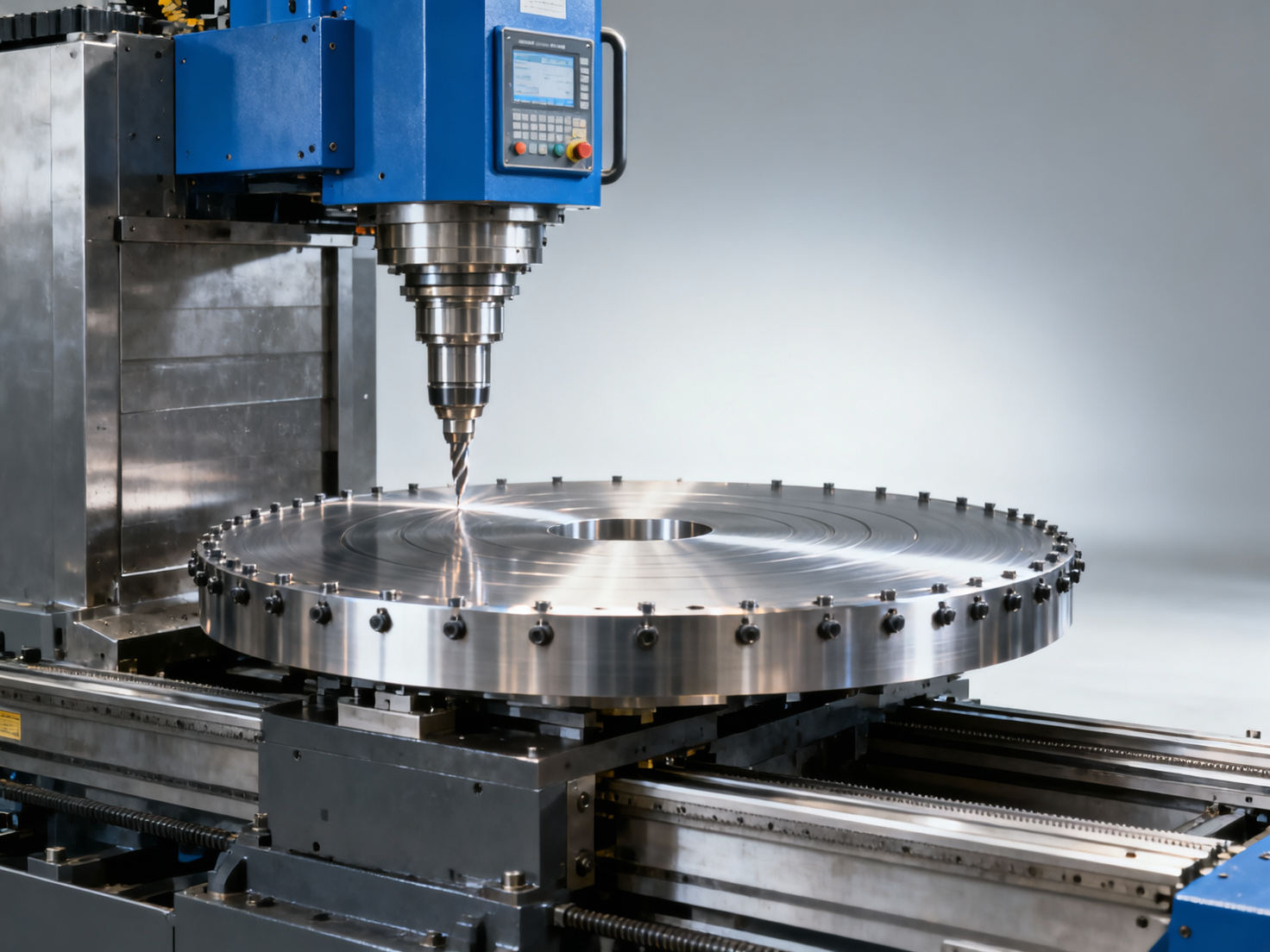
Achieving high precision machining of thin-walled disc parts remains one of the toughest challenges in modern CNC manufacturing—where material springback can sabotage even sub-micron programs. This demands more than just a precision lathe or slant bed lathe; it requires integrated expertise across multi-axis machining, intelligent tooling systems, and automated machine tools. From aerospace-grade disc parts to high-accuracy structural components, success hinges on synergy between precision turning, industrial cutting, and end-to-end automation lines. For operators, procurement teams, and decision-makers alike, mastering this frontier means bridging materials science, machine dynamics, and smart manufacturing—where every micron counts.
Why Thin-Walled Disc Machining Pushes CNC Systems to Their Limits
Thin-walled disc parts—common in turbine assemblies, satellite flywheels, and high-speed motor housings—typically feature wall thicknesses under 1.5 mm and diameter-to-thickness ratios exceeding 80:1. At these proportions, residual stress release during and after cutting induces elastic recovery (springback) of 8–25 µm—even when programmed toolpaths target ±0.3 µm positional accuracy.
Conventional CNC lathes struggle because thermal drift, spindle deflection, and fixture-induced clamping distortion compound with material memory effects. Multi-axis machining centers fare better only when equipped with real-time thermal compensation (per ISO 230-3), sub-arcsecond rotary table repeatability, and adaptive feed control synchronized to in-process strain monitoring.
This isn’t a software-only issue. It’s a system-level challenge requiring co-optimized hardware: high-stiffness hydrostatic guideways (≥ 250 N/µm), direct-drive spindles with ≤ 0.8 µm radial runout, and vacuum-assisted fixtures that distribute clamping force over ≥ 70% of the disc’s outer perimeter—reducing localized deformation by up to 40% versus mechanical collets.
Which CNC Platforms Deliver Reliable Sub-Micron Stability?
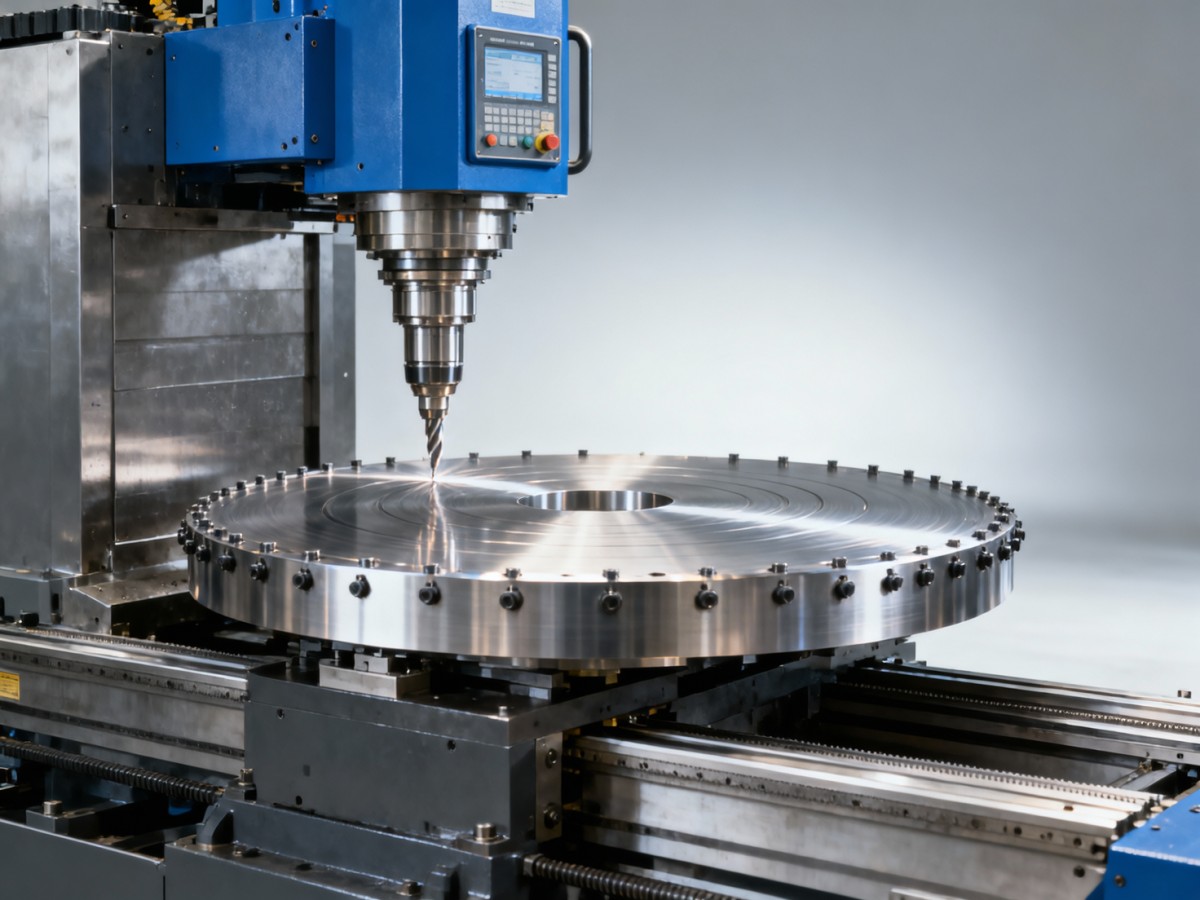
Not all “high-precision” machines meet the dynamic rigidity and thermal management thresholds required for repeatable thin-disc machining. The table below compares three platform categories against six measurable performance criteria critical for production-grade stability.
The hybrid platform achieves best-in-class results—but only when paired with in-process metrology (e.g., laser triangulation probes sampling at 2 kHz) and closed-loop compensation executed within ≤ 12 ms latency. For aerospace Tier-1 suppliers, this configuration enables Cpk ≥ 1.67 across 500-part batches—meeting AS9100 Rev D requirements for critical rotating components.
Procurement Checklist: 5 Non-Negotiable Evaluation Criteria
When evaluating CNC systems for thin-walled disc work, procurement teams must move beyond catalog specs and validate performance under actual conditions. These five checkpoints separate viable solutions from theoretical promises:
- Verified thermal stability report per ISO 230-3, measured over ≥ 8 hours at 20°C ± 1°C ambient (not lab-conditioned).
- Fixture interface compatibility with vacuum chucks rated for ≥ 80 kPa suction and ≤ 0.02 mm surface flatness deviation over full contact area.
- Open CNC architecture supporting third-party adaptive control plugins (e.g., Siemens SINUMERIK Integrate or Fanuc FOCAS API integration).
- Documentation of ≥ 3 verified customer cases machining discs with wall thickness ≤ 1.2 mm and aspect ratio ≥ 100:1.
- On-site validation protocol including 3-part test run with post-machining CMM verification (ZEISS CONTURA or equivalent) reporting full GD&T compliance.
How Smart Toolpath Strategies Reduce Springback Impact
Hardware alone is insufficient. Operators and programming engineers must adopt process strategies proven to suppress springback-driven error propagation. Three techniques deliver measurable gains:
- Staged Finishing Passes: Split final cut into 3–5 shallow passes (depth of cut ≤ 0.02 mm), allowing gradual stress redistribution instead of abrupt release. Reduces post-machining warpage by 35–50% versus single-pass finishing.
- Asymmetric Tool Engagement: Use variable-pitch end mills or indexable inserts with non-uniform lead angles to break harmonic vibration patterns—critical for maintaining surface integrity on aluminum 7075-T6 and Inconel 718 discs.
- Directional Compensation Mapping: Build a part-specific offset map using pre-machined reference geometry and iterative CMM feedback, then apply vector-based corrections per 5° angular sector around the disc circumference.
These methods require CNC controllers capable of macro-variable interpolation and real-time G-code modification—features available natively in Mitsubishi M800/M80 Series, Heidenhain TNC 640, and latest-generation Siemens Sinumerik ONE platforms.
Why Partner With a Global CNC Solutions Provider?
Selecting a machine is only step one. Success depends on integrated support: application engineering aligned with your specific alloy, geometry, and volume; certified training for operators on adaptive machining protocols; and service response windows under 48 hours for critical axis recalibration.
We provide turnkey validation for thin-walled disc programs—including fixture design review, toolpath simulation with material model integration (using DEFORM or MSC Marc), and first-article CMM certification traceable to NIST standards. Our global service network covers 32 countries, with local technical teams fluent in ISO 2768, ASME Y14.5, and JIS B 0401 tolerancing practices.
Contact us to request: (1) a free thin-disc feasibility assessment with your CAD model and material spec, (2) comparative analysis of 2–3 validated machine configurations, or (3) access to our library of 17 industry-tested springback mitigation toolpaths—with parameter sets pre-tuned for Ti-6Al-4V, stainless 17-4PH, and carbon fiber composites.
- CNC Lathe
- Precision Machining
- Machine Tool
- Fixtures
- Multi-axis Machining
- Automation Line
- Smart Manufacturing
- Disc Parts
- Machining Center
- Tooling System
- Fixture Design
- CNC turning
- precision lathe
- slant bed lathe
- high precision machining
- CNC manufacturing
- precision turning
- machine tools
- automated machine tools
- industrial cutting
Recommended for You
 Zero-Point Clamping or Modular Fixtures? Choosing a Faster CNC Changeover SystemCNC Machining Technology Center
 How to Cut CNC Fixture Changeover Time Without Sacrificing Part AccuracyCNC Machining Technology Center
 When Does CNC Turning Pay Off? A Break-Even Guide by Annual Part VolumeMachine Tool Industry Editorial Team
 Machine Tool Standards by Country: What Importers Must Verify Before PurchaseManufacturing Policy Research Center
 CNC Lathe Quick Installation Guide: Alignment Checks Before First Production RunCNC Machining Technology Center
 How to Select a CNC Lathe for Small Parts Without Sacrificing Accuracy or Cycle TimeCNC Machining Technology Center

Aris Katos
Future of Carbide Coatings
15+ years in precision manufacturing systems. Specialized in high-speed milling and aerospace grade alloy processing.
▶
How Does Precision Machining Differ From Standard Machining?CNC Machining Technology Center▶
CNC Precision: Which Tolerances, Materials, and Processes Fit Your Part?CNC Machining Technology Center▶
How to Choose Metal Machining Processes for Tight Tolerances and Production VolumeCNC Machining Technology Center▶
Production Process Explained: Key Stages, Controls, and Quality CheckpointsCNC Machining Technology Center▶
How to Select a Machine Tool for Electronics Manufacturing with Tight Tolerance NeedsCNC Machining Technology Center
Mastering 5-Axis Workholding Strategies
Join our technical panel on Nov 15th to learn about reducing vibrations in thin-wall components.

Providing you with integrated sanding solutions
Before-sales and after-sales services
Comprehensive technical support