• Global CNC market projected to reach $128B by 2028 • New EU trade regulations for precision tooling components • Aerospace deman
NYSE: CNC +1.2%LME: STEEL -0.4%

How to Choose a CNC Machine Tool Manufacturer in 2026
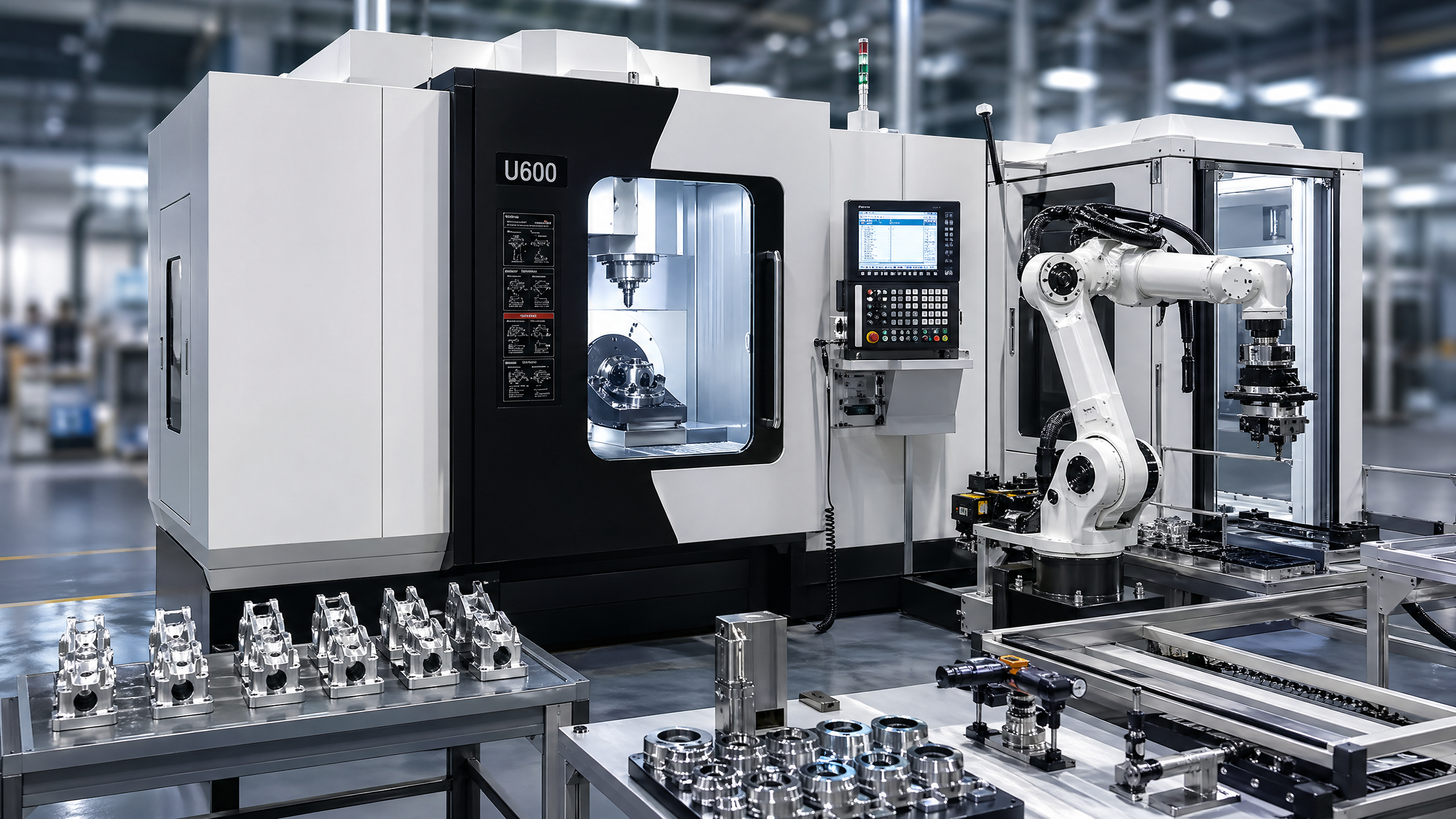
Choosing the right CNC machine tool manufacturer in 2026 is less about finding the lowest quote and more about reducing production risk over the full equipment lifecycle. For most buyers, operators, and business evaluators, the best manufacturer is the one that can consistently deliver machining accuracy, process stability, automation readiness, service responsiveness, and a realistic total cost of ownership. If a supplier looks strong on paper but cannot support your materials, tolerances, production volume, software integration, or after-sales needs, it is not the right fit. This guide explains how to compare a CNC manufacturing supplier with confidence and how to avoid costly mistakes when evaluating machine tool partners for modern manufacturing.
What matters most when choosing a CNC machine tool manufacturer in 2026?
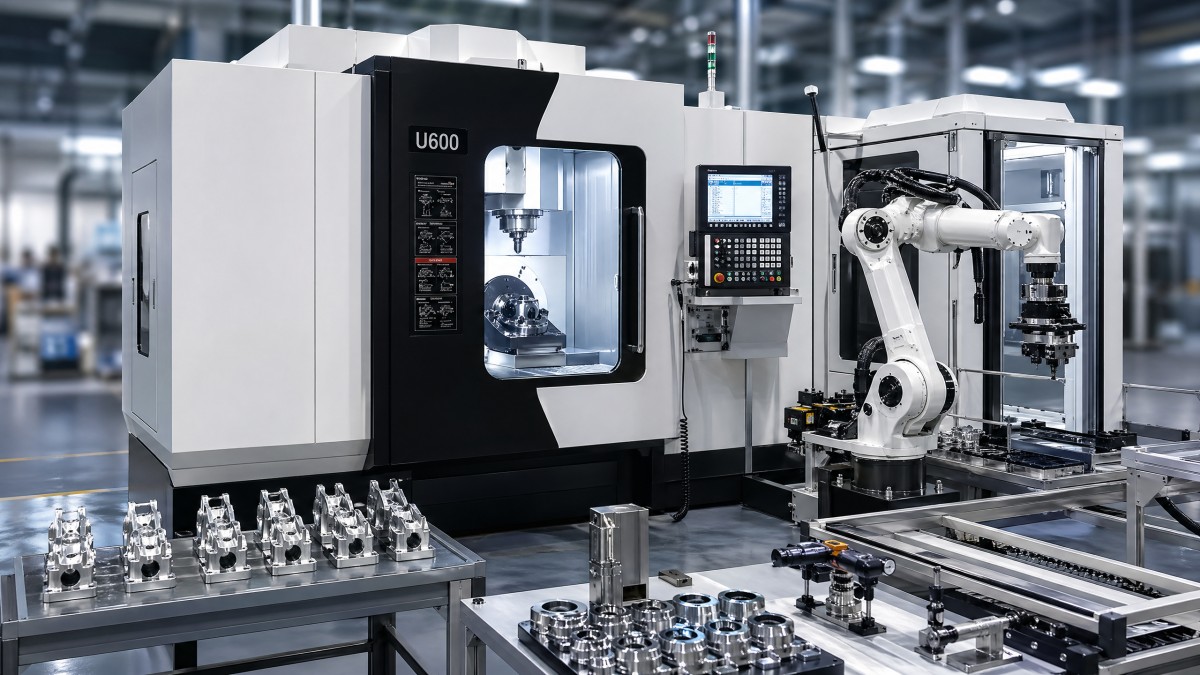
The core search intent behind this topic is practical decision-making. Readers are not just looking for a list of manufacturers. They want to know how to judge which CNC machine tool manufacturer is reliable, future-ready, and suitable for their production goals. In 2026, that means evaluating more than machine specifications alone.
The most important questions usually are:
- Can this manufacturer deliver the precision and repeatability our parts require?
- Does the machine support automation, digital monitoring, and smart factory integration?
- Is the price reasonable when service, tooling, downtime, and maintenance are included?
- Can the supplier provide application support for our industry, materials, and production process?
- Will spare parts, training, and technical support still be available years after installation?
For procurement teams, the decision often comes down to balancing capability, delivery risk, and long-term operating cost. For machine users and operators, ease of use, control system familiarity, maintenance access, and process stability may matter just as much as spindle speed or axis count. For business evaluators, the manufacturer’s scalability, export experience, and financial credibility are also important.
Start with your own production requirements, not the supplier brochure
Before comparing manufacturers, define what your factory actually needs. Many poor purchasing decisions happen because buyers start with brand reputation or price instead of application requirements.
Create a simple evaluation baseline that includes:
- Part type: shafts, discs, housings, structural parts, molds, medical components, or complex aerospace parts
- Materials: aluminum, stainless steel, titanium, hardened steel, copper alloys, composites
- Tolerance and surface finish: required accuracy, consistency, and inspection standards
- Production volume: prototype, small batch, medium batch, or mass production
- Machine type needed: CNC lathe, vertical machining center, horizontal machining center, turn-mill center, or multi-axis machine tool
- Automation goals: manual loading, robotic loading, pallet systems, flexible production lines
- Factory integration: MES, ERP, remote diagnostics, data collection, and predictive maintenance
Once these needs are clear, it becomes much easier to judge whether a CNC manufacturing factory is genuinely qualified or simply offering a general-purpose solution.
How to evaluate machine quality and machining capability
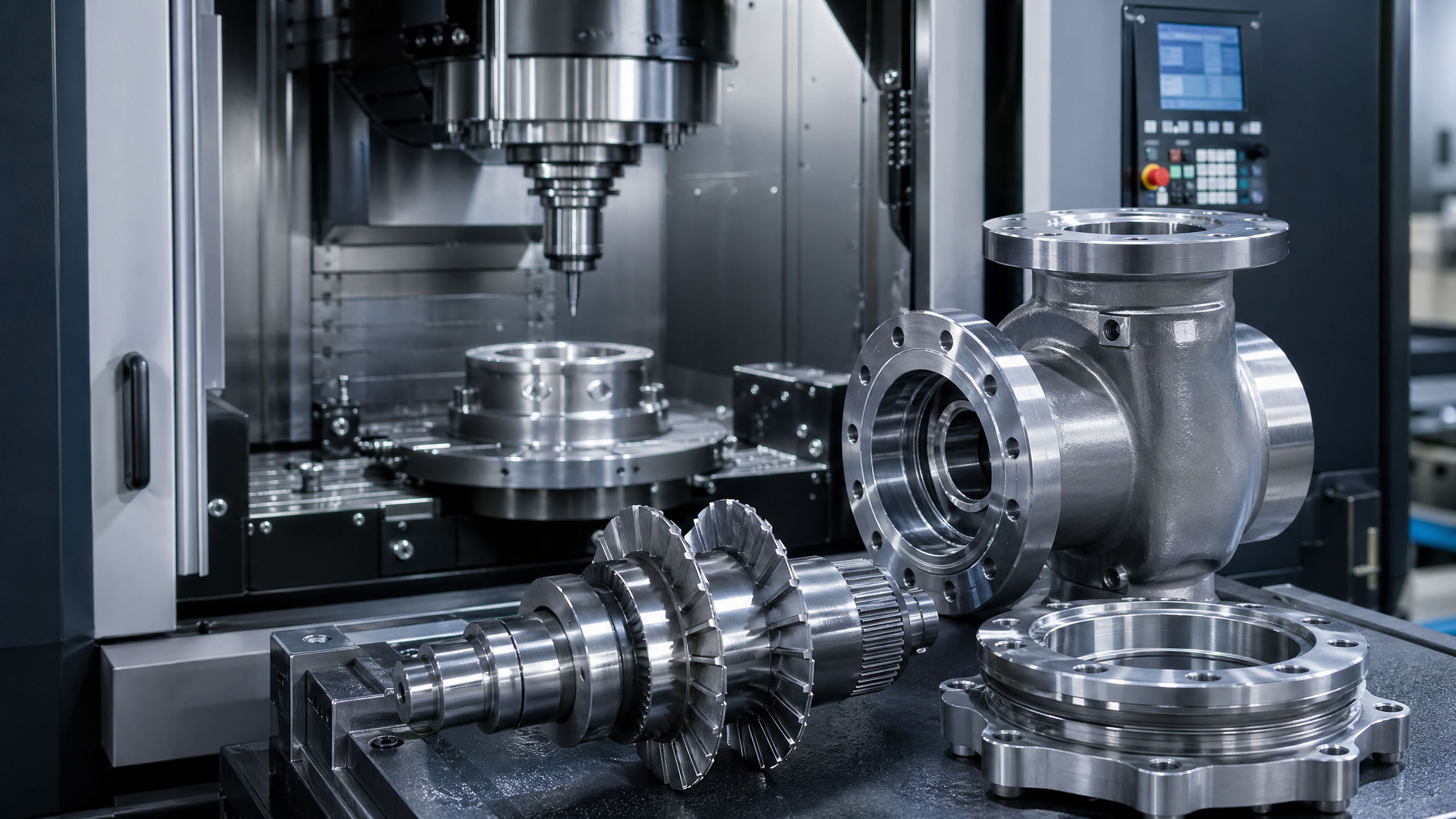
Machine quality should be tested through evidence, not marketing language. A strong CNC machine tool manufacturer should be able to explain how its machines achieve stability, accuracy, and repeatability under real production conditions.
Look closely at the following areas:
- Structural rigidity: bed design, casting quality, vibration resistance, and thermal stability
- Core components: spindle, guideways, ball screws, servo systems, bearings, and controller brand
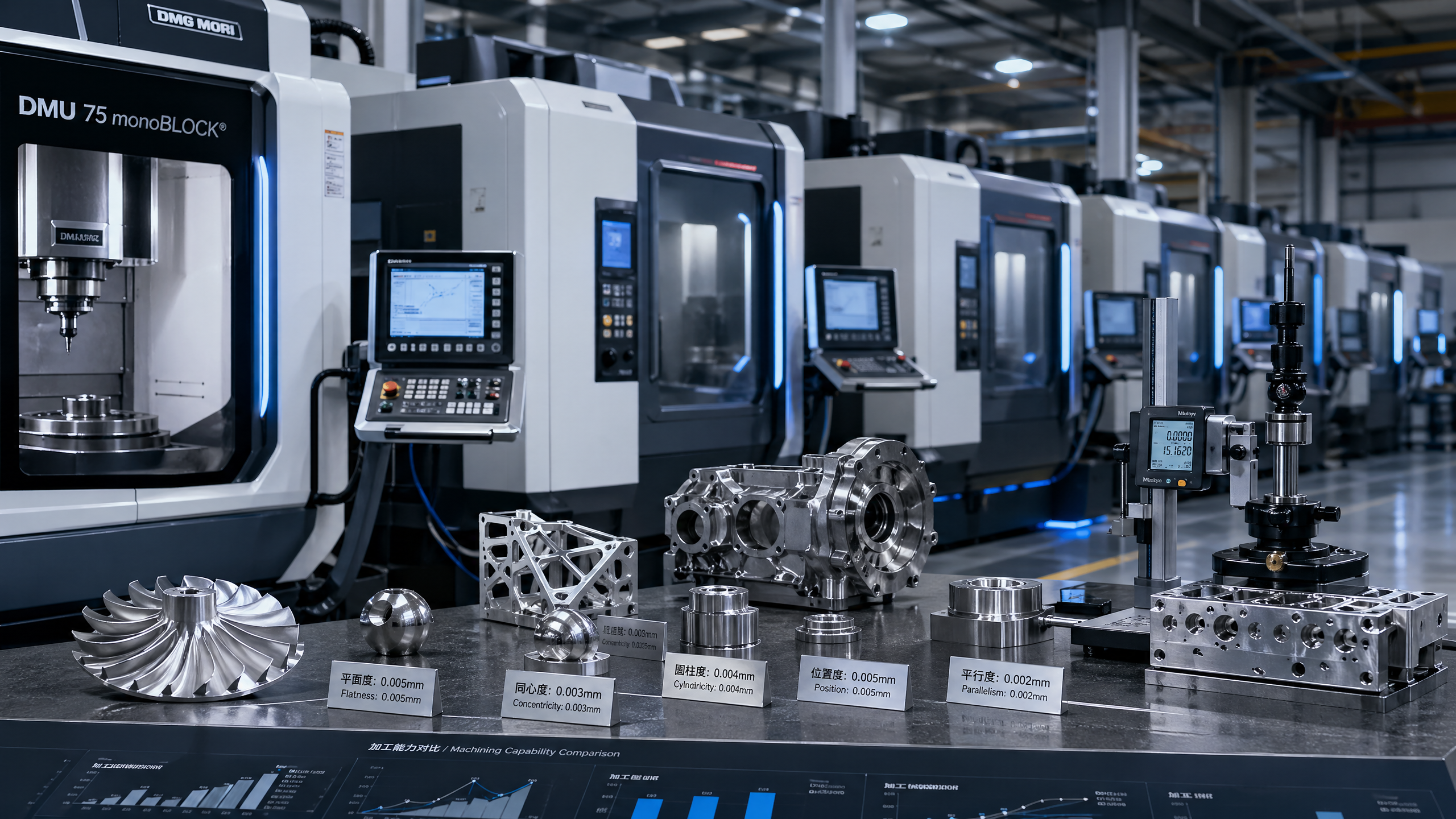
- Accuracy standards: positioning accuracy, repeatability, and compensation systems
- Multi-axis performance: interpolation precision, simultaneous machining capability, and control stability
- Cutting performance: material removal rate, chip control, and cycle time consistency
If possible, ask the manufacturer to provide sample part reports, machine test protocols, and customer case studies from similar industries. For high precision CNC manufacturing, machine demonstrations using your own part drawings or materials can be much more valuable than generic showroom tests.
Manufacturers serving aerospace, automotive, medical devices, and energy equipment should also understand sector-specific quality expectations. For example, a supplier with experience in titanium machining or precision sealing surfaces may be far more useful than one with only general metal cutting experience.
Why automation and digital integration are now key selection criteria
In 2026, many buyers are not just purchasing a standalone machine. They are investing in a production node that must fit into a broader automated or semi-automated workflow. That is why smart manufacturing capability has become a major evaluation factor.
Ask whether the manufacturer can support:
- Automatic tool changers and tool life monitoring
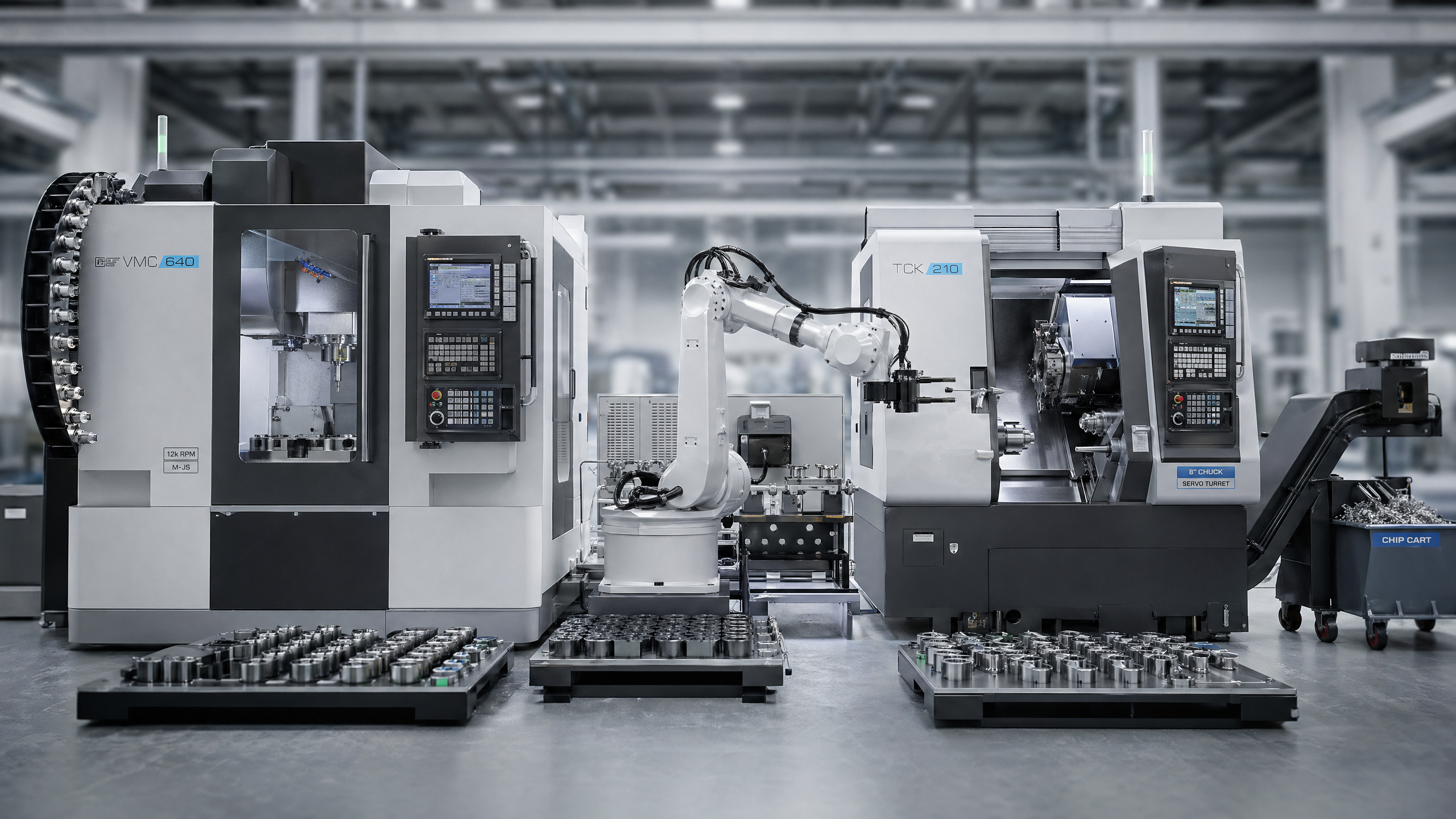
- Robotic loading and unloading systems
- Pallet changers and flexible machining cells
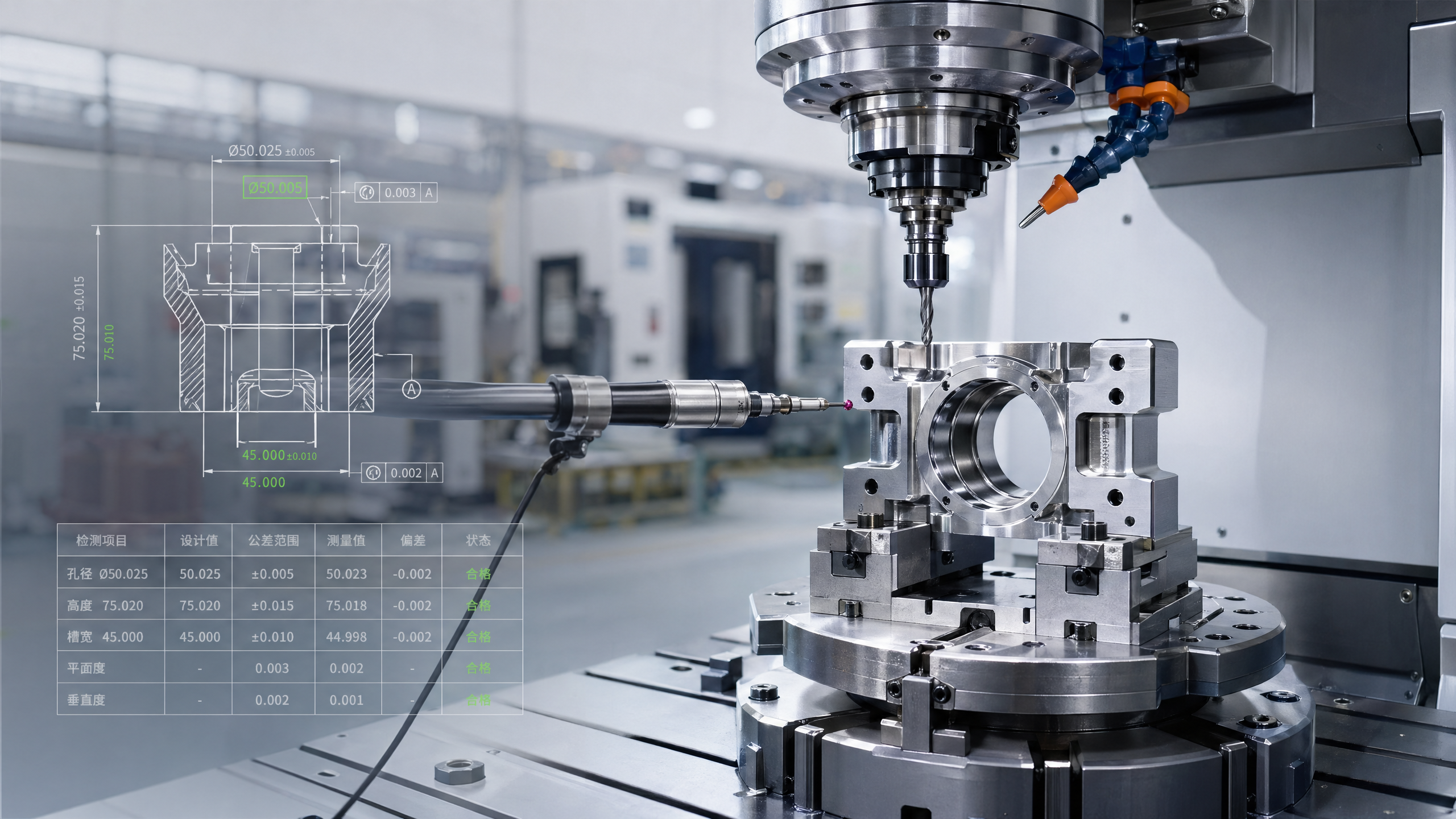
- In-process probing and automatic measurement
- Remote diagnostics and condition monitoring
- Data connectivity with MES, ERP, or factory dashboards
A manufacturer offering advanced machine tools but weak integration support may create hidden implementation problems later. On the other hand, a CNC manufacturing supplier with practical automation experience can help improve labor efficiency, reduce setup errors, and increase machine utilization.
This is especially important for factories facing labor shortages, rising wage costs, or the need to run mixed-model production. Flexible automation is no longer a premium feature only for large corporations. It is increasingly becoming a competitive necessity.
Do not compare price alone—compare total cost of ownership
One of the biggest mistakes in machine tool sourcing is treating purchase price as the main decision factor. A lower-cost machine may end up being more expensive if it causes downtime, unstable part quality, slow cycle times, or expensive maintenance.
When comparing quotations, include:
- Base machine price
- Tooling, fixtures, and optional accessories
- Shipping, installation, and commissioning costs
- Operator training and programming support
- Software licenses and control upgrades
- Spare parts pricing and lead times
- Expected maintenance frequency
- Energy consumption and energy-saving machine tool features
- Estimated productivity and scrap rate impact
Energy efficiency deserves more attention in 2026 than in previous years. Energy-saving machine tool technologies such as optimized servo systems, standby power management, and efficient cooling designs can lower operating costs over time, especially in larger production environments.
A practical way to compare suppliers is to calculate cost per qualified part over three to five years, rather than judging by acquisition price alone.
How to assess the manufacturer’s service, support, and global reliability
Even a high-quality machine can become a problem if service support is slow or inconsistent. For many buyers, after-sales support is the real test of a CNC machine tool manufacturer.
Evaluate support in these areas:
- Installation capability: Can the supplier handle commissioning efficiently?
- Training: Are operators, programmers, and maintenance staff trained properly?
- Technical response time: How quickly can service engineers respond?
- Spare parts network: Are critical parts stocked locally or regionally?
- Remote support: Is online troubleshooting available?
- Documentation: Are manuals, maintenance schedules, and software records complete?
If the manufacturer serves international markets, check export experience, certification compliance, language support, and local partner networks. A globally active CNC manufacturing factory may be better prepared to support multinational operations, but only if its service system is well organized.
Reference checks are highly valuable here. Speak with existing customers in similar industries if possible. Ask about uptime, service speed, machine stability, and whether the supplier delivered what was promised.
Questions buyers should ask before shortlisting a CNC manufacturing supplier
To move from general research to real supplier comparison, use a structured question list. This helps procurement, engineering, and operations teams evaluate suppliers on the same basis.
Useful questions include:
- Which industries and applications does this manufacturer specialize in?
- What machine configurations are most suitable for our part family?
- Can the supplier provide process recommendations, not just machine sales?
- What are the machine’s accuracy retention and maintenance requirements over time?
- Which control systems and software platforms are supported?
- Can the machine be upgraded later for automation or additional functions?
- What is the standard lead time, and how reliable is delivery performance?
- What warranty terms are included, and what is excluded?
- Can the supplier share customer references or successful installations similar to ours?
These questions often reveal major differences between manufacturers that may not be obvious from catalogs or websites.
Red flags that suggest a manufacturer may not be the right partner
Some warning signs appear early if you know what to look for. Be cautious if a supplier:
- Cannot clearly explain machine performance under your operating conditions
- Provides vague answers about core component brands or sourcing
- Has no relevant case studies in your industry
- Offers an unusually low price without explaining trade-offs
- Lacks local or regional service capacity
- Cannot provide test data, inspection reports, or acceptance standards
- Pushes a standard machine where your application clearly requires customization
Another red flag is overselling “smart manufacturing” without concrete integration examples. Digital features are valuable only when they improve visibility, uptime, process control, or automation compatibility.
Which type of CNC machine tool manufacturer is best for your business?
There is no single best manufacturer for everyone. The right choice depends on your production strategy.
- High-mix, low-volume manufacturers may benefit from flexible, easy-to-program machines with quick changeover support.
- Mass production plants often need highly stable machines with strong automation integration and low cost per part.
- Precision-focused industries such as aerospace or medical may prioritize accuracy retention, process validation, and advanced multi-axis machine tool solutions.
- Cost-sensitive buyers may seek the best balance of quality and affordability, but should still verify support capability and component quality.
In many cases, the ideal CNC manufacturing supplier is not the largest brand or the cheapest source. It is the manufacturer whose machine platform, service model, and technical support best match your production reality.
Conclusion: choose the manufacturer that lowers long-term risk
To choose a CNC machine tool manufacturer in 2026, focus on the factors that truly affect performance after installation: machining accuracy, process stability, automation readiness, service support, digital integration, and total lifecycle cost. A good supplier should not only sell equipment, but also help you produce parts efficiently, maintain quality consistently, and adapt to future manufacturing demands.
For buyers, operators, and business evaluators, the strongest decision framework is simple: define your production needs clearly, compare suppliers using technical and operational evidence, and prioritize long-term reliability over short-term price appeal. When a manufacturer can prove both machine capability and support capability, you are far more likely to make a sound investment.
NEXT ARTICLE
Recommended for You
 How to Choose a Space-Saving CNC Manufacturing SetupCNC Machining Technology Center
![]() What to Check Before Using a CNC Manufacturing WholesalerGlobal Machine Tool Trade Research Center
What to Check Before Using a CNC Manufacturing WholesalerGlobal Machine Tool Trade Research Center Why Precision CNC Manufacturing Fails Tolerance GoalsCNC Machining Technology Center
 Is CNC Manufacturing for Energy Equipment Worth the CostManufacturing Market Research Center
![]() How Low Maintenance CNC Manufacturing Cuts DowntimeMachine Tool Industry Editorial Team
How Low Maintenance CNC Manufacturing Cuts DowntimeMachine Tool Industry Editorial Team How to Compare One CNC Manufacturing Factory to AnotherManufacturing Market Research Center


Aris Katos
Future of Carbide Coatings
15+ years in precision manufacturing systems. Specialized in high-speed milling and aerospace grade alloy processing.
▶
What to Check Before Using a CNC Manufacturing WholesalerGlobal Machine Tool Trade Research Center▶
What Medical Buyers Need in CNC Manufacturing TodayGlobal Machine Tool Trade Research Center▶
How to Find a Machine Tool Distributor You Can TrustGlobal Machine Tool Trade Research Center▶
How to Choose a CNC Machine Tool Manufacturer in 2026Global Machine Tool Trade Research Center▶
Dongfang Select Core Hosts Exit Amid Stricter Live-Streaming RegulationsGlobal Machine Tool Trade Research Center
Mastering 5-Axis Workholding Strategies
Join our technical panel on Nov 15th to learn about reducing vibrations in thin-wall components.

Providing you with integrated sanding solutions
Before-sales and after-sales services
Comprehensive technical support