• Global CNC market projected to reach $128B by 2028 • New EU trade regulations for precision tooling components • Aerospace deman
NYSE: CNC +1.2%LME: STEEL -0.4%

How to Compare One CNC Manufacturing Factory to Another
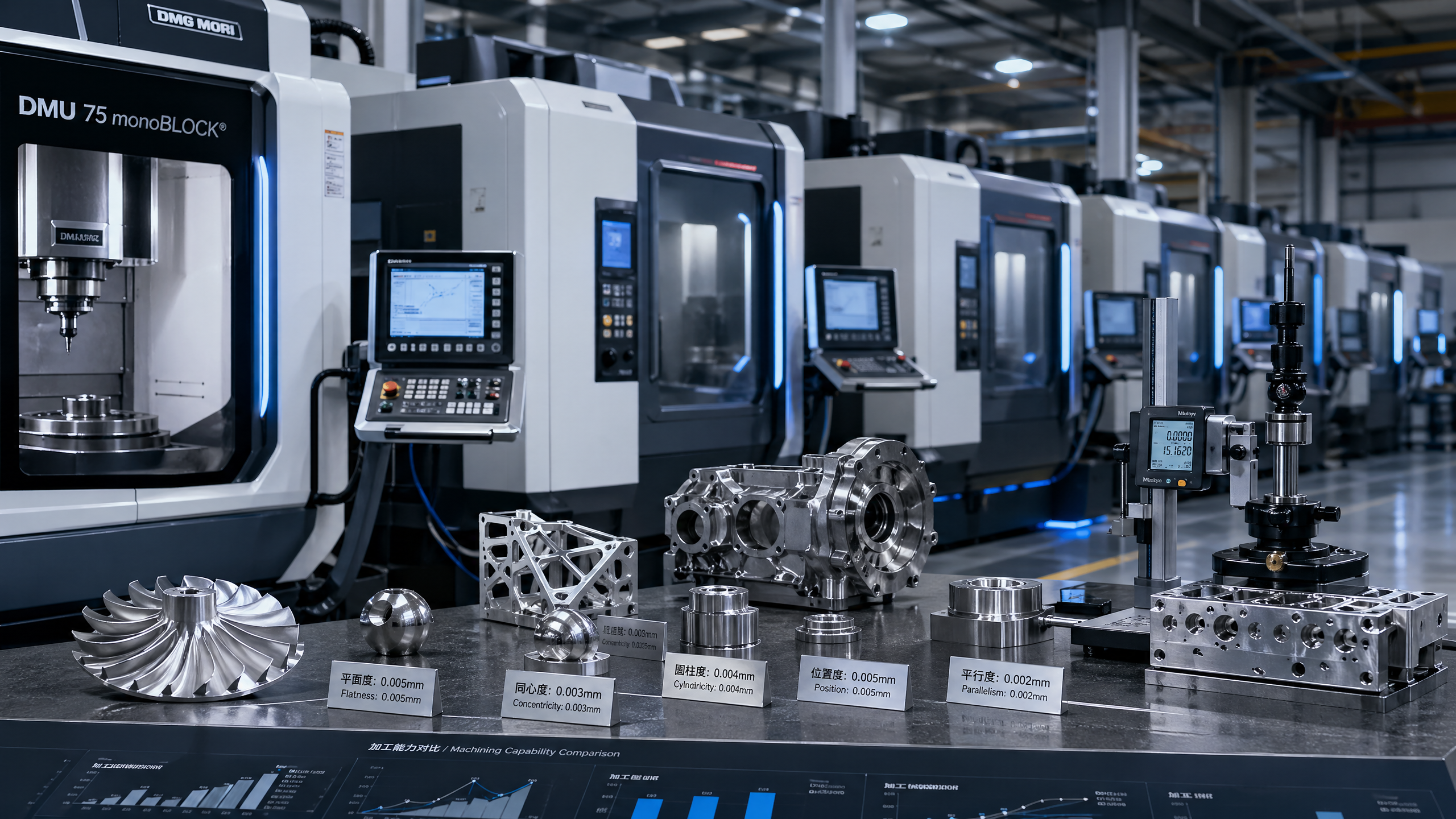
Choosing between one CNC manufacturing factory and another is not just about who offers the lowest quote. The best supplier is the one that can consistently meet your tolerance requirements, handle your part complexity, protect delivery schedules, and support your business as volumes or technical requirements change. For buyers, operators, and evaluation teams, the smartest comparison method is to assess capability, process control, responsiveness, and total production risk together—not machine price alone.
What should you compare first when evaluating a CNC manufacturing factory?
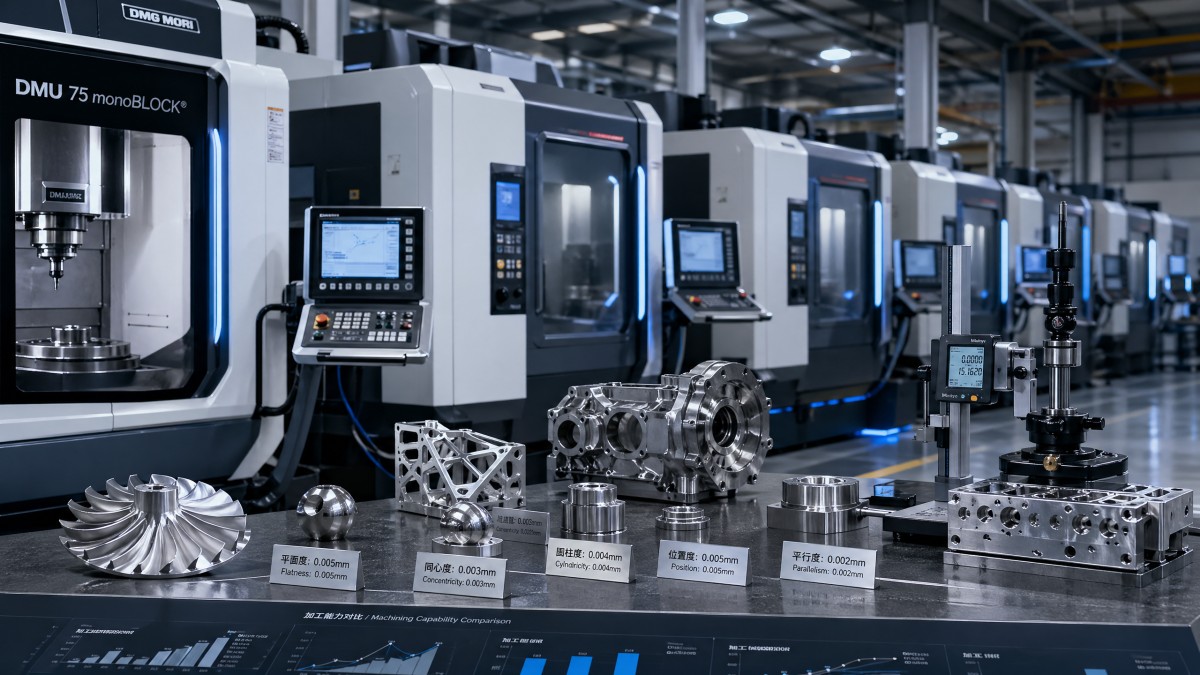
Start with the factors that directly affect whether the factory can actually produce your parts correctly and repeatedly. A practical comparison should begin with these five questions:
- Can the factory make your part type? A shop that is strong in simple turned parts may not be the right fit for complex multi-axis CNC manufacturing or thin-wall precision components.
- Can it hold the required tolerances consistently? High precision CNC manufacturing depends on machine condition, process control, tooling strategy, inspection systems, and operator skill.
- Can it meet your volume and lead time needs? Some factories are optimized for prototypes and small batches, while others perform better in repeat production or automated high-volume runs.
- Does it understand your industry requirements? Aerospace, electronics, energy equipment, and automotive applications often demand different materials, traceability, documentation, and quality standards.
- How much supply risk are you taking on? Delivery reliability, communication quality, engineering support, and problem-solving speed matter just as much as machining capability.
If you compare factories in this order, you can quickly eliminate suppliers that look competitive on paper but are risky in real production.
Can the factory handle your part complexity and technical requirements?
This is often the most important technical filter. A CNC manufacturing supplier may have impressive equipment lists, but that does not automatically mean it is suitable for your parts.
Look at the match between your components and the supplier’s actual production strengths:
- Part geometry: shafts, discs, housings, structural parts, thin-wall parts, deep cavities, or freeform surfaces
- Machining process: turning, milling, drilling, tapping, grinding, EDM, or hybrid processes
- Axis capability: 3-axis, 4-axis, 5-axis, turn-mill, or full multi-axis CNC manufacturing
- Material experience: aluminum, stainless steel, titanium, Inconel, tool steel, copper, engineering plastics, or composites
- Surface and finishing needs: anodizing, passivation, plating, polishing, deburring, heat treatment, coating, or assembly
A good CNC manufacturing manufacturer should be able to explain how it will machine your part, what critical dimensions need special control, what fixtures or tooling will be required, and where process risks may appear. If a supplier cannot discuss these points clearly, it may be relying on quotation speed rather than engineering depth.
How do you judge high precision CNC manufacturing capability?
Precision claims are easy to make and harder to verify. To compare one factory to another, ask for evidence rather than general promises.
Key evaluation points include:
- Tolerance history: Ask what tolerances the factory regularly holds in mass production, not only under ideal sample conditions.
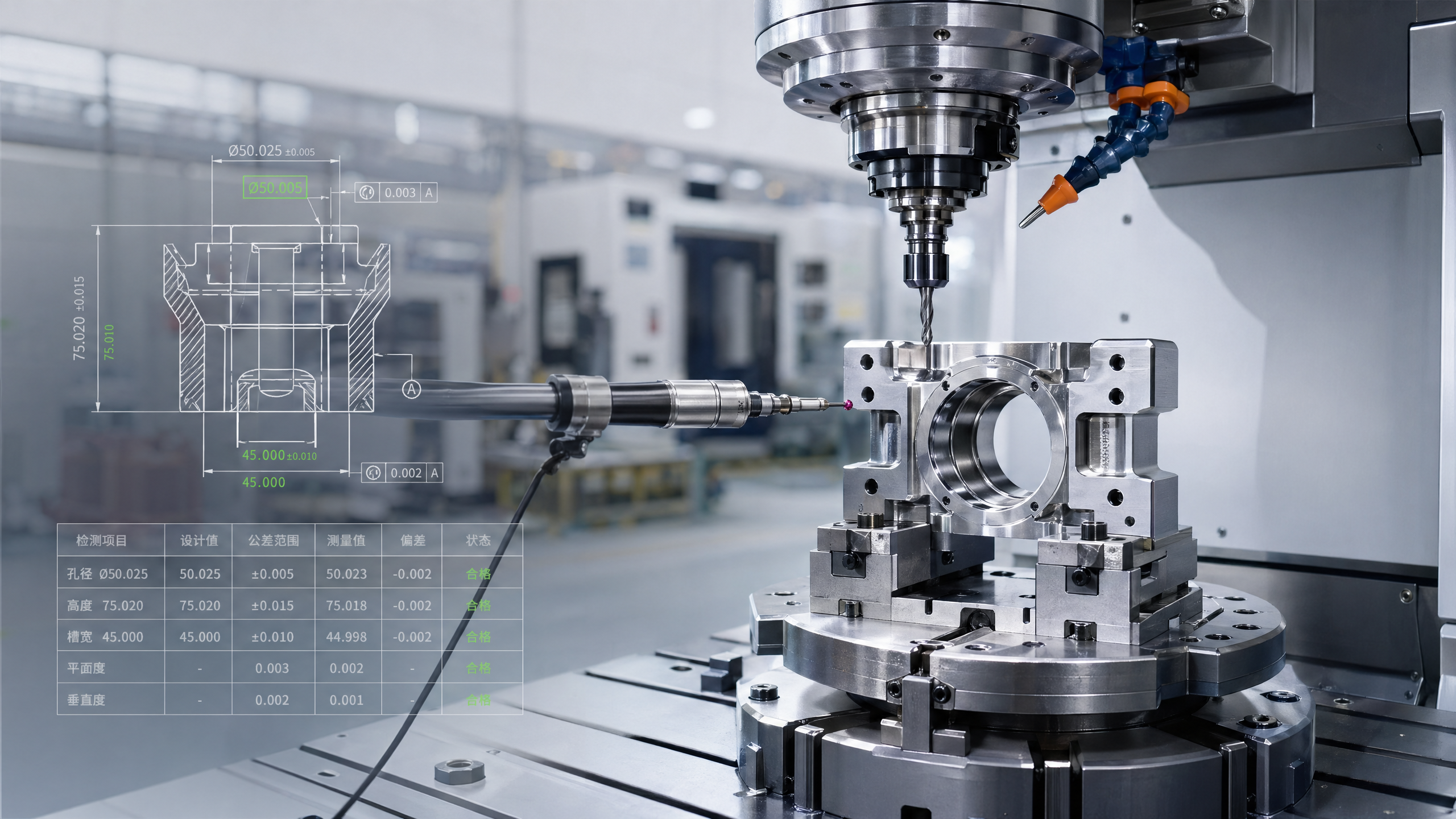
- Inspection equipment: CMMs, vision systems, height gauges, roundness testers, surface roughness testers, and calibrated handheld tools indicate stronger quality infrastructure.
- Calibration and maintenance: Precision depends on machine health and inspection accuracy, so preventive maintenance and calibration records matter.
- First article inspection process: A disciplined first article process helps catch setup or programming issues before full production.
- SPC or process monitoring: For repeat production, statistical control shows whether the factory can maintain stability over time.
You should also ask for sample inspection reports. A capable supplier can usually provide dimension results, material certificates, and process documentation that show how quality is controlled from setup through final inspection.
Does more automation always mean a better CNC manufacturing supplier?
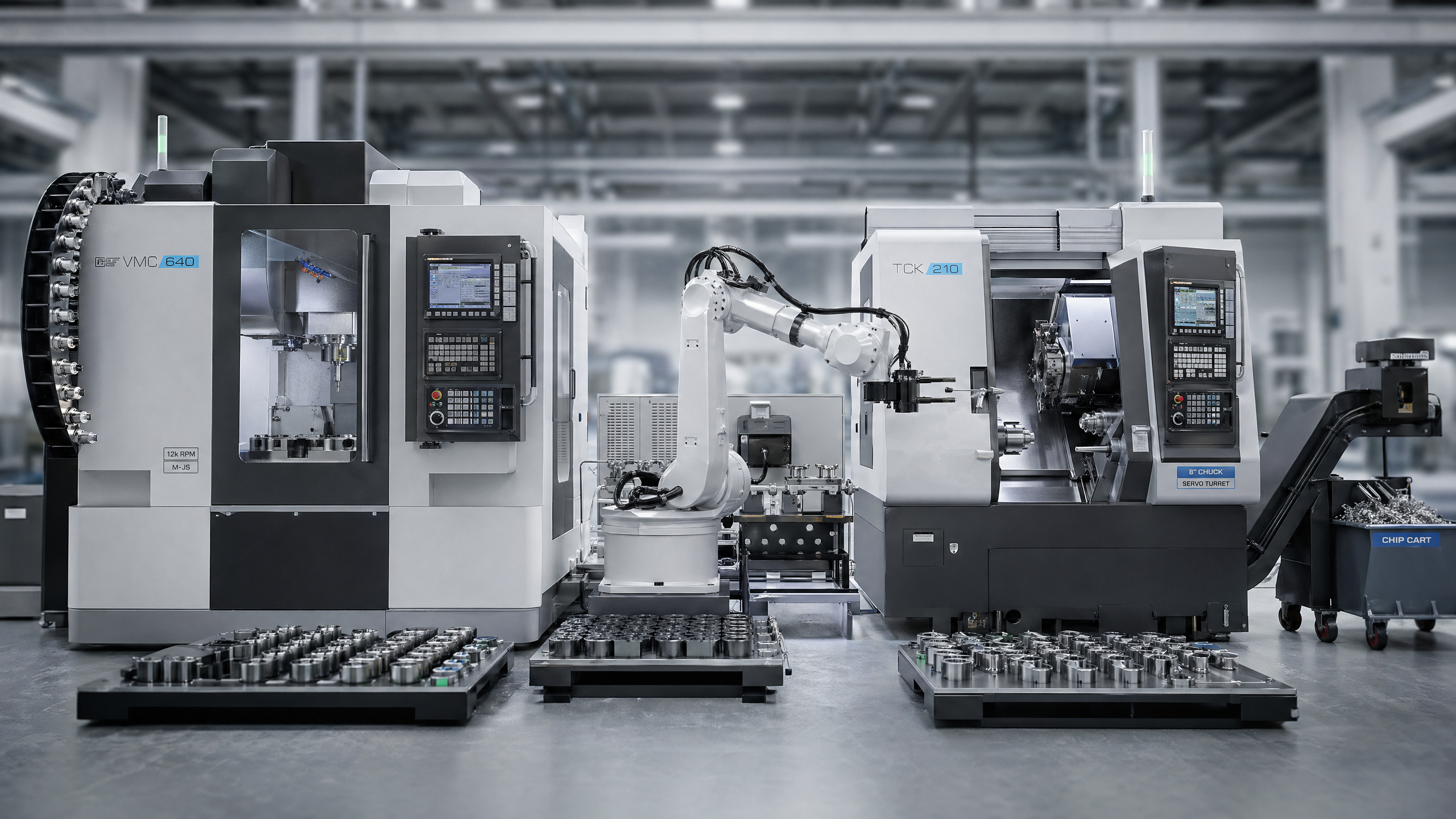
Not always, but automation can be a major advantage when applied correctly. Automated loading, pallet systems, robotic handling, in-process measurement, and digital production tracking can improve consistency, labor efficiency, and throughput.
However, the right comparison is not “more automation versus less automation.” It is whether the factory’s automation level fits your product and order pattern.
Automation is especially useful when you need:
- High repeatability across medium- to high-volume orders
- Shorter cycle times and lower manual variation
- More stable scheduling and faster delivery response
- Better overnight or lights-out production capacity
For prototypes, highly customized parts, or frequent design changes, a flexible manual-plus-automated process may actually be more practical than a heavily fixed setup. The best CNC manufacturing factory is one whose production system matches your real demand pattern.
How important are quality systems, traceability, and documentation?
They are critical, especially for procurement teams and business evaluators. Many supplier problems do not start with machining ability—they start with weak process control, inconsistent records, or poor corrective action.
When comparing factories, review:
- Quality certifications: ISO 9001 is common; industry-specific certifications may be relevant for aerospace or automotive projects.
- Material traceability: Can the factory connect each batch to raw material certificates and production records?
- Nonconformance handling: What happens when a part fails inspection or a process drifts out of control?
- Corrective action system: Does the factory identify root causes and prevent repeat issues?
- Revision control: Can it manage drawing updates, engineering changes, and version tracking cleanly?
For industries such as aerospace, electronics, and energy equipment, documentation quality is often part of product quality. If the supplier cannot manage records reliably, future risk increases even if early samples look acceptable.
How do lead time, capacity, and responsiveness affect supplier comparison?
A technically capable factory is still a poor choice if it cannot support your schedule. Buyers should compare not just quoted lead time, but the supplier’s true ability to deliver on time during production peaks.
Ask questions such as:
- What is the current capacity utilization?
- How are urgent orders handled?
- Are key machines shared across too many projects?
- How long does programming, setup, and first article approval usually take?
- Does the factory outsource critical processes that may delay delivery?
Responsiveness is another strong indicator of future performance. If a supplier is slow to answer technical questions, vague about process details, or inconsistent in quotation communication, those same issues often appear later in production management.
Should you compare price or total cost?
You should compare total cost. A lower unit price may hide higher risk, more quality loss, slower communication, or poor consistency that increases your real cost over time.
Total cost includes:
- Quoted part price
- Tooling or fixture cost
- Inspection and documentation requirements
- Packaging and logistics cost
- Scrap, rework, and return risk
- Delay cost from missed delivery
- Engineering support and change management effort
If one CNC manufacturing supplier is slightly more expensive but offers stronger process control, lower defect risk, and better production reliability, it may deliver better long-term value. This is especially true for precision parts where one quality issue can disrupt assembly, customer delivery, or field performance.
What questions should buyers ask before selecting a CNC manufacturing manufacturer?
To make a more confident decision, use a structured supplier evaluation checklist. Good questions include:
- What similar parts do you currently produce?
- What tolerances do you routinely hold on this material and geometry?
- Which machines and processes will be used for this part?
- What inspection plan will you follow?
- What is done in-house and what is outsourced?
- How do you manage production peaks or urgent orders?
- Can you provide sample reports, certifications, or customer references?
- What risks do you see in this part design or manufacturing process?
The final question is especially useful. A strong factory will not simply say “no problem.” It will identify possible tolerance stack-up issues, fixture challenges, burr concerns, deformation risks, or finish-related complications. That level of honesty usually signals real engineering competence.
How can operators and technical teams support better factory comparison?
Factory selection should not be left to price comparison alone. Operators, process engineers, and quality personnel can help procurement and commercial teams make better decisions by reviewing manufacturability and production risk early.
Technical teams can contribute by:
- Clarifying critical-to-quality dimensions
- Identifying features that require multi-axis CNC manufacturing
- Highlighting material or tool wear concerns
- Defining realistic inspection needs
- Flagging design areas likely to cause scrap or instability
When technical and purchasing teams evaluate suppliers together, the result is usually a better fit between quoted capability and actual manufacturing performance.
Final decision: which CNC manufacturing factory is actually better?
The better CNC manufacturing factory is not simply the one with the newest machine tools or the lowest quoted price. It is the one that fits your part type, quality requirements, volume profile, industry expectations, and risk tolerance most effectively.
In practice, the strongest comparison focuses on:
- Real part and material experience
- Proven high precision CNC manufacturing capability
- Appropriate automation and capacity
- Reliable quality systems and traceability
- Consistent communication and delivery performance
- Competitive total cost over the full project lifecycle
If you evaluate suppliers this way, you move from a simple quote comparison to a more strategic sourcing decision. That leads to better production stability, lower quality risk, and stronger long-term value.
PREVIOUS ARTICLE
NEXT ARTICLE
Recommended for You
 How to Choose a Space-Saving CNC Manufacturing SetupCNC Machining Technology Center
![]() What to Check Before Using a CNC Manufacturing WholesalerGlobal Machine Tool Trade Research Center
What to Check Before Using a CNC Manufacturing WholesalerGlobal Machine Tool Trade Research Center Why Precision CNC Manufacturing Fails Tolerance GoalsCNC Machining Technology Center
 Is CNC Manufacturing for Energy Equipment Worth the CostManufacturing Market Research Center
![]() How Low Maintenance CNC Manufacturing Cuts DowntimeMachine Tool Industry Editorial Team
How Low Maintenance CNC Manufacturing Cuts DowntimeMachine Tool Industry Editorial Team How to Compare One CNC Manufacturing Factory to AnotherManufacturing Market Research Center


Aris Katos
Future of Carbide Coatings
15+ years in precision manufacturing systems. Specialized in high-speed milling and aerospace grade alloy processing.
▶
How to Compare One CNC Manufacturing Factory to AnotherManufacturing Market Research Center▶
How to Identify a Reliable CNC Manufacturing ManufacturerManufacturing Market Research Center▶
What Makes a CNC Manufacturing Supplier Easy to Work WithManufacturing Market Research Center▶
How to Audit a Machine Tool Factory Before OrderingManufacturing Market Research Center▶
Hengli Petrochemical Subsidiary Added to U.S. SDN ListManufacturing Market Research Center
Mastering 5-Axis Workholding Strategies
Join our technical panel on Nov 15th to learn about reducing vibrations in thin-wall components.

Providing you with integrated sanding solutions
Before-sales and after-sales services
Comprehensive technical support