• Global CNC market projected to reach $128B by 2028 • New EU trade regulations for precision tooling components • Aerospace deman
NYSE: CNC +1.2%LME: STEEL -0.4%

What Medical Buyers Need in CNC Manufacturing Today
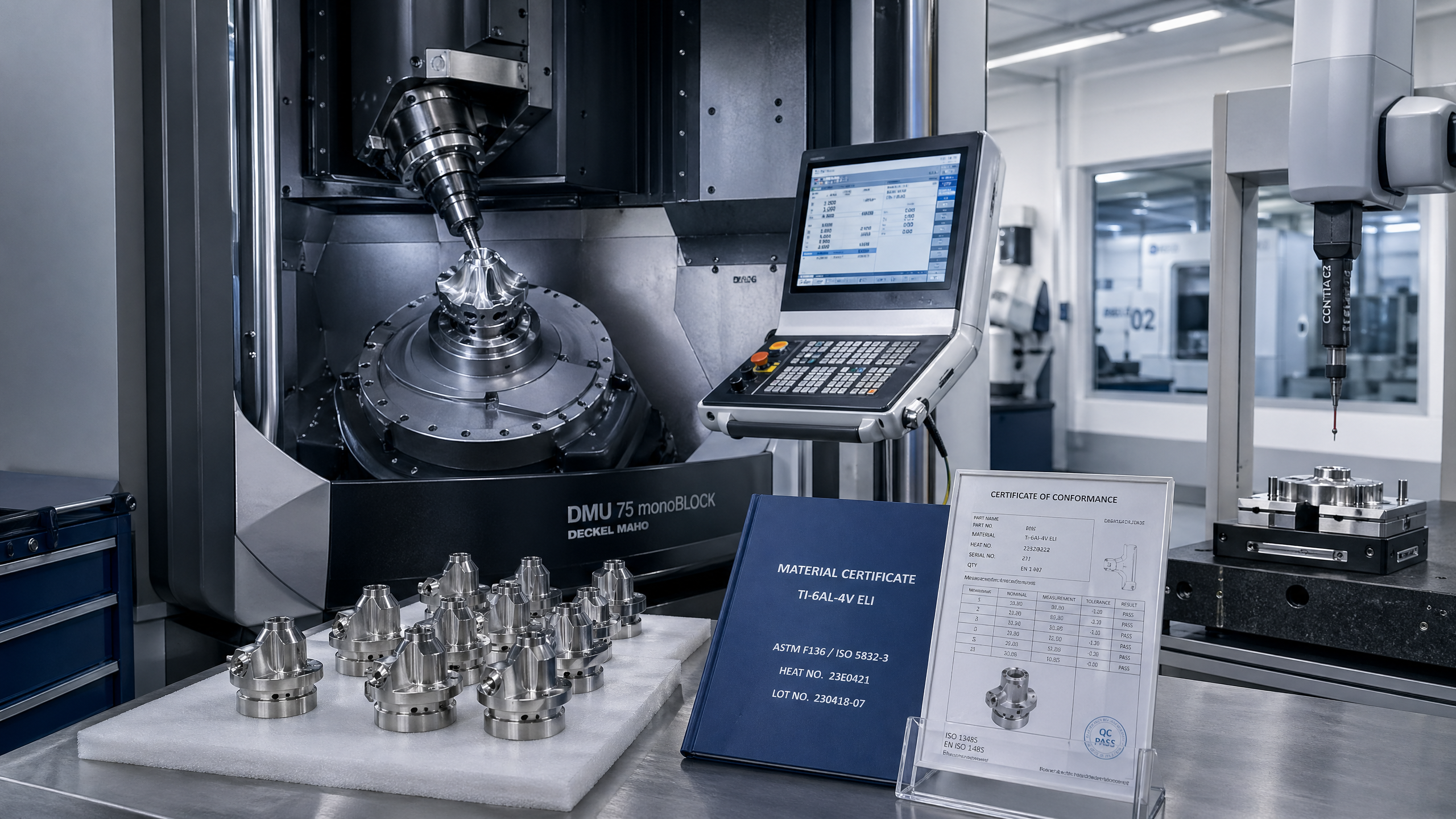
Medical buyers are under pressure to source parts and assemblies that meet strict regulatory requirements without slowing product launches or driving up total cost. In practice, that means CNC manufacturing is no longer evaluated on machining capability alone. Buyers now need a supplier that can combine validated quality systems, repeatable precision, material traceability, faster setup, and production scalability. For medical device programs, the best CNC manufacturing partner is the one that reduces compliance risk while still delivering speed, consistency, and commercial flexibility.
What medical buyers are really evaluating in CNC manufacturing today
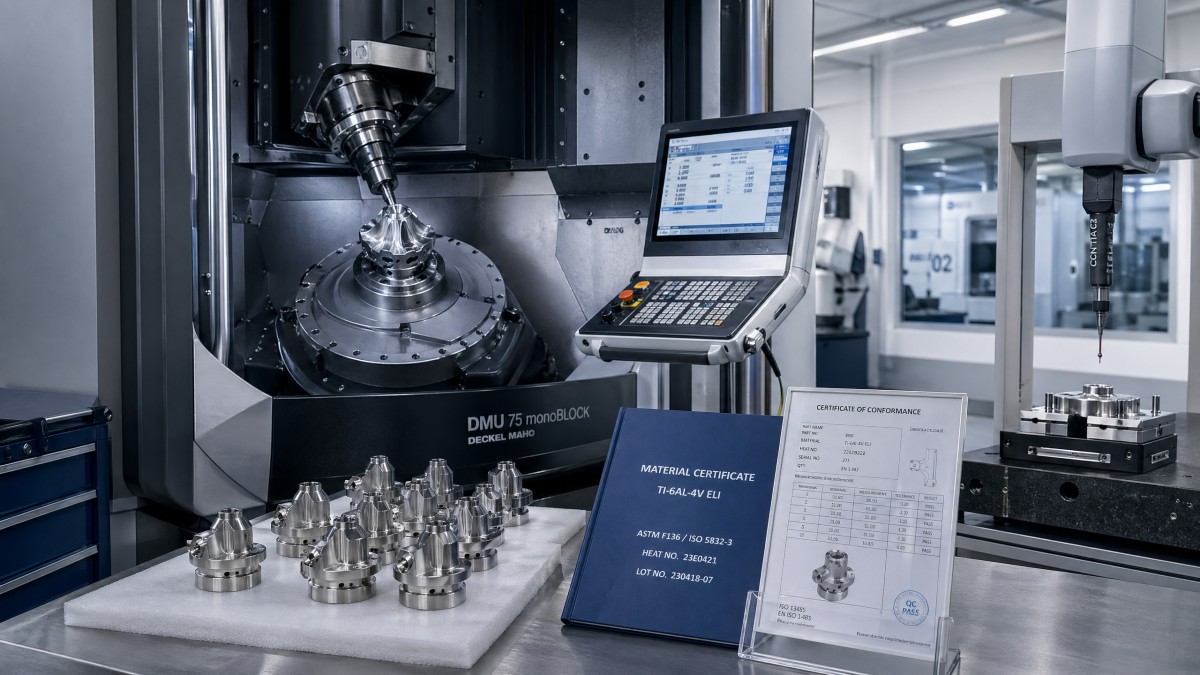
When buyers search for CNC manufacturing for medical devices, they are usually not looking for generic machining capacity. They are trying to answer a more practical question: Can this supplier reliably produce medical-grade components with the documentation, consistency, and responsiveness required for regulated production?
That evaluation typically includes five priorities:
- Compliance readiness: Can the supplier support regulated manufacturing expectations, controlled processes, and audit requirements?
- Precision and repeatability: Can it hold tight tolerances across batches, not just on a sample part?
- Material and process control: Are material certifications, traceability, and inspection records available and complete?
- Speed to production: Can the supplier handle prototypes, pilot runs, and production scaling without repeated delays?
- Commercial reliability: Is the total supply relationship stable, responsive, and low risk over time?
For procurement teams, engineering users, and business evaluators, these factors matter more than a broad promise of “high quality.” Medical applications leave little room for inconsistency, undocumented changes, or avoidable machine downtime.
Why compliance and documentation matter as much as machining accuracy
In many industries, a supplier can compete mainly on speed and price. In medical manufacturing, that is not enough. Buyers need evidence that quality is built into the process, not inspected in at the end.
A capable CNC manufacturing supplier should be prepared to support:
- Documented quality management systems
- Process control and revision management
- Material certificates and lot traceability
- First article inspection and in-process inspection records
- Nonconformance handling and corrective action procedures
- Clean handling requirements where applicable
This is especially important for components used in surgical instruments, orthopedic devices, dental systems, diagnostic equipment, and implant-adjacent applications. Even when a CNC supplier is not the final legal manufacturer, its process discipline directly affects downstream validation, regulatory submissions, and market risk.
For buyers, the takeaway is simple: a supplier with advanced machine tools but weak documentation can create more cost and delay than a slightly higher-priced partner with stronger compliance control.
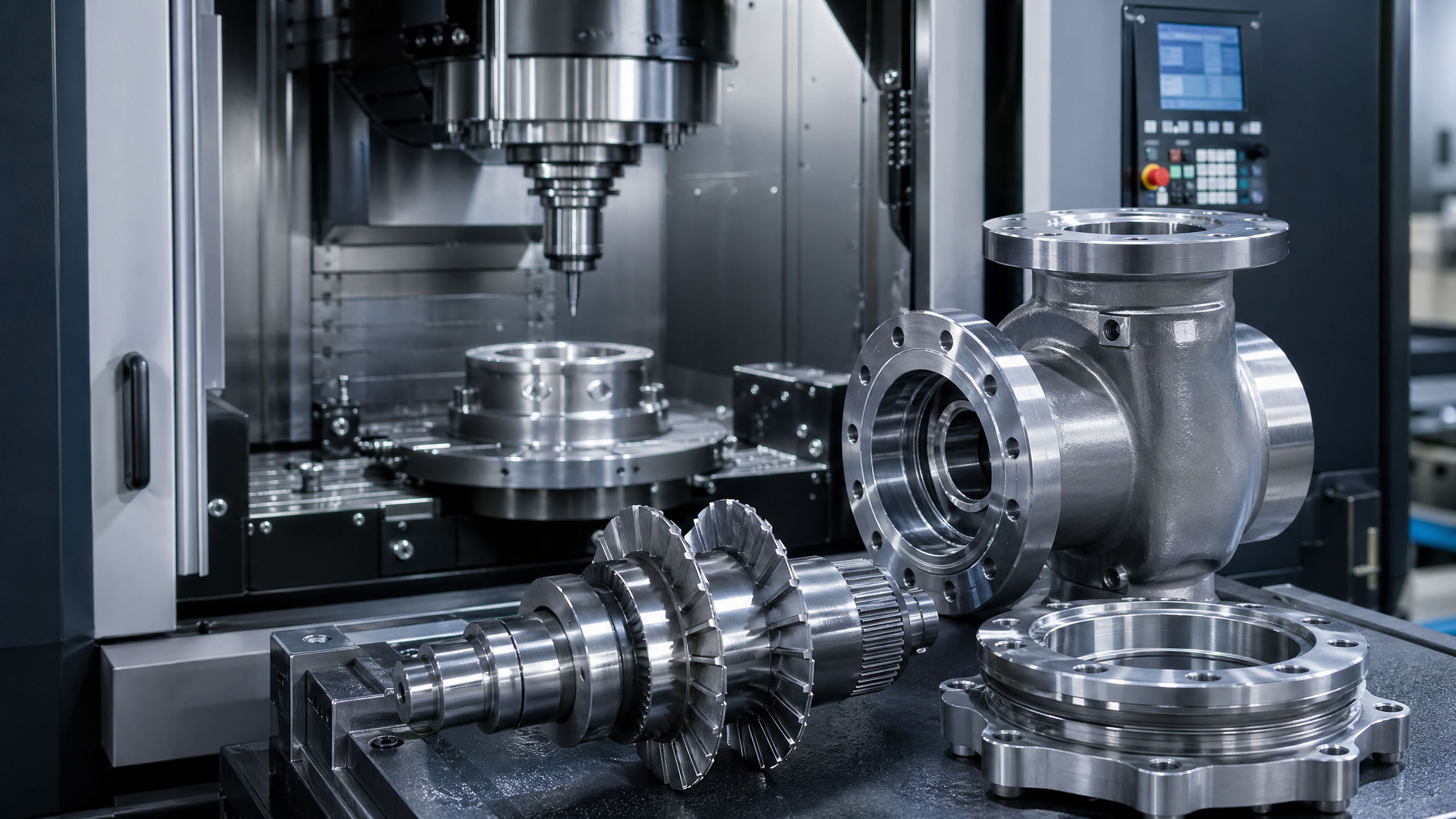
What high precision machine tool capability means for medical applications
Medical components often require more than basic dimensional accuracy. They may involve miniature features, complex contours, demanding surface finishes, burr control, and precise relationships between multiple critical dimensions.
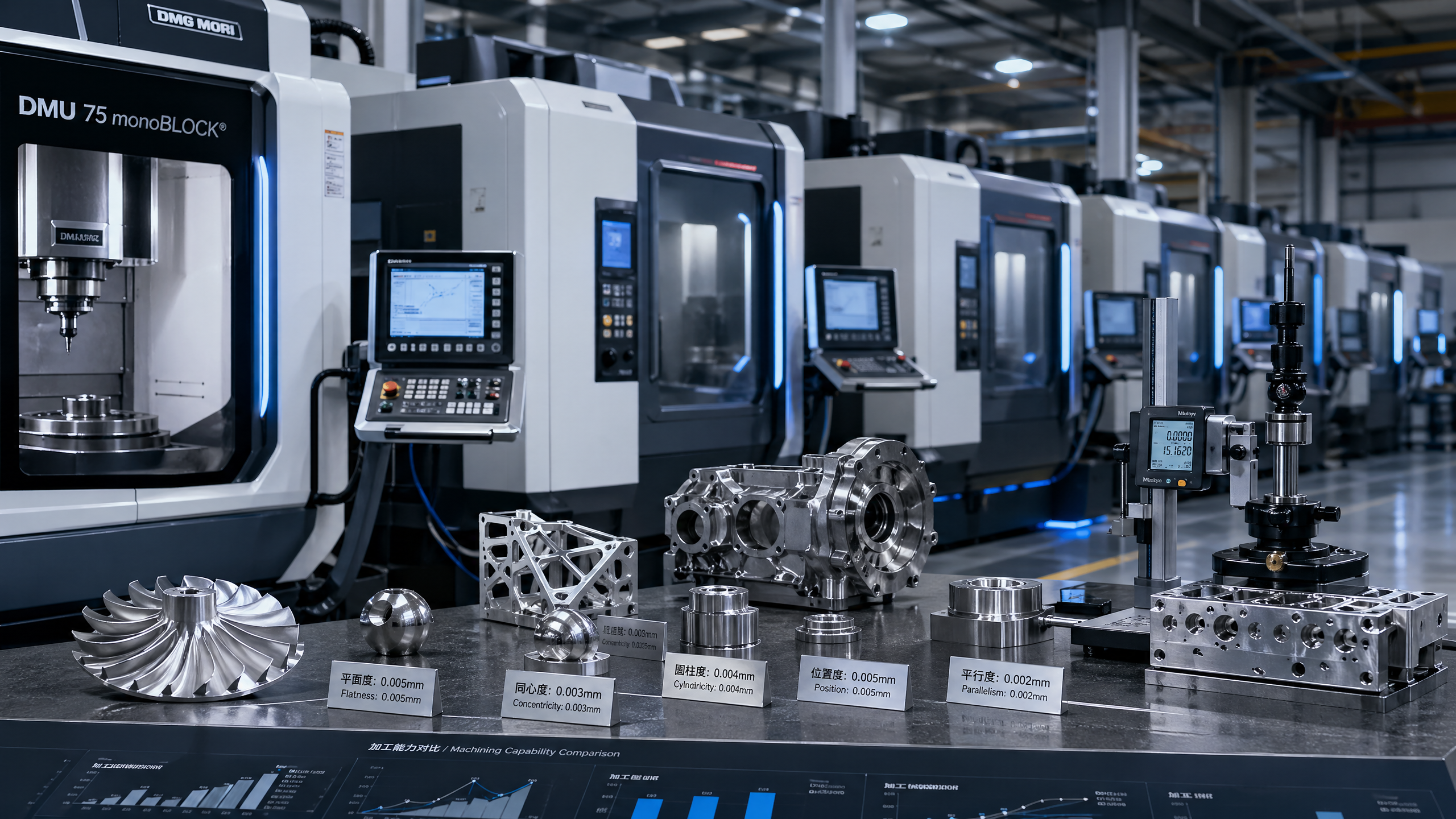
That is why high precision machine tool capability matters. Buyers should look beyond advertised tolerance claims and ask how the supplier consistently achieves them. Relevant indicators include:
- Machine stability and thermal control
- Capability for tight-tolerance milling and turning
- Proven measurement systems such as CMM and optical inspection
- Tool management practices for wear control
- Process validation for repeat production
- Experience with medical-grade metals and engineered plastics
Common medical materials such as titanium, stainless steel, cobalt-chrome, PEEK, and aluminum each bring different machining challenges. A supplier that understands material behavior can better protect tolerances, surface integrity, and part performance.
In practical terms, high precision is not only about making a difficult part once. It is about maintaining dimensional consistency across hundreds or thousands of parts with minimal variation.
How multi-axis CNC manufacturing improves part quality and production efficiency
For many medical buyers, multi-axis CNC manufacturing is now a strategic advantage rather than a premium feature. Complex geometries, undercuts, contoured surfaces, and multi-face parts are increasingly common in medical device design. Multi-axis systems help manufacturers produce these features in fewer setups.
That creates several direct benefits:
- Better geometric accuracy: Fewer setups reduce repositioning error.
- Improved surface quality: More continuous toolpaths can support smoother finishes.
- Shorter lead times: Complex parts can often be machined faster in one process sequence.
- Lower handling risk: Less manual intervention helps protect delicate features.
- More efficient scaling: Once optimized, the process can be repeated more reliably.
This is particularly relevant for housings, surgical device components, dental parts, precision shafts, connector features, and custom instrument bodies. For buyers comparing suppliers, the question is not just whether they own 5-axis equipment, but whether they use it effectively for stable medical production.
Why quick setup CNC manufacturing matters for prototypes and NPI
Medical programs often move through multiple design iterations before commercialization. During prototyping and new product introduction, delays usually come from setup time, programming revisions, fixture changes, and communication gaps rather than cutting time itself.
Quick setup CNC manufacturing is valuable because it reduces these hidden delays. Buyers should prioritize suppliers that can support:
- Fast CAM programming and revision response
- Flexible fixturing for small batches
- Efficient changeover between part families
- Clear DFM feedback before machining begins
- Short-cycle prototype to pilot transitions
This matters not only for engineers but also for procurement and business teams. Faster setup capability can shorten development cycles, reduce the cost of iteration, and help products reach clinical evaluation or market launch sooner.
In other words, responsiveness is part of manufacturing performance. A supplier that machines accurately but reacts slowly can become a bottleneck for the entire program.
How low maintenance CNC manufacturing supports supply reliability
Low maintenance CNC manufacturing is not just about the machine design itself. For buyers, it represents a broader operational question: How resilient is the supplier’s production system?
Suppliers that invest in reliable equipment, preventive maintenance, digital monitoring, and process standardization are better positioned to avoid unexpected downtime. That translates into real purchasing value:
- More predictable delivery schedules
- Lower disruption risk for recurring orders
- Reduced emergency outsourcing or expediting costs
- Better consistency between production batches
- Stronger long-term capacity planning
For medical buyers, machine reliability directly affects inventory planning, service commitments, and customer confidence. This is especially important when sourcing critical components for devices that require stable ongoing supply rather than one-off production.
Questions buyers should ask before selecting a CNC manufacturing supplier
To make better sourcing decisions, medical buyers should move beyond general capability presentations and ask targeted questions:
- What medical or regulated manufacturing experience do you already have?
- How do you manage traceability for raw materials, tooling, and finished parts?
- What inspection methods are used for critical dimensions and cosmetic requirements?
- Can you support prototype, pilot, and production volumes within the same quality framework?
- What is your process for engineering changes and document control?
- How do you prevent cross-contamination or handling issues for sensitive parts?
- What is your average lead time for repeat orders and urgent revisions?
- How do you manage preventive maintenance and capacity planning?
- Can you provide sample documentation packages with certifications and inspection reports?
These questions help buyers compare suppliers based on operational maturity, not just equipment lists or quoted price.
What separates a strong medical CNC partner from a general machining vendor
Many machine shops can produce precise parts. Fewer can consistently support the demands of medical manufacturing. The strongest suppliers typically stand out in four ways:
- They understand regulated production realities, including documentation and traceability expectations.
- They combine precision with repeatability, using controlled processes rather than relying on operator skill alone.
- They communicate early and clearly, especially around manufacturability, lead time, and change control.
- They support lifecycle needs, from prototype machining to scaled production.
That distinction matters because medical buyers are not purchasing a part in isolation. They are choosing a manufacturing partner that can influence launch timing, quality performance, regulatory readiness, and total cost over the life of the program.
Conclusion: what medical buyers should prioritize now
Today’s medical buyers need CNC manufacturing partners that deliver more than accurate machining. The real requirement is a combination of compliance support, high precision machine tool capability, multi-axis CNC manufacturing, quick setup CNC manufacturing, and low maintenance CNC manufacturing that protects supply continuity.
If a supplier can provide repeatable quality, complete documentation, flexible production response, and dependable long-term performance, it is far more likely to create value in medical manufacturing. For buyers evaluating options today, the best decision is usually the supplier that lowers operational and compliance risk while still meeting cost and speed targets.
In a healthcare market shaped by tighter standards and faster product cycles, that balance is no longer optional. It is the new baseline.
PREVIOUS ARTICLE
Recommended for You
 How to Choose a Space-Saving CNC Manufacturing SetupCNC Machining Technology Center
![]() What to Check Before Using a CNC Manufacturing WholesalerGlobal Machine Tool Trade Research Center
What to Check Before Using a CNC Manufacturing WholesalerGlobal Machine Tool Trade Research Center Why Precision CNC Manufacturing Fails Tolerance GoalsCNC Machining Technology Center
 Is CNC Manufacturing for Energy Equipment Worth the CostManufacturing Market Research Center
![]() How Low Maintenance CNC Manufacturing Cuts DowntimeMachine Tool Industry Editorial Team
How Low Maintenance CNC Manufacturing Cuts DowntimeMachine Tool Industry Editorial Team How to Compare One CNC Manufacturing Factory to AnotherManufacturing Market Research Center


Aris Katos
Future of Carbide Coatings
15+ years in precision manufacturing systems. Specialized in high-speed milling and aerospace grade alloy processing.
▶
What to Check Before Using a CNC Manufacturing WholesalerGlobal Machine Tool Trade Research Center▶
What Medical Buyers Need in CNC Manufacturing TodayGlobal Machine Tool Trade Research Center▶
How to Find a Machine Tool Distributor You Can TrustGlobal Machine Tool Trade Research Center▶
How to Choose a CNC Machine Tool Manufacturer in 2026Global Machine Tool Trade Research Center▶
Dongfang Select Core Hosts Exit Amid Stricter Live-Streaming RegulationsGlobal Machine Tool Trade Research Center
Mastering 5-Axis Workholding Strategies
Join our technical panel on Nov 15th to learn about reducing vibrations in thin-wall components.

Providing you with integrated sanding solutions
Before-sales and after-sales services
Comprehensive technical support