• Global CNC market projected to reach $128B by 2028 • New EU trade regulations for precision tooling components • Aerospace deman
NYSE: CNC +1.2%LME: STEEL -0.4%

What to Check Before Using a CNC Manufacturing Wholesaler

Choosing a reliable CNC manufacturing wholesaler requires more than comparing machine tool price. Buyers should verify high precision CNC manufacturing capability, multi-axis machine tool support, quality control, delivery stability, and after-sales service. Whether you need CNC manufacturing for aerospace, energy equipment, electronics, or automotive industry applications, checking the CNC manufacturing factory’s technical strength and export experience helps reduce risk and ensure cost-effective CNC manufacturing.
For procurement teams, machine operators, and business evaluators, the challenge is not simply finding a supplier that can quote quickly. The real task is identifying a CNC manufacturing wholesaler that can repeatedly deliver parts within tolerance, maintain stable lead times, communicate clearly across projects, and support future scaling from trial batches to medium or large-volume orders.
In global precision manufacturing, even a small mismatch between drawing requirements and shop-floor capability can create delays of 2–6 weeks, extra inspection costs, or assembly failures. A practical evaluation process helps buyers compare wholesalers on measurable factors such as equipment range, tolerance control, process documentation, export readiness, and service response speed.
Assess Core CNC Manufacturing Capability Before Price
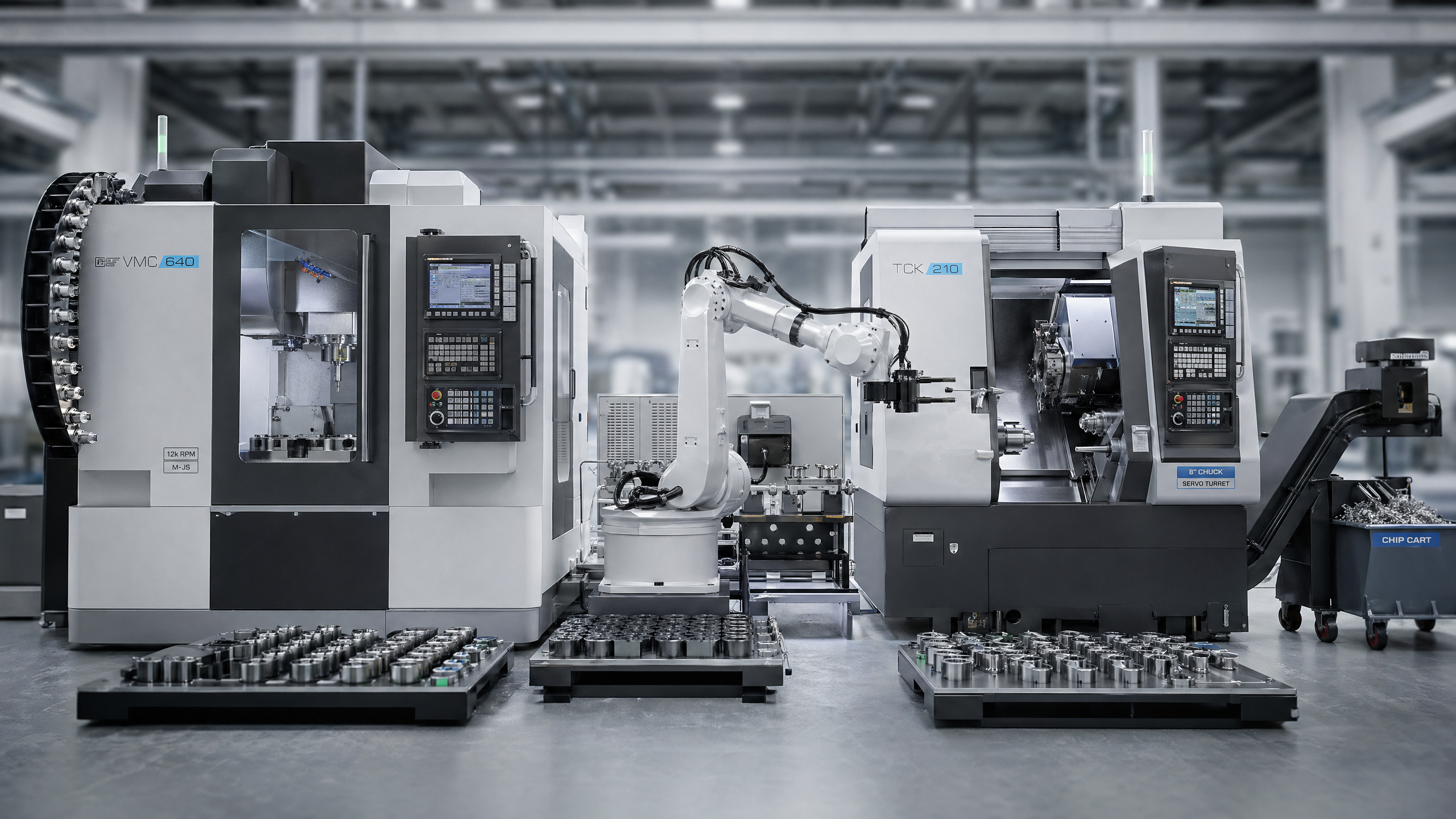
[[IMG:img_01]]A low unit price means little if the wholesaler cannot machine your required geometry, material, or tolerance range. Before reviewing discounts, buyers should confirm the supplier’s core CNC manufacturing scope: turning, milling, drilling, tapping, grinding, and whether it supports 3-axis, 4-axis, or 5-axis machining. In many industrial projects, capability fit is the first filter, and price comparison comes second.
For example, complex aerospace brackets, energy equipment housings, and automotive precision shafts often require tolerance bands from ±0.01 mm to ±0.05 mm depending on function. A wholesaler handling only simple 2-axis turning may still be suitable for standard bushings or sleeves, but not for parts with angled faces, compound curves, or multi-side machining completed in a single setup.
Material capability is another early checkpoint. Many CNC manufacturing wholesalers work comfortably with carbon steel, alloy steel, aluminum, stainless steel, brass, and engineering plastics. However, not every factory is equally prepared for difficult materials such as titanium alloys, hardened steel, or thin-wall aluminum parts where deformation risk increases. Asking about their most common material mix can reveal whether your project fits their routine process window.
Questions that clarify real machining strength
A strong supplier should answer practical questions without ambiguity. Ask how many axes are available, what maximum part diameter or travel range they support, and whether they can complete first-article samples within 7–10 working days. If a wholesaler cannot explain setup logic, fixture approach, or tool-path challenges for your part family, the risk of later process instability becomes much higher.
Key technical checks
- Whether the shop supports 3-axis, 4-axis, and 5-axis machining for different part complexity levels.
- Whether turning centers can handle shaft parts, discs, threads, grooves, and concentricity-critical features.
- Whether there is in-house capability for deburring, heat treatment coordination, coating, or final assembly support.
- Whether prototype, pilot batch, and repeat production can be managed under the same quality workflow.
The table below helps buyers compare capability categories when screening a CNC manufacturing wholesaler for industrial applications.
The main takeaway is simple: first verify whether the wholesaler can produce your part family consistently, then compare commercial terms. Capability gaps often cause more total cost than a 3%–8% price difference on the initial quote.
Review Quality Control, Inspection Flow, and Process Discipline
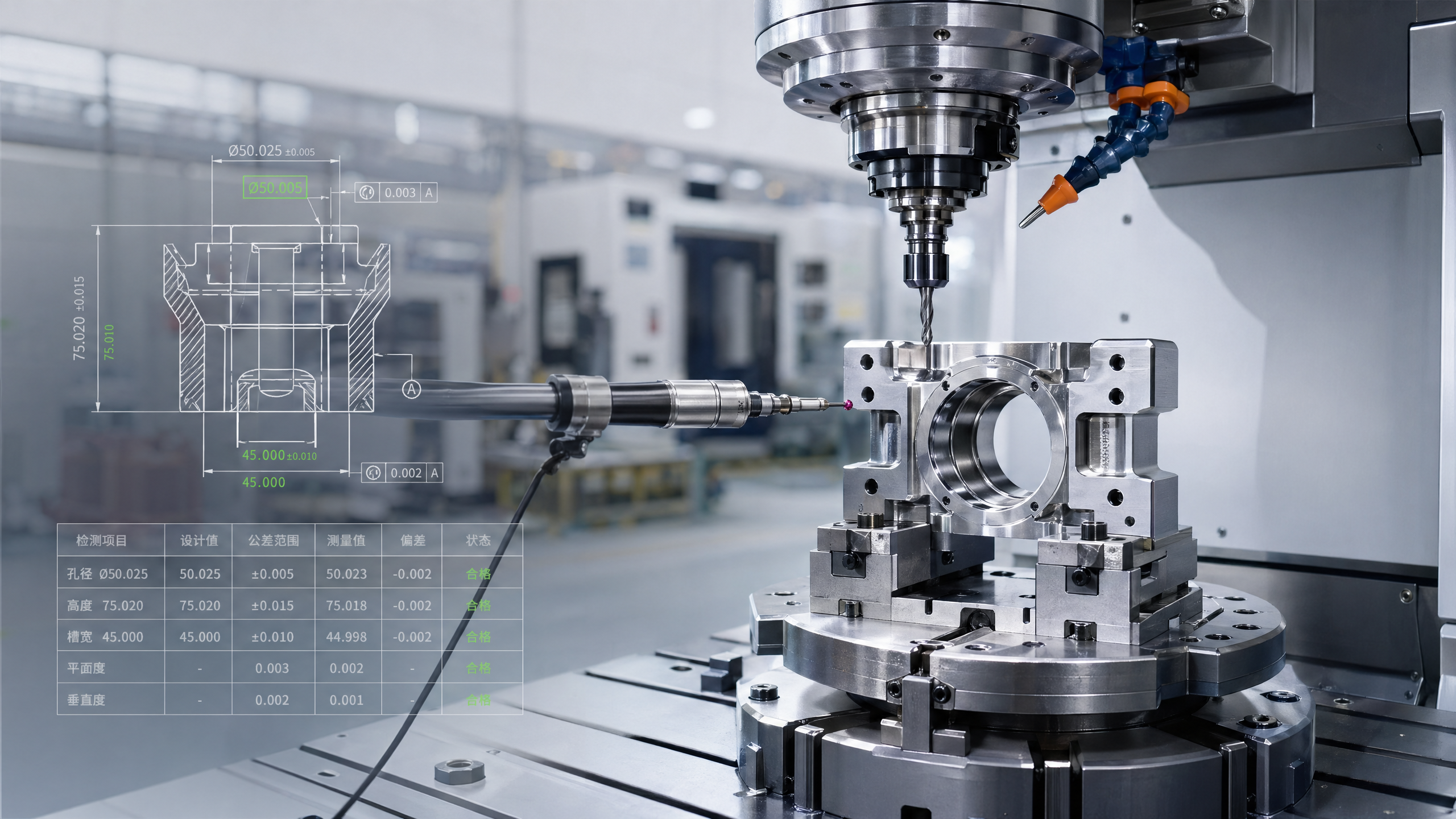
Quality control is where many CNC manufacturing evaluations become too superficial. A supplier may show clean sample photos, but buyers need to know how dimensions are verified, how nonconforming parts are isolated, and how process drift is controlled over repeated batches. In precision manufacturing, the difference between a stable supplier and a risky one is often the inspection routine rather than the machine list alone.
Ask whether the wholesaler performs incoming material checks, first-article inspection, in-process checks, and final inspection. For repeat orders, a practical workflow usually includes at least 3 quality gates: setup approval, patrol inspection during production, and outgoing verification before packing. This is especially important for electronics components, automotive fittings, and energy equipment parts where dimensional consistency affects downstream installation speed.
Inspection equipment matters as well. A capable CNC manufacturing wholesaler may use calipers, micrometers, height gauges, bore gauges, thread gauges, roughness testers, and coordinate measuring systems depending on tolerance level. Not every project requires advanced metrology, but the wholesaler should match measuring tools to the critical characteristics on the drawing instead of using generic checks for every part.
What process discipline looks like in practice
A disciplined factory can explain revision control, work instructions, tool offset management, and traceability. If your drawing changes from Rev A to Rev B, the supplier should be able to isolate old production records and prevent mixed output. For regulated or export-heavy sectors, buyers should also check how packing labels, batch identification, and inspection reports are matched to shipments.
The following table outlines common quality checkpoints buyers can use during supplier evaluation.
When a wholesaler can show a clear inspection path, buyers gain more than confidence. They gain predictability. That predictability usually lowers total quality cost across 3 areas: fewer urgent reworks, fewer installation delays, and fewer replacement shipments.
Common warning signs
- No clear distinction between sample inspection and mass production inspection.
- No tolerance review before quotation, even for parts with tight geometric requirements.
- Inspection reports that list only a few dimensions while ignoring critical functional features.
- Unclear handling procedure for nonconforming parts or customer complaints within 24–72 hours.
Check Delivery Stability, Capacity Planning, and Export Readiness
Delivery performance is one of the most overlooked factors when choosing a CNC manufacturing wholesaler. A supplier may machine accurate parts, but if lead times fluctuate from 15 days to 35 days without warning, the buyer still faces production risk. For importers and industrial sourcing teams, stable scheduling is often as valuable as machining precision.
Capacity planning should be discussed early. Buyers should ask about normal sample lead time, repeat-order lead time, and peak-season loading. A practical wholesaler can usually separate prototype jobs, urgent replacement parts, and recurring production in different queues. If every order is treated the same way, higher-priority projects may be delayed by unrelated work in the shop.
Export readiness is equally important for international buyers. The wholesaler should understand commercial packing, corrosion prevention, carton labeling, pallet planning, and document coordination. For machined steel parts shipped by sea for 20–40 days, insufficient anti-rust treatment can create avoidable claims even when dimensions are correct. Logistics discipline is therefore part of supplier quality, not a separate issue.
How to evaluate delivery risk before ordering
Ask the wholesaler to explain the path from drawing confirmation to shipment release. A clear answer should include quotation review, process planning, raw material procurement, sample approval if needed, machining schedule, inspection, packing, and dispatch. This is often a 5-step to 7-step process, and missing steps usually indicate weak coordination between sales, engineering, production, and quality teams.
Practical delivery review checklist
- Confirm standard sample lead time, such as 7–15 working days for moderate complexity parts.
- Confirm repeat production lead time, often 2–4 weeks depending on quantity and material.
- Check whether raw materials are sourced after PO release or kept in common stock.
- Review packaging method for moisture, impact, and mixed-batch prevention.
- Verify who communicates delays and how often status updates are shared during production.
If the wholesaler supports export projects regularly, they should be able to discuss transit risks, packaging reinforcement, and destination-specific labeling without hesitation. This is especially relevant for wholesalers serving buyers in multiple regions from manufacturing hubs in China, Germany, Japan, or South Korea, where shipment volume and documentation frequency are high.
A good rule for buyers is to compare two metrics together: dimensional reliability and on-time reliability. A supplier that scores well on both is far more valuable than one that performs strongly in only one area.
Evaluate Service Support, Communication, and Total Procurement Value
The best CNC manufacturing wholesaler is not always the one with the lowest quote or the largest machine count. Often, the deciding factor is how well the supplier supports the full procurement cycle: drawing review, manufacturability suggestions, sample feedback, order tracking, issue response, and after-sales follow-up. This becomes especially important when buyers manage multiple SKUs or cross-border projects.
Communication quality has direct commercial impact. If technical questions take 3–5 days to answer, quotation and approval cycles slow down. If an issue appears during inspection or assembly, a response time of less than 24 hours is usually far more useful than a generic apology sent days later. For business evaluators, communication speed is a practical indicator of internal coordination maturity.
After-sales support should also be concrete. Buyers should ask what happens if delivered parts show burr issues, dimension drift, coating defects, or packing damage. The wholesaler should define the complaint path, evidence required, expected analysis period, and corrective action options such as replacement, rework, or credit negotiation. A vague answer at this stage usually leads to disputes later.
Comparing procurement value beyond unit price
Total procurement value includes at least 4 dimensions: machining fit, quality stability, delivery reliability, and service responsiveness. A quote that is 5% lower can become much more expensive if it creates line stoppages, extra incoming inspection, or urgent remanufacture. Buyers should estimate the total cost of poor coordination, not just the purchase order amount.
The table below can be used as a practical scoring model when shortlisting CNC manufacturing wholesalers.
This kind of weighted review helps procurement teams make balanced decisions. It also allows users, operators, and sourcing managers to align technical expectations with commercial targets before long-term cooperation begins.
Common buyer mistakes to avoid
- Choosing a wholesaler based only on the first quotation without a drawing feasibility review.
- Assuming that a factory making simple components can also handle multi-axis precision parts.
- Ignoring packaging, export handling, and complaint resolution terms until after shipment.
- Failing to compare response quality across 2–3 shortlisted suppliers during the sampling stage.
Frequently Asked Questions Before Selecting a CNC Manufacturing Wholesaler
Many buyers ask similar questions during supplier screening, especially when sourcing across borders or entering a new product category. The answers below can help structure discussions with CNC manufacturing wholesalers and reduce surprises during quotation, sampling, and repeat production.
How many suppliers should be compared before making a decision?
For most industrial projects, comparing 2–4 qualified wholesalers is usually enough. Fewer than 2 makes benchmarking weak, while reviewing more than 4 can slow the process without adding much value. The key is to compare them on the same drawing package, tolerance notes, material requirement, finish requirement, and target annual volume.
What lead time is reasonable for samples and repeat orders?
Reasonable lead times depend on complexity, material, and post-processing. Many CNC machined samples fall within 7–15 working days, while repeat orders can range from 2–4 weeks. If heat treatment, coating, or complex fixtures are required, extra days may be necessary. What matters most is whether the wholesaler gives a realistic schedule and communicates changes early.
Is a multi-axis machine tool supplier always better?
Not always. If your parts are simple rotational components or standard plates with basic drilling, a specialist in turning or 3-axis milling may offer better efficiency and lower cost. Multi-axis capability becomes more valuable when the part has compound surfaces, angled features, or requires fewer setups to maintain accuracy across several faces.
What documents should buyers request before placing a formal order?
At minimum, request a formal quotation, drawing confirmation record, material plan, lead time commitment, inspection scope, and packing method description. For repeat or higher-risk projects, it is also useful to request a sample approval record and a defined complaint handling process with target response timing such as 24–72 hours.
Selecting a CNC manufacturing wholesaler is ultimately a risk-control decision as much as a purchasing decision. Buyers who verify machining capability, quality discipline, delivery stability, and service responsiveness usually achieve better long-term results than those who focus only on initial machine tool price. If you are evaluating CNC manufacturing sources for aerospace, energy equipment, electronics, or automotive applications, now is the right time to review your supplier checklist in detail.
If you need support comparing wholesalers, clarifying machining requirements, or building a more reliable sourcing process for precision manufacturing, contact us to get a tailored evaluation framework, discuss your project details, and explore more CNC manufacturing solutions.
PREVIOUS ARTICLE
NEXT ARTICLE
Recommended for You
 How to Choose a Space-Saving CNC Manufacturing SetupCNC Machining Technology Center
![]() What to Check Before Using a CNC Manufacturing WholesalerGlobal Machine Tool Trade Research Center
What to Check Before Using a CNC Manufacturing WholesalerGlobal Machine Tool Trade Research Center Why Precision CNC Manufacturing Fails Tolerance GoalsCNC Machining Technology Center
 Is CNC Manufacturing for Energy Equipment Worth the CostManufacturing Market Research Center
![]() How Low Maintenance CNC Manufacturing Cuts DowntimeMachine Tool Industry Editorial Team
How Low Maintenance CNC Manufacturing Cuts DowntimeMachine Tool Industry Editorial Team How to Compare One CNC Manufacturing Factory to AnotherManufacturing Market Research Center

Aris Katos
Future of Carbide Coatings
15+ years in precision manufacturing systems. Specialized in high-speed milling and aerospace grade alloy processing.
▶
What to Check Before Using a CNC Manufacturing WholesalerGlobal Machine Tool Trade Research Center▶
What Medical Buyers Need in CNC Manufacturing TodayGlobal Machine Tool Trade Research Center▶
How to Find a Machine Tool Distributor You Can TrustGlobal Machine Tool Trade Research Center▶
How to Choose a CNC Machine Tool Manufacturer in 2026Global Machine Tool Trade Research Center▶
Dongfang Select Core Hosts Exit Amid Stricter Live-Streaming RegulationsGlobal Machine Tool Trade Research Center
Mastering 5-Axis Workholding Strategies
Join our technical panel on Nov 15th to learn about reducing vibrations in thin-wall components.

Providing you with integrated sanding solutions
Before-sales and after-sales services
Comprehensive technical support