• Global CNC market projected to reach $128B by 2028 • New EU trade regulations for precision tooling components • Aerospace deman
NYSE: CNC +1.2%LME: STEEL -0.4%

Industrial CNC demand in Southeast Asia is not moving evenly
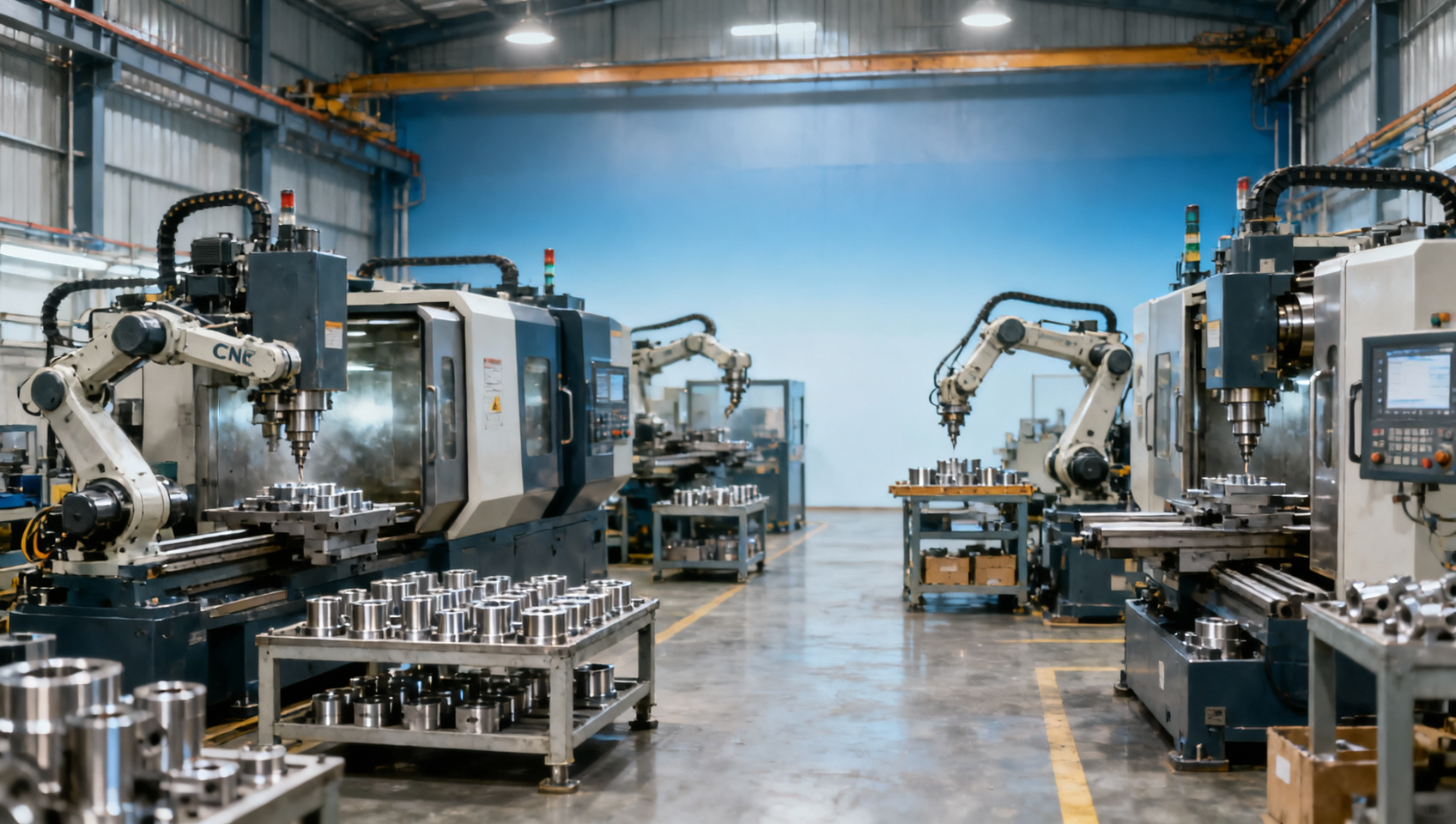
Industrial CNC demand in Southeast Asia is rising, but not at the same pace across every market. From metal machining and CNC metalworking to automated production line investment, buying priorities vary by industry, labor costs, and export strategy. For buyers, operators, and decision-makers in the Manufacturing Industry, understanding these uneven shifts is essential to planning smarter CNC production and Industrial Automation strategies.
Across the region, the headline story is growth, but the operating reality is more fragmented. A shop serving export-oriented automotive parts in Thailand does not evaluate CNC capacity the same way as an electronics subcontractor in Vietnam or a job shop in Indonesia serving energy equipment and general engineering. Machine type, spindle utilization, operator skill depth, floor space, financing conditions, and after-sales support all shape real demand.
That unevenness matters because CNC investments are capital-intensive and often tied to a 3- to 7-year planning horizon. A machining center that looks ideal for one market can create underused capacity in another. For procurement teams, the challenge is not only identifying where demand is rising, but also determining which machine configurations, automation layers, and service models match local production economics.
This article examines how CNC demand is shifting across Southeast Asia, why the pace differs by country and end-use sector, and what buyers should evaluate before committing to new equipment, production lines, or digital upgrades. The focus is practical: where demand is strongest, what risk factors matter, and how to align CNC purchasing with actual manufacturing needs.
Why CNC demand is growing unevenly across Southeast Asia
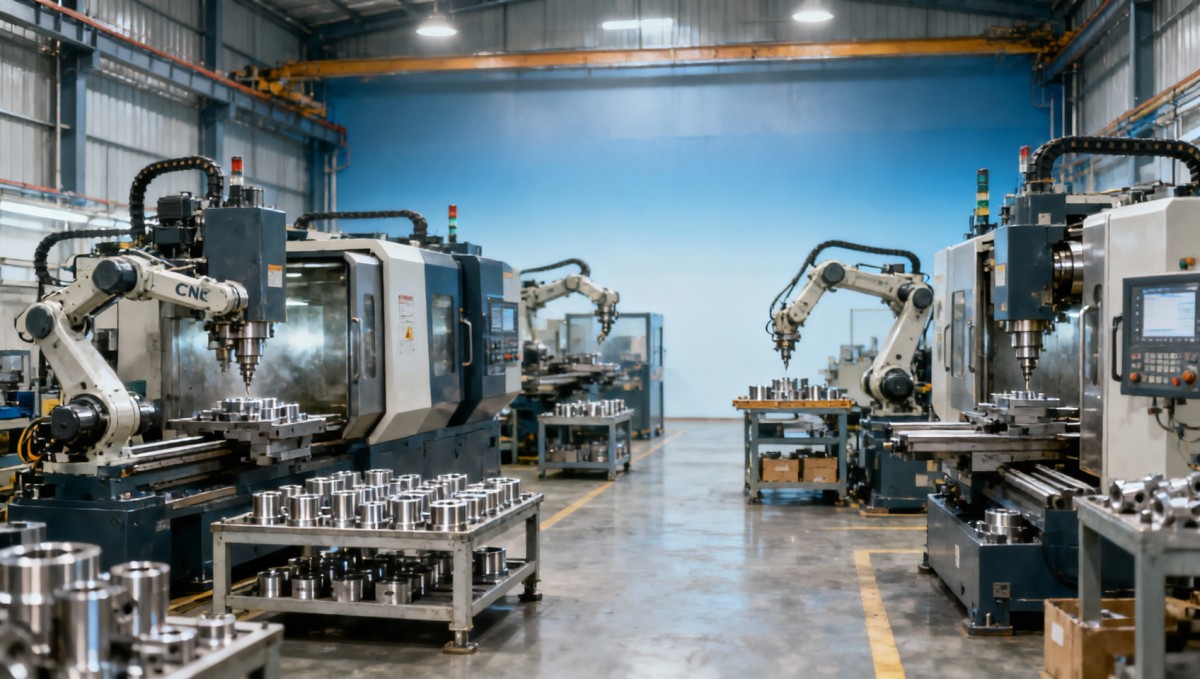
Regional demand is supported by several shared drivers: supply chain diversification, industrial upgrading, and the push toward higher precision manufacturing. However, these drivers do not affect every country in the same way. Markets with stronger export manufacturing bases and better industrial infrastructure typically move faster from conventional machining to CNC machining centers, CNC lathes, and integrated automation.
Thailand and Vietnam often attract attention because they combine manufacturing scale with growing investment in automotive components, electronics, and metalworking. In these markets, buyers may move directly from 2-axis or entry-level CNC equipment toward multi-machine cells, tool management systems, and partial robot loading. In contrast, some factories in Indonesia or the Philippines may prioritize durable standalone CNC machines first, then add automation later in 12- to 24-month phases.
Labor cost is another reason demand does not move evenly. Where labor remains relatively affordable, some manufacturers still accept semi-automatic workflows if they can maintain output and avoid large upfront spending. But once defect costs, export deadlines, and repeatability requirements tighten, CNC metalworking investment becomes less about labor replacement and more about process stability, dimensional consistency, and traceable production control.
Power supply stability, technician availability, local spare parts access, and financing terms also influence adoption speed. A high-speed machining center with advanced software may deliver excellent productivity, but if service response takes 5 to 10 days and the plant lacks trained programmers, utilization can remain below 60%. In practical terms, uneven demand often reflects uneven readiness, not uneven interest.
Four major factors behind different buying rhythms
- End-use industry mix: automotive and electronics usually adopt CNC faster than low-mix general fabrication.
- Factory maturity: plants with ERP, tool tracking, or basic MES can integrate automation in 6 to 12 months more easily.
- Capital structure: buyers with leasing or staged capex options are more likely to invest in higher-spec equipment.
- Service ecosystem: local application support and spare parts availability often decide final machine selection.
Typical signs a market is shifting from basic CNC to automation-led demand
Common signals include shorter RFQ cycles, stronger interest in pallet systems, demand for unattended night shifts of 4 to 8 hours, and more frequent questions about tool life monitoring or in-process measurement. These are not just equipment questions; they indicate that manufacturers are trying to improve output per square meter and reduce variation across batches.
Country and sector patterns buyers should watch
For procurement planning, it is more useful to look at country-sector combinations than at Southeast Asia as a single block. Demand for CNC machine tools in electronics clusters differs sharply from demand in heavy engineering or oil and gas support industries. Machine specification, rigidity requirements, tooling strategy, and expected ROI all shift with the application.
In Vietnam, demand is often tied to export manufacturing, electronics housings, precision fixtures, and subcontract machining linked to foreign-invested factories. In Thailand, automotive and supporting industries continue to sustain interest in repeatable medium- to high-volume production. Indonesia shows potential in general engineering, energy-related parts, and broader industrial development, but machine selection may lean toward flexible, robust platforms that can handle varied batch sizes.
Malaysia tends to show stronger interest in higher precision applications, especially where electronics, medical-related components, or export-oriented machining require tighter tolerances. In several markets, buyers are not necessarily asking for the most advanced machine available. They are asking for the most reliable machine that can maintain tolerance, protect spindle life, and fit local operator capability.
The table below summarizes common demand characteristics by market and application type. These are not fixed rules, but they reflect the practical differences many suppliers and buyers see during project discussions.
The key takeaway is that demand strength alone does not define the right investment. A buyer in a fast-growing market may still require a simpler 3-axis vertical machining center, while a buyer in a slower market may need a more advanced 5-axis or mill-turn solution because of part complexity. Market momentum and technical requirement should be evaluated separately.
Sector-specific demand differences
Automotive suppliers usually care about takt alignment, fixture repeatability, and predictable maintenance windows every 500 to 1,000 spindle hours. Electronics manufacturers often emphasize fine surface finish, thermal stability, and lower vibration at high spindle speeds. Energy and heavy equipment producers may accept longer cycle times if they gain stronger cutting rigidity and better adaptability for larger or tougher materials.
How buyers should evaluate CNC investment by production stage
A common mistake in Southeast Asian CNC procurement is treating every equipment purchase as a pure price comparison. In reality, the right decision depends on production stage. A factory moving from manual or conventional machines into first-stage CNC adoption has different needs from a plant already running 10 to 20 CNC units and looking to automate loading, inspection, or work handling.
At the entry stage, priorities usually include machine stability, operator learning curve, available local service, and a realistic spare parts plan. At the expansion stage, buyers start focusing more on fixture standardization, software compatibility, and tool presetting. At the optimization stage, the discussion shifts toward automation islands, robotic tending, machine connectivity, and overall equipment effectiveness rather than individual machine price alone.
For many manufacturers, ROI depends on hidden variables such as setup frequency, scrap rate, and shift structure. A machine with a purchase price 12% lower may still be less economical if setup takes 40 minutes instead of 20, or if repeated alignment issues reduce effective utilization by 8% to 15%. Evaluating CNC production through the full process lens is more useful than comparing only spindle power or travel range.
The following framework helps buyers match CNC investment to operational maturity and production goals.
This matrix shows why uneven demand should not be interpreted as uncertainty. In many cases, buyers are investing in phases. A factory may standardize 4 to 6 core machines first, then add robot loading or inline gauging after operators and maintenance teams become comfortable with the process. Phased adoption often reduces implementation risk while preserving future scalability.
A practical 5-step procurement checklist
- Define part family requirements, including material type, tolerance band, batch size, and annual volume.
- Estimate effective spindle utilization by shift, not theoretical machine availability.
- Review local support response time, spare parts stocking, and operator training scope.
- Compare setup reduction potential, not only machine purchase price.
- Check whether the machine can support future automation within 12 to 24 months.
What operators and users should confirm early
Operators should ask about controller familiarity, access to troubleshooting guides, preventive maintenance intervals, coolant and chip management, and real alarm handling procedures. Even a technically strong CNC machine becomes difficult to run efficiently if daily use is not matched to the team’s skill level and support structure.
Risks, bottlenecks, and common mistakes in regional CNC expansion
As demand rises, many Southeast Asian manufacturers face a similar set of execution risks. The first is overspecification. Some buyers choose a highly advanced machine because they expect future orders, but current parts only use 50% of the machine’s capability. That creates longer payback periods and ties up budget that could have improved fixtures, metrology, or operator training.
The second risk is undersupport. Factories sometimes focus on purchase value but underestimate the importance of application engineering, commissioning, and preventive service. If installation takes 2 weeks longer than planned or post-install tuning is weak, a machine can miss production targets during the first 90 days, which is often the period when operational confidence should be built.
A third bottleneck is automation mismatch. Not every plant is ready for a fully integrated automated production line. When fixture consistency, part orientation control, or process repeatability are still unstable, adding robot loading may only shift the bottleneck rather than remove it. In these cases, simple improvements such as tool management, barcode job tracking, or pallet organization may deliver faster returns.
Finally, there is the risk of weak standardization across multiple sites or suppliers. If one factory buys machines with incompatible controllers, different tooling bases, or inconsistent probing routines, scaling across the region becomes harder. Standardization does not require identical equipment in every location, but it does require clear common rules for tooling, maintenance records, and operator training.
Mistakes that often increase total cost of ownership
- Buying based on peak spindle speed while ignoring rigidity and real material mix.
- Assuming local technicians can support all controller brands equally.
- Skipping trial parts or process validation for components with tolerance bands below ±0.02 mm.
- Adding automation before standardizing fixtures, part clamping, and tool life rules.
- Not planning consumables, filters, coolant management, and preventive checks over a 6- to 12-month horizon.
How decision-makers can reduce risk
A disciplined approach is to run a pilot on one product family, one shift, and one machine platform before wider rollout. Measure setup time, dimensional stability, tooling consumption, operator error rate, and maintenance interventions over at least 6 to 8 weeks. That data provides a stronger basis for scaling than assumptions based only on vendor brochures or headline regional demand.
What stronger CNC demand means for sourcing, operations, and next-step strategy
Uneven demand in Southeast Asia should be seen as a planning signal, not a market weakness. It means sourcing teams need more precise evaluation criteria, operations teams need phased implementation plans, and management needs better alignment between factory capability and target customers. In some markets, the right move is immediate capacity expansion. In others, the better move is process stabilization, workforce training, or selective automation.
For information researchers, the most useful lens is comparative: which markets are accelerating on export-driven CNC machining, which sectors are moving toward precision metalworking, and where service ecosystems can support long-term machine utilization. For users and operators, the priority is practical usability, repeatable operation, and manageable maintenance. For procurement and enterprise leaders, the focus is ROI, standardization, scalability, and supply continuity.
As machine tool demand evolves, competitive advantage will increasingly come from matching the right CNC machine, the right automation level, and the right support model to each site’s real production profile. That may mean a simpler, service-friendly platform in one country and a higher-precision, more digitally integrated setup in another. Regional growth is real, but smart execution depends on local fit.
If your business is evaluating CNC lathes, machining centers, multi-axis systems, or automated production line upgrades for Southeast Asia, a structured assessment can shorten decision cycles and reduce implementation risk. Contact us to discuss your application, get a tailored equipment strategy, and explore practical solutions for CNC production, precision manufacturing, and industrial automation.
Recommended for You
 Heavy-duty Machining Center for mold making: Why coolant filtration standards evolve faster than OEM manualsMachine Tool Industry Editorial Team
 Quick-change Fixture Design for CNC turning: Why clamping force consistency drops after 200 cyclesCNC Machining Technology Center
 5 Axis Machining for impeller manufacturing: Why toolpath smoothing affects surface fatigue lifeCNC Machining Technology Center
 Lean Production Process implementation: Where value stream mapping fails to expose hidden machine downtimeManufacturing Market Research Center
 Modular Tooling System for flexible manufacturing: Why interface repeatability degrades faster than expectedMachine Tool Industry Editorial Team
 Industrial Automation control system for CNC machines: When cybersecurity updates disrupt scheduled maintenanceMachine Tool Industry Editorial Team

Aris Katos
Future of Carbide Coatings
15+ years in precision manufacturing systems. Specialized in high-speed milling and aerospace grade alloy processing.
▶
Industrial CNC Import Trends Are Changing in Southeast AsiaGlobal Machine Tool Trade Research Center▶
What is changing first in Global Manufacturing this year?Global Machine Tool Trade Research Center▶
Industrial CNC demand in Southeast Asia is not moving evenlyGlobal Machine Tool Trade Research Center▶
How regional market insights reveal unexpected demand for compact vertical lathes in GermanyGlobal Machine Tool Trade Research Center▶
Industrial lathe demand shifted sharply in Southeast Asia—not toward price, but toward service-response SLAsGlobal Machine Tool Trade Research Center
Mastering 5-Axis Workholding Strategies
Join our technical panel on Nov 15th to learn about reducing vibrations in thin-wall components.

Providing you with integrated sanding solutions
Before-sales and after-sales services
Comprehensive technical support