• Global CNC market projected to reach $128B by 2028 • New EU trade regulations for precision tooling components • Aerospace deman
NYSE: CNC +1.2%LME: STEEL -0.4%

An Automated Production Line can lose efficiency after adding sensors
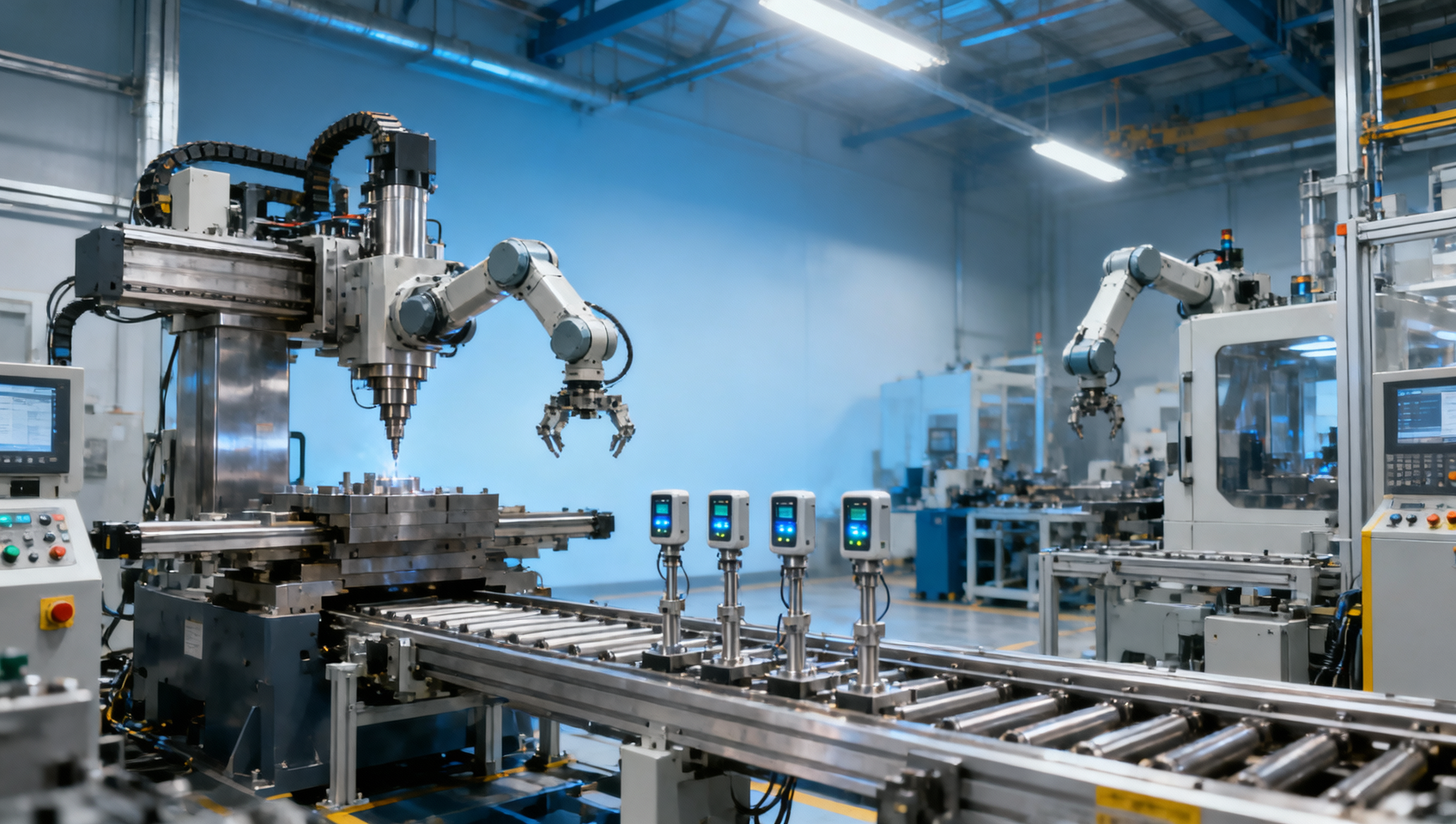
An Automated Production Line can lose efficiency when added sensors disrupt cycle timing, data flow, or machine coordination. In today’s Manufacturing Industry, improving Industrial Automation is not only about adding devices, but about optimizing the entire Production Process across industrial CNC systems, CNC cutting stations, and automated lathe operations. This article explores why sensor integration can reduce performance and how smarter CNC production restores balance.
For researchers, operators, buyers, and manufacturing decision-makers, this issue is highly practical. A sensor project may look small on paper, yet even 20–80 milliseconds of extra response time, unstable communication, or repeated alarm logic can reduce OEE, extend cycle time, and increase scrap risk on a line that once ran smoothly.
In CNC machining, precision machine tools, and automated transfer systems, sensor value depends on system fit rather than sensor quantity. A well-designed sensing layer improves traceability, safety, and process control. A poorly integrated one can overload PLC scans, confuse machine interlocks, and slow down every station from loading to cutting to unloading.
Why adding sensors can reduce production line efficiency
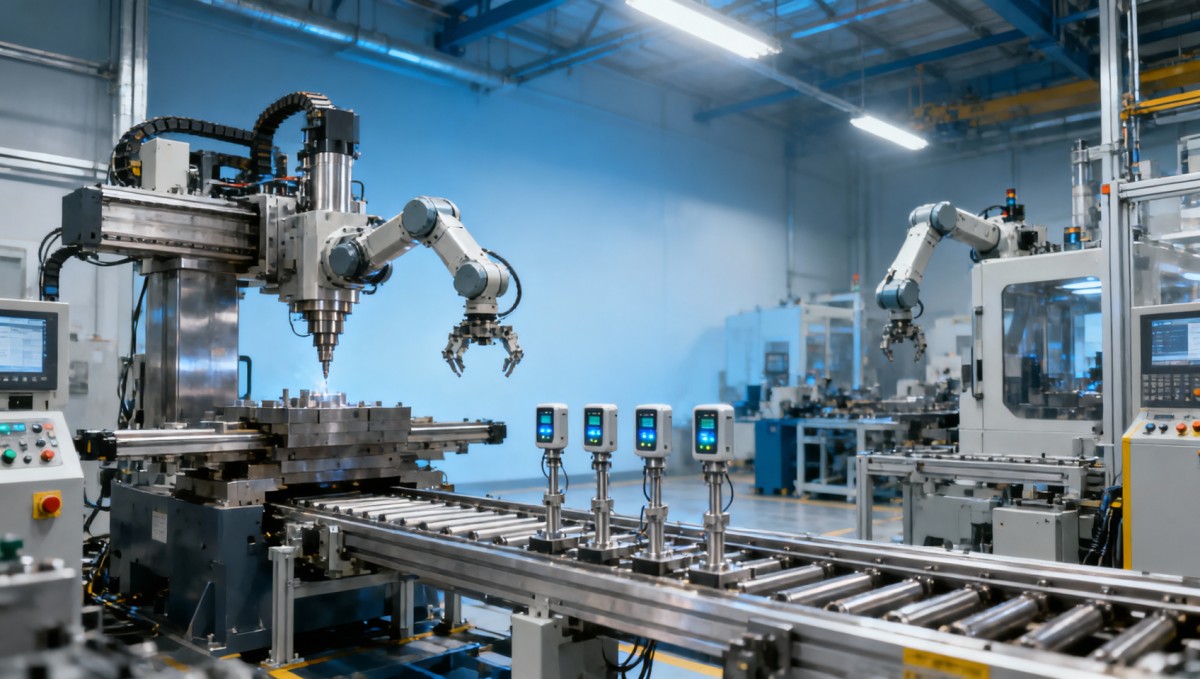
In modern CNC production, sensors are often added for part presence verification, spindle monitoring, tool wear checks, coolant status, vibration detection, and robotic positioning. Each device may seem useful in isolation. However, an automated production line is a timing-sensitive system in which every signal affects machine sequence, handshaking, and cycle release.
A common problem is scan-time expansion. When a PLC or edge controller processes 30 signals and then grows to 120 or 180 signal points after retrofit, the logic path becomes longer. If each station adds 2–4 conditional checks before motion release, total station delay can rise from less than 0.1 second to 0.5–1.2 seconds per cycle. Across 2,000 cycles per shift, that small delay becomes a measurable production loss.
Another issue is communication layering. CNC lathes, machining centers, robots, vision units, and conveyors may use different protocols such as Profinet, EtherNet/IP, Modbus, or serial interfaces. When sensors are added without a unified architecture, data packets compete for bandwidth, timestamps become inconsistent, and machine status may update too late for stable decision-making.
Typical causes behind performance drop
The first cause is excessive interlocking. Engineers often add “just in case” logic so that one failed signal blocks downstream movement. This increases safety margin but also creates unnecessary stoppages. In a high-volume line producing shafts, discs, or structural parts, one unstable sensor can stop 3 linked stations instead of one.
The second cause is poor sensor placement. A photoelectric sensor mounted near coolant mist, metal chips, or reflective surfaces may misread every few hundred cycles. False positives trigger retries, while false negatives hold the part in queue. Both outcomes reduce throughput and increase operator intervention.
The third cause is data without action design. Some factories collect temperature, vibration, power, and position data at 100 ms intervals, but they do not define alarm thresholds, filtering rules, or maintenance responses. The result is more data traffic with little operational value.
Operational symptoms teams should not ignore
- Cycle time rises by 3%–8% after sensor installation, even though cutting parameters stay unchanged.
- Machine waiting time increases at transfer or clamp confirmation points.
- Alarm frequency grows from a few events per week to several events per shift.
- Operators begin bypassing checks manually, which creates quality and safety risks.
These symptoms are especially common in retrofitted CNC production lines where sensor projects are added after commissioning. The line was originally balanced around machine takt, not around a new digital validation layer. Without rebalancing, more sensing can mean less output.
Where sensor integration fails in CNC and automated machining environments
The failure point is rarely the sensor itself. In most machine tool environments, the deeper issue lies in interaction between mechanical motion, CNC control logic, I/O architecture, and environmental conditions. A proximity sensor with stable lab performance may behave very differently near chips, coolant splash, spindle heat, or high-frequency motor noise.
Automated lathe cells and CNC cutting stations face additional challenges because part orientation, clamping repeatability, and tool change timing are tightly linked. If a part confirmation sensor checks too early, before vibration settles, it may read a false misalignment. If it checks too late, the station loses 0.3–0.8 seconds every cycle waiting for a confirmation that could have been combined with another event.
For purchasing teams, this means sensor choice cannot be separated from line architecture. The right procurement question is not “Which sensor is most advanced?” but “Which sensing method fits our machine sequence, contamination level, response time target, and integration cost?”
Comparison of common sensor-related bottlenecks
The table below shows how common sensor integration issues affect automated production line efficiency in CNC machining and precision manufacturing environments.
The key takeaway is that efficiency loss usually comes from system design errors, not from the concept of sensing itself. In CNC production, stable throughput depends on matching signal speed, control logic, and physical process timing. That is why successful smart factory upgrades begin with workflow mapping instead of component shopping.
Environmental checkpoints before adding new sensors
- Confirm contamination level: dry chips, wet chips, oil mist, coolant fog, or abrasive dust.
- Measure actual response window: many stations need decisions within 50–300 ms, not “real-time” in the abstract.
- Check cable path and EMI exposure around spindle drives, servo motors, and robot controllers.
- Verify maintenance access: if cleaning requires 15 minutes every shift, the monitoring gain may not justify the burden.
These checks help prevent overengineering. For many buyers, the most cost-effective upgrade is not the most sensor-dense one, but the one that improves control at the few points that truly limit quality or uptime.
How to integrate sensors without slowing the production process
A smarter approach begins by separating critical control signals from informational monitoring signals. Critical signals include clamp confirmation, part present validation, robot clear-to-enter, spindle safe state, and door interlocks. Informational signals include trend-based vibration, ambient temperature, coolant concentration, or power analytics. Mixing both categories in the same decision layer often creates avoidable delays.
In many CNC lines, the practical target is to keep sensor-related logic delay below 2% of total takt time. For a 30-second station cycle, all additional sensing decisions should ideally stay within 0.6 seconds combined. If the retrofit adds more than that, the project should be redesigned before full rollout.
Another good practice is staged deployment. Instead of installing 25 new sensors across the entire line at once, manufacturers can upgrade one cell, measure baseline versus post-installation performance for 1–2 weeks, then replicate only the configurations that improve quality or uptime without harming throughput.
A practical implementation sequence
- Map the current cycle in 5–7 steps, including loading, clamping, machining, gauging, unloading, and transfer.
- Identify the top 3 bottlenecks by lost seconds, scrap events, or manual interventions per shift.
- Assign sensors only to those bottlenecks first, rather than building a full visibility layer immediately.
- Set response thresholds and debounce times before installation; 100–300 ms filtering is often enough for unstable environments.
- Review post-installation OEE, alarm rate, and cycle consistency after at least 3 production days.
Operators should also be involved early. They know which alarms are actionable and which are noise. On many production lines, operator feedback reduces unnecessary alarm points by 20%–40%, which directly improves usability and lowers the chance of bypass behavior.
Recommended control priorities by application
The following table provides a practical guide for choosing sensor priorities across common CNC and automated machining scenarios.
This comparison shows that the best sensor strategy is selective and process-driven. Smart CNC production does not mean measuring everything. It means measuring the variables that protect part quality, machine uptime, and balanced takt performance.
Buying and decision criteria for sensor-enabled automated production lines
For procurement teams and plant managers, the investment question is broader than component price. A lower-cost sensor that requires frequent cleaning, custom brackets, repeated calibration, or PLC rework may create a higher total cost within 6–12 months. Evaluation should include hardware, integration effort, maintenance time, and production risk.
Decision-makers should ask suppliers for application-specific evidence rather than generic product claims. In CNC and machine tool environments, useful proof includes expected response time, ingress protection level, resistance to coolant or oil, mounting tolerance, wiring method, and compatibility with existing controller architecture.
The best procurement frameworks also connect sensor decisions to measurable KPIs. Examples include cycle stability within ±1.5%, alarm reduction per shift, false trigger rate below a defined threshold, or maintenance intervention frequency under 1 event per week for a given station.
Four decision filters buyers should apply
- Process fit: Does the sensor solve a real bottleneck in machining, transfer, clamping, or inspection?
- Integration fit: Can it connect to existing PLC, CNC, robot, or MES layers without excessive gateway complexity?
- Environmental fit: Is it rated for chips, oil, vibration, and temperature variation common to the shop floor?
- Maintenance fit: Can operators inspect, clean, and replace it in less than 10–15 minutes when needed?
When these filters are skipped, projects often drift into technology-first spending. That is risky in industries such as automotive, aerospace, energy equipment, and electronics production, where delivery schedules and quality compliance depend on predictable machining output more than on feature count.
Common procurement mistakes
- Buying the highest-spec sensor without checking if the machine needs that measurement resolution.
- Assuming one sensor type can perform equally well across wet machining, dry cutting, and robot transfer zones.
- Ignoring software engineering time, which may represent 30%–50% of total retrofit effort in complex lines.
- Approving full-line rollout before confirming station-level performance during pilot production.
For international sourcing, buyers should also assess spare part availability, lead time, and replacement compatibility. A good sensor strategy should support stable production for years, not just successful installation on day one.
Maintenance, troubleshooting, and long-term optimization
Even a well-designed sensor layer needs maintenance discipline. In precision manufacturing, contamination is cumulative. Lens fouling, cable strain, bracket movement, and connector oxidation can slowly change signal quality. If inspection is delayed for months, the line may suffer gradual efficiency loss before a clear failure appears.
A practical maintenance plan should define inspection frequency by environment. In heavy coolant or chip-rich machining cells, visual checks every shift and functional verification every 1–2 weeks are common. In cleaner assembly or gauging areas, monthly checks may be sufficient. The goal is not excessive maintenance, but predictable performance.
Long-term optimization should also include logic review. As lines evolve, temporary alarms and bypasses tend to remain in software. After 6–9 months, the control program may contain many conditions that no longer add value. Cleaning up this logic can recover cycle time without changing hardware.
FAQ for operators and managers
How many sensors are too many on a CNC production line?
There is no fixed number, but trouble often starts when signal growth is not matched by control redesign. If adding 10–20 new signals increases cycle time, alarm noise, or troubleshooting time, the line has likely crossed the point where sensing complexity exceeds operational benefit.
What is the safest way to retrofit an existing automated production line?
Start with one bottleneck station, establish a baseline for at least 3 production days, then add sensors in a pilot phase. Compare cycle time, downtime, false alarms, and operator interventions. If the pilot shows gains within 2–4 weeks, scale to the rest of the line in stages.
Which KPI matters most after sensor integration?
No single KPI is enough. A balanced review should include cycle time, OEE, alarm frequency, false trigger rate, and scrap trend. If quality improves but cycle time rises by 8%, the project may still need redesign to deliver true production value.
Can smarter software restore efficiency without removing sensors?
Often yes. Debounce logic, threshold filtering, event grouping, asynchronous data logging, and simplified interlocks can recover performance. In many cases, software tuning solves 50% or more of sensor-related slowdown without major hardware replacement.
An automated production line loses efficiency not because sensors are inherently harmful, but because uncontrolled sensor expansion can disrupt timing, coordination, and maintainability. In CNC machining, precision manufacturing, and industrial automation, the winning strategy is selective sensing, disciplined integration, and measurable performance review.
Whether you are evaluating a retrofit, sourcing equipment for a new line, or improving an existing CNC production process, the right approach combines process mapping, control simplification, and environment-specific sensor selection. To reduce downtime, protect cycle time, and build a more reliable smart manufacturing system, contact us to discuss your application, request a tailored solution, or learn more about practical automation strategies for your production line.
Recommended for You
![]() Iranian LNG Vessels Breach U.S. Strait Blockade; Shanghai Crude Surges 4%Manufacturing Market Research Center
Iranian LNG Vessels Breach U.S. Strait Blockade; Shanghai Crude Surges 4%Manufacturing Market Research Center![]() Pakistan Launches CNC Localization Tender for CPEC II Smart Manufacturing ParkGlobal Machine Tool Trade Research Center
Pakistan Launches CNC Localization Tender for CPEC II Smart Manufacturing ParkGlobal Machine Tool Trade Research Center![]() NVIDIA Joins $1T Club; AI-Driven CNC Digital Twin Gains Global TractionCNC Machining Technology Center
NVIDIA Joins $1T Club; AI-Driven CNC Digital Twin Gains Global TractionCNC Machining Technology Center![]() World's First 5-Axis Middle-Grade Wire EDM Machine Enters Mass ProductionMachine Tool Industry Editorial Team
World's First 5-Axis Middle-Grade Wire EDM Machine Enters Mass ProductionMachine Tool Industry Editorial Team![]() China’s CNC Machine Tool Export Prices Up 11.3% in Q1 2026Global Machine Tool Trade Research Center
China’s CNC Machine Tool Export Prices Up 11.3% in Q1 2026Global Machine Tool Trade Research Center![]() Saudi Energy Security Boosts CNC Import Efficiency in Middle EastGlobal Machine Tool Trade Research Center
Saudi Energy Security Boosts CNC Import Efficiency in Middle EastGlobal Machine Tool Trade Research Center


Aris Katos
Future of Carbide Coatings
15+ years in precision manufacturing systems. Specialized in high-speed milling and aerospace grade alloy processing.
▶
OPC AI Maintenance Cuts CNC Downtime 42% in SuzhouMachine Tool Industry Editorial Team▶
Industrial Painting Robots: Where Finish Quality Usually DropsMachine Tool Industry Editorial Team▶
What Slows Down an Automation Line in Textile Production?Machine Tool Industry Editorial Team▶
Automated Production Lines in Auto Manufacturing: Key BottlenecksMachine Tool Industry Editorial Team▶
Industrial Automation control system for CNC machines: When cybersecurity updates disrupt scheduled maintenanceMachine Tool Industry Editorial Team
Mastering 5-Axis Workholding Strategies
Join our technical panel on Nov 15th to learn about reducing vibrations in thin-wall components.

Providing you with integrated sanding solutions
Before-sales and after-sales services
Comprehensive technical support