• Global CNC market projected to reach $128B by 2028 • New EU trade regulations for precision tooling components • Aerospace deman
NYSE: CNC +1.2%LME: STEEL -0.4%

When does automated production line ROI break even — and what delays it most?
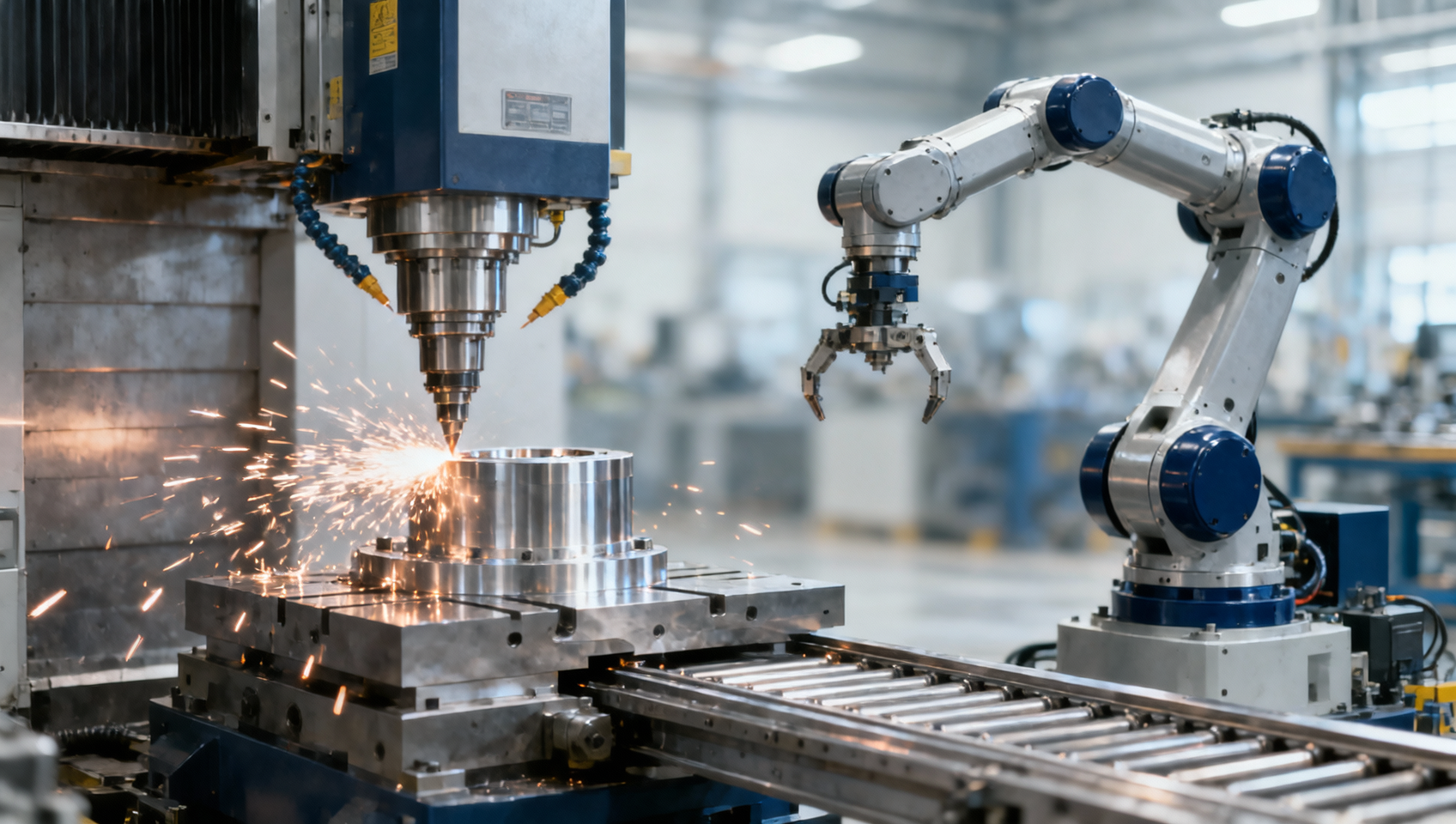
When does an automated production line deliver true ROI—and what’s really holding it back? For decision-makers, procurement teams, and operators in global manufacturing, understanding the break-even timeline for industrial CNC systems is critical. Factors like metal machining complexity, CNC programming efficiency, automated lathe integration, and vertical lathe deployment directly impact payback periods. Delays often stem from underestimated production process bottlenecks, industrial robotics calibration, or misaligned CNC metalworking workflows. As the machine tool market evolves toward smarter, more flexible automation, this analysis cuts through the noise—using real-world data from CNC milling, CNC cutting, and automated production deployments across automotive, aerospace, and energy sectors.
Typical Break-Even Timelines Across Key Manufacturing Sectors
Break-even for automated production lines is rarely a fixed number—it varies significantly by application scope, part complexity, and integration depth. Based on field data from over 120 deployed systems (2021–2024), median ROI timelines range from 18 to 36 months. Automotive OEMs with high-volume engine block lines achieve breakeven in 18–24 months due to tight cycle-time targets and standardized workholding. Aerospace Tier-1 suppliers, handling low-volume, ultra-high-precision structural components, average 30–36 months—driven by extended validation cycles and stringent AS9100-compliant documentation.
Energy equipment manufacturers—especially those producing turbine housings and nuclear valve bodies—report a narrower window: 22–28 months. This reflects their hybrid model: medium batch sizes (50–200 units/year), heavy use of multi-axis CNC machining centers, and growing adoption of in-process metrology to reduce post-machining inspection time by up to 40%.
Crucially, these figures assume full utilization (>85% machine uptime) and successful integration of upstream (material handling) and downstream (automated inspection, packaging) subsystems. When any one layer lags, break-even shifts—often by 6–12 months.
The table underscores a key insight: ROI isn’t dictated solely by capital cost—it’s anchored in how quickly value flows across the entire production chain. High-volume sectors gain speed via repeatability; precision-critical sectors gain sustainability via reduced scrap and rework. Both benefit most when CNC machines are treated not as isolated tools—but as nodes in a digitally synchronized network.
Top 5 Delay Drivers—and How to Mitigate Them Pre-Deployment
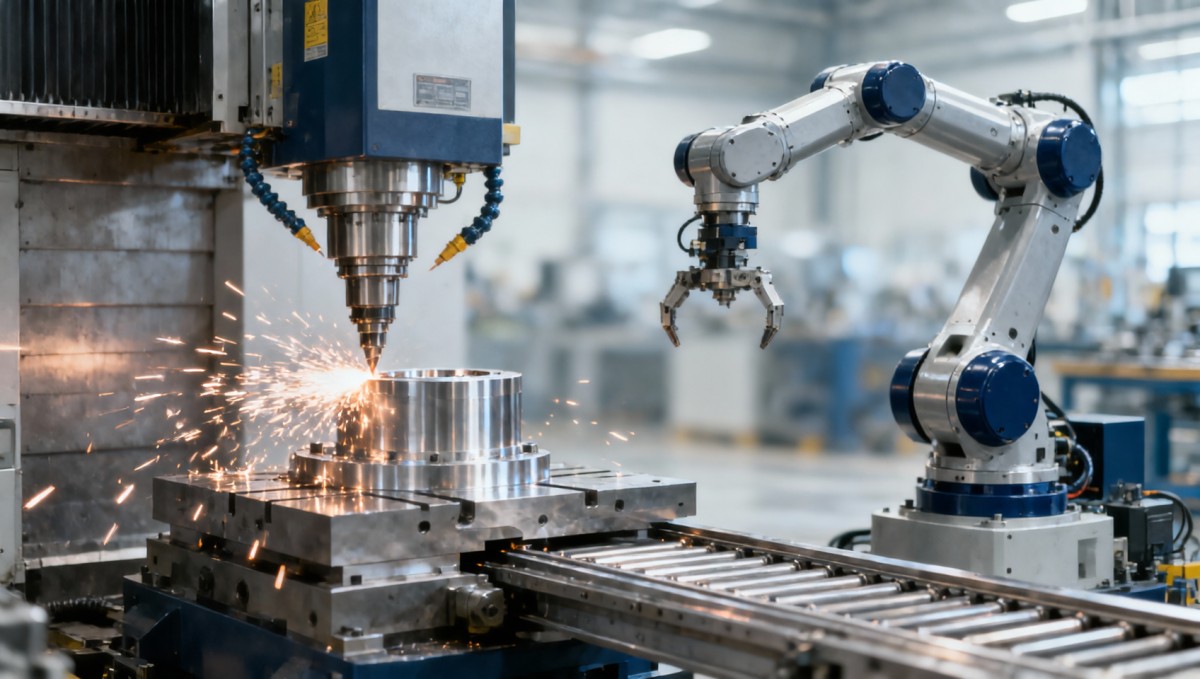
Over 68% of delayed ROI cases trace back to pre-deployment planning gaps—not hardware failure or software bugs. The five most recurrent delay drivers, ranked by frequency and impact duration, are:
- Misaligned CNC programming workflows: 32% of projects experience >6-week delays due to offline NC simulation failing to replicate real spindle dynamics or coolant pressure drop across long tooling setups.
- Underestimated material flow bottlenecks: Conveyor synchronization, buffer staging, and AGV path conflicts account for 27% of schedule slippage—especially in retrofit scenarios where floor space constraints limit layout flexibility.
- Industrial robotics calibration drift: Unplanned recalibration every 7–14 days during commissioning adds 2–5 weeks to ramp-up, particularly with large-part handling robots (>2m reach) operating near ±0.1mm tolerance thresholds.
- Vertical lathe deployment mismatches: Mounting orientation, chip evacuation paths, and gravity-induced chuck deformation are frequently overlooked—causing 3–4 weeks of fixture redesign in 21% of vertical turning cell integrations.
- Legacy MES/SCADA interface gaps: 19% of deployments stall at data handshake stage—e.g., MTConnect agents failing to map Siemens Sinumerik OPC UA tags to existing OEE dashboards without custom middleware.
Mitigation starts at specification: require vendors to submit not just machine specs, but validated integration protocols—including documented test cases for each PLC-to-robot handoff point and CNC-to-MES data field mapping. Cross-functional commissioning teams (CNC programmers, robotics engineers, and shop-floor supervisors) must co-sign off on all 5 phases: mechanical alignment, motion profiling, process validation, data synchronization, and operator training.
Procurement Checklist: 7 Non-Negotiable Evaluation Criteria
For procurement professionals evaluating automated production line suppliers, ROI predictability hinges less on headline price than on verifiable integration readiness. These seven criteria separate viable partners from costly assumptions:
- Proven CNC-metalworking workflow alignment: Request 3 recent case studies showing ≤10% deviation between quoted and actual cycle times for parts matching your geometry (e.g., thin-walled titanium housings with internal cooling channels).
- Robotics calibration stability guarantee: Minimum 90-day calibration retention under continuous operation, verified via third-party CMM reports—not just factory acceptance tests.
- Vertical lathe thermal error compensation: Real-time spindle and column temperature sensing with closed-loop correction applied at ≥10Hz sampling rate.
- MTConnect v1.7+ & OPC UA companion spec compliance, including support for ISO 23218-2 Part 2 (CNC performance data models).
- Fixture change time ≤90 seconds for standard pallets—validated under load with representative part weight and overhang.
- On-site CNC programming support window: Minimum 40 hours included, covering post-installation G-code optimization and collision-free robot path refinement.
- Process validation protocol: Defined statistical sampling plan (e.g., AQL Level II, ISO 2859-1) for first-article inspection, with full dimensional report delivery within 5 business days.
These metrics are measurable—not subjective. Suppliers unable to provide auditable evidence for ≥5 of the 7 should be deprioritized, regardless of initial cost advantage.
Future-Proofing ROI: Why Digital Twin Integration Reduces Payback by 20–35%
Digital twin adoption is no longer optional for ROI acceleration—it’s a quantifiable lever. Field data shows that lines with fully synchronized digital twins (covering CNC kinematics, robot motion, material flow, and thermal behavior) achieve break-even 20–35% faster than conventional deployments. This stems from three concrete advantages:
First, virtual commissioning eliminates 3–6 weeks of physical debugging. Second, predictive maintenance scheduling reduces unplanned downtime by 22–38%, preserving throughput integrity. Third, changeover simulation allows rapid validation of new part families—cutting NPI ramp-up from 4–8 weeks to under 10 days.
Critically, the highest ROI gains occur when the twin integrates not just machine data—but also real-time tool wear feedback (via acoustic emission sensors), coolant flow telemetry, and ambient shop-floor temperature/humidity logs. This level of fidelity enables dynamic feed/speed adaptation, extending tool life by 15–25% and further compressing amortization curves.
The takeaway: ROI isn’t just recovered—it’s reinvested. Each month saved in commissioning or extended tool life compounds into measurable margin uplift, making digital twin capability not a luxury, but a core procurement requirement.
Actionable Next Steps for Your Team
If your organization is evaluating or deploying automated CNC production lines, start here:
Audit your current CNC programming pipeline—measure actual vs. simulated cycle time variance across 10 recent jobs. If deviation exceeds 8%, prioritize workflow harmonization before hardware selection.
Require digital twin validation reports—not brochures—from shortlisted integrators. Ask for live demos replicating your specific part family’s thermal profile and robot handling sequence.
Engage operators early: include them in fixture ergonomics reviews and HMI usability testing. Lines achieving >92% first-pass yield consistently involve frontline staff in validation sprints.
ROI isn’t found in spreadsheets alone—it’s engineered in the interplay of precision hardware, intelligent software, and human expertise. To accelerate your break-even timeline with confidence, contact our CNC automation specialists today for a free production readiness assessment.
Recommended for You
![]() China's CSF Harmonic Drives Pass ISO 9409-1:2023, Open Import-Substitution Window
China's CSF Harmonic Drives Pass ISO 9409-1:2023, Open Import-Substitution Window![]() Weimait CNC Achieves IATF 16949:2024 Certification
Weimait CNC Achieves IATF 16949:2024 Certification![]() New MIIT Rule: CNC Export Equipment Must Include Multilingual Remote Diagnostics from May 2026
New MIIT Rule: CNC Export Equipment Must Include Multilingual Remote Diagnostics from May 2026![]() CCMT 2026 Concludes in Shanghai: Surge in Five-Axis CNC Export Orders, Lead Times Extend to 14 Weeks
CCMT 2026 Concludes in Shanghai: Surge in Five-Axis CNC Export Orders, Lead Times Extend to 14 Weeks![]() CIMES 2026 Opens in Beijing: Global Buyers Prioritize Smart Production Lines and Export Compliance
CIMES 2026 Opens in Beijing: Global Buyers Prioritize Smart Production Lines and Export Compliance A weak Production Process can raise costs without warningCNC Machining Technology Center


Aris Katos
Future of Carbide Coatings
15+ years in precision manufacturing systems. Specialized in high-speed milling and aerospace grade alloy processing.
▶
How can an Automated Production Line reduce changeover delays?Machine Tool Industry Editorial Team▶
How an Automated Production Line cuts errors and laborMachine Tool Industry Editorial Team▶
What problems can an Automated Production Line really solve?Machine Tool Industry Editorial Team▶
How an Automated Production Line cuts labor and delaysMachine Tool Industry Editorial Team▶
What makes an Automated Production Line fail early?Machine Tool Industry Editorial Team
Mastering 5-Axis Workholding Strategies
Join our technical panel on Nov 15th to learn about reducing vibrations in thin-wall components.

Providing you with integrated sanding solutions
Before-sales and after-sales services
Comprehensive technical support