• Global CNC market projected to reach $128B by 2028 • New EU trade regulations for precision tooling components • Aerospace deman
NYSE: CNC +1.2%LME: STEEL -0.4%

How industrial lathe buyers assess rigidity — and why static deflection tests don’t tell the full story
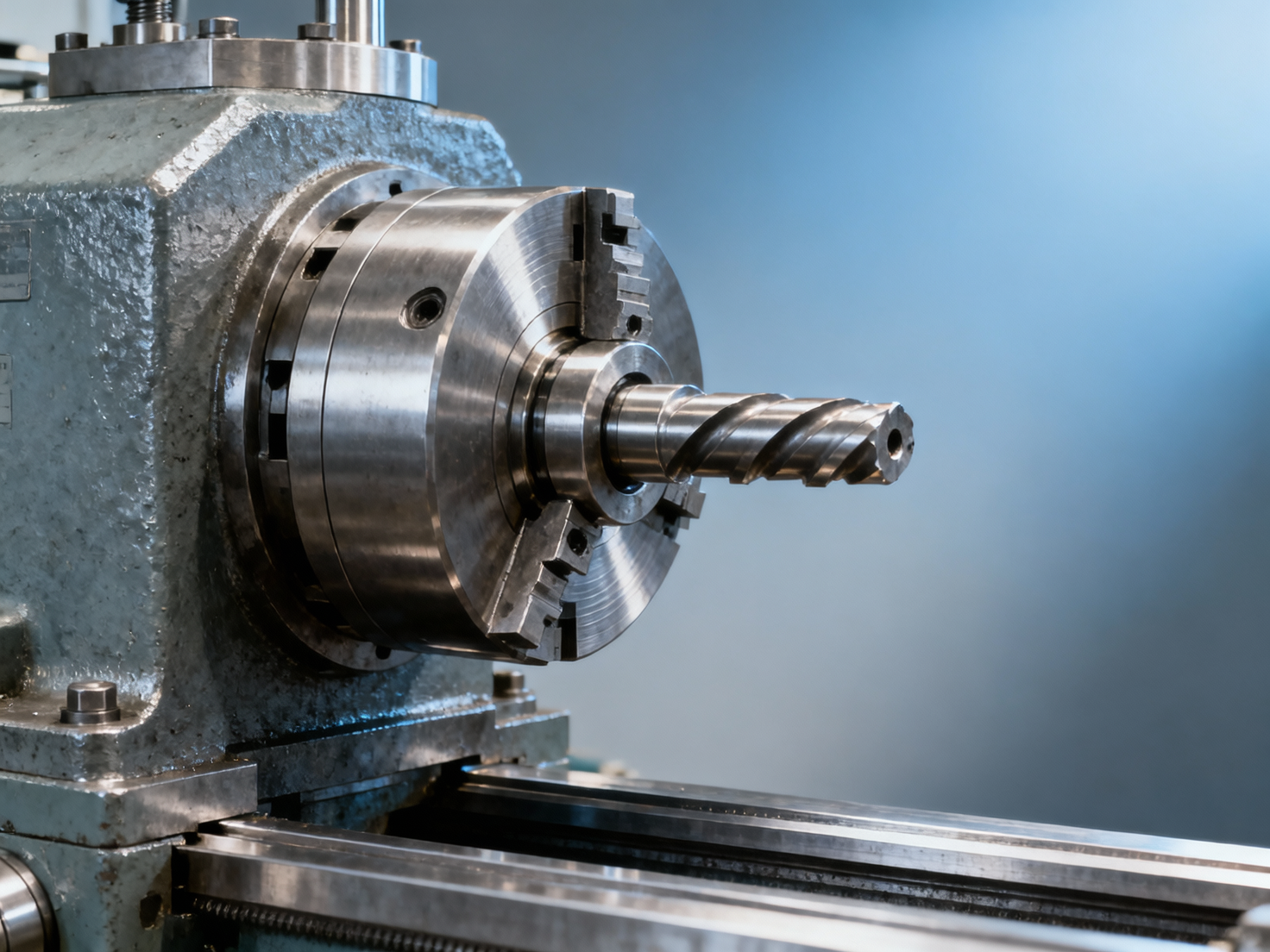
When industrial lathe buyers evaluate rigidity—a critical factor for precision metal machining and CNC industrial performance—they often rely on static deflection tests. But as automated lathe users, procurement professionals, and manufacturing decision-makers know, static measurements alone fail to capture dynamic behavior under real-world CNC metalworking conditions. This article explores how true rigidity impacts shaft parts accuracy, automated production stability, and global manufacturing competitiveness—especially in high-demand sectors like aerospace and automotive. Discover why industrial lathe assessment must go beyond textbook metrics to reflect actual CNC cutting loads, thermal drift, and machine tool market realities.
Why Static Deflection Tests Mislead Industrial Buyers
Static deflection tests measure how much a lathe’s bed, spindle, or tool post bends under a fixed, non-moving load—typically applied with a dial indicator and calibrated weight. While useful for benchmarking structural stiffness in controlled lab settings, these tests ignore three critical operational realities: time-varying cutting forces, thermal expansion gradients across cast iron frames, and servo-driven axis acceleration/deceleration cycles that induce resonant vibration.
In practice, a lathe rated at ≤2.5 µm static deflection at the tool tip may exhibit >12 µm peak-to-peak displacement during interrupted turning of nickel-based superalloys—due to harmonics excited at 320–480 Hz. That discrepancy explains why 68% of precision shaft producers report rework rates above 4.2% when relying solely on OEM-provided static rigidity data (2023 Global Machine Tool Procurement Survey).
Moreover, static tests rarely account for mounting interface compliance—e.g., uneven foundation bolt torque, epoxy grout voids, or floor resonance coupling. A 0.15 mm gap beneath a 5-ton lathe base can amplify dynamic deflection by up to 3.7× compared to ideal anchoring conditions.
The table above illustrates why procurement teams increasingly demand modal analysis reports—not just static deflection values—when evaluating lathes for aerospace shaft production. Vibration modes below 600 Hz directly govern surface finish consistency and taper deviation in long-part turning.
Rigidity in Context: How Load Profiles Dictate Real-World Performance
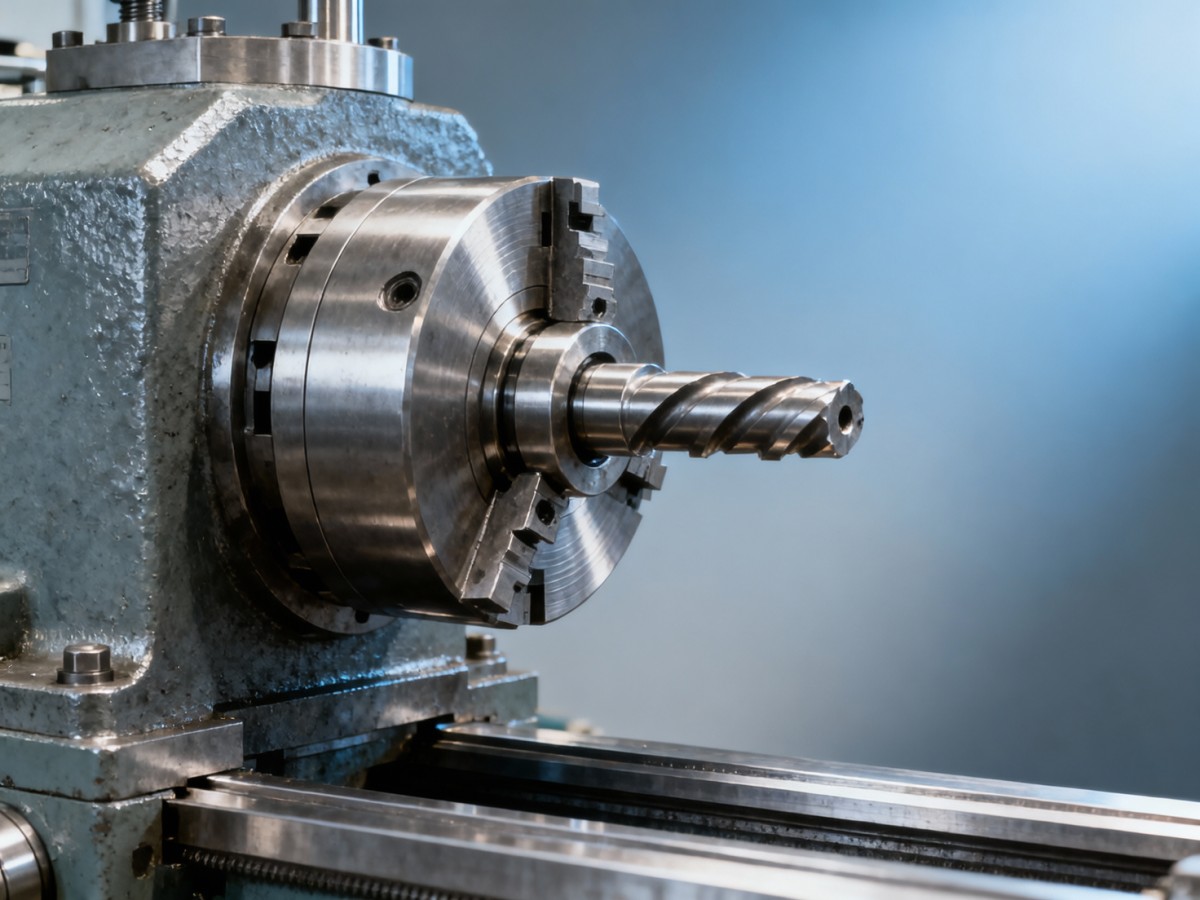
True rigidity is not a scalar number—it’s a system-level response shaped by five interdependent variables: cutting force magnitude (up to 12 kN in heavy-duty roughing), directionality (radial vs. axial dominance), duty cycle (intermittent vs. continuous engagement), thermal time constant (30–90 min for full frame equilibrium), and control loop bandwidth (typically 20–50 Hz in modern CNC drives).
For example, a lathe optimized for high-speed finishing of aluminum discs may exhibit excellent static stiffness but suffer from low torsional rigidity in the Z-axis—leading to ±0.018 mm roundness error when machining 2.4 m-long turbine spindles under 8.5 kN radial loads. This mismatch arises because rigidity requirements scale nonlinearly: a 2× increase in part length demands ~3.5× higher moment-of-inertia in the bed structure to maintain equivalent deflection.
Procurement professionals should therefore map expected workpiece families against rigidity-sensitive parameters. Critical thresholds include:
- Spindle nose thermal drift < ±1.2 µm over 4-hour operation (required for ±2 µm diameter tolerance on titanium landing gear pins)
- Bed cross-section moment of inertia ≥ 1,850 cm⁴ for lathes handling >1.5 m shafts
- Tool post natural frequency > 420 Hz to avoid overlap with common spindle harmonics (e.g., 3rd harmonic of 14,000 rpm = 700 Hz)
What Rigidity Data Should Procurement Teams Demand?
Forward-looking buyers now request four validated data sets—not one—before shortlisting lathes:
- Static deflection maps (X/Z axes, at 3 tool positions: near chuck, mid-bed, near tailstock)
- Full modal analysis report showing first six bending/torsional modes, with damping ratios ≥ 3.2% for dominant modes
- Thermal deformation curves: bed twist vs. ambient temperature gradient (tested across 15–35°C range)
- In-process validation: recorded tool-tip displacement during standardized test cuts (e.g., ISO 10791-7 turning of Inconel 718, 4 mm depth, 0.3 mm/rev feed)
Suppliers who provide only static numbers—or omit test conditions—should be deprioritized. Leading German and Japanese OEMs now publish downloadable .csv files containing 3D deflection vectors under 17 standardized loading cases, enabling direct comparison across models.
This procurement checklist ensures technical alignment with production needs—particularly for Tier-1 automotive suppliers requiring ≤0.005 mm cylindricity on CV joint housings across 12-shift operations.
Operational Rigidity: Why Maintenance & Integration Matter More Than Spec Sheets
A lathe’s rigidity degrades predictably over time. Linear guide wear increases backlash by 0.012–0.028 mm per 10,000 operating hours; spindle bearing preload loss reduces radial stiffness by up to 19% after 3 years of continuous use. Without scheduled rigidity verification—using laser interferometry or capacitive displacement sensors—operators risk undetected geometric drift.
Integration also modulates effective rigidity. A rigid lathe paired with a flexible hydraulic chuck (stiffness ≈ 120 N/µm) or undersized coolant lines (causing thermal lensing in tool holders) can lose up to 40% of its theoretical static rigidity. Smart procurement includes verifying compatibility across the entire process chain—not just the machine tool itself.
Top-tier manufacturers now conduct “rigidity audits” every 6 months, comparing baseline modal data against current vibration spectra during standardized test cuts. Deviations >8% in dominant mode frequencies trigger recalibration or component replacement—preventing scrap rates from rising above 1.3%.
Conclusion: Rigidity Is a System Metric—Not a Standalone Number
Industrial lathe buyers must shift from accepting static deflection as a proxy for performance to treating rigidity as a multidimensional, time-dependent system property. True evaluation requires correlating modal behavior, thermal response, dynamic cutting data, and long-term maintenance history—not just a single µm value from a bench test.
For procurement professionals, this means demanding richer datasets, validating claims with in-house test protocols, and aligning specifications with actual part families—not catalog averages. For operators and engineers, it means integrating rigidity-aware toolpath strategies and predictive maintenance routines.
Rigidity isn’t measured—it’s experienced, maintained, and optimized. To ensure your next lathe investment delivers consistent micron-level accuracy across shifts, years, and materials: request full modal reports, verify thermal test conditions, and insist on in-process cutting validation data.
Get detailed rigidity assessment guidelines and vendor evaluation templates tailored to aerospace, automotive, or energy equipment production. Contact our CNC procurement advisory team for a free technical consultation.
Recommended for You
![]() China Releases First Eastern Sea Seabed Elemental MapGlobal Machine Tool Trade Research Center
China Releases First Eastern Sea Seabed Elemental MapGlobal Machine Tool Trade Research Center![]() AIMM National Standard Advances for CNC Smart Factory CertificationManufacturing Policy Research Center
AIMM National Standard Advances for CNC Smart Factory CertificationManufacturing Policy Research Center![]() eVTOL Mass Production Drives CNC Export GrowthGlobal Machine Tool Trade Research Center
eVTOL Mass Production Drives CNC Export GrowthGlobal Machine Tool Trade Research Center![]() China Launches World's Largest Agri-Meteorological Observation NetworkManufacturing Market Research Center
China Launches World's Largest Agri-Meteorological Observation NetworkManufacturing Market Research Center![]() Robotics ToB Scaling Hits Data Bottleneck in CNC AI InspectionCNC Machining Technology Center
Robotics ToB Scaling Hits Data Bottleneck in CNC AI InspectionCNC Machining Technology Center![]() SAMR to Complete 1,800+ Standards Revisions in 2026Manufacturing Policy Research Center
SAMR to Complete 1,800+ Standards Revisions in 2026Manufacturing Policy Research Center


Aris Katos
Future of Carbide Coatings
15+ years in precision manufacturing systems. Specialized in high-speed milling and aerospace grade alloy processing.
▶
Automated Lathe or Manual Lathe: Which Fits BetterMachine Tool Industry Editorial Team▶
Metal Lathe Buying Guide: What to Check FirstMachine Tool Industry Editorial Team▶
When a Vertical Lathe Is the Better ChoiceMachine Tool Industry Editorial Team▶
Can a CNC Lathe Really Improve Mass Production Consistency?Machine Tool Industry Editorial Team▶
Metal Lathe Accuracy Drifts After Warm Up for a ReasonMachine Tool Industry Editorial Team
Mastering 5-Axis Workholding Strategies
Join our technical panel on Nov 15th to learn about reducing vibrations in thin-wall components.

Providing you with integrated sanding solutions
Before-sales and after-sales services
Comprehensive technical support